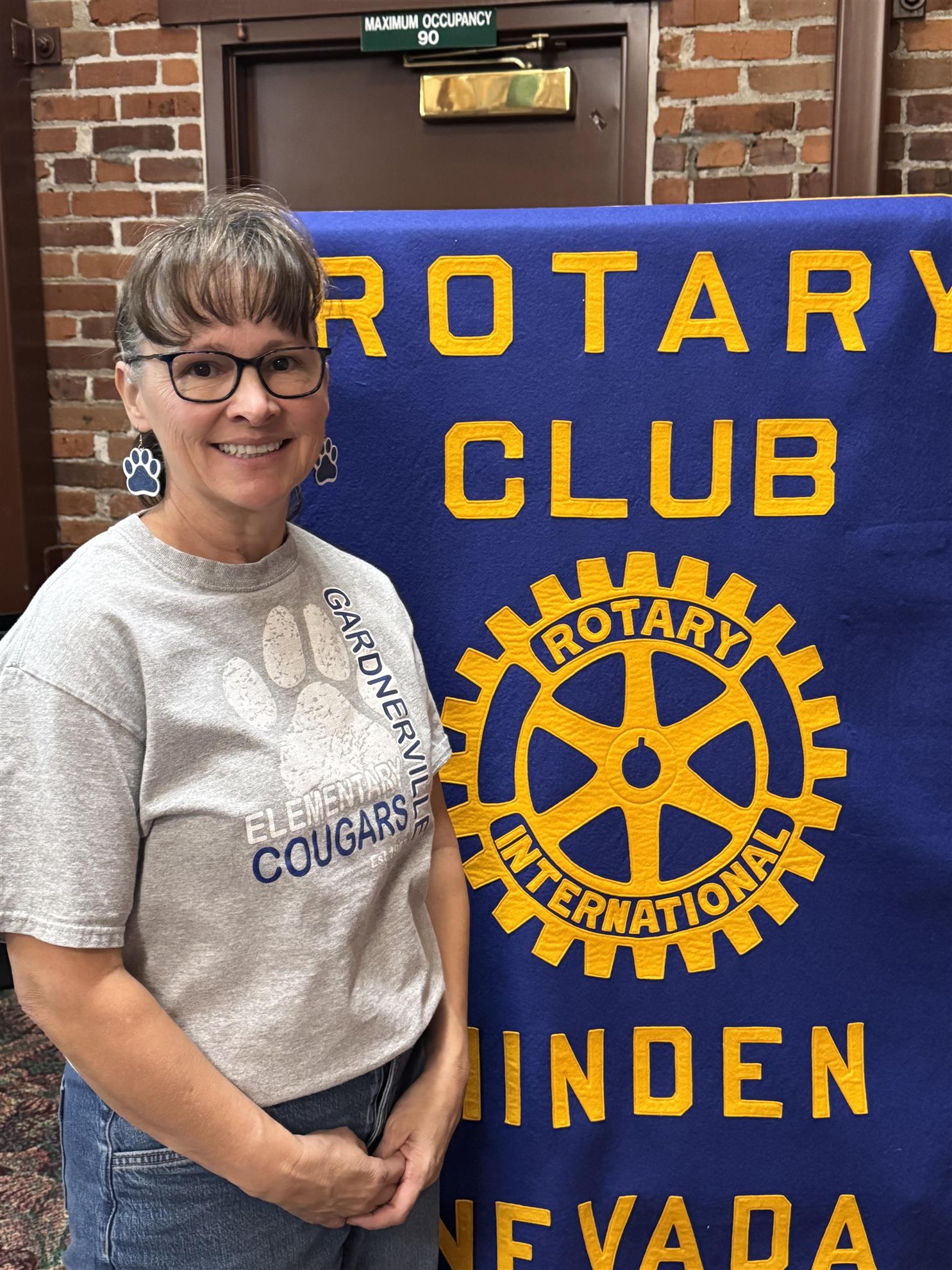
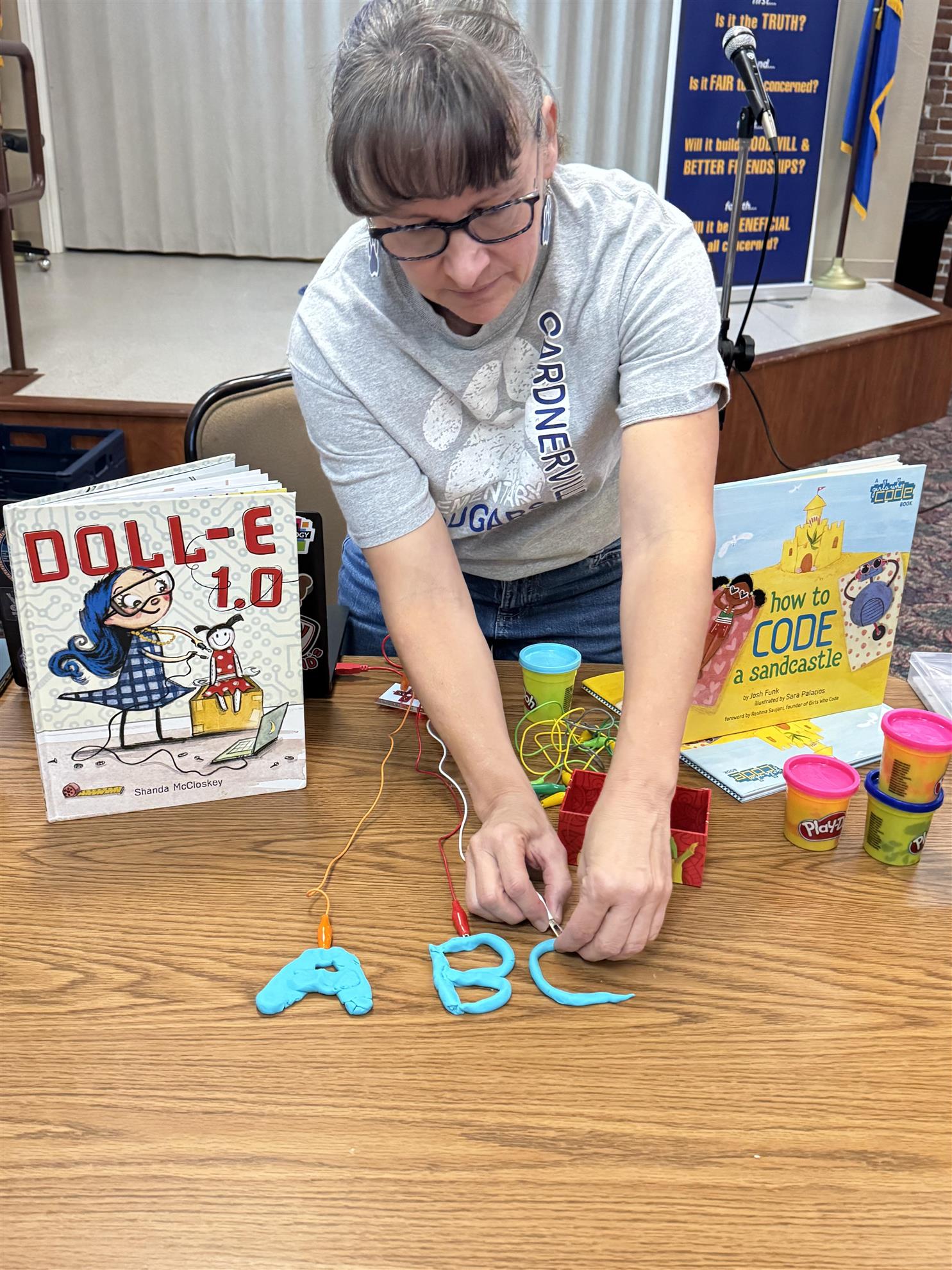
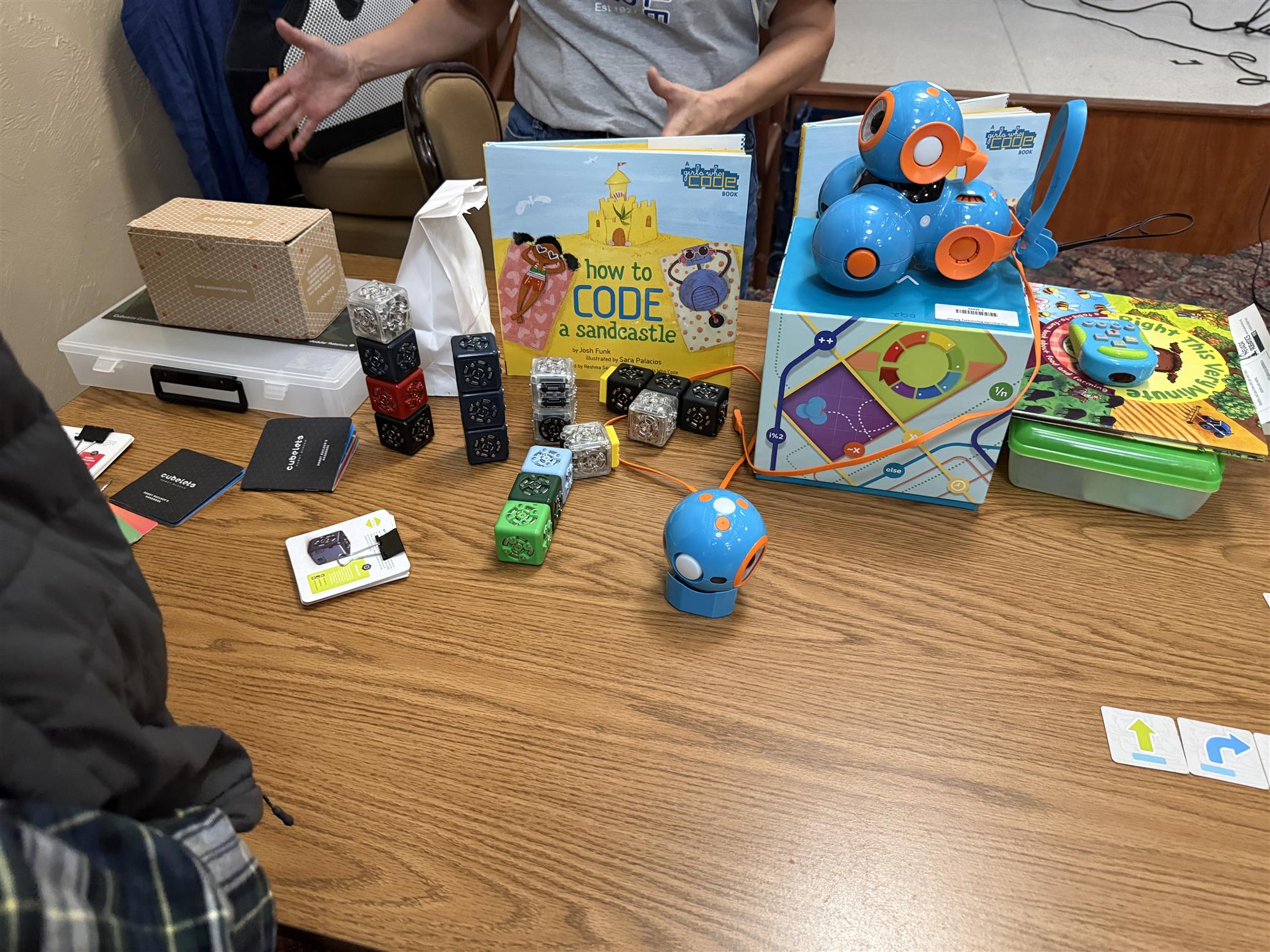
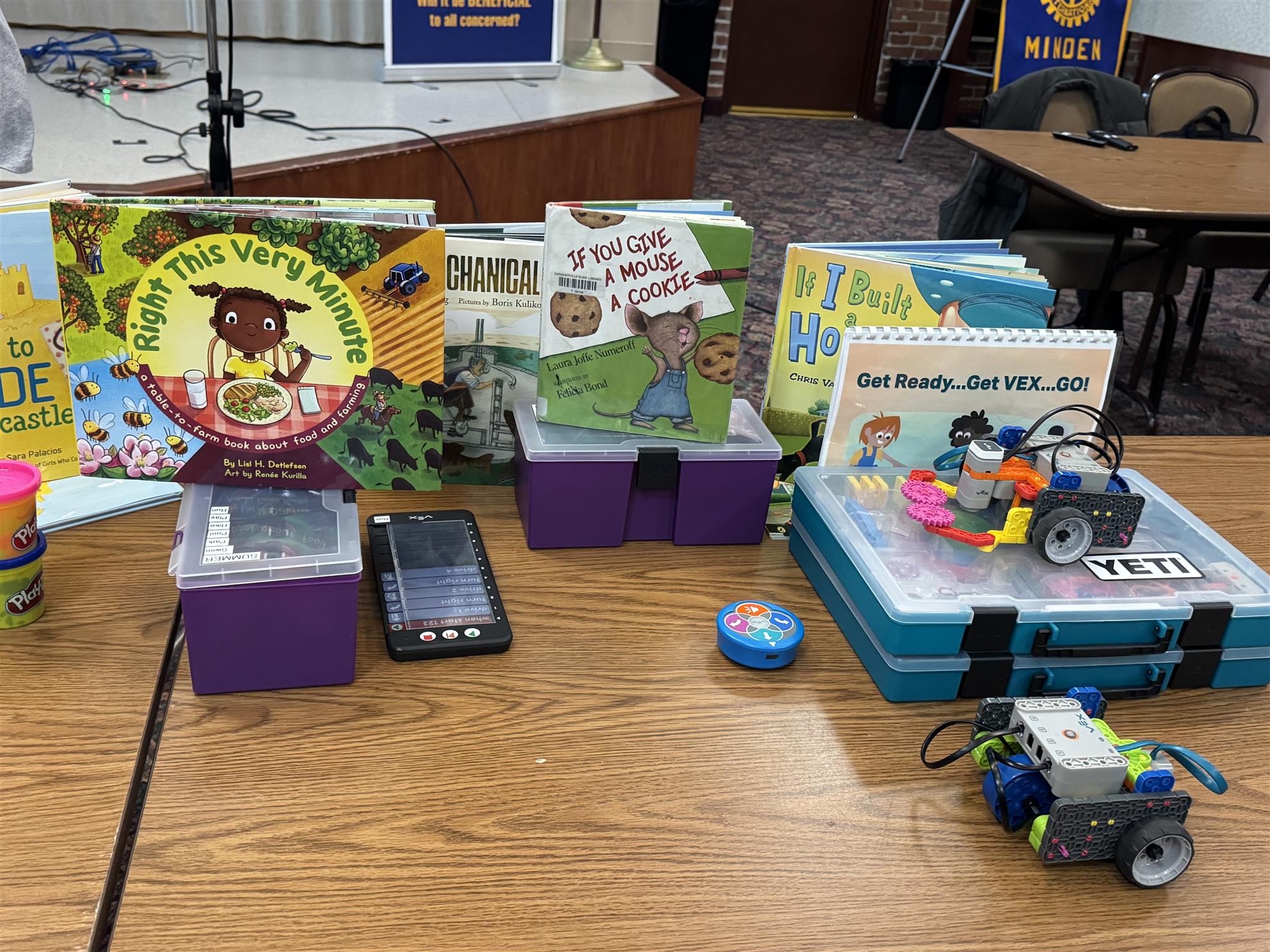
Today's speaker was Vivian Michalik, a second grade teacher at Gardnerville Elementary School (GES), as well as the school’s STEM coordinator and after school STEM Club leader. She holds a Nevada STEM endorsement for K-8 teachers. The Tahoe/Douglas Elks Lodge named her its 2025 Citizen of the Year in recognition of her leadership in youth STEM education. Vivian talked about STEM at GES and displayed some of the students’ robotics kits.
STEM is an acronym for Science, Technology, Engineering and Mathematics.
Vivian mentioned studies suggesting that if young children, especially girls, aren't encouraged to get excited about STEM or feel comfortable with it at an early age, they may reach middle school believing these subjects aren't for them.
She mentioned one STEM profession—engineering—and how the word itself can intimidate students. Her goal is to teach children at a young age that being an engineer simply means helping the world in some way. That might mean working with cars or developing accessibility devices for people with medical conditions or disabilities.
Robotics is just one small part of STEM, but Vivian emphasizes it in her program. Robotics activities are engaging for all students, especially those who struggle academically with literacy or math, have had limited exposure to technology, or face challenges outside the school setting.
The school children love to touch and play with robots. Robotics makes learning skills such as reading, writing, and math much more approachable. The robots come in various kits, each designed to address a different learning objective and grade level—even as early as kindergarten. Each kit includes a book. Children learn that before they can play with the robots, they must read the book or listen to a read-aloud that introduces the robot and explains how to program and use it.
Funding for the STEM program comes from several sources. The Desert Research Institute provides teacher training, free books and materials, and, at times, stipends. Local organizations also generously support the program. With funding from last year's Rotary grant, Vivian was able to host a STEM week.
Vivian extended an open invitation to the audience to visit her classroom and see firsthand how Rotary’s partnership with the community makes a positive difference. She runs the STEM club once a week, although she is on a leave of absence until January, and can always use extra hands to help out.
Anyone interested can become an approved volunteer by completing a volunteer packet. No STEM expertise is required. Vivian herself had no coding experience when she first got involved in STEM, but she learned along the way. Children learn so quickly that they can help, too. Vivian sometimes invites second-graders to assist with activities for her younger students.
Following her presentation, Vivian demonstrated several robotic kits she had brought with her and answered questions from the audience.