Rotary International is considering a project to address membership, public image, communication, leadership, and fundraising challenges to help define a more sustainable future for Rotary.
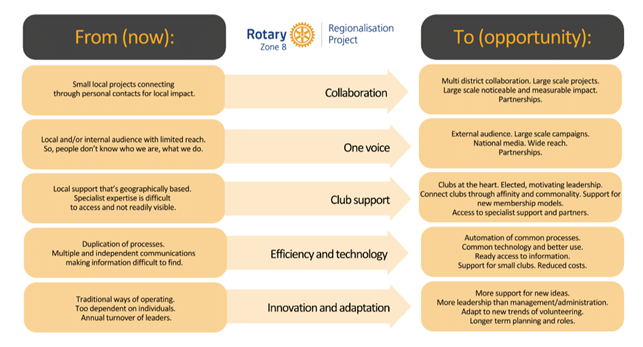
The challenges we face are ageing and declining membership; difficulty attracting and retaining members; lack of public understanding of who we are and what we do; complex and inefficient structure and ineffective use of technology.
Our region, or Zone 8, which includes Australia, New Zealand, and the Pacific Islands, has been selected as one of two potential regions from across the globe to pilot a regional approach to governance. It is important that our fellow Rotarians, are consulted throughout this process. In fact, the project cannot proceed without the support of members and clubs.
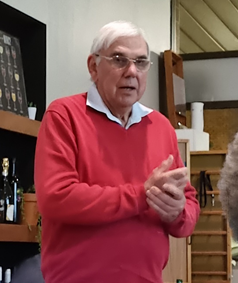
Past President stepped back in time (if only a couple of months)
and became the Acting President for the night.
A local Regionalisation team made up of Rotarians from our zone has identified five key project objectives:
- Support clubs to engage members, volunteers, and communities
- Create new attractive leadership roles and development opportunities
- Build a stronger unified Rotary brand
- Encourage partnerships
- Improve efficiencies and reduce duplication.
To help achieve these objectives, the project seeks to develop and test a streamlined governance approach to:
- Allow clubs sharing geography, culture, and language to organise in ways that suit them.
- Eliminate duplication and remove layers of hierarchy to make Rotary more responsive and cost effective.
- Bring together the best resources from across the region and make them easily accessible to every club.
- Improve communication effectiveness to enhance club and member engagement.
- Grow membership through new club types, flexibility, and partnership options reflecting our diversity.
- Attract more community, corporate, and government sector support by communicating with one voice.
- Enhance leadership and personal development activities to better suit our modern world.
- Foster more diverse perspectives in decision making.
- Reduce the burden of administrative responsibilities placed upon leaders.
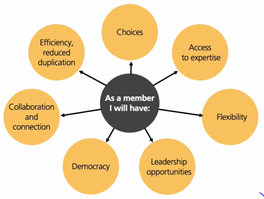
What does this mean for members?
The overarching aim of this project is to provide better and more direct support to Rotary and Rotaract clubs through a less layered and more devolved contemporary approach.
In addition to potentially releasing members time for humanitarian service by reducing administrative duplication, any new structure must foster more vibrant club environments and provide doable and attractive roles accessible to all potential Rotary leaders.
What is proposed?
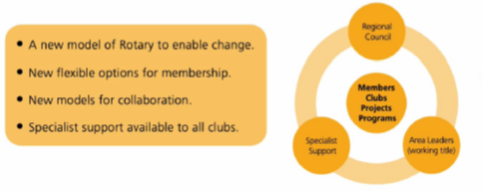
To meet future challenges, it is believed we need an approach that recognises the central role of members, clubs, projects, and programs relative to impact, reach and engagement. An approach that works with groups of clubs or other collaboration configurations based on affinity, modern volunteering, and leadership expectations.
Changing volunteer needs and ageing demographics demand new opportunities for innovation and collaboration in the ways we serve our communities, enjoy fellowship, engage participants, develop leaders, and grow Rotary.
The time has come to address some of our most persistent challenges in ways that are more impactful, relevant, and attractive to future generations who share our passion for service and leadership. We must
do so whilst enhancing what is great about Rotary.
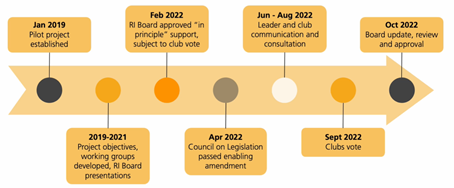
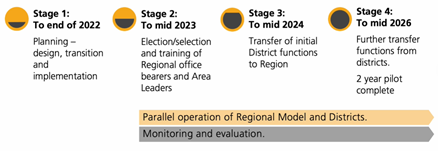
Zone 8 Regionalisation milestones
Principles of a regional structure:
- Democratically elected Regional Council with supporting committees and area leaders.
- Elected Area leaders for 10-25 clubs.
- Any Rotarian and Rotaractor can nominate self or others for all roles.
- Representation is important – geography, gender, etc.
- Best resources from Zone 8 to support every club.
- 2 – 4 year terms.
Looking Ahead
The vote rules are one vote per club and any club abstaining from voting is a NO vote. Two thirds majority of clubs in each district voting YES is require. Clubs vote first, then district.
The vote options are:
Yes – To explore, develop and test alternative ways of operating
Or
No – To not participate in the pilot.
Committee Mode
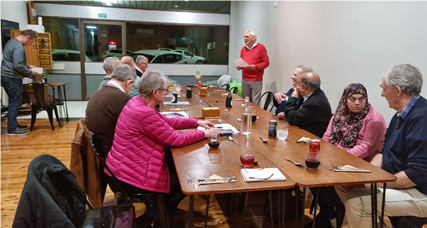
At the last Rotary meeting at Hungry Fox on 4 August 2022 the club moved into a committee mode.
Moved:
That the Rotary Club of Leeton support the move to adopt the Regionalisation Pilot Program
Moved - Brian Munro Seconded - Greg Brown Passed – unanimously
********************************

 Graeme’s Something to Smile About
 Director’s Roundup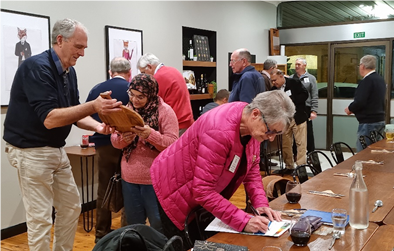



 Stupid Silly Joke