In The Chair: President Peter Draper
Members: 10
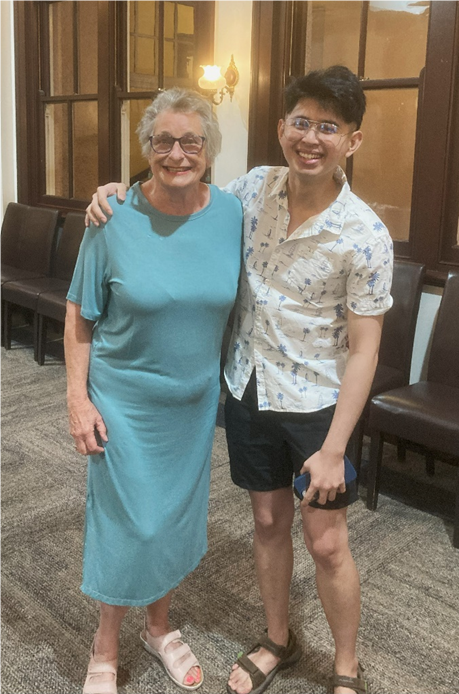
Guests Fay Abdul (Guest Speaker)
Exchange Student Javian Niewöhner
********************************
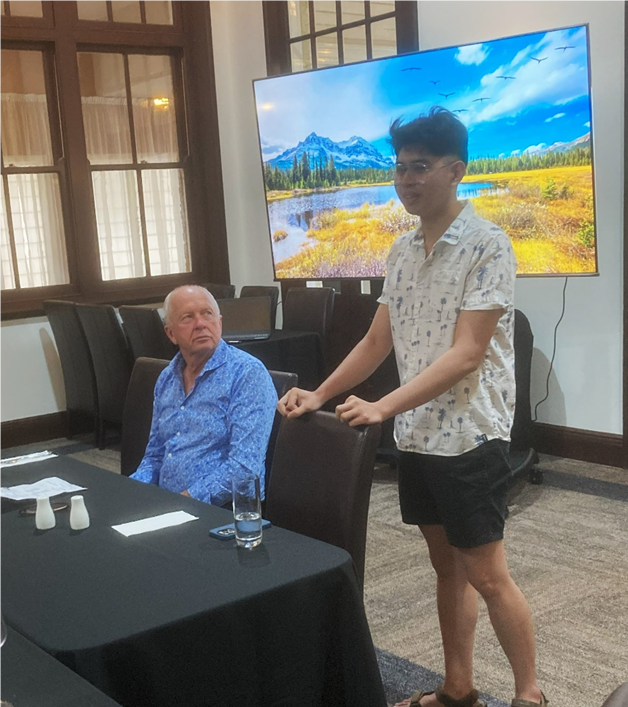
Fay Abdul (Leeton Borneo Association Inc.) – The Kaamatan Festival (Sabah)
Fay was introduced to the club by President Peter. He has been in Leeton for 5 years after he came to to town to visit his aunt who was a resident of the town and has stayed here since. He was asked by Nicholas to tell us a little about the Kaamatan Festival in Sabah and its offshoot in Leeton (Yanco).
Kaamantan is a harvest festival held every year in the month of May. Celebrations last for all of May but there is a public holiday on 30th and 31st May in Sabah. The history of Kaamatan revolves around the Kadazan legend of Huminodun. According to this legend, Huminodun was the daughter of Kinoingan (God) and Suminundu. She was an ever virtuous maiden well beyond her years with resplendent beauty to accompany her wisdom.
In the days of yore, Kinoingan and his people on earth were at peace. However, Ponompulan, Kinoingan’s son, rebelled against his father and went on to corrupt the minds of humans on earth thus breaking the peace that had been forged between Kinoingan and his people. The enraged Kinoingan banished Ponompulan and cast him to Kolungkud or the underworld. For mankind, Kinoingan punished them for their sinful ways by sending out seven plagues. The seventh and final plague was a severe drought and famine to destroy humans on earth.
Seeing the massive starvation that had descended upon Kinoingan’s people, (according to Fay: the king was so angry he also sacrificed his virtuous daughter but her mother intervened to ensure that her sacrifice was not in vain.) Huminodun was offered, or offered to sacrifice herself so that parts of her body would be transformed into food for the people. It is said that through Huminodun’s divine sacrifice, her flesh gave rise to rice; her head, coconuts; her bones, tapioca; her toes, ginger; her teeth, maize; her knees, yam while the other parts of her body became a variety of edible plants. In that very year, thanks to Huminodun’s sacrifice, the harvest was bountiful like never before.
From there onwards, it came to pass in the Kadazan language that Huminodun equates to sacrifice. The transfigured sacrifice of Huminodun is embodied as the spirit of rice or Bambaazon. Kadazans celebrate Kaamatan annually to pay homage to Bambaazon through various ceremonies to ensure bountiful harvests in years to come. This spirit is believed to be responsible for the growth and well-being of the rice plant; protecting it from famine and natural hazards such as pests and floods. Though, Bambaazon must be kept happy, well-fed and in a good mood. With this, various rituals, ceremonies and celebrations are to be performed.
Today, the festival encompases many events including:
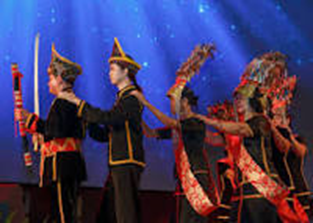
Traditional Music and Dances
To the multi-sounds and tempo of traditional music, multi-ethnic cultural dances are performed to show guests and visitors the rhythm of local life.
Traditional Sports
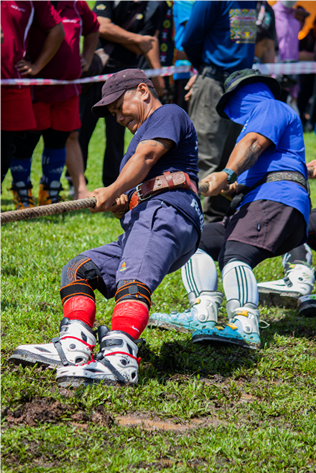
Outside the main hall, traditional sports are held such as: Mipulos (Arm Wrestling),Mipadsa (Knuckle Wrestling), Monopuk (Blow Piping), Momolositik (Catapulting) and Migayat Lukug (Tug of War).
Kaamatan multi-ethnic Culinary and Beverage Delights
For those who would rather have Kaamatan as a feast day, numerous varieties of unique traditional food and beverages await.
Sugandoi Kaamatan Serenades
It has been part of the tradition of the Kadazandusuns during harvesting time to trade riddles and while celebrating Kaamatan Festival to trade songs of wit, poems and innuendos as well as songs of praise and thanksgiving to Huminodun the Sacrificed Daughter of God. It is from this traditional practice that the current Kaamatan Sugandoi singing contest is now an important part of the Kaamatan Festival Program from village, district and to the State Level Celebration.
Huminodun’s Beatification in Unduk Ngadau
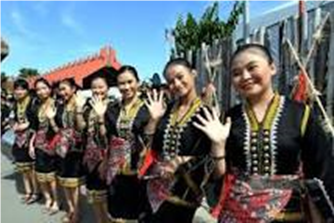
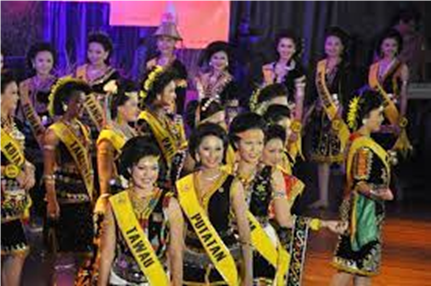
The Unduk Ngadau Queen selection is never meant to be just another of those Beauty Queen Contests. Beyond physical beauty, concealed in piety and attired gracefully in full traditional costumes of her ethnic community, the Unduk Ngadau in her most natural self must portray the best virtues and potentials to resemble beatified Huminodun, the Kadazandusun Queen of love and compassion, the ultimate symbol of perfection and purity of divinity.
Fay and a group of like -minded people formed the Leeton Borneo association to celebrate their culture. This year, on 31st May, they celebrated Kaamatan at Yanco Hall for the first time. This was a successful event and they hope to repeat it again next year.
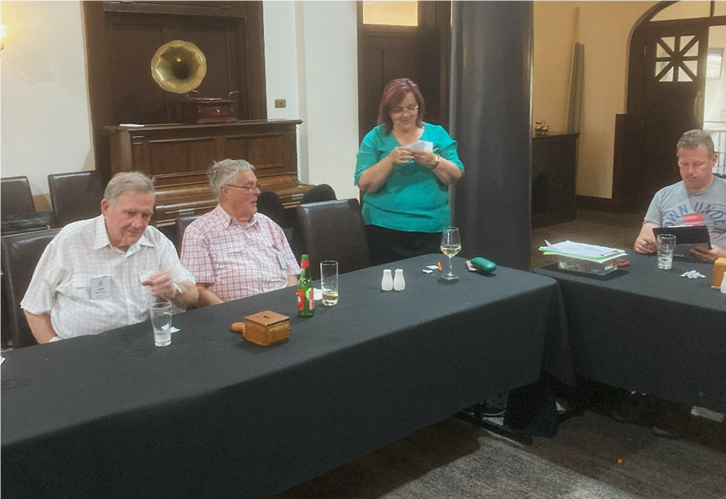
There was much discussion following Fay’s talk and it turned out that he and Jennifer had much to discuss about shared interests in the Malay Culture.