banner
 
 
Rotary Club of Ann Arbor North 
Information.
 
Meeting location is at Dixboro United Methodist Church at 5221 Church Street Ann Arbor, MI 48105 View Map.
 
Go to the Upcoming Events section on this website,
for the meeting you want to attend, to find the
Zoom link.
 
      Day of the Month       Event     Time
First Monday of the Month Board Meeting 07:00 PM
Second Thursday of the Month Meeting with Program 12:00 PM
Third Thursday of the Month No Meeting  
Fourth Thursday of the Month Meeting with Program 12:00 PM
If Month has Five Weeks The first week will not have a meeting  
 
 
E-mail Address: rotaryclubaan@gmail.com
 
Phone Number: (734)224-4130
 
          Facebook- RCAAN        Youtube- RCAAN
 
Upcoming Events
Zoom Board Meeting & Club Assembly
Zoom
Jun 05, 2023
7:00 PM – 8:00 PM
 
RCAAN Luncheon: Jan Turosky, MI Lighthouses
Dixboro United Methodist Church
Jun 08, 2023
12:00 PM – 1:15 PM
 
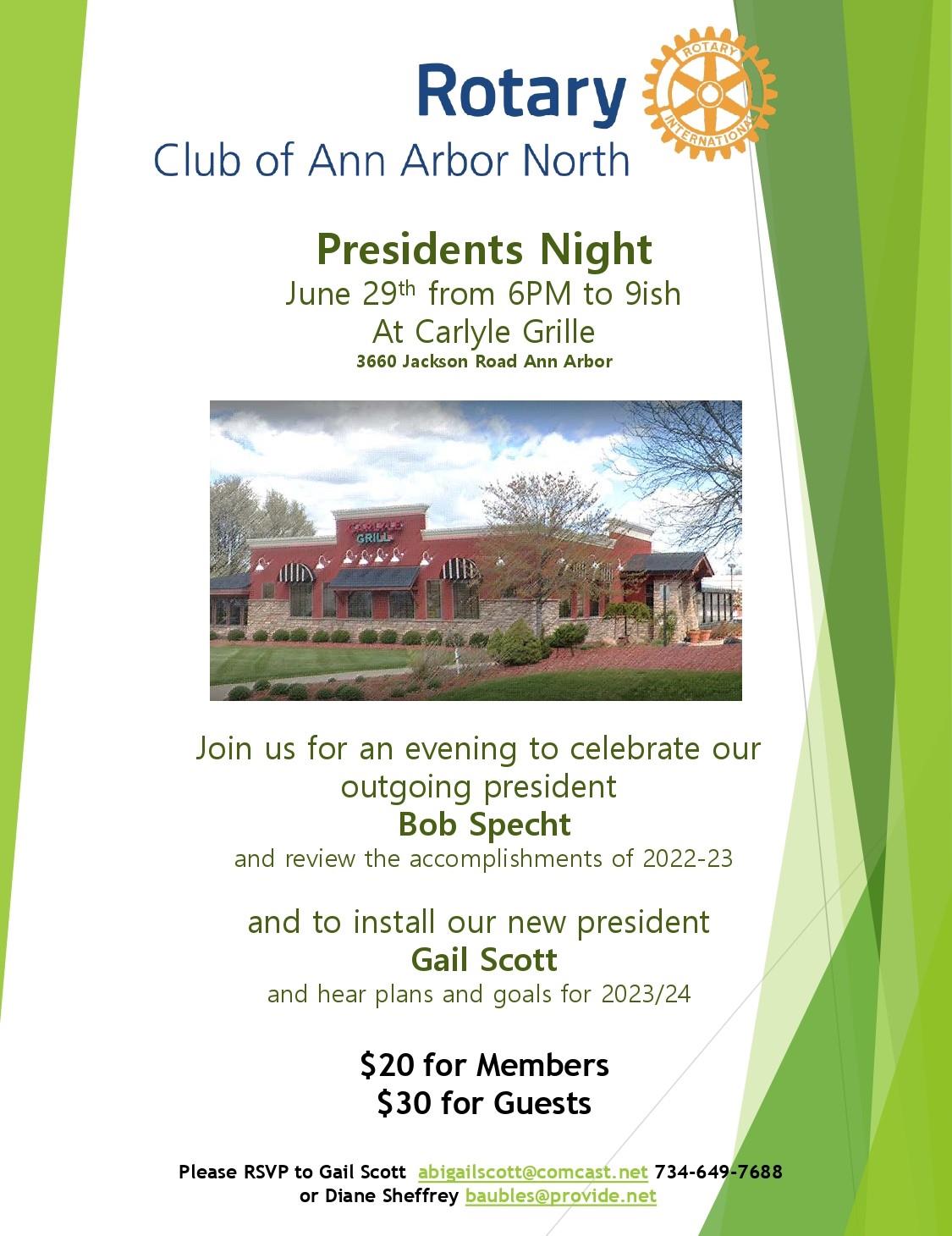
President's Night at Carlyle Restaurant Ann Arbor
Carlyle Restaurant
Jun 29, 2023
6:00 PM – 9:00 PM
 
Zoom Board Meeting & Club Assembly
Zoom
Jul 03, 2023
7:00 PM – 8:00 PM
 
RCAAN Luncheon
Dixboro United Methodist Church
Jul 13, 2023
12:00 PM – 1:15 PM
 
Meet the Governor: Collyer Smith
Michigan Stadium
Jul 13, 2023
4:00 PM – 7:00 PM
 
RCAAN Luncheon
Dixboro United Methodist Church
Jul 27, 2023
12:00 PM – 1:15 PM
 
Zoom Board Meeting & Club Assembly
Zoom
Aug 07, 2023
7:00 PM – 8:00 PM
 
RCAAN Luncheon
Dixboro United Methodist Church
Aug 10, 2023
12:00 PM – 1:15 PM
 
RCAAN Luncheon
Dixboro United Methodist Church
Aug 24, 2023
12:00 PM – 1:15 PM
 
View entire list
Upcoming Events In Calendar View
 
Add Events To Your Calendar
 
Keep up to date with Rotary Club Ann Arbor North Events, by adding it to your computers calendar.
 
Click on your calendar software to see instructions:
Use this URL, http://portal.clubrunner.ca/659/calendar-feed with your calendar software.
Stories
President's Night is June 29th.
 
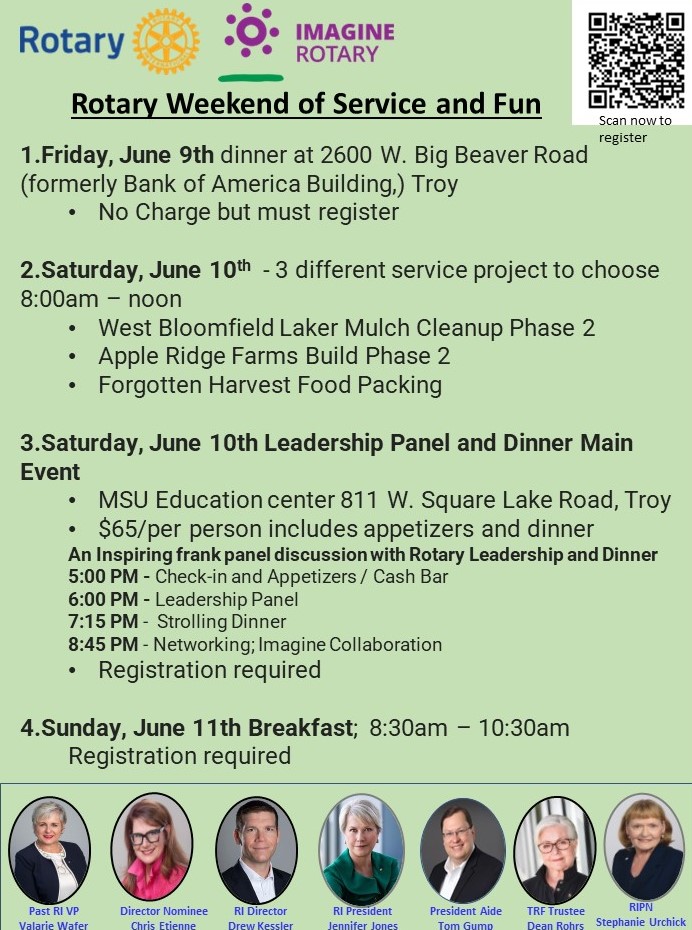
Day of Service and Fellowship with Rotary International Leadership.

Register Now for a great Day of Service and Fellowship with Rotary International Leadership

RI President Jennifer Jones, RI President- Elect Stephanie Urchick,  Rotary Foundation Trustee Dean Rohrs, Rotary VP Valarie Wafer, Rotary Aide to President-Elect Tom Gump, Zones 28 & 32 Director Drew Kessler and Rotary Zones 28 & 32 Director-Elect Chris Etienne will all be joining in person for a day of service!

Its going to be a fabulous weekend and we'll have so much personal time with each of the RI leaders. The collaboration begins on Friday evening June 9th at 5:30 with a dinner; Then on June 10th, we start the morning with 3 different service projects, culminating in the evening with a Leadership in Rotary panel and dinner. Finally, on Sunday, June 11th, we will have breakfast together and bid farewell. Each event registration is separate, We need an accurate count for each section.

Registration Links for each event:

Our District 6380 has chosen 3 projects you can participate in, depending on your interest. Each of the Rotary Leadership will be distributed among the projects ; All the projects are very much needed and require a lot of people to help complete them. Each of the projects has a separate registration link, please chose only 1 registration per person as this will help us in planning the scope of the work for that day.

Service Project Registration - Choose ONE

Saturday, June 10th Service Projects with our Leadership 9:00am - Noon

  1. West Bloomfield Laker Mulch Cleanup; Phase 2 Registration: https://rotary6380.org/event/1b-wb-hills-tree-planting-phase-2/

  2.  Install log steps into the hill at the end of the trail where we stopped in phase 1.

  3. Plant two BUR OAK and two TULIP POPLAR. Locations for planting will be decided by WBHS Earth Club.

  4.  Continue wood chipping the trail down the hill and along the lakeside trail as permitted by West Bloomfield Township Environmental Dept.

  5. Volunteers will be asked to bring a wheelbarrow and rake

Apple Ridge Farms Build Phase 2 Registration: https://rotary6380.org/event/1a-apple-ridge-garden-cleanup/

  • We need 100+ people to build and paint raised garden beds, add signs to the Underground Railroad Garden, <

  • install other signage, build a compost bin and plant some cold crops.

  • Prepare the site for further development.

  • Closed-toe shoes, Long pants, Long sleeve shirts required

Forgotten Harvest Food Packing Registration: https://rotary6380.org/event/forgotten-harvest-food-packing-oak-park/

  • Forgotten Harvest Warehouse Food Packing for the needy - 50 people maximum and you MUST register.15000 Eight Mile Road, Oak Park, MI 48237 

Any Questions can be directed to Roma Murthy (romamurthy6380@gmail.com)

Event Flyers:


Click Read More for RI President Jennifer Jones video invite.


Read more...
Come Out To Celebrate An Ann Arbor Rotarian Becoming A District Governor.
I am looking forward to serving you in our new Rotary year together!
 
To "kick" things off- we will have our Meet the Governor event at the Jack Roth Pavilion (at the University of Michigan stadium in Ann Arbor, Michigan, overlooking 111,000 seats. We will get a chance to tour the locker room, and get out onto the field. We shall kick field goals for Polio!
 
Bring guests, your kids, grandkids, Interact and Rotaract members (that are in town) for fun! 
 
Thursday,  July 13th from 4:00-7:00 PM- tailgate food will be there!
 
CLICK HERE to register!
 
Collyer A. Smith
 
 
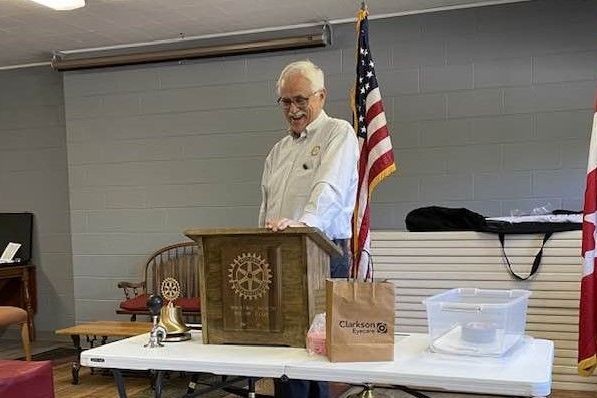
Jeff Lichty Talked About The Rotary Foundation At The RCAAN Luncheon on May 25th.
At The Rotary Club of Ann Arbor North Luncheon on May 25, 2023, Jeff Lichty talked at the Rotary Foundation.
 
The Rotary Foundation (TRF) taps into a global network of Rotarians who invest their time, money and expertise into priorities that align with our seven areas of focus and Foundation grants empower Rotarians to approach problems such as disease, poverty, illiteracy, and malnutrition with sustainable solutions that leave a lasting impact.
 
The Rotary Foundation is organized as a public charity operated exclusively for charitable purposes and governed by a Board of Trustees. The operations of Rotary International, a member organization, are overseen by its Board of Directors.
 
The headquarters of Rotary International and The Rotary Foundation are in Evanston, Illinois, USA. We have associate foundations in Australia, Brazil, Canada, Germany, India, Japan, Korea, and the United Kingdom.
 
The Mission of The Rotary Foundations is that The Rotary Foundation helps Rotary members to advance world understanding, goodwill, and peace by improving health, providing quality education, improving the environment, and alleviating poverty.

The Rotary Foundation is known throughout the world for its exceptional financial management and for the efficient use of its donations. Every year since 2008, TRF has received the top four-star rating from Charity Navigator, the world’s largest and most trusted charity evaluator. This rating is a standard achieved by only one percent of charities for judicious care of donors’ money.
 
The Foundation was created in 1917 by Rotary International’s sixth president, Arch Klumph. It was established as an endowment fund to provide an ongoing and sustainable income for Rotary to allow us to ‘do good in the world’. It has grown from an initial contribution of US$26.50 from the Rotary Club of Kansas City to more than US$1 billion. It provides grants of over $1 million per day to support projects led by Rotarians. Today, TRF has one of the largest and most prestigious international fellowship programs in the world.
 
Since it was founded, it has spent more than US$4 billion on life-changing, sustainable projects. TRF’s mission is to enable Rotarians ‘to advance world understanding, goodwill, and peace through the improvement of health, the support of education, and the alleviation of poverty’.
 
The Rotary Foundation has special qualities because it is an enabling Foundation. It is a not-for-profit organization that is supported solely by donations from its members and friends. TRF asks us to donate, just like other charities, but it also asks us to get involved and utilize the funds. Our Foundation is able to achieve its mission through the generous contributions and the active participation of its members.
 
A major recipient of donations to TRF is the Annual Fund. When we donate, half our contributions are directed to the District Fund and the other half to the World Fund. Both help support and enable Rotary projects to become a reality through global and district grants.
 
The Types of Grants given from The Rotary Foundation:
  • District grants fund small-scale, short-term activities that address needs in your community and communities abroad.
  • Global grants support large international activities with sustainable, measurable outcomes in Rotary's areas of focus.
  • Disaster response grants support relief and recovery efforts in areas that have been affected by natural disaster.
  • Programs of scale grants fund intentional effort by Rotary members, in partnership with others, to expand proven program models within our areas of focus in order to benefit more people and in more places and foster lasting change.
Gail Scott lastly reminded The Club that President's Night is June 29th at Carlyle Restaurant 3600 Jackson Road Ann Arbor MI 48103.
 
 
Random Acts of Kindness.
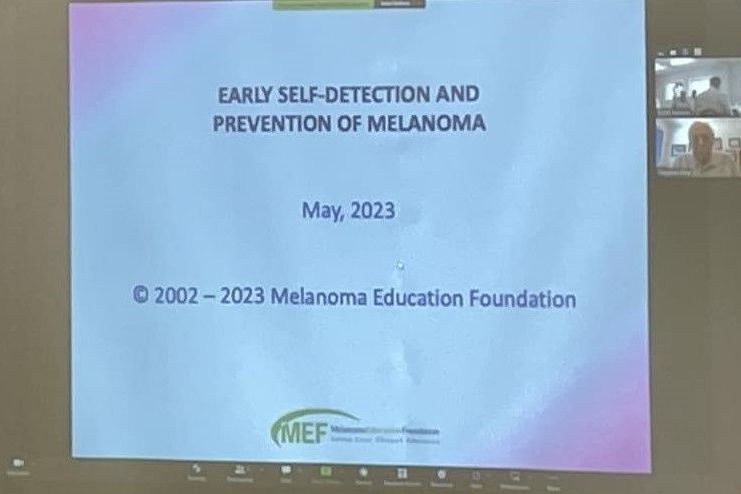
Steve Fine Talked About Melanoma At The Rotary Club of Ann Arbor North Luncheon.
At the Rotary Club of Ann Arbor North Luncheon on May 11, 2023, Steve Fine from Melanoma Education Foundation (Second website for MEF) talked about Melanoma.
 
Steve said, "melanoma is a common but serious skin cancer which, if not removed early while it is thin, spreads internally and is usually fatal. It is often ignored until too late because, in the early stages, it may look harmless and cause no discomfort. Many people don't realize that something small on their skin can kill them if not treated promptly."
 
Although it is uncommon in children under 10, melanoma occurs in every age group after puberty. It is the most common type of cancer in the 25 to 29 age group and second only to breast cancer in women ages 20 to 39.
 
Overall, melanoma is the fifth most common cancer in males and sixth in females. The US incidence of melanoma is nearly triple that of new HIV infections and is increasing at an epidemic rate; 196,060 new cases were predicted for 2020.
 
Most new melanoma patients have no family history of the disease; it can strike anyone regardless of health, physical condition, or skin complexion. On the average, there is a melanoma death in the US every 56 minutes.
 
The good news is that melanoma is easy to detect yourself at an early stage while it is thin and is curable by simple, painless removal in an office setting. All it takes is a ten minute monthly skin check. This site shows you how to check your skin, what to look for, and how to decrease your risk of melanoma.
 
The first step in learning about melanoma is to learn about moles, common pigmented skin lesions that can be flat or raised.
 
There are two types of moles: ordinary and atypical (the medical term for atypical moles is dysplastic nevi). 10 to 15 percent of the white population have atypical moles.
 
Ordinary Moles have all of these features: 
 
  • Round or oval shape
  • Sharp, even borders with skin
  • Uniform color (usually brown)
  • Less than 1/4 inch wide
Atypical Moles often have one or more of these features:
 
  • Irregular shape
  • Uneven and/or fuzzy borders with skin
  • Two or more shades of brown or pink
  • 1/4 inch wide or more
  • Cauliflower or smooth surface
  • Flat edges with "fried egg" center if  mole is raised
In most cases, melanoma is easy to self-detect at an early stage while it is curable by simple surgical excision. Although the visual appearance of a skin lesion (a growth or mark) is often an indication of melanoma, you cannot always rely on this alone. You should also be aware of the history of your skin lesions—any changes that occur in them, as well the onset of any new ones. The only way to develop this awareness is by regular self-examination of your skin.
 
Warning signs of Melanoma are any of these should prompt an immediate visit to a dermatologist or plastic surgeon: 
 
  • Any change in a mole, blemish, freckle, birthmark, or pigmented area
  • A new mole or freckle that appears out of the blue or is growing rapidly, especially if you don't have many moles, or the new mole or freckle looks different from those you do have
  • A mole or other growth that has any of the ABCD properties or all of the EFG properties
  • A change in surface texture or in the way a mole feels to the touch
  • A new "freckle" that is dark, dry, or scaly
  • A pigmented area or splotch that is new or that you don't remember seeing before
  • A new spot that is black, even if very small
  • A mole or other spot that looks or behaves differently than those around it, even if it seems otherwise normal
  • A mole or other spot that itches and/or bleeds
  • Redness, other color, or shadow extending into the surrounding skin
There are two types of melanoma: radial and nodular. Radial melanomas are easier to self-detect because they grow in diameter near the skin surface before growing downward through the skin. Radial melanomas usually have two or more of the ABCD properties.
 
About 20 percent of melanomas begin the dangerous vertical growth phase with little or no radial growth first. For these nodular melanomas the ABCD properties do not apply; instead they have three combined EFG properties.
 
E = ELEVATED-  Early elevation above the skin surface
 
F = FIRM- Firm to the touch, not flabby
 
G = GROWING- Continues growing more than two to three weeks
 
Any of the following warning signs may indicate a nodular melanoma: 
 
  • The start of a new bump in a mole, freckle, blemish, or birthmark.
  • The start of a thickness increase in a previously flat or slightly raised mole.
  • In otherwise clear skin, the beginning of a bump that looks like a blood blister, bubble, or pimple that continues to grow after two to three weeks, especially if you don't ordinarily have pimples and haven't injured yourself at the site of the blood blister.
Although a nodular melanoma can arise in a pre-existing mole, it is more common for one to develop spontaneously from normal skin, as in the four photos above. All of these were fatal. The colors of nodular melanomas are usually black, blue-black, dark brown, or brown-red. However, occasionally they are red (third photo from left), pink, grey, flesh-tone, or light to medium brown (far right photo, from the ankle of a 12-year-old boy). Nodular melanomas are typically dome-shaped and lacking in the ABCD properties, making visual diagnosis more difficult than with radial melanomas.
 
How Much Time Do You Have to Act?
 
  • Nodular melanomas can spread internally in as little as three months.
  • Most radial melanomas can spread internally within 6 to 18 months from the first noticeable change of a pre-existing mole or appearance of a new mole.
  • Radial melanomas that develop from age or liver spots (which typically occur in people 70 or older) can take as long as 10 to 15 years to spread internally.
Steve described to the club "how to find Melanoma."
 
What you'll need:
 
  • Flashlight
  • Two small chairs or stools
  • Hand mirror with a long handle
  • Hairbrush or blow dryer for checking your scalp
  • Large wall mirror, preferably full-length, in a well-lighted area
How to check:
  1. Facing the wall mirror, examine your face including lips, ears, and eyes. Use a flashlight to check inside your mouth, nostrils, and ears. Check your neck, shoulders, and upper chest. Women should also check under breasts.
  2. Using both mirrors, check behind your ears, neck, and upper back. While parting your hair with the blow dryer or brush, use both mirrors to check your scalp—front, back, and sides. Or have a partner or family member help.
  3. Check your abdomen, front and sides. Use the hand mirror to check your mid- to lower back carefully. (The back is the most common site of melanomas in males.) Use the hand mirror or both mirrors to check all areas of your buttocks and genitals, including hidden parts.
  4. Raise both of your arms and check all sides of your arms and hands, including between fingers and under fingernails. Then check under your arms and the sides of your upper body.
  5. Sitting on a small chair or stool, prop each leg in turn on the other chair or stool. Check all sides of your legs from ankles to thighs. Check your feet, including the tops, heels, soles, between toes, and under toenails. (Legs are the most common sites of melanomas in females.)
 
Although the risk of developing melanoma cannot be eliminated, it can be reduced by minimizing exposure to ultraviolet (UV) radiation from the sun and from tanning lamps, especially during childhood and adolescence. This combined with a complete self-skin exam once every month to detect early melanomas would drastically reduce the death rate from the disease.
 
The sun emits several types of radiation, and much of it reaches the earth's surface. In the above animation, the energy of the radiation increases from right to left. Warmth from the sun is due to infrared radiation, while the light and colors we perceive are due to visible radiation. Neither infrared nor visible radiation is harmful under ordinary circumstances. Moving toward the high energy part of the spectrum is ultraviolet radiation, a known carcinogen (cancer-causing agent). Both UVA and UVB radiation reach the earth's surface. Exposure to either increases your risk of melanoma and other skin cancers. UVC radiation and X-rays have even higher energies, but are absorbed by the atmosphere and never reach the earth's surface.
Steve said, "If you want a tan, the only safe option is to use a sunless bronzer. Sunless bronzers contain active ingredients that safely tan the dead outer layer of the skin without the damaging effects of ultraviolet radiation. Modern bronzing products produce tans that are indistinguishable from those resulting from unsafe UV exposure.
 
Spray booths are now available in many tanning salons and make the process of getting a safe, natural-looking tan quick and easy. There are also many sunless bronzers available for self-application. The key to getting a natural-looking tan without an orange color is to choose a product that is only slightly darker than your skin. Pretest a sample on an inconspicuous area of skin 24 hours in advance, then clean your skin and apply following product instructions.
 
Vitamin D is produced in the skin of all warm-blooded animals upon exposure to UVB radiation. There are several forms of Vitamin D; the form produced in skin is Vitamin D3, or Cholicalciferol.
 
The US daily recommended dose of Vitamin D is 600 International Units (IU) for individuals up to age 70 and 800 IU for those over 70.
 
For a white Caucasian in the Northern Hemisphere, sufficient Vitamin D3 is generated by incidental exposure to sunlight a few times per week in the summer, but not during winter. The maximum safe dose of Vitamin D3 is 4000 IU. Salmon, sardines, and tuna are rich in Vitamin D3. Milk and some orange juice brands contain added Vitamin D3. 
 
Unless you are at high risk for skin cancer, it isn't necessary to be fanatic about avoiding sun exposure. Options for reducing overexposure (tanning or burning) are listed below. Using a combination of options is generally more effective than relying on one alone.
 
Minimize Direct Exposure: 
 
  • Stay in the shade whenever possible.
  • Minimize sun exposure, especially during the peak intensity hours of 10:00 a.m. to 4:00 p.m.
  • Avoid intermittent or sudden exposure of normally covered skin to strong sunlight. (See examples of intermittent exposure.)
  • Protect infants from sun exposure to their skin and eyes until they are older than six months.
Sunscreen:
 
  • Routinely apply a waterproof sunblock or sunscreen of SPF 45 or higher when going outdoors.
  • Sun Protection Factor (SPF) is the time it would take for the first skin redness to occur with sunscreen divided by the time it would take without sunscreen. For example, if your skin normally begins to burn in five minutes without sunscreen, a properly applied* SPF 30 sunscreen will extend the time to 150 minutes (SPF 30 x 5 minutes = 150 minutes).
  • SPF ratings of sunscreens are based only on UVB protection, and although most modern sunscreens also include UVA-absorbing ingredients, there is no rating system that allows consumers to determine the degree of UVA protection. The best UVA-protecting sunscreens contain micronized zinc oxide and micronized titanium oxide. An added benefit of these ingredients is that they don't cause allergic reactions like certain organic additives may.
Sun Protective Clothing
 
When going outdoors, wear sun protective clothing, including UV-protective glasses and a wide-brim hat.
 
Ultraviolet Protection Factor (UPF) is a rating system similar to SPF, but for clothing. Some clothing is less protective than you may think. A typical T-shirt has a UPF of 5, not enough to prevent sun damage to your skin.
 
In hot weather, loose fitting, tightly woven fabrics offer good protection. Specialized sun-protective clothing is available from several retailers. Alternatively, a laundry additive called SunGuard makes ordinary clothing such as T-shirts much more UV-protective and is claimed to last through 20 washing cycles.
 
A wide-brim hat will protect your face, ears, and neck. Wraparound UV-protective sunglasses will protect your eyes. Glasses labeled as UV-protective do not not necessarily protect your eyes adequately or to the same extent. The darkness of the lens, color, or price is not an indicator of the degree of protection. Sunglasses that completely block both UVA and UVB will have one of these labels:
 
  • "UV 400"
  • "100% UV Protection"
  • "Meets ANSI UV Requirements"
Plastic lenses in prescription eyeglasses block 100 percent of UVB radiation and at least 90 percent of UVA radiation. Additional UV protective coatings on plastic lenses are unnecessary.
 
The nonprofit Melanoma Education began conducting free presentations on early self-detection of melanoma to Rotary clubs in June, 2022 and, since then, has conducted 115 30-minute Zoom presentations. The American Cancer Society predicts nearly 190,000 new cases in 2023; melanoma can strike anyone from preteen to elderly and is often fatal but, when found early, is permanently curable in a short outpatient visit without any need for follow-up chemo or radiation. For more information contact Steve by email.
Read more...
Kroger Community Rewards
 
Kroger Community Rewards 
ENROLL TODAY:
 
 
Rotary Club of Ann Arbor North Foundation earned for $44.95 for time period November 01, 2022-April 30, 2023. 12 households are registered for Ann Arbor North Foundation's Kroger Community Rewards.
 
Rotary Club of Ann Arbor North Foundation is registered in the Kroger Community Rewards Program. Sign up and start making money for The Rotary Club of Ann Arbor North Foundation.
 
***Rotary Club of Ann Arbor North Foundation Non-Profit Organization Account Number, is BD440.  ***
 
  • Click on Sign In/Register
  • Most participants are new online customers', so they must click on SIGN UP TODAY in the ‘New Customer?’ box.
  • Sign up for a Kroger Rewards Account by entering zip code, clicking on favorite store, entering your e-mail address and creating a password, agreeing to the terms and conditions
  • You will then get a message to check your e-mail in-box and click on the link within the body of the e-mail.
  • Click on My Account and use your e-mail address and password to proceed to the next step.
  • Click on Edit Kroger Community Rewards information and input your Kroger Plus card number.
  • Update or confirm your information.
  • Enter Non-Profit Organization Account number (#BD440) or name of organization (Rotary Club of Ann Arbor North Foundation), select organization from list and click on confirm.
  • To verify you are enrolled correctly, you will see your organization’s name on the right side of your information page.
 
Friendly Reminder: For The Foundation to continue receiving your donation through Kroger Community Rewards, you must re-enroll in the program every April.
 
Make it easier, after signing up, download the Kroger Mobile App:
 
Sign Up To Our Newsletter
 
 
Subscribe to our
E-Newsletter and stay
up to date on the latest
news and events.
 
Free Clubrunner Mobile App
App for RCAAN web page and more.
 
            
               Club Finder


About Our Club


Membership


Membership Resource Guide
 
 
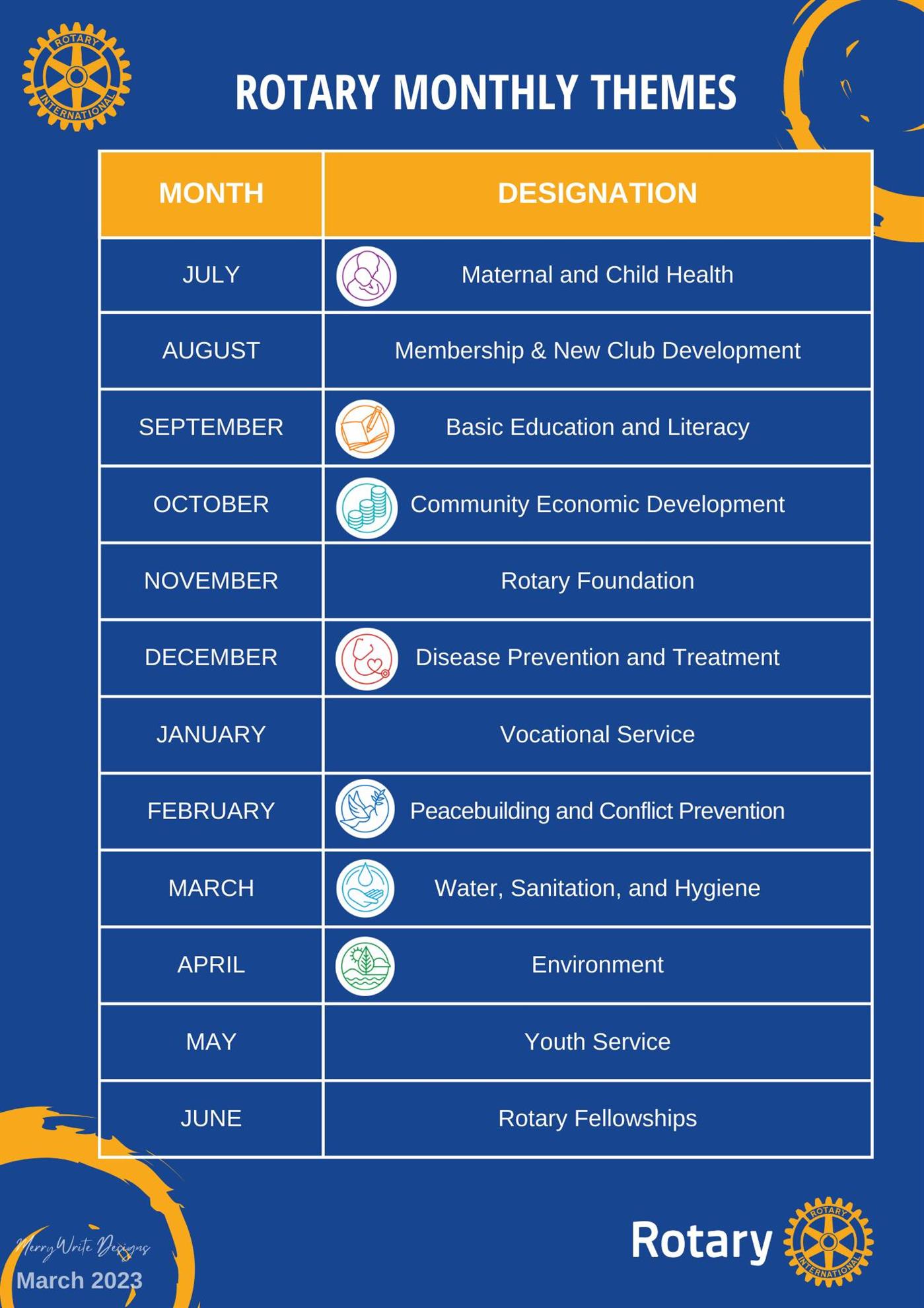
Monthly Rotary Theme Calendar 
For more information Click here.
Rotary Global Rewards
Click image to go to link.


Get Rotary Global Rewards Mobile App
 
 
Advertisement for Russell Hampton
Advertisement for ClubRunner
Advertisement for ClubRunner Mobile
Links
 
 
Rotary Club of Ann Arbor North Five Year Strategic Plan 2018-2023
 
 
Rotary Foundation
 
 
Rotary
 
 
Rotary Leadership Institute-Great Lakes
 
Rotary Club of Ann Arbor North By-Laws
 
Ann Arbor Area Rotary Clubs
 
Ann Arbor   Ann Arbor:
Wednesday, 12:00 p.m., Michigan Union 530 South State Street, Ann Arbor, MI 48109.
 
Ann Arbor North   Ann Arbor North: 
Second & Fourth Thursday's, 12:00 p.m., Dixboro United  Methodist Church, 5221 Church RoadAnn Arbor, MI 48105, In person and Zoom meeting is available.
 
Ann Arbor West   Ann Arbor West:
First & Third Monday's, 5:30 p.m., Absolute Title
 
Chelsea   Chelsea: 
Tuesday, 12:15 p.m., The Common Grill Restaurant
 
Dexter    Dexter: 
Thursday, 7:30 a.m., Fillmore
 
Milan   Milan: 
First & Third Tuesdays, 12:00 p.m., Milan School District Board Room,  Second & Fourth Tuesdays, 5:30 p.m., Milan American Legion Post
 
Saline   Saline: 
Thursday, 12:00 p.m., 109 West Michigan Ave., Saline, MI 48176 
 
Ypsilanti   Ypsilanti: 
Monday, 11:45 p.m., Meets on Zoom
 
 
Get The Club Finder Mobile App
 
Club Finder Club Finder 
QR Code For RCAAN Home Page
 
Meeting Day & Time: 2nd and 4th Thursday's of the month at 12:00 pm | Meeting Address: University Living of Ann Arbor, 2865 South Main Street, Ann Arbor, MI 48103 (View Map) |
Web Site: http://www.rcaan.org E-Mail: rotaryclubaan@gmail.com | Phone: (734)224-4130 |
 
       Facebook- RCAAN     YouTube- RCAAN