Rosie the Riveter was the star of a campaign aimed at recruiting female workers for defense industries during World War II, and she became perhaps the most iconic image of working women. American women entered the workforce in unprecedented numbers during the war, as widespread male enlistment left gaping holes in the industrial labor force. Between 1940 and 1945, the female percentage of the U.S. workforce increased from 27 percent to nearly 37 percent, and by 1945 nearly one out of every four married women worked outside the home. (Source: https://www.history.com/topics/world-war-ii/rosie-the-riveter)
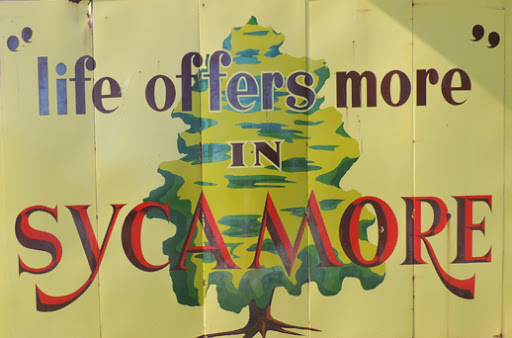
Outgoing Sycamore Mayor and Rotarian Curt Lang summarized his four years in office during a virtual presentation from Florida at this week’s meeting. Saying “I love Sycamore” and “it was a great four years”, Lang spoke about his accomplishments and the outlook for the city as COVID-19 restrictions begin to be relaxed.
Mayor Lang was particularly proud of linking youth to city events in hopes they follow their school years by staying in Sycamore and helping it prosper. Examples he gave were the student-organized Cinco de Mayo parade and having the high school FFA organization plant daffodils at the three entryway signs to the city.
Responding to the COVID-19 pandemic, Lang said the city worked hard to support local businesses. The City delayed license renewals and sales tax collections. More recently, the city decided to cut 2021 bar and restaurant license fees by one-half. Help for local businesses also come from a facade assistance program, Enterprise Zone incentive program that was expanded to include the school and park districts, and plans for a revised Tax Increment Finance District.
There were several projects occurring during his term in office highlighted by Lang. Included was revision to certain downtown parking lots in a partnership with the Auto Meter Company, He noted work is underway to extend the bike path from the Sycamore Forest Preserve (the former Evergreen Trailer Park) into the city limits, and vibrant activity that promises to keep downtown store fronts filled. Also, despite a statewide trend of population decline, he recited figures showing new home building permits in the city at 30 or more for all four years he has been in office.
Lang paid recognition to leadership of past and new leaders in Sycamore pointing out that within the past year there are new people in charge at the School District, the Park District, and the Library. He concluded by pointing out the 48-years of various public service by his immediate predecessor, Ken Mundy, who passed away in 2019. He said Mundy would always promote the city’s successes by referring to “Team Sycamore” and Lang said he expects that spirit to continue as his term of office concludes.
It’s easy to take access to water for granted. Your access to water relies on pipes, tanks, treatment systems, and more to get water to your door. Many people lack access to clean water, putting them at risk of dehydration and disease.
Every year, UN-Water coordinates the United Nations international observances on freshwater and sanitation to raise awareness about this important issue. Today, 22 March, is World Water Day and this year’s theme is valuing water. Water means different things to different people. Water can affect your home, family life, livelihood, wellbeing, and cultural practices. You can see conversations in real time about what water means to people around the world.
To support these efforts, the Water, Sanitation, and Hygiene Rotary Action Group can help you design and implement, or scale up, your club or district WASH project. Stay tuned to hear how WASHRAG can help you advance WASH priorities locally or abroad and to learn about their upcoming virtual summit. http://www.wash-rag.org
For this World Water Day, tell us your story and leave a comment on our blog. What does water mean to you? How has your club or district worked to provide clean water, health, or sanitation to an area of the world?
In 1991, Mount Pinatubo erupted after 600 years of inactivity and destroyed homes and farms, displacing many indigenous Aeta living in the highlands of central Luzon, Philippines.
While Aeta can refer to several different related ethnic groups, the Aeta here are descendants of Mag-Antsi, who following the eruption, were resettled by the government. Since then, many have returned to their ancestral lands to rebuild and reestablish their communities.
The roughly 43 families in Flora and 79 in nearby Kawayan make a living farming. While Aeta in other areas have been granted title to their ancestral land by the government, these Aeta have seen their lands shrink and their source of livelihood suffer as people from the lowlands staked competing claims during their resettlement years.
Like more than 10 million households in the Philippines, they lack sanitation facilities. The Philippines government has made progress in extending water to its 109 million inhabitants, but long-term plans to expand sanitation are running behind, especially in rural regions. This reduced access to personal hygiene exposes communities to diseases like diarrhea and cholera, and can lead to decreased school attendance, malnutrition, poor oral health, and fear of violence in women who must practice personal hygiene outdoors, according to a report by UNICEF.
March 23, 1775 – Patrick Henry helps ignite the American Revolution with a speech in Richmond, Virginia. He delivers these now famous words to those assembled, “…I know not what course others will take; but for me, give me liberty or give me death.”
March 25, 1911 – A raging fire erupted inside the Triangle Shirtwaist Company in New York City leading to the deaths of 123 women and 23 men. The tragedy spurred national attention to labor working conditions and resulted in legislation improving factory fire safety rules.
March 24, 1934 – The Philippine Islands are granted independence by President Franklin D. Roosevelt after nearly 50 years of U.S. control.
March 24, 1989 – One of the largest oil spills in U.S. history occurs when the oil tanker Exxon Valdez runs aground in Prince William Sound off the coast of Alaska. More than 11 million gallons of oil leak into the water stretching along 45 miles of shoreline.