Last week’s program was presented by Rotarian Dennis Brownlee. Dennis’ guest speaker was Dr.Amber Orman, Radiation Oncologist, Moffit Cancer Center. Dr. Orman spoke to the club about Prostate Cancer. Dr. Orman believes in treating not only the disease but also the whole patient. Prostate cancer is the most frequently diagnosed cancer in American men, and it is especially common in men over the age of 50. Nine out of 10 prostate cancers are classified as adenocarcinomas, which originate in the cells of the prostate gland. However, rare cancers may sometimes develop in the cells of the prostate ducts, the cells that line the urethra or the cells that cover the prostate gland. In most cases, prostate cancers are slow-growing and highly responsive to treatment. Depending on each patient’s specific needs the following treatment options are available; Surgery, Radiation therapy, Chemotherapy, Biological therapy. Although there is no known cause of prostate cancer, several risk factors have been established through years of dedicated research. For instance, men with a family history of the condition have been found to have a higher likelihood of developing it themselves. However, it’s important to remember that there’s no proven way to predict a person’s prostate cancer risk; many at-risk individuals never become ill, while others develop the disease without having a single risk factor. The known prostate cancer risk factors include: Being 65 years of age or older (risk increases with age, and very few men under the age of 45 are diagnosed with prostate cancer), Having a father, brother or son who has been diagnosed with prostate cancer, Eating a diet that’s high in red meat products and full-fat dairy products, and is low in fruits and vegetables. A prostate cancer screening may incorporate one or both of the following tests: 1. A digital rectal exam (DRE), which allows a physician to manually assess the size of the prostate and check for any abnormal lumps. Should an unusual growth be found, the physician may request a transrectal or transperitoneal biopsy to help determine the nature of the cells. 2. A prostate-specific antigen (PSA) test, which measures levels of PSA in the blood. Higher PSA levels may be indicative of prostate cancer, although elevated PSA levels may also result from other non-cancerous conditions. If a patient’s PSA test results are unusually high, a physician can order additional tests to determine the cause. The goal of these prostate cancer screening techniques is to identify potentially cancerous growths early on in their development, when the tumors are most responsive to treatment and the prognosis is most favorable. The prostate cancer survival rate is exceptionally high. Because the cancer grows very slowly and responds well to treatment, the majority of patients are able to lead long and healthy lives. Nearly 100 percent of patients live at least five years after their diagnosis, 99 percent of patients live at least 10 years after their diagnosis, 94 percent of patients live at least 15 years after their diagnosis. As with other cancers, prostate cancer has the most favorable survival rates when patients are diagnosed early. -submitted by Mike Arndt
Club News
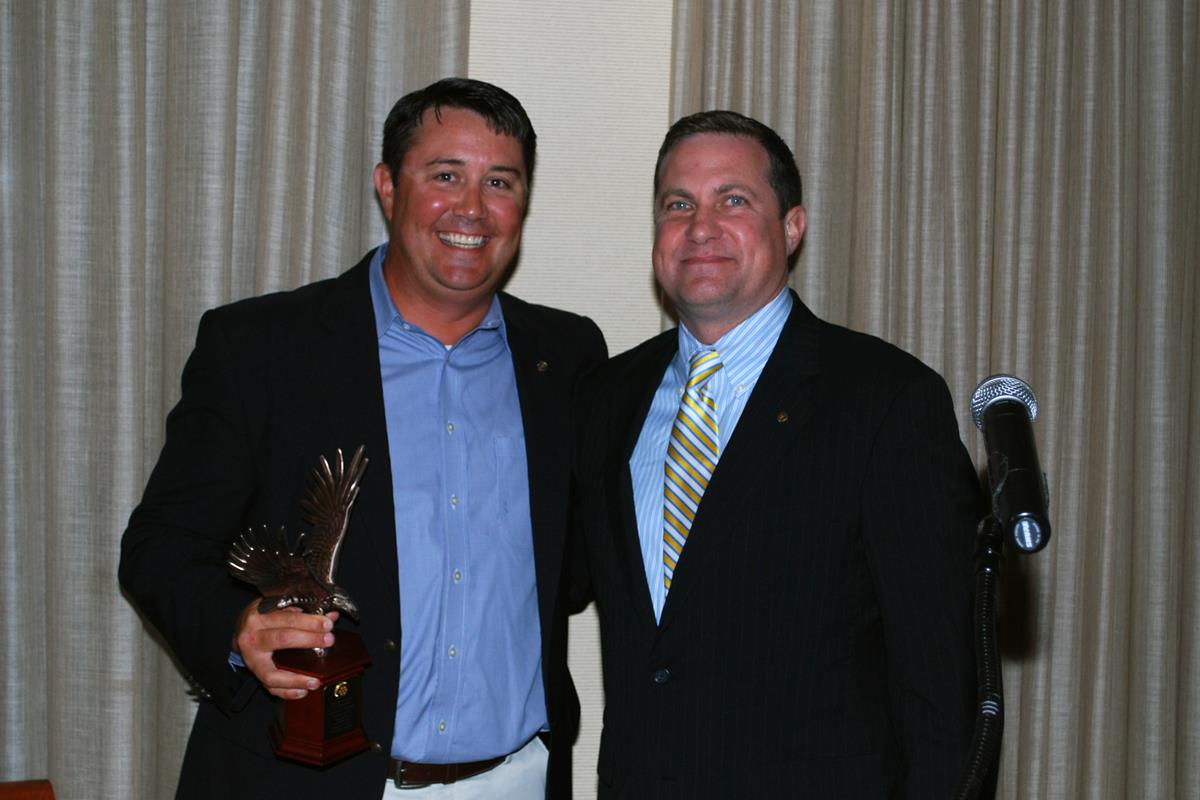
Installation BanquetJune 23rd The Awards and Installation banquet was held this past Thursday at the Lone Palm Country Club. If you weren't there you missed a night of fun and fellowship that will be remembered for some time to come. Full story and more pictures to come later. (Your bulletin editor is out of town.)
Dancers Needed Dancing with the locals planning is underway!Jodi Stevens is chairing this event and could use any help you can give.Dancers are needed!The event is Friday, November 11.Stay tuned for more information on this event.
Program Chairman
John Haney is our program chairman. Please notify him regarding upcoming speakers and programs. Call 813-716-5108 or email John at jhaney@acebid.com
This is your newsletter. If there is news you would like to share with your club (new job? a birth? employment opportunity? club projects? anything you think other members or subscribers to our bulletin would find interesting or useful) then please e-mail it to your bulletin editor.
Share the Rotary News! If you know anyone that would like to receive our E-bulletin, let them know they can sign up for it on the home page of our website www.PlantCityRotary.org. They just need to go to the bottom of the left hand column, click on sign up for newsletter and fill in their name and e-mail address. You can also forward them this newsletter and they can use the link at the bottom of the left column.
Calling for website sponsors! It is our goal to have enough sponsorship from members of the club to make our website and these e-bulletins self-supporting. If you enjoy these electronic updates and appreciate our club having a presence on the website it's time to step up. For the low fee of $50, your business ad is not only included in each of these e-bulletins and on the website pages, these ads are active links that take you to your business's website. Don't have a business and still want to help, we can include an ad thanking you for your sponsorship. For more information emailBill Wicker.
Brian Griffin - June 11
Matt Edgemon – June 20
Mike Arndt - June 22
Club Anniversaries This Month
Adam Myers - 1 year
Steve Wyman – 3 years
Matt Edgemon – 4 years
Maida Pou – 8 years
Mac McGrath – 14 years
Felix Haynes – 17 years (32 total in Rotary)
Michael Watkins – 17 years
James Surrency – 22 years
Clayton Jenkins – 30 years