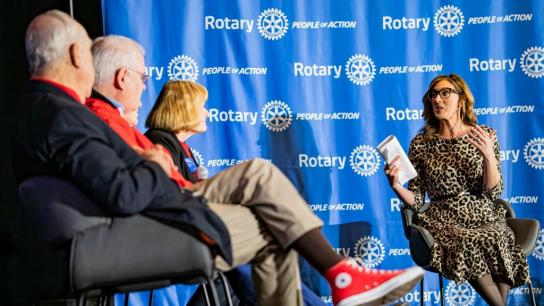
Thank you to all our Rotarians who came together to help put on another successful event!
UPCOMING EVENTS: Watch your email for notifications of upcoming events and service opportunities.
If you have any announcements you would like to share, please email me at chuck.gore@stahlinsurance.com and I will include it in the bulletin.
======================
We have several open dates coming up. Please be aware if these are programs you are responsible for and reach out to Steve Solomon or Kayla Drawdy to let them know what you have planned.
=====================
If you have an announcement that you would like to share with the club, please email me the details by Thursday afternoon so it can be included in this weeks bulletin!
The Mayos' first partner was Augustus Stinchfield, who was hired by William Worrall Mayo. Once in place as a partner in the private practice, W. W. Mayo retired at age 73. The private practice became the not-for-profit Mayo Clinic in 1919. At that point, the remaining partners went on salary, and the Mayo Properties Association was established. The world's first "integrated group practice" was established by the seven partners and staff.
The Mayo Clinic came to be regarded as one of the foremost medical treatment and research institutions in the world. Within Mayo's lifetime, it registered one million patients.
The idea of medical specialization was developed by this group of medical pioneers. A close and enduring relationship between the Mayo Clinic and the University of Minnesota Medical School developed. C. H. Mayo specialized in surgery of the thyroid and nervous system.
He was also responsible for the clinic's ophthalmic patients until 1908. He and early partners insisted on sterile conditions in the operating room, and that was one of many factors that contributed to the medical practice's early surgical successes.
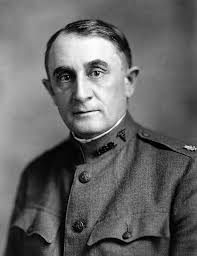
Charles H. Mayo was professionally active in numerous medical and academic bodies. He was successively President of the Western Surgical Association (1904–1905), President of the Minnesota State Medical Association (1905–1906), President of the Section on Surgery of the International Congress on Tuberculosis (1908–1909), and President of the Clinical Congress of Surgeons of North America (1911–1912).[1] In 1913, he became a Regent and Fellow of the American College of Surgeons, serving as its president from 1923 to 1925. He was President of the American Medical Association in 1916–1917, President of the Section on General Surgery of the Pan-American Medical Association from 1932 to 1934, and of the Minnesota Public Health Association from 1932 to 1936, becoming its Honorary President in 1936.[1]
During World War I, Mayo and his brother served as chief surgical consultants for the U.S. Army. Commissioned a colonel in 1917, in 1921 he was commissioned brigadier general in the Officers' Reserve Corps of the U.S. Army, and subsequently held rank as brigadier general in the Army Medical Department (from 1926) and as brigadier general in the Auxiliary Army of the United States from 1931.[1] From 1919 to 1936, when he retired, he was a member of the Senate of the University of Minnesota and professor of surgery in the UMN medical school.[1]
Charles H. Mayo was engaged in numerous civic organizations. He was a professor of surgery at the University of Minnesota, active there and nationally in both Alpha Kappa Kappa and Sigma Xi fraternities.
Rotary is committing US$500,000 to bolster the initiative, channeling these funds through a dedicated Polio Outbreak Response Fund. This contribution represents Rotary's sustained support to the World Health Organization in combating polio globally.