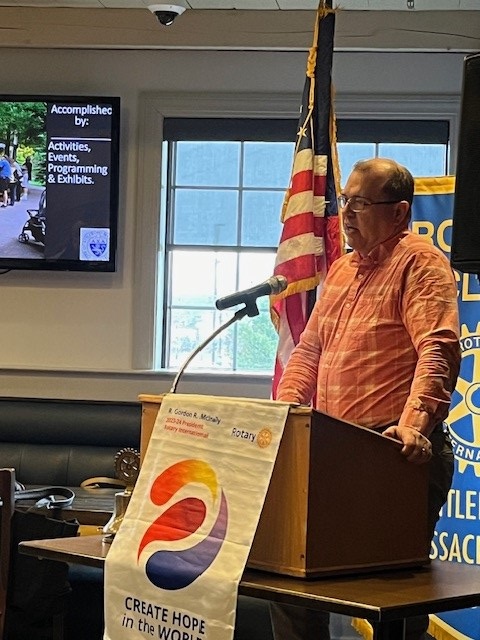
TODAY'S SPEAKER (4/3/2024): John Wright, Director of Capron Park Zoo
John Wright was the Zoo Director for the Spring River Zoo in Roswell New Mexico from June 2021 through December 2023. He managed the day to day operations, supervised senior zoo staff, managed and administered the operating budget, and many more responsibilities. Prior to that he was the Curator of Mammals and Birds at the Loveland Living Planet Aquarium in Draper Utah (Sept 2019 - Sept 2020), the Director of the Henson Robinson Zoo in Springfield Illinois (May 2017 - Feb 2019), the Hutchinson Zoo Director in Hutchinson Kansas (April 2014 - Sept 2015). He attended Truman State University and received his Bachelor's degree in Biology in 1993.
John was hired by the City of Attleboro in January 2024 to take the helm of the city zoo. He wants to create a unique experience for all of the visitors. He wants to make the zoo stand out from the zoo's in Boston and Providence. He is continually looking to innovate while maintaining a budget.
ROTO  : John Wright, but picked the 4 of hearts
GUESTS: Grace Thayer, Vista volunteer at the Attleboro YMCA, guest of Cyndee Goodinson-Lindsey
VISITING ROTARIANS: None
HAPPY BUCKS:
1. Bill Kelly gave $3 - Tom Kelly helped him out at Bliss Brothers
2. Bill Larson gave $10 - he told a story of his trip to Hawaii and how he went to a make-up Rotary meeting at Pearl Harbor. Yesterday the last remaining veteran of Pearl Harbor passed away.
ANNOUNCEMENTS:
4/6 - YMCA Spinathon
4/20 - Attleboro Spring Fling (11am - 2pm)
5/15 - Literacy Center International Food Tasting at 5:30pm
5/27 - Memorial Day Parade
**Mark & Robin Cuddy are being honored at the Boy Scouts on 5/16.
**Rotary auction ends tonight. The live auction portion will run from 7-9.
Fun Fact:
1. Identical twins don’t have the same fingerprints. You can’t blame your crimes on your twin, after all. This is because environmental factors during development in the womb (umbilical cord length, position in the womb, and the rate of finger growth) impact your fingerprint.
2. Earth’s rotation is changing speed. It's actually slowing. This means that, on average, the length of a day increases by around 1.8 seconds per century. 600 million years ago a day lasted just 21 hours.





.png)