 Senator Robert (Rob) Clements spoke with us today about Property Taxes, Inheritance Taxes, about Nebraska’s COVID Economy and the Agriculture Economy.
 Property Taxes: Nebraska’s property taxes is higher than the states bordering it. The legislature is working to phase in more state funding for the public schools. In a chart that Rob gave us it shows that new credit for the next three years would be like $125 million in 2020; $250 million in 2021; and hopefully by 2022 $375 million. The school taxes in millions of dollars would be $2,000 throughout the three years which would give a new tax credit for 2020 6.3%, 2021 12.5%, and 18.8% in 2023. These percentages would be for school taxes. If you took a piece of Lincoln Real Estate at 100,000 from 2019-2022 you would have a School tax of 52% or 1,050 with a tax credit of -104 and with the new tax credit starting with 2020 -66; 2021 -131 and in 2022 -197 with a percent savings of 3% in 2020, 7% in 2021 and 10% in 2022.
If you take farm property located in Lancaster County that is assessed at 100,000 the real estate tax going to schools would be 62% or 1,049 from 2019-2022. The current tax credit would be -125 for those 4 years and with the new tax credit it would be the same as real estate in Lincoln. The tax per acre for 2019-2022 would be 57, 55, 53, and 50 with the following percent saved at 4.2%, 8.3% and 12.5%. The year 2019 would be at zero in all cases.
Inheritance Taxes: There are only six states that have inheritance tax and Nebraska is one of them which is the highest in the nation at 18%. An example is you farmer who had a $5 million estate, and no children and you gave the property to a niece or nephew they would have to pay $650,000 in inheritance tax and owe the Federal government nothing. If left to a non-relative they would be paying 13% on inheritance tax. This tax does not go to the state, but the county in which the property is located or the person who died lived. They use it more for emergency funding. The legislature would like to reduce this tax.
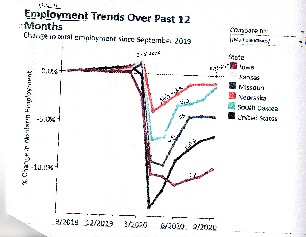
COVID Economy: Nebraska’s employment in March of 2020 had not went down very much. This is due to the fact Nebraska is fortunate to have less high-risk jobs. Rob talked about the Payroll Protection Plan (PPP) grants which many small businesses took advantage. This loan was for payroll, and utilities for eight weeks. Many of those who took advantage of the PPP is now in the process of getting their paper work done so they don’t have to pay back any of the money. We were No. 1 in the nation to actually take advantage of the PPP grant.
Rob shared with us how the Nebraska Department of Revenue faired since July 1, 2020. All amounts are in millions. In July they expected 605.3, and actually received 605.3; in August they expected 445.8, but actually received 513.5 which is a 67.7 difference. In September the expected 510.6 and actually received 526.8 which is a difference of 16.2. This is 83.9 above the forecast they expected to receive. Since they received more, they don’t have to do any budget cuts. The Cash Reserve as of 6-30-20 was $470 million and the state usually spends about $390 million. The goal for the Cash Reserve is $750 million. Last year they ended with a balanced budget.
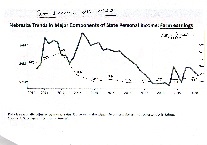 Farm Income: Rob gave us a graph that showed what the last ten years was like. The first five years was better than these last five years. Nebraska has some extreme drought in the western part of the state and northeast part, but most of the rest of the state is plenty dry. Many farmers are very conservative and that helps them.