On a regular basis, our resident photo pros Warren Smith and Jack Strange submit pictures of what is going on at the weekly meetings. You can always find the most recent pictures at the websites photo journal called "Meeting Sighting" Please note that all the meeting photos for the entire Rotary year are at this location with the most recent on the last page.
Thanks for all the great pictures Warren and Ross! Link to Meeting Sightings. The most recent are on the last page!
85 Sunrisers and guests enjoyed a great day at Oakmont
Tequila and Goat Hole
Dixon Hole
Sausage Hole
Casino Hole
Teeing off!
While detailed information on the Tournament results was not available, that info will be provided at our next meeting and distributed in a future Bulletin.
Congratulations to all that participated in a Great Tournament!
Muslim and Christian women work together to prevent dengue fever in Indonesia
In a world where intolerance and violence fueled by religious differences are seemingly increasing, one Rotary club in Indonesia is showing how diversity can help prevent a pandemic threat.
When the Rotary Club of Solo Kartini in Surakarta, Indonesia, formed 25 years ago, its members drew criticism from the predominantly Muslim community.The club’s members were mostly Christians, atypical for a country where more than 80 percent of the population is Muslim. Religious leaders were skeptical of Rotary’s secular mission and wary of intrusion.
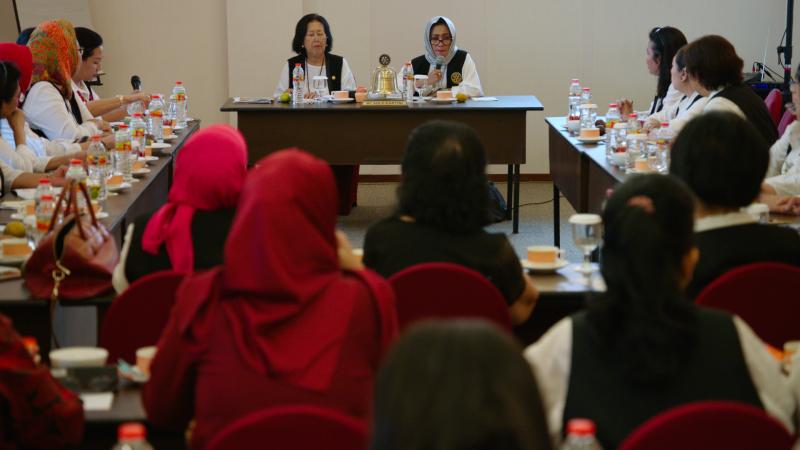
Undeterred, the club started recruiting more members. Today, the 72-member, all-female club includes both Muslims and Christians.
And the effort they have put into breaking down barriers and fostering respect and understanding among club members has reinforced the club’s capacity to address dengue fever, one of the biggest public health threats in tropical cities like Surakarta.
Dengue fever is a virus transmitted by mosquitos that flourish in tropical urban environments like Surakarta. There is no effective treatment; once infected, victims experience sudden high fevers, severe headaches, joint and muscle pain, fatigue, nausea, and vomiting.
Launching an effective public health initiative to prevent the disease requires volunteers with deep knowledge and connections to the community who can craft specific and sustainable solutions. And that means being able to build relationships across religious, cultural and socio-economic lines.
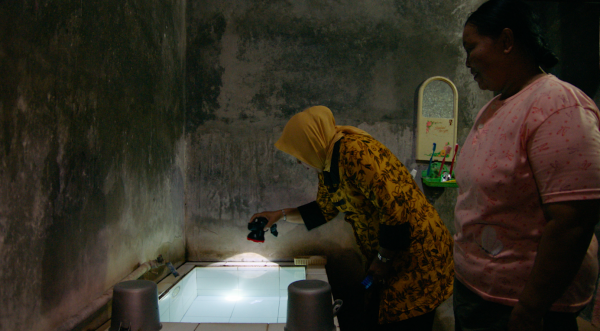
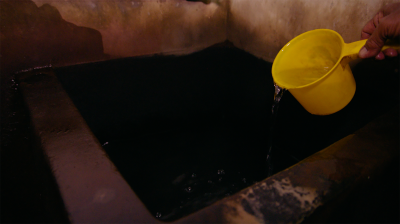
The Rotary Club of Solo Kartini in Surakarta, Indonesia, installed white tiles on more than 3,500 tubs. The tiles make it easier to see and clean mosquito larvae, which helps prevent dengue fever.
Rotary member Mariam Kartonagoro says her club’s diverse makeup – particularly its abundance of mothers and professionals of varied ages and backgrounds – enhances their effort to fight dengue fever. “The fact that we are different does not create trouble, but it strengthens our relationship,” she says.
In collaboration with the Rotary Club of Westport, Connecticut, USA, and the local ministry of health in Surakarta, the Muslim and Christian club members have been able to help reduce the risk for dengue fever by interrupting the breeding cycles of carrier mosquitos.
The first step was to implement a startlingly simple, low-cost strategy: line the dark cement bathtubs, common in Indonesian households, with white tiles so mosquito larvae is easier to see – and remove. In five years, the club project modified more than 3,500 tubs in two neighborhoods.
But tiles weren’t enough. The club needed to change habits and behaviors that contribute to infections, which required building trust to educate the community.
“Our main focus is to educate and invite people to be aware of health issues, hygiene, and the importance of a clean environment,” says Rotarian Indrijani Sutapa, one of the dengue project leads. “This takes a very long time to teach.”
Community social workers teach homeowners how to empty and scrub infested tubs twice a week, close the lid on water containers, and bury waste that can collect water.
"The fact that we are different does not create trouble, but it strengthens our relationship."
Mariam Kartonagoro Rotary Club of Solo Kartini in Surakarta, Indonesia
Siti Wahyuningsih, Surakarta’s director of public health, hopes to extend Rotary’s white-tile project to other parts of the city.
“Health is a shared responsibility between government, society, and the private sector,” she says. “The government can’t do it alone. We as a community must embrace all of our strengths, and Rotary is a big one.”
The club hopes to see more people crossing cultural lines to help each other.
“Rotary has a very diverse membership, and we can be examples to others in the way we work. After all, when we give help, we do not ask about the religion of the person whose tub we replace. We think in a much more global way,” says Rotarian Febri Dipokusumo. “And we try to foster relationships with people who may have different beliefs or thoughts. We can become friends here in Rotary. Maybe this way, we can inspire Indonesia and the world.”
Rotary Club of Solo Kartini in Surakarta, Indonesia, formed 25 years ago. Today, the all-female club has 72 members and includes both Christians and Muslims.
Rotary and the Bill & Melinda Gates Foundation announce $450 million
commitment to end polio
ATLANTA, Ga. (June 12, 2017) – Today in Atlanta Rotary President John Germ and Bill Gates, co-chair of the Bill & Melinda Gates Foundation, announced a commitment of up to $450 million to support the eradication of polio.
To an audience of nearly 40,000 Rotary members attending the humanitarian organization’s annual convention, Rotary and the Bill & Melinda Gates Foundation renewed their longstanding support for ending polio – a paralyzing, life-altering scourge on the verge of becoming the second human disease ever to be eliminated. Rotary committed to raise $50 million per year over the next three years, with every dollar to be matched with two additional dollars from the Gates Foundation. This expanded agreement will translate into $450 million for polio eradication activities, including immunization and surveillance over the next three years. This critical funding helps ensure countries around the world remain polio-free and that polio is ended in the remaining three endemic countries: Afghanistan, Nigeria, and Pakistan.
Ashleigh Banfield of CNN interviews Bill Gates of the Bill & Melinda Gates Foundation RI President John Germ.
“In 2016, fewer children were paralyzed by polio than ever before, thanks to the dedication of Rotary members and our partners,” said Germ. “The paralysis of even one child by a preventable disease is unacceptable, and I'm proud to see our members redoubling their commitment to ensure we reach every single child with the polio vaccine.”
In a partnership spanning a decade, Rotary and the Gates Foundation, along with the other Global Polio Eradication Initiative (GPEI) partners, have led the effort to end polio worldwide. This funding extension reaffirms a commitment established at the 2013 Rotary Convention in Lisbon, Portugal, when the Gates Foundation pledged to match Rotary contributions two-to-one, up to $35 million per year through 2018. Rotary, including matching funds from the Gates Foundation, has donated more than $1.6 billion to polio eradication.
“The vision of eradicating polio began with Rotary, and its support of that effort has been unwavering for more than 35 years,” said Gates. “Rotary’s commitment to raise $150 million over the next three years to end polio forever is a testament to the compassion, generosity, and kindness of more than a million Rotarians around the world.”
Today’s announcement comes on the heels of the news that world governments and other donors have pledged to contribute US$1.2 billion total to the GPEI for polio eradication efforts. The government funding—also announced today at the Rotary Convention—will substantially help to close the US$1.5 billion funding gap, allowing partners to immunize 450 million children every year and support rigorous disease surveillance in both endemic and at-risk polio-free countries. While the government funding announced today makes considerable headway in the fight to end polio, continued support from donors remains vital to achieve a polio-free world.
The global eradication of polio has been Rotary’s top priority since 1985. Through the Global Polio Eradication Initiative – a public-private partnership that includes Rotary, the Bill & Melinda Gates Foundation, the U.S. Centers for Disease Control and Prevention, the World Health Organization, and UNICEF – the incidence of polio has plummeted by more than 99.9 percent, from about 350,000 cases a year at the start of the initiative to just 37 cases in 2016.
Rotary Club of Santa Rosa Sunrise - Founded June 30, 1986