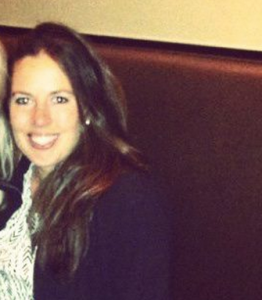
Kerry Fugett is the new Executive Director of Sonoma County Conservation Alliance. Born and raised in Sebastopol, Kerry graduated from UC San Diego with a BS in Physiology and Neuroscience. After graduating, she worked as a field biologist on a variety of projects. She later managed a Social Responsibility program at an IT firm in San Francisco, and was a consultant to Salesforce.com. Immediately prior to joining SCCA, she worked as a Community Organizer for sustainable agriculture in Australia. Her love for Sonoma County, it’s environment and community brought her home to Sebastopol where she currently resides.
She will share a little about SCCA and discuss the pro’s and con’s of two of the initiatives on the Sonoma County ballot this November- renewal of the green belt “Community Separators” between cities in the county and a proposed quarter cent sales tax to support improvement and operations of lands acquired by the Open Space District.
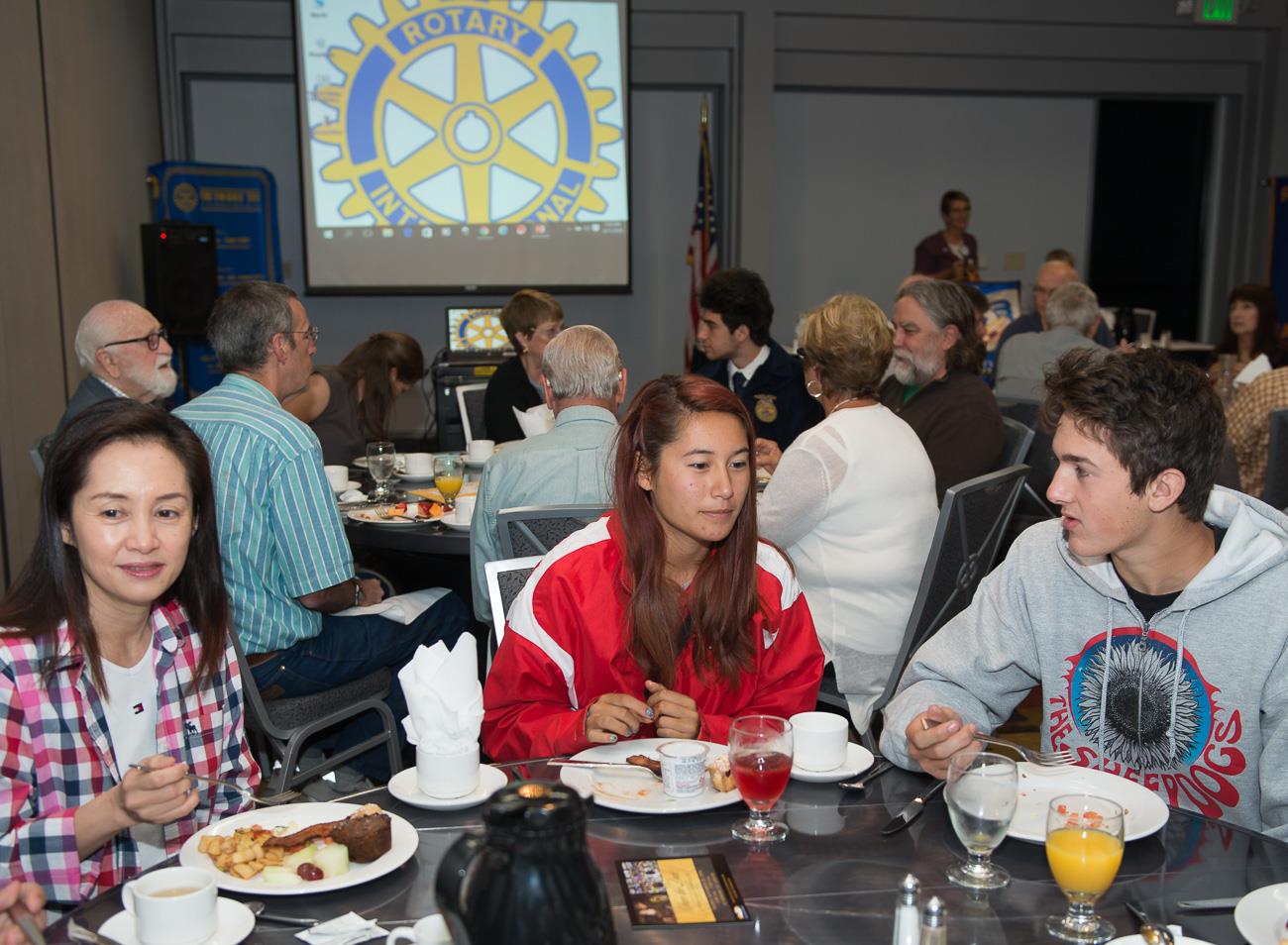
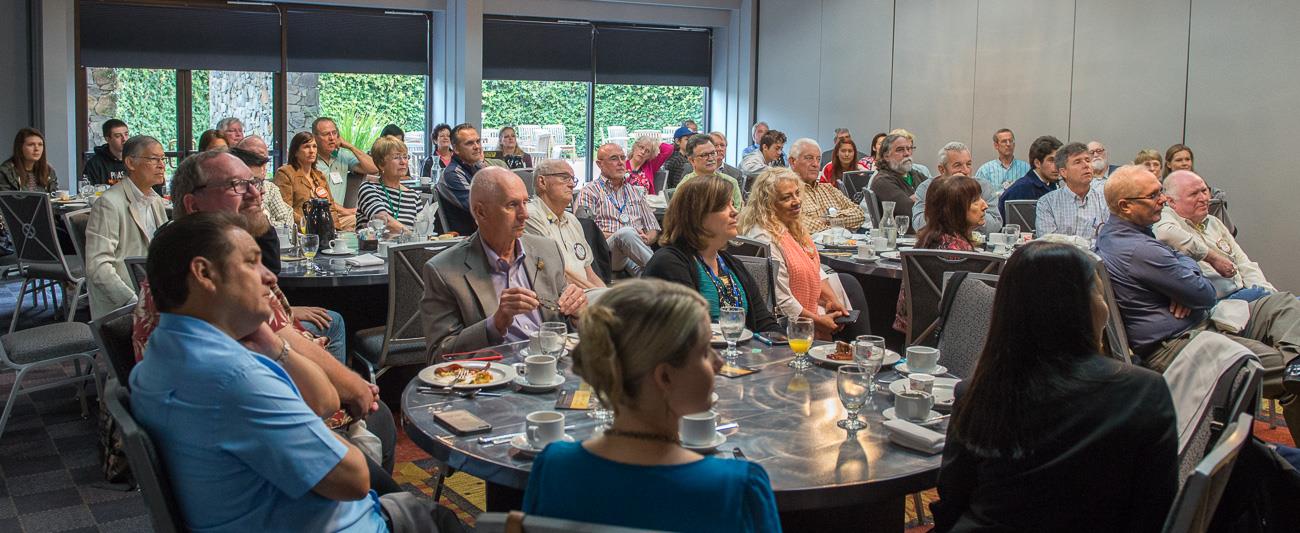
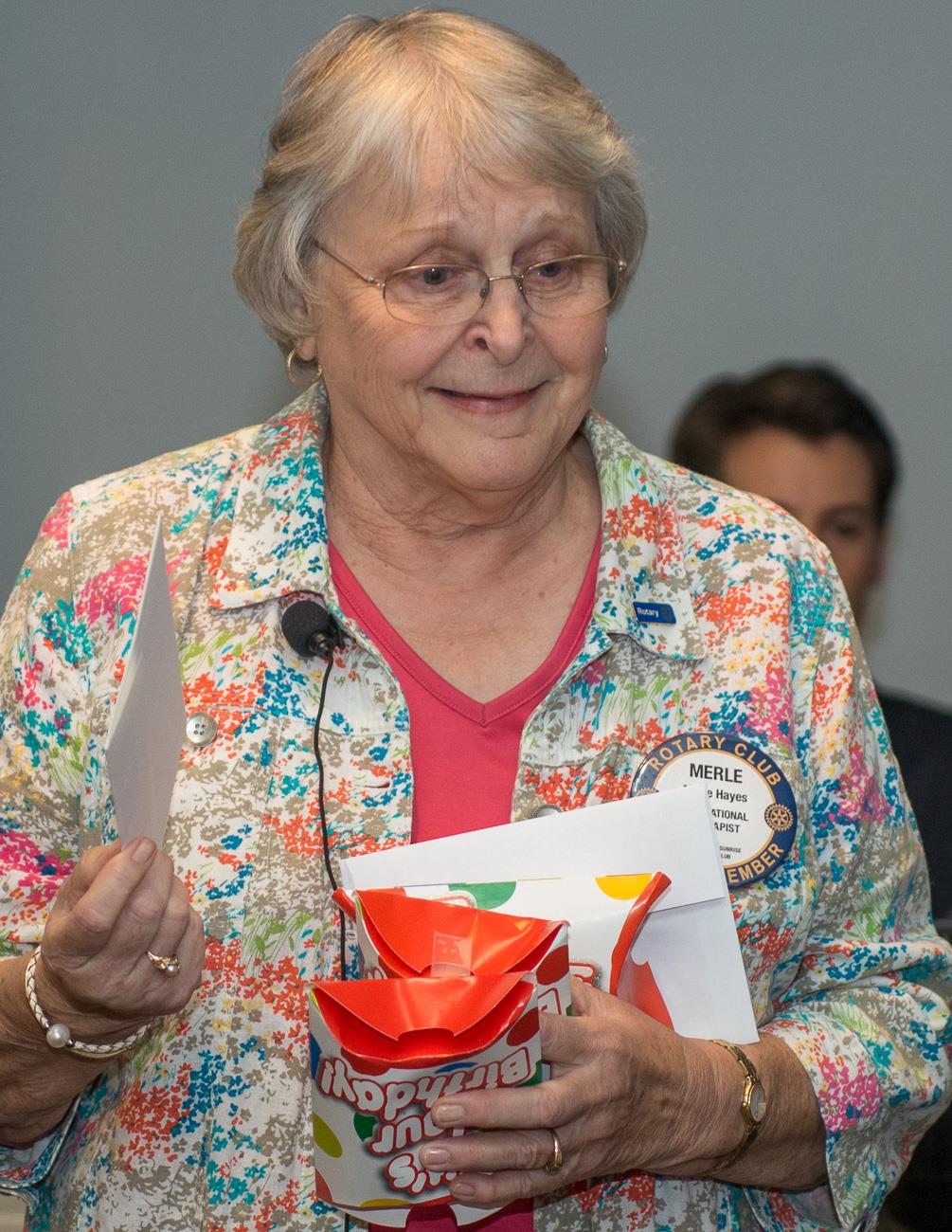
Cassidy Childs (center above), daughter of Venus (left) and Max Childs, and John Eakins (right), son of Tom Eakins -- both students of the 2015 Santa Rosa portion of the Santa Rosa/Kagashima Student Exchange Program (SRKSEP), join 2016 Kagashima students at Sunrise Rotary breakfast. Past President, Eloise Tweeten, standing in for President Merle Hayes, (who caught a case of bronchitis from her grandsons presided over a full contingent of Rotarians, guests and students, celebrating the culmination of this two year student exchange program.
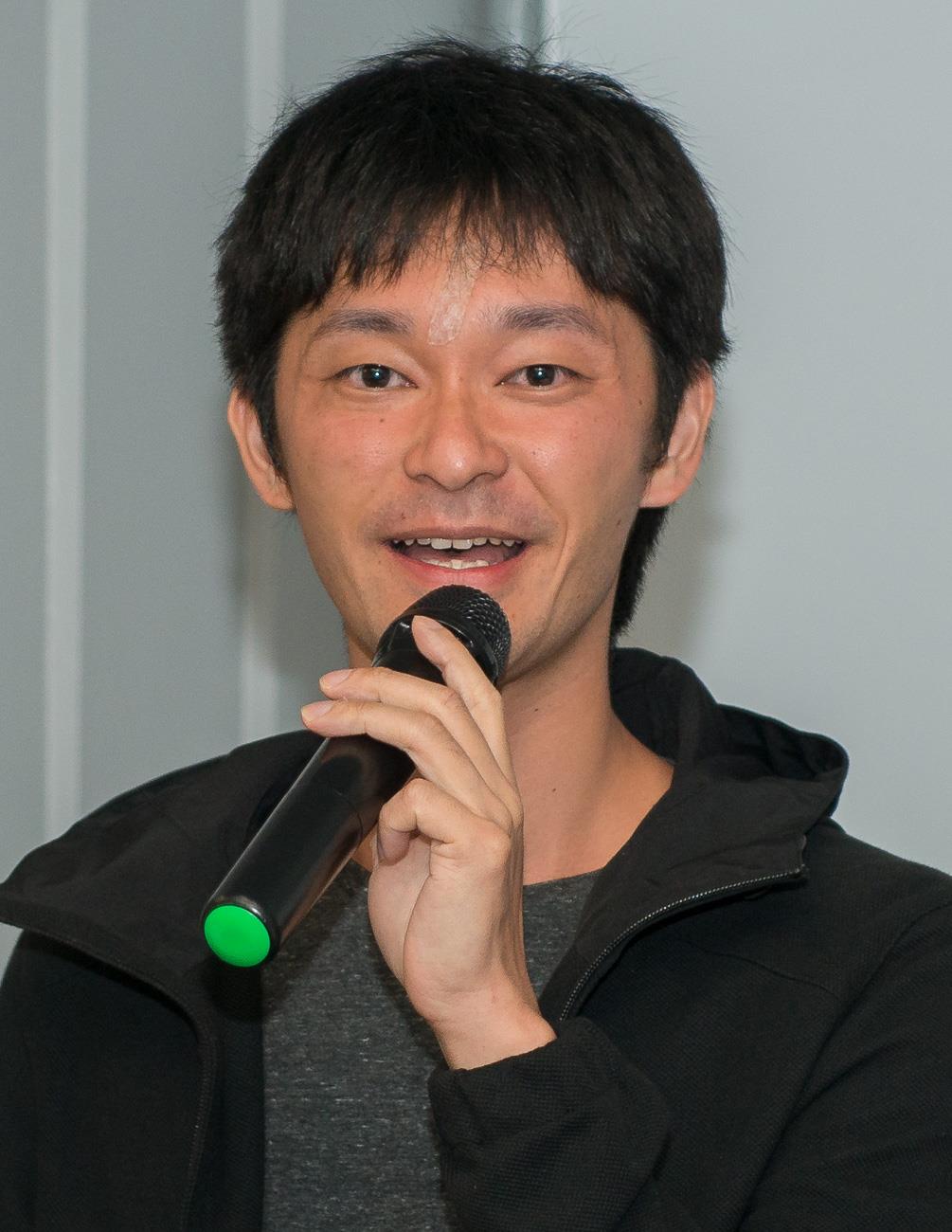
Students from Santa Rosa visit Kagashima and stay with host families in the odd years and students from Kagashima visit Santa Rosa host families in the even years. Program leaders Naoya Sumiyoshi and Shauna Lorenzen, (left to right below) highlighted the many benefits of this international program.
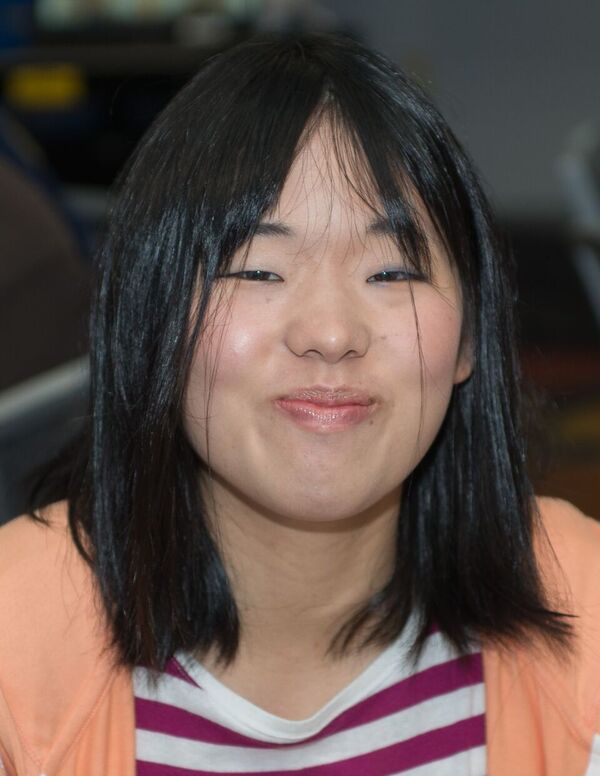
Pictured below are 2016 Exchange Students from Kagashima:
On a regular basis, our resident photo pros Warren Smith and Jack Strange submit pictures of what is going on at the weekly meetings. You can always find the most recent pictures at the websites photo journal called "Meeting Sighting" Please note that all the meeting photos for the entire Rotary year are at this location with the most recent on the last page.
Thanks for all the great pictures Warren and Ross! Link to Meeting Sightings. The most recent are on the last page!
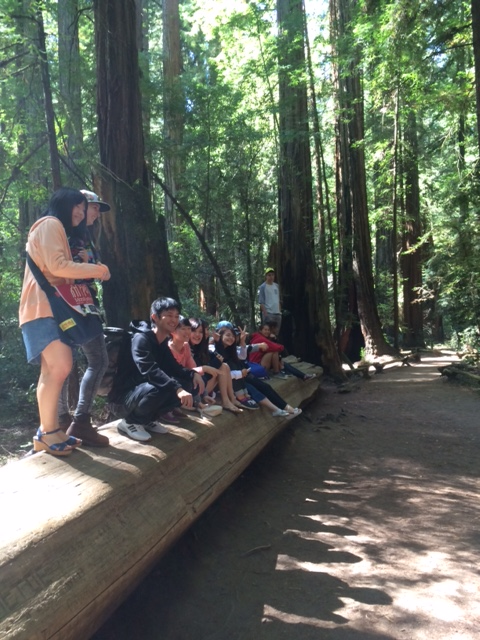
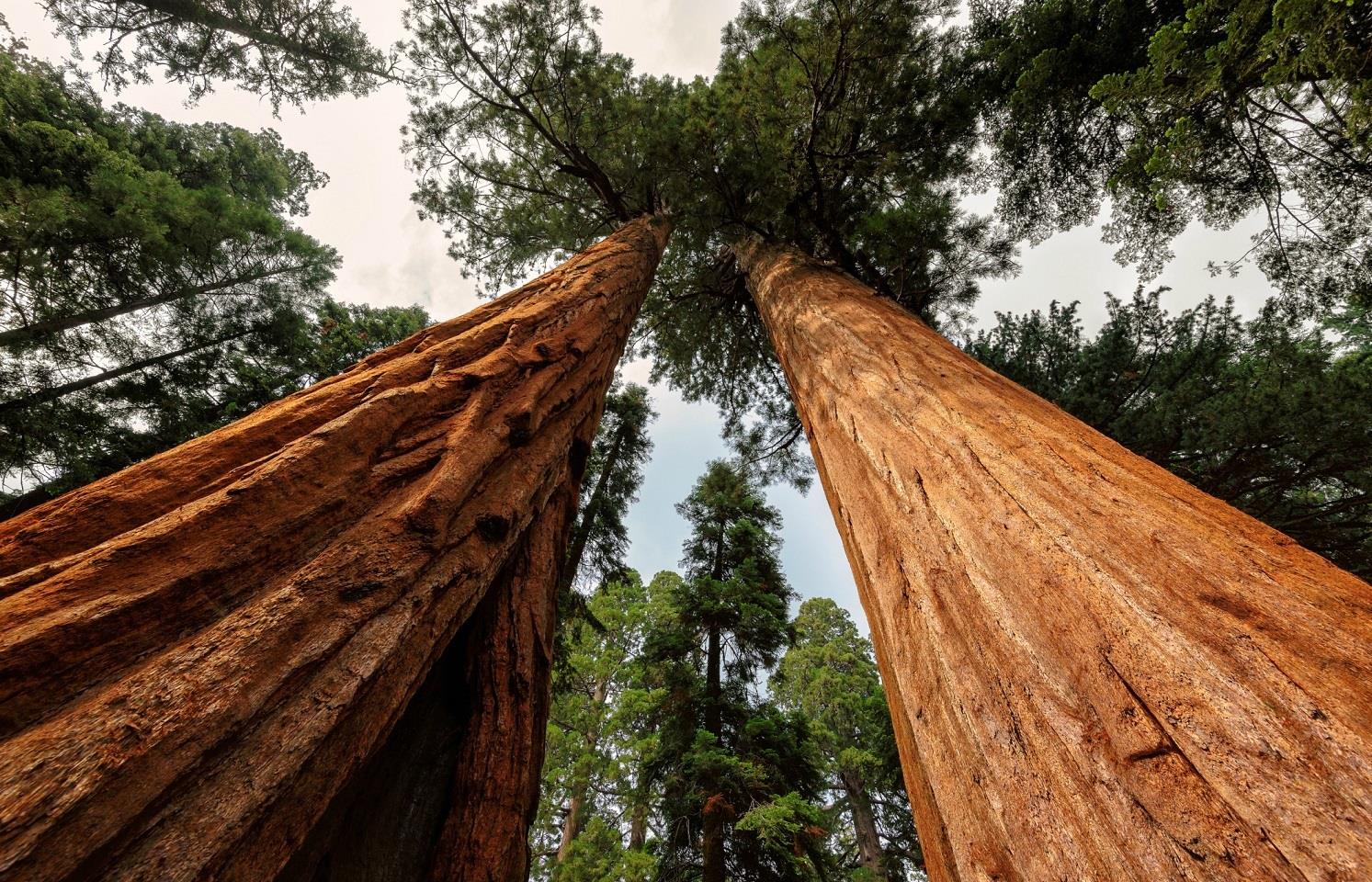
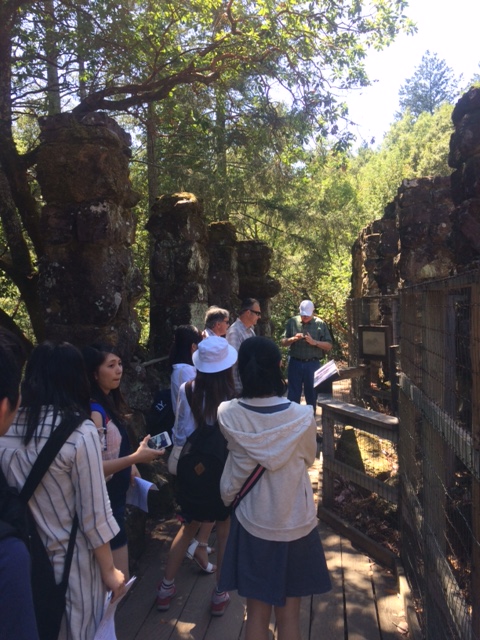
Seven students from Kagoshima Japan and their Teacher-Chaperone began their two week exchange visit to Santa Rosa last Monday with a tour of Armstrong Woods State Park near Guerneville. Chauffered by Sunriser's Deb Frances, Ralph Harryman and Rich Randolph, the eager learners observed more than talked.
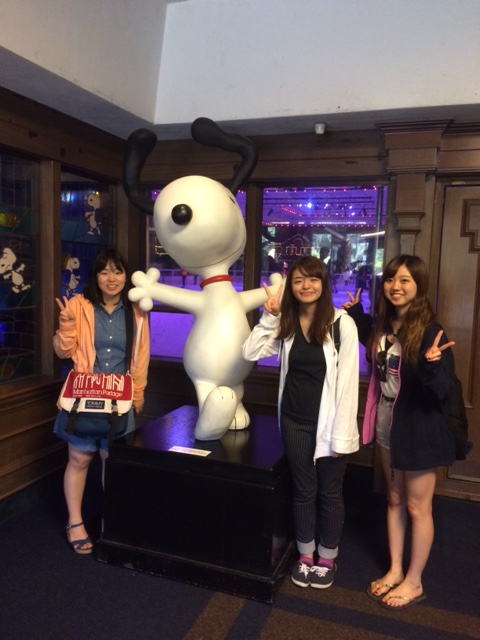
Following the walk in the woods, the group headed to the Charles M. Schulz Museum for lunch at the adjacent Warm Puppy Cafe and a chill in Snoopy's Ice at the Redwood Empire Ice Rink. Photos of that leg of the excursion are in the album section on the Home Page.
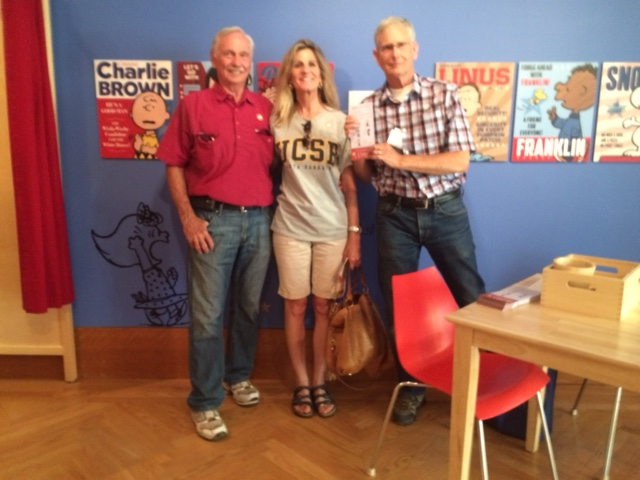
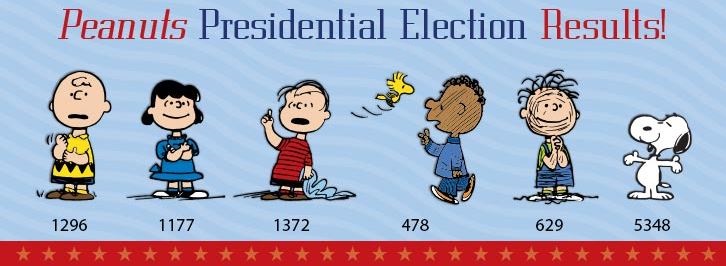
Transporting the students gave drivers Ralph Harryman, Deb Frances and Rich Randolph a chance to discover hometown gems as well: Here they are at Election Center, where all visitors may vote for a Presidential Candidate from the Schultz slate of candidates: All the usual suspects~ Snoopy, Lucy, Franklin, Linus and of course, good ol' Charlie Brown.
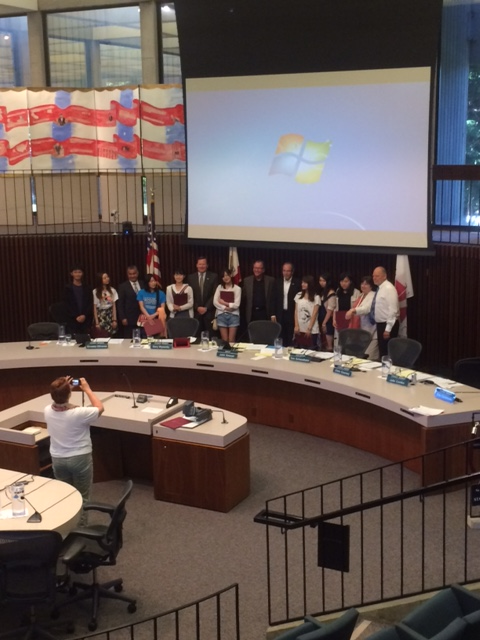
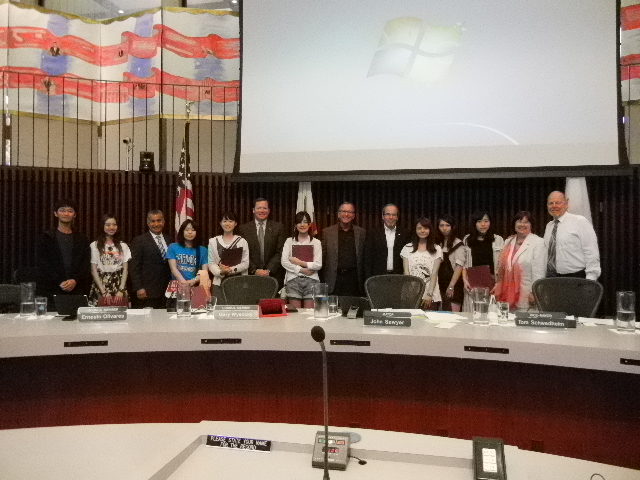
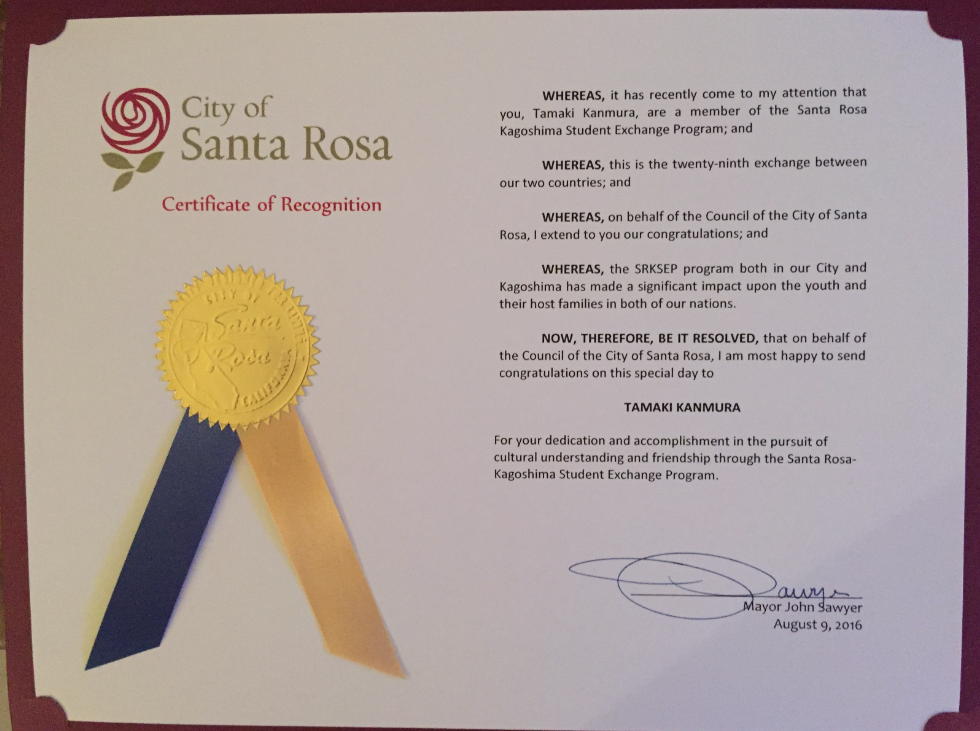
Tuesday took the trekkers to Jack London State Park and saw Wolf House as well as Charmian's House of Happy Walls. After the warm mile hike everyone travelled to Santa Rosa City Council Chambers and were greeted by council members and presented with a commemorative certificate by Mayor John Sawyer.
SRKSEP Chair Shauna Lorenzen takes the group's portrait following presentations.
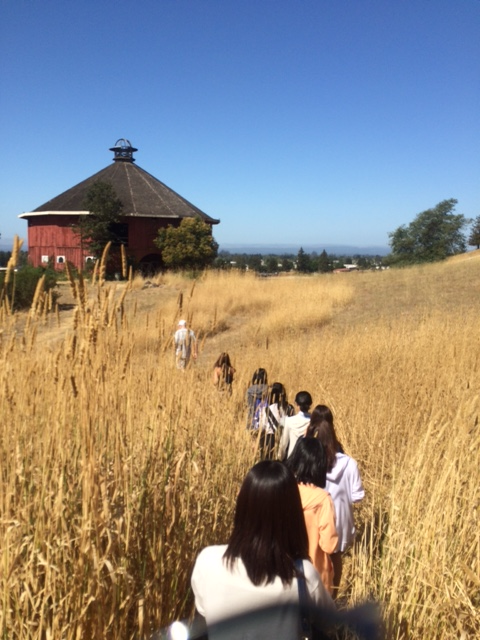
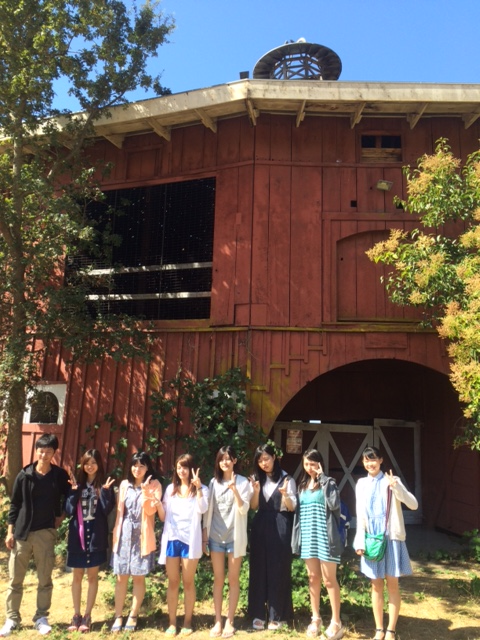
Wednesday, before a Pool Party at Santa Rosa Golf and Country Club, students explored Round Barn, built by Kanaye Nagasawa in 1899!
(A few wild blackberries were sampled) Have you explored this historic structure?
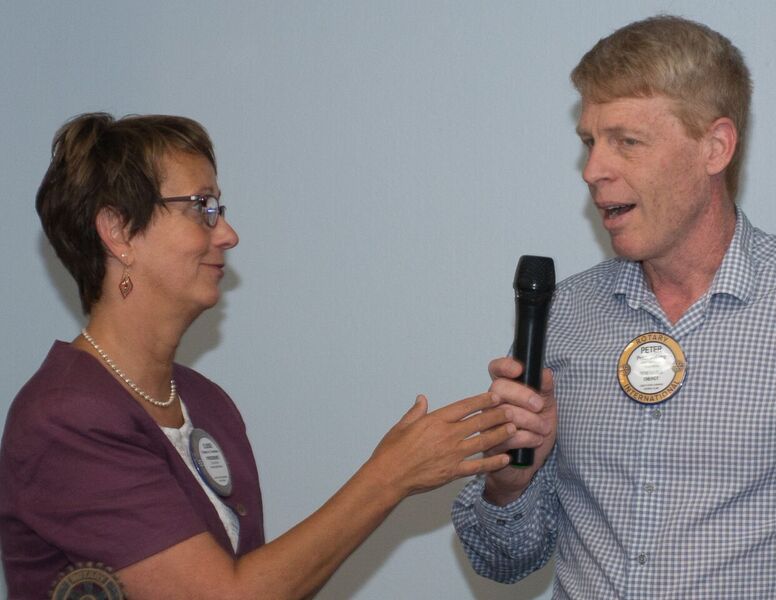
Past President Eloise questions Peter Hoberg about his recent trip to Amsterdam, Indonesia, Lyon and other locations, which Peter claims was strictly business with no time off.
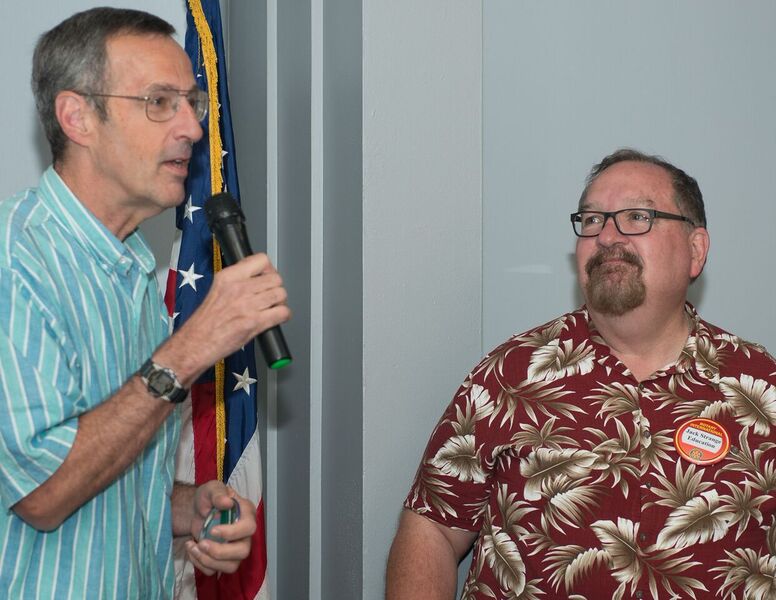
Jim Moir managed to show up for Rotary breakfast and present a blue badge to Jack Strange even though he can only find 10% of his stuff following their move from Calistoga to Santa Rosa.
With continuous, patient coaching from Eoise, Doug Shureen managed to offer some information, from the board meeting, on budgets, fundraising and a proposal to develop an Interact club at Roselind University Prep, if a leader can be recruited.
Proud grandfather Harry Coffee celebrated the birth of his 5th grandchild -- Nova Coffee -- with a High $20.
Today Sonoma County has a population of approximately 495,025 people.
As the Spanish arrived and the first Europeans, there were 133,000 Native Americans. By 1890 those numbers had delcined to 17,000 decimated by disease brought into California by the Spanish and other new comers. 70 reservations were finally establisher over 436,900 acres. Locally we had a Kashi reservation near Stewarts Point and another in Alexander Valley. Humboldt County had a large Hoopa reservation. Pomo live in the area as well.
The Spanish land grants took much of the land once owned by the Native Americans. The first Spanish grants were given in 1784. There were only 20 ranchos by 1821 when Mexico won its independence from Spain. Between 1834 and 1846 Mexican governors confirmed at least 600 private Rancho Grants. The smallest was 4,500. And the largest was 100,000 acres.
Sonoma was located in one of the Rancho Grants and the home of the last Missions. It was the end of the El Camino Real. It was the domain of General Vallejo a Governor of Mexico. In June of 1846 soldiers from Sacramento rode into Sonoma and arrested General Vallejo and declared CA an Independent Republic. For 25 days Sonoma was the capital of the Republic of CA. To create a flag for the new republic the men used unbleached muslin and a donated red petticoat. One of the men sewed a red star on the upper left-hand corner and a red stripe along the bottom. He hand-painted CA Republic and drew a crude grizzly bear just above it. This has been come to be known at _____?______The bear flag was born and is used as the CA flag to this day. The original flag was destroyed in the 1906 earth quake and fire.
Today a natural rock in the Sonoma plaza marks the site where the flag was raised.
Grady Mooseman (above right), student at Elsie Allen High School and his Ag Teacher, Lindsay Swickard (left) reviewed the various tasks and facilities necessary for raising and showing livestock. Grady won a top award for raising a 1,250 pound, crossbred Angus steer in his back yard. Brady's prize steer grazed free range on his family's large estate, even devouring some of his dad's fruit trees.
Lindsay thanked Sunrise Rotarians for support of the agriculture program at Elise Allen and projected visuals of ag program goats being raised in crowded, make shift pens. She previewed plans to also add sheep to their growing animal farm, if suitable housing can be provided.
Sunrisers Jack, Eloise, Jim M., Paul, Penny, Peter B (and Mary), plus Carmen (and her nephew) had a blast watching the Sonoma Stompers play Pittsburgh at Arnold Field in Sonoma Sunday night, August 14. It was a small but vocal crowd. The game started off by the Stompers own Kelsie (outfielder) and Stacy (pitcher) thanking their host families for giving them a place to stay and support in their breakthough professional year. This was also their last game since they’re now off trying-out for the national team.
On the line-up card for Pittsburgh was former big-leaguer Jose Canseco. He signed a contract to play for the month of August but that didn’t include last night because he was a no-show. Everyone kept hoping for a late innings surprise appearance to no avail.
The die-hard Sunriser fans enjoyed ice cold beer, grilled hot dogs, nachos and tri-tips as we cheered the Stompers on from our own little “Rotary corner” in left field. In the sixth inning they were joined by the Stomper’s mascot, “Rawhide.”
In movie finish style, the Stompers were tied 4-4 in the bottom of the 9th with two outs, bases loaded, and a full count when the Pittsburgh pitcher walked-in the winning run. Go Stompers! They won 5-4. We gotta do this again 😊
Tuesday began with a 9:00 meeting at Nagasawa Park, where drivers Rich Randolph, Deb Francis and Ralph Harryman packed everyone up and headed out to Armstrong Woods in Guerneville.
Unusually clear summer morning weather provided for a pristinely clear visit. Rich Randolph provided a wonderful interpretation for our team about the ancient grove of Redwoods. Walking in Armstrong Woods they “felt the energy of nature”! After a walking tour of the Wood’s, it was off to The Charles Schultz Snoopy Museum.
Appropriate to it being an election year, the exhibit at the Museum was “Mr. Schultz Goes to Washington” where our team had a chance to “Vote” for their favorite Peanuts character for President!
Charlie Brown, Lucy, Linus, Franklin, Pigpen, or Snoopy for President!After the Museum it was off to have lunch at “The Warm Puppy” at the Redwood Empire Ice Arena, one of the favorite regular hang outs of “Sparky”.
It wouldn’t be a visit to “Snoopy’s Home Ice” without a stop at Snoopy’s Gallery and Gift Shop. They had fun at Snoopy’s Museum and got great gifts for family and friends!
Tuesday morning started with a little creativity. Chaperone from SRKSEP 2009, Maggie London hosted the team in a Ceramics class, creating some personal souvenirs from their trip to Santa Rosa. Then it was off with drivers Rich Randolph, Frank Cercone, Don Floriani and Steve Amend to Sonoma and lunch at a local favorite, Mary's Pizza.
After lunch is was on to Jack London State Park to visit the Glen Ellen Home of Jack London, and his legendary Wolf House ruins, destroyed by fire in 1913, in the Sonoma Valley, also known as the Valley of the Moon.
Then it was on to “Official Business”, where at the Santa Rosa City Council, the entire SRKSEP Team was first on the agenda to receive special attention and the presentation of individual Certificates of Recognition from the Mayor of Santa Rosa, John Sawyer.
Friday morning, and it was meeting at Nagasawa Park to join drivers Shauna Lorenen, Steve Zwick and Viva McKenzy and head to San Francisco!
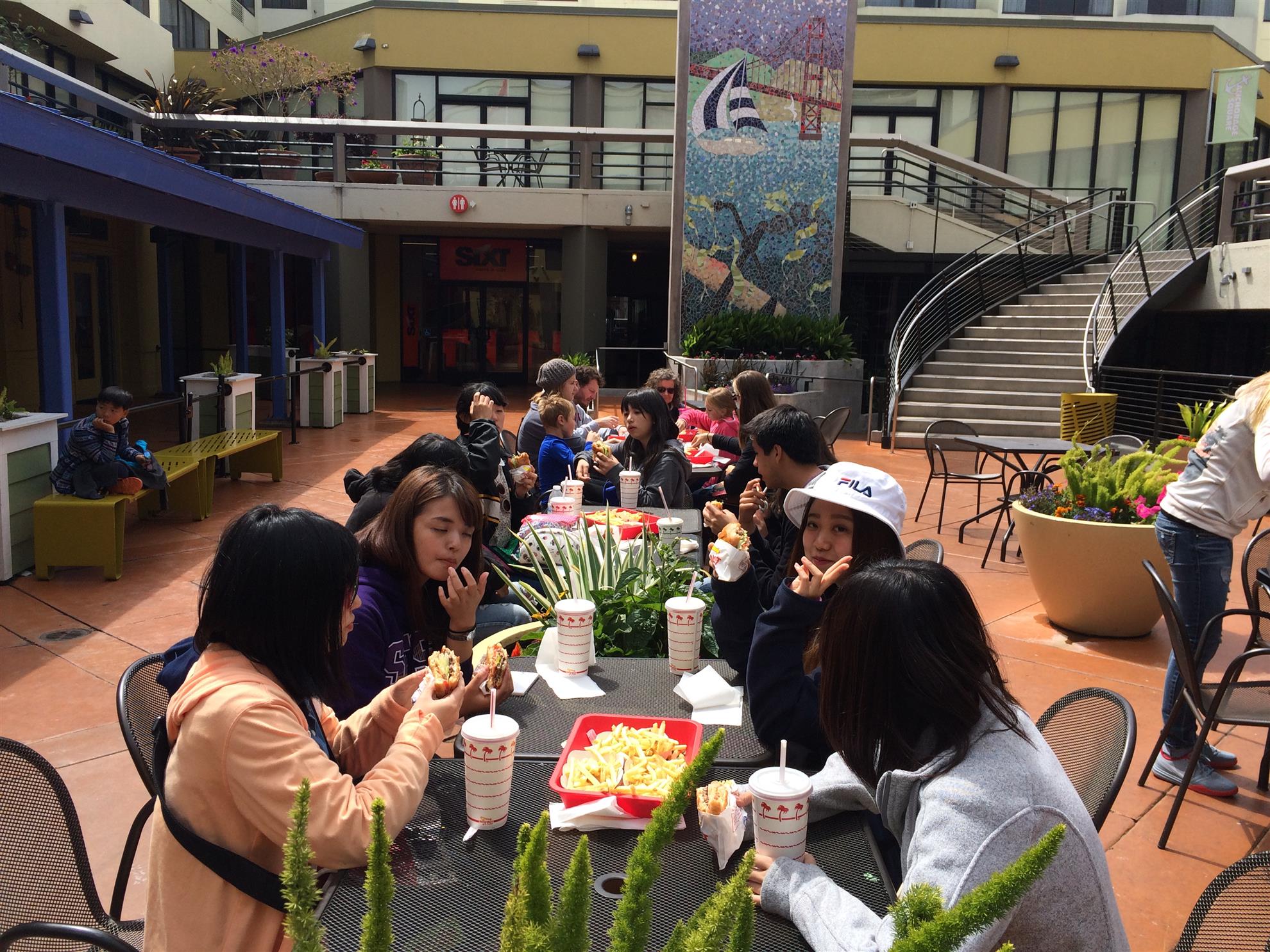
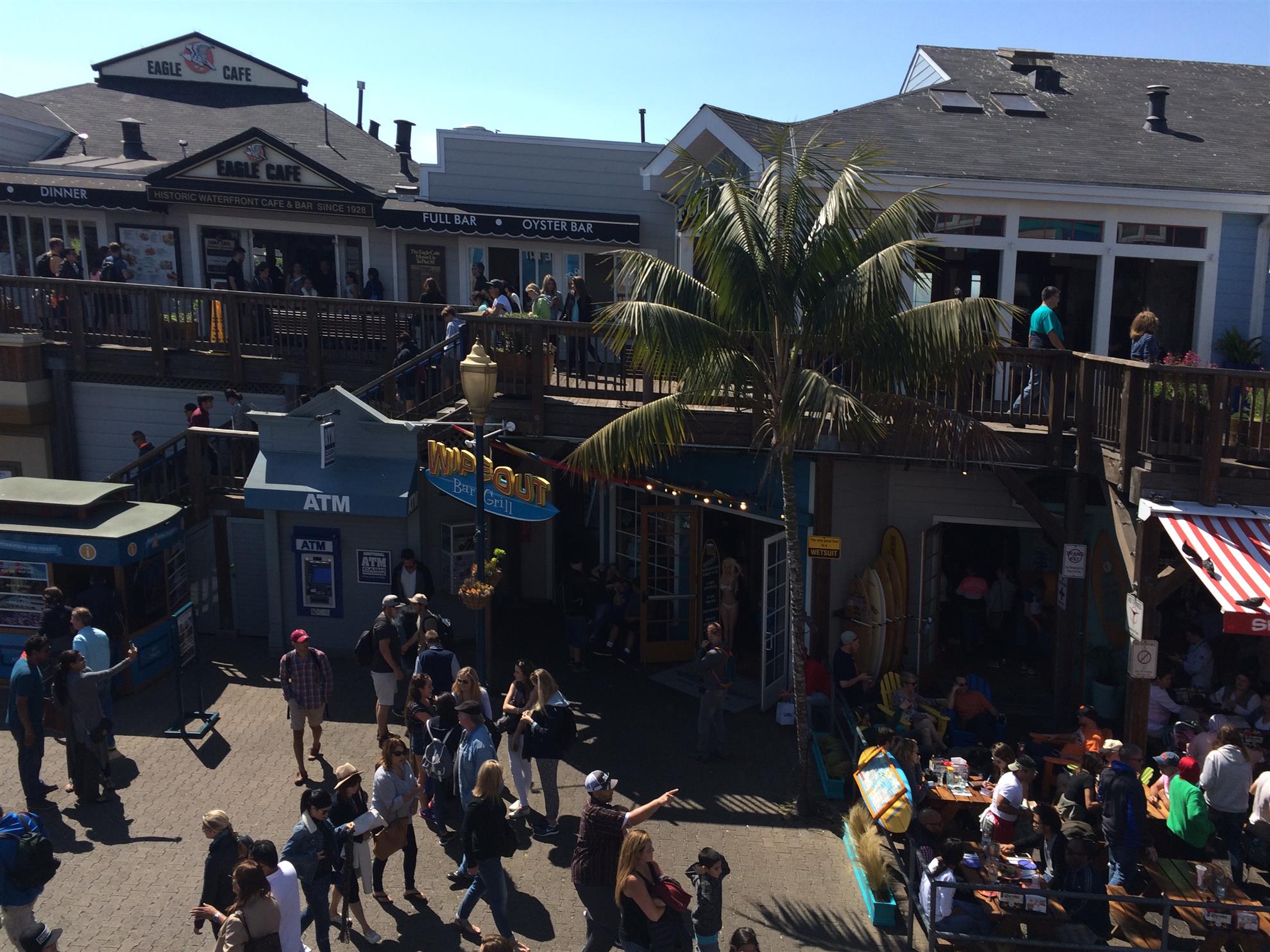
First stop, Fishermans Wharf, for a little shopping, before stopping at “In-N-Out” for truly American Burgers, Fries and Milkshakes.
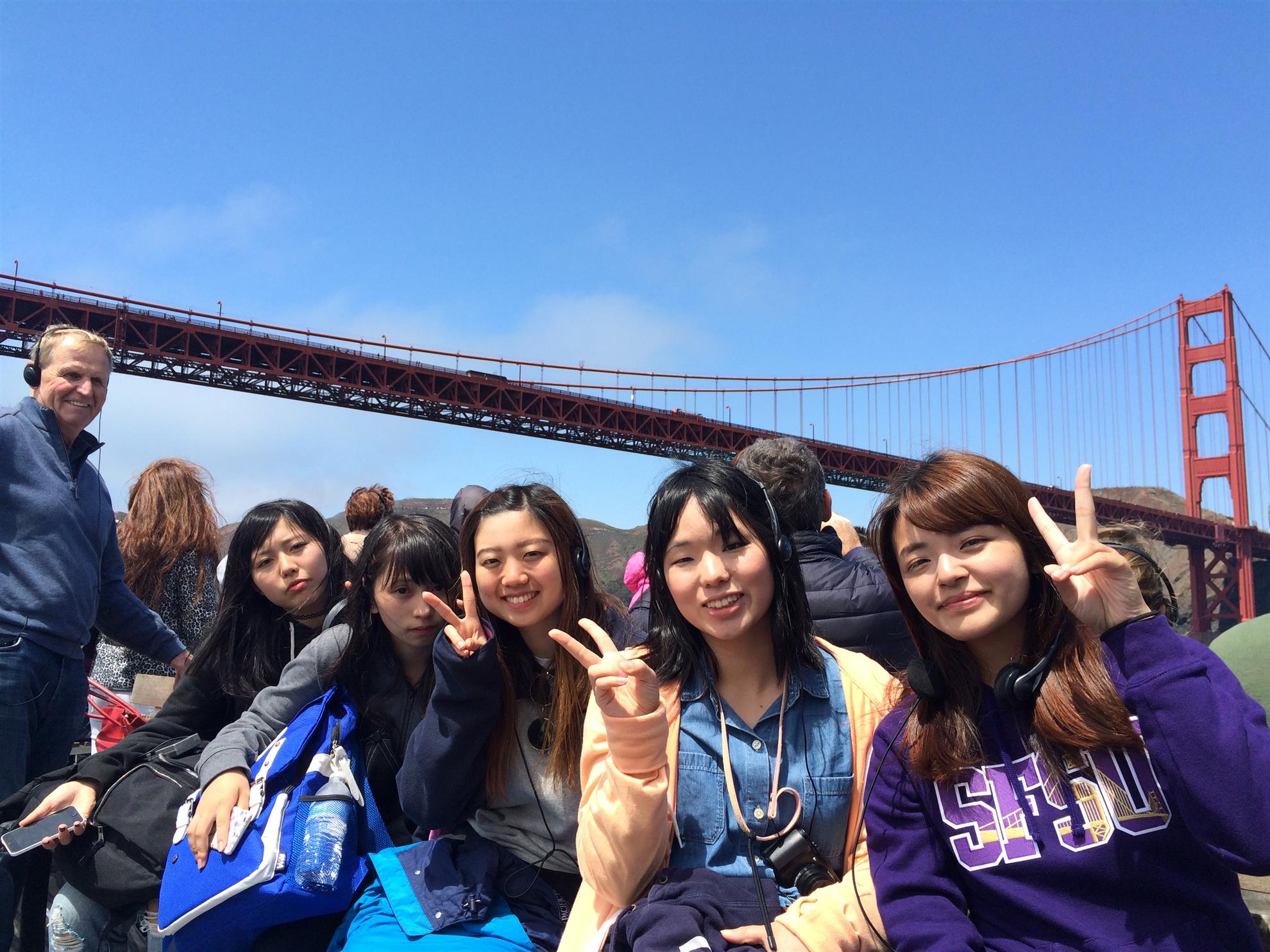
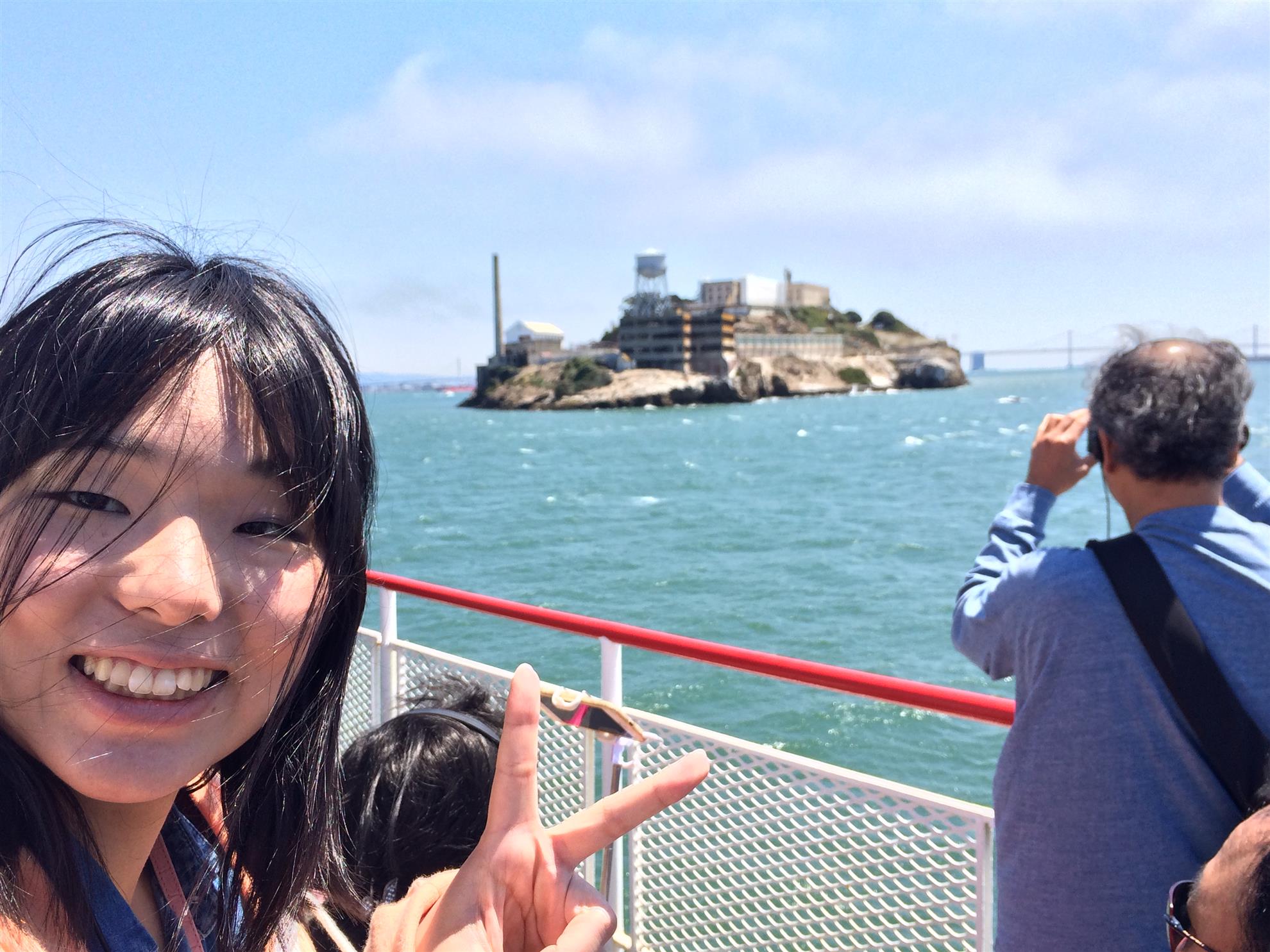
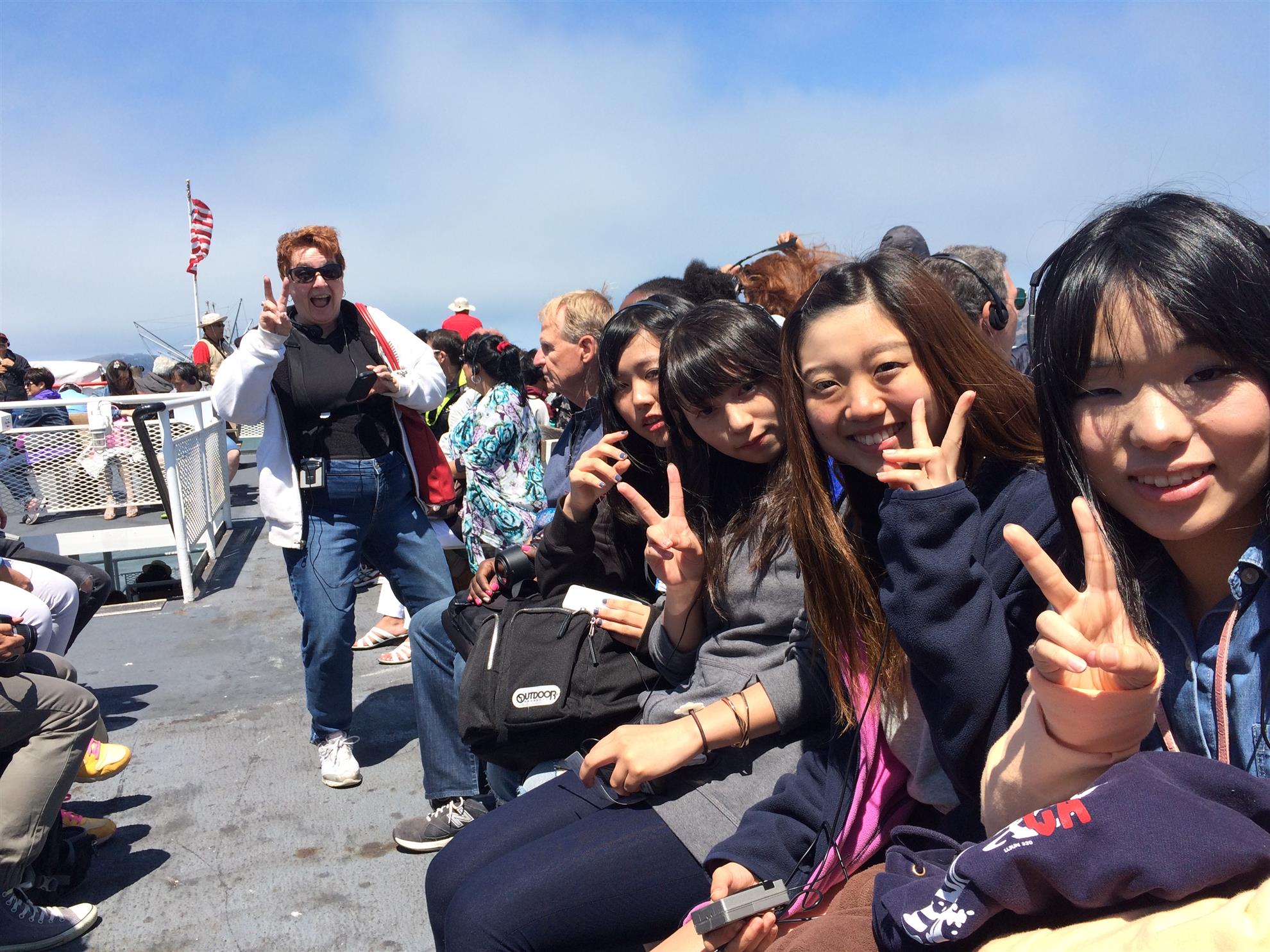
Once everyone had their fill of Burgers and Fries, it was off to Pier 43 ½ and the Red and White Fleet for a 2 hour Bay Cruise, where they saw all of San Francisco’s spectacular waterfront in one breathtaking cruise, from the Golden Gate Bridge at the edge of the Pacific Ocean all the way to the Bay Bridge in the heart of San Francisco’s financial district.
Along the way, discovering the city’s rich history and world-renowned landmarks. Best part of the cruise was “traveling under the Golden Gate Bridge!” And very un-San Francisco like, it was warm!
After the cruise it was shopping and sightseeing at world famous Pier 39!
PIER 39 is a 45-acre waterfront complex that is a gathering place for millions of San Francisco locals and visitors. In addition to its 14 full-service restaurants, 90+ shops and popular attractions, PIER 39 is home to a 5-acre waterfront park and a 300-berth marina. PIER 39 is known for its spectacular views of San Francisco Bay including the Golden Gate Bridge, Bay Bridge and Alcatraz, as well as the world famous California sea lions hauled out on K-Dock. “Shopping was lots of fun” (isn’t it always!).
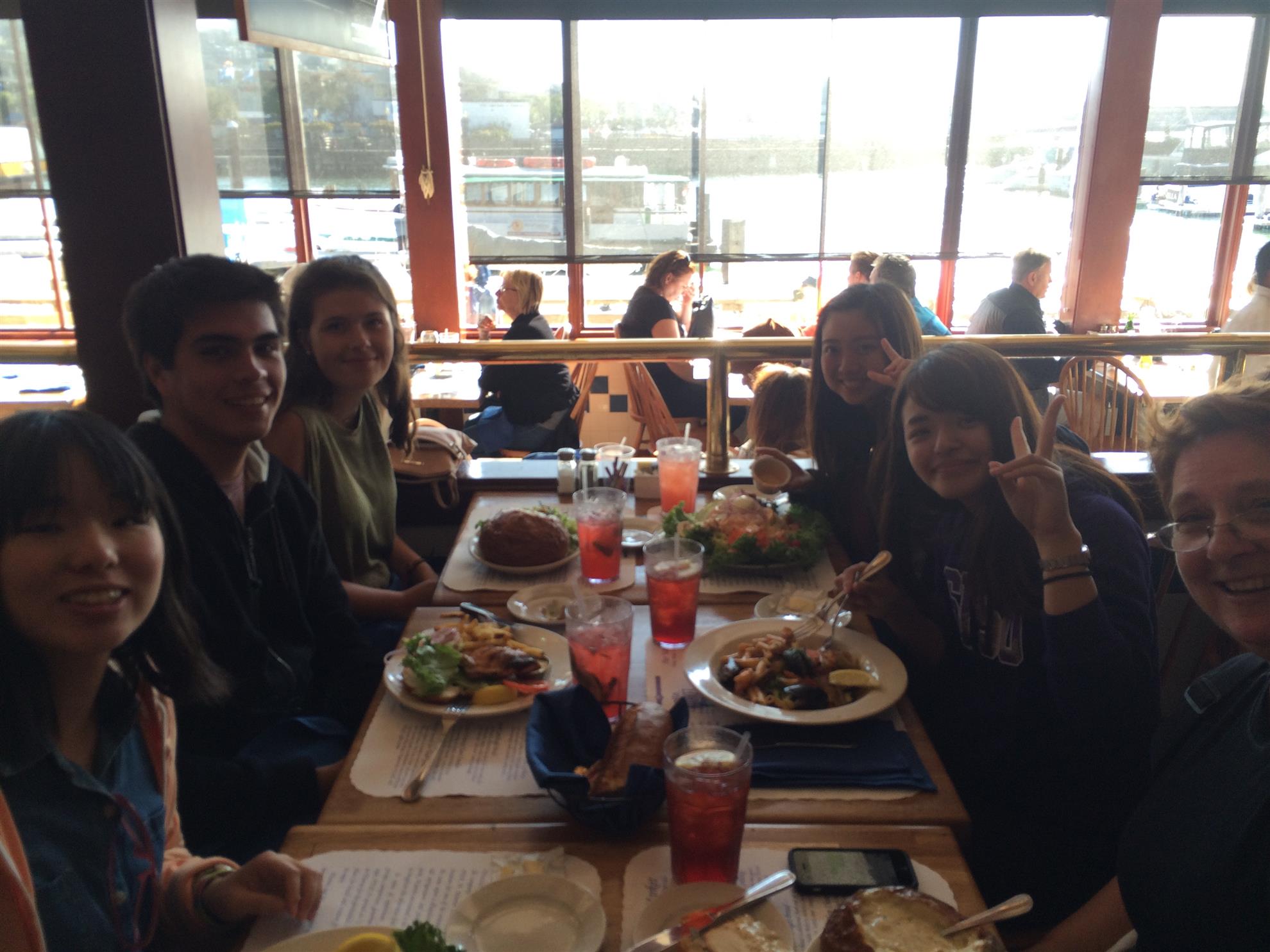
Dinner was served at Pier Market, where a variety of cuisines were enjoyed ….. Seafood Chowders, Teriyaki Salmon, Crab Louis…….even Fish and Chips!
Lots of fun filled events before the return to families in Santa Rosa by 8 pm.
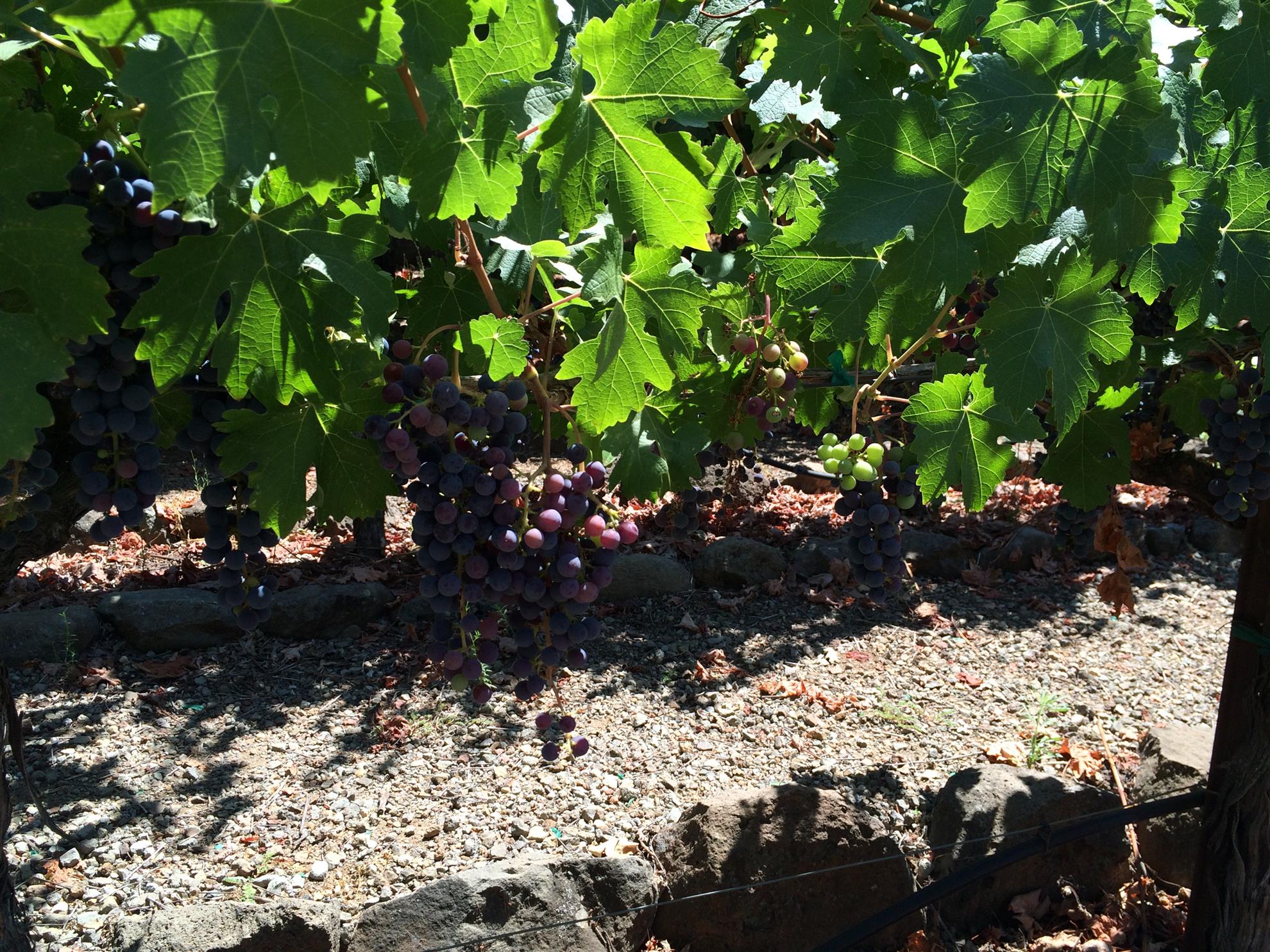
On the weekend, our travelers enjoyed a number of different adventures with their host families. Some of the known events included visiting Sonoma County Wineries, Ice Skating at Snoopy’s Home Ice, and Bowling at Double Decker Lanes!
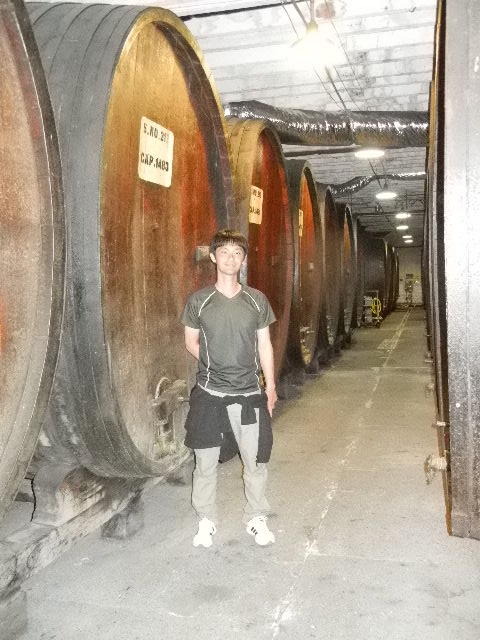
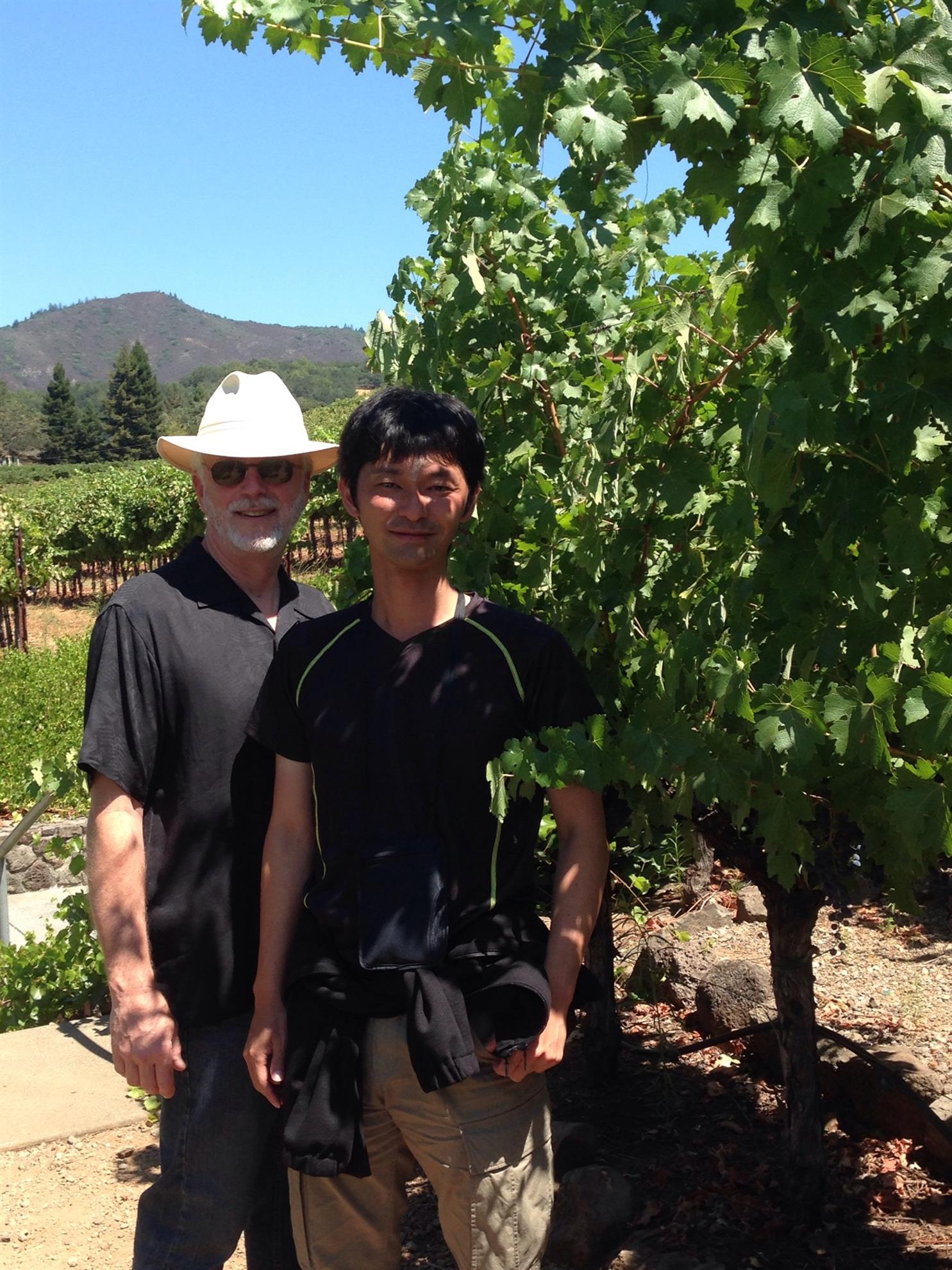
Naoya spent Saturday with Dave and Shauna Lorenzen visiting Sonoma County Wineries at Kunde Estate Winery and at Korbel California Champagne Cellars.
At Kunde we visited their aging caves and enjoyed come of their current vintages of estate wines. After a day of wine tasting it was dinner at home and then enjoying the movie “Across the Universe” in the outdoor theater, just like an American Drive-In Theater.
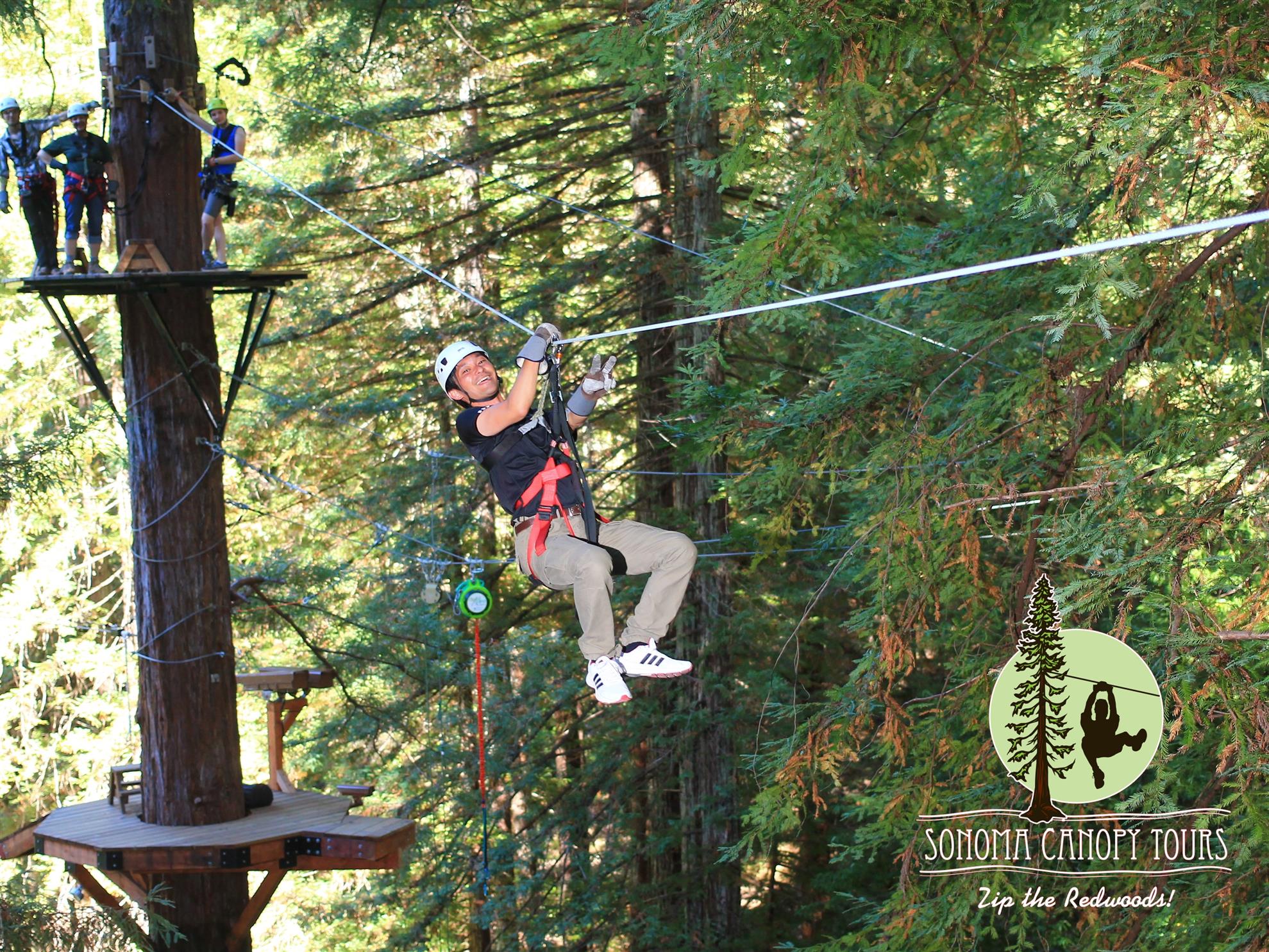
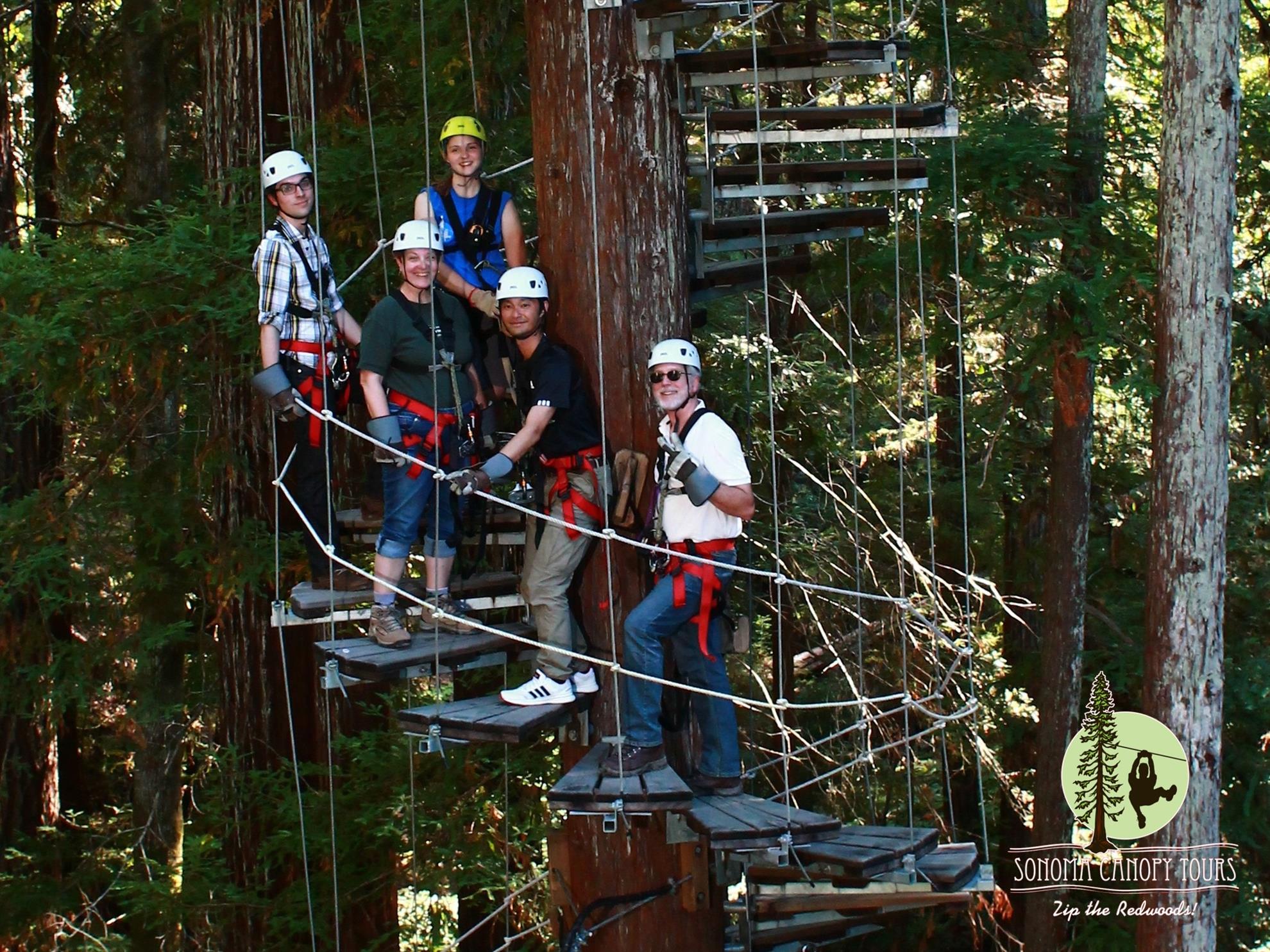
Sunday was a much bigger adventure with a trip to Bodega Bay for a fresh seafood lunch, before traveling to Sonoma Canopy Tours at Alliance Redwoods for an adventure on the Zip Lines. A zipline lets the magic of gravity do all the work. Fitted with a specially-designed harness, we reach speeds of up to 25 miles per hour on the fastest zips. Naoya was a natural on the gravity defying zip lines!
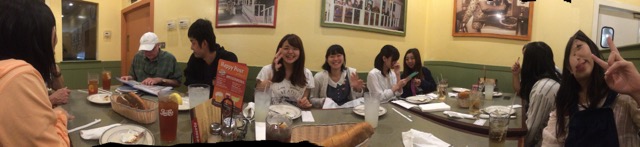
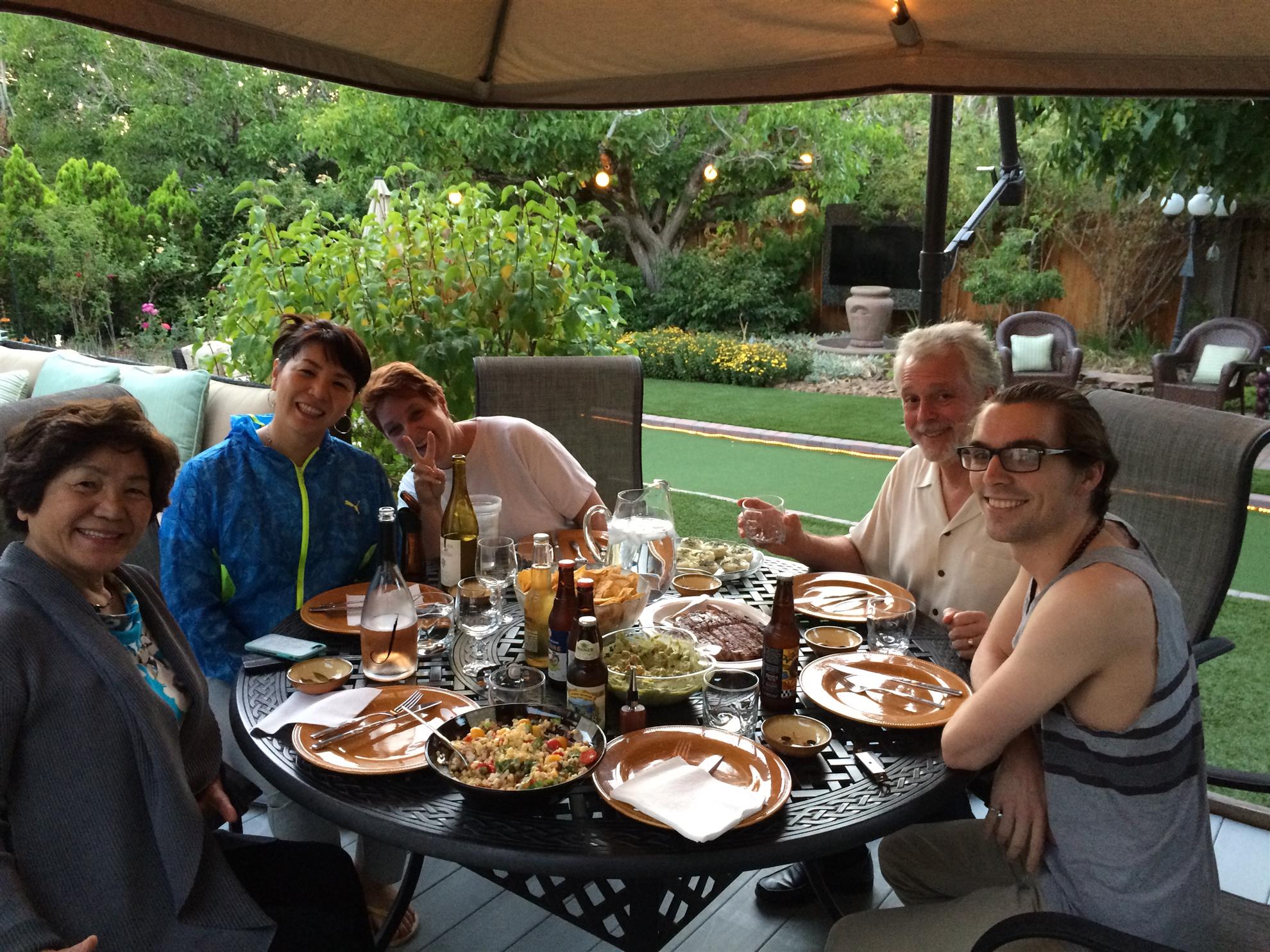
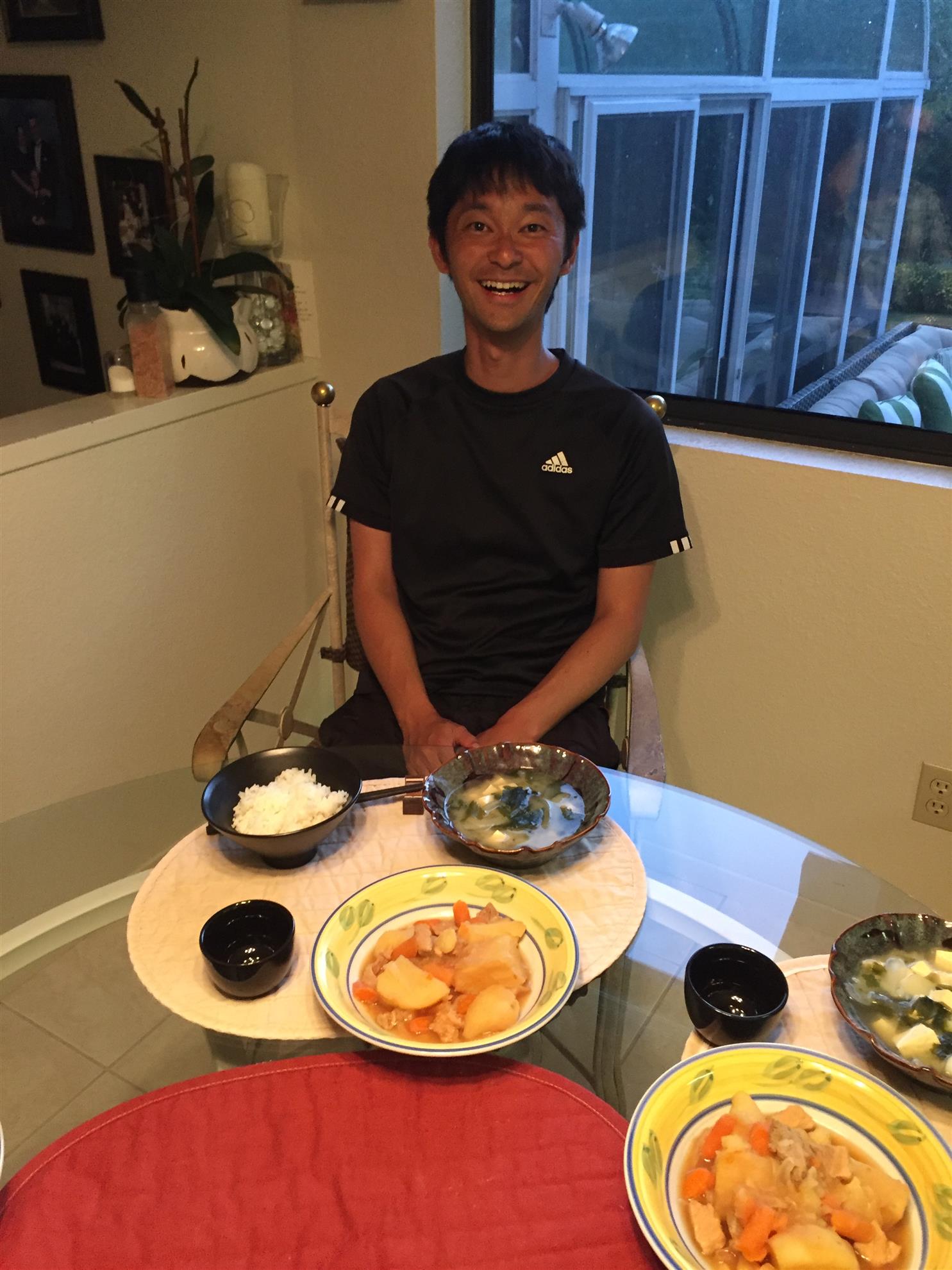
One of the wonderful experiences is sharing meals with our new family members. Many of the team members take part of the cooking duties by preparing a favorite home cooked meal. Sunday's dinner was a traditional Japanese meal prepared by Nayoa, stickey rice, Japanese Pork Stew and wonderful Miso Soup. An old family recipe!
Tomorrow, it is off to Africa (or at least the Sonoma County version at Safari West)!
“Loving the Living Room” - You are cordially invited to our 5th annual summer event and Grand Opening of our new home! Enjoy a delightful afternoon on the grounds of our new campus, with wine & hors d'oeuvres, silent auction, diamond pendant raffle, and live music - including a performance by the Santa Rosa Children's Choir under the direction of Carol Menke. Click here to purchase tickets online, or call 707-579-0138. To purchase ticket by mail, print flyer and ticket form. We look forward to seeing you at our biggest event of the year!
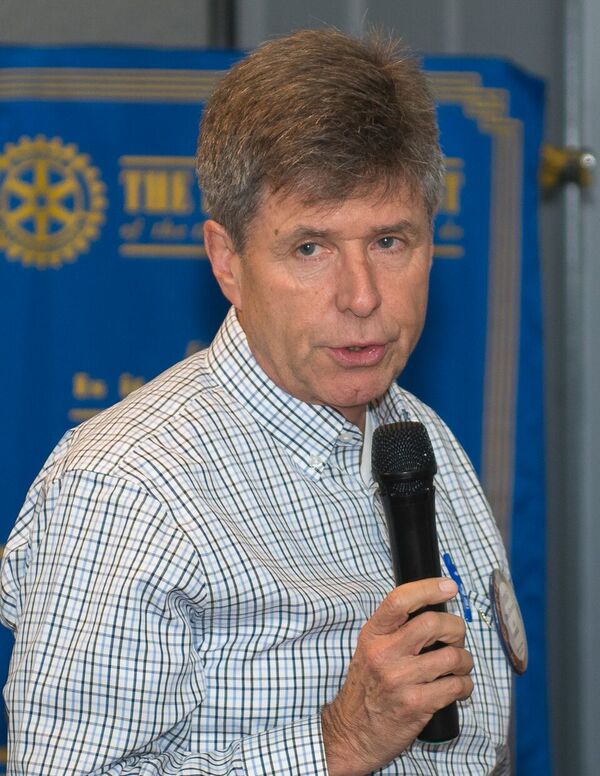
Four hundred years ago, the invention of the microscope gave us a glimpse into an aspect of the world too tiny to be seen by the human eye. The microscope works by capturing light shone on or through an object observed through lenses, which magnify the resulting image so we can see it. But a microscope has its limits. In 1873, German physicist Ernst Abbe discovered that the ability of a microscope to see past a certain size was limited not by the quality of its lens, but by the wavelength of light shining into it. And since the wavelength of visible light falls within a specific range – and can’t be altered – then it was believed the ability of a microscope was limited. It’s a concept called the diffraction barrier.
Because of this, microscopes have been able to create a clear image only up to 200 nanometers (about 500 times smaller than the thickness of a human hair). But that leaves out a world of detail – and even the more advanced microscopes that followed, such as the electron microscope, were unable to show what was going on in a living cell.
It was assumed that the diffraction barrier was impossible to overcome. But physicist Stefan Hell, a member of the Rotary Club of Göttingen, Germany, thought differently. Hell, who grew up under communist rule in Romania, spent his youth seeing a chasm between what officials told him to believe and what was true. Despite an entire scientific community of detractors who did not think advance in this area of microscopy was possible, Hell pursued a career dedicated to breaking past the long-believed barrier with hopes of creating a light microscope capable of illuminating a world that humans had never seen.
Eventually Hell and his colleagues found that by switching the ability of molecules to fluoresce on and off to make them discernible, the diffraction barrier could be broken. His discovery created a new field of science called superresolution microscopy, allowed scientists to see details less than 200 nanometers apart using focused light for the first time, and, in 2014, won him the Nobel Prize in chemistry. Hell, 53, a director at the Max Planck Institute for Biophysical Chemistry, spoke with contributor Erin Biba about what it’s like to break impossible barriers.
THE ROTARIAN: The discovery that led to your Nobel Prize was overcoming a barrier in microscopy that had existed for 130 years. Why did you pursue a discovery that most people believed was impossible to achieve?
HELL: In my childhood, I noticed that the official “truth” conveyed by the communist rulers on TV and in newspapers did not coincide with the reality around me. I must also add that we were well-informed about what was really going on in the world by listening to West German radio stations, including Radio Free Europe. Therefore, as a child I was confronted with the fact that the official truth was not the real truth, which I could see by opening my eyes. I became more skeptical about official and accepted opinions. When I was confronted with the then well-accepted resolution barrier of light microscopy, I wondered if it was really true or just a well-accepted scientific opinion.
TR: Four Romanians have won a Nobel Prize, which seems like a lot for such a small country. What is the attitude toward science and research there?
HELL: George Palade was one of the most influential cell biologists ever. Two laureates were writers, namely Elie Wiesel and Herta Müller. At the time I grew up there, Romania was a communist country and virtually nobody was allowed to build up personal wealth. As a consequence, people were quite keen to educate their children well and early on, because it was the only way to master life reasonably well. It is also fair to state that all Romanian-born Nobel laureates did their decisive work, be it in literature or in science, outside the country – either in Germany or in the United States. I should add that Romania has come a long way since 1989. It is now a democracy and a staunch member of the free world.
TR: Why is it important that we advance the field of microscopy and increase the resolution of the devices we already have?
HELL: The resolution of the light microscope was fundamentally limited to about 200 nanometers. The tiny details in a human cell, such as the spatial arrangements of proteins, are yet smaller by ten- to one-hundredfold. While we have the electron microscope to see such small details, the electron microscope cannot image living cells and also has difficulty identifying proteins and other molecules in the cell specifically. This is highly relevant so that we know which molecules are where to uncover the principles of how, where, and ideally when molecules come together to perform their cellular functions, and under what circumstances such processes go wrong and cause disease – something the light microscope is really good at. For these reasons, it was so important to make the light microscope sharper. Modern so-called superresolution fluorescence light microscopes can do both: They enable us to see proteins at tenfold higher resolution and also in living cells.
TR: When you began the work that led to your groundbreaking microscope, you were alone – in fact, somewhat of an outcast – as the optic community didn’t embrace the ideas you were testing. How did being on your own affect your discovery?
HELL: I think this was a major ingredient in my becoming successful and finding a solution. If you work more or less on your own, you can start thinking about the problem very deeply. Isolation can be critical to going a very different route. Studying the field, I was aware of previous approaches that all turned out to be futile, and I looked into the math of diffraction theory again to convince myself that there really was no loophole to focus light any sharper with a single lens. Two lenses from two sides helped along the axis, as I was able to show, but I concluded that, just like everyone believed, the focusing of light really was not a strategy that, on its own, would support higher spatial resolution. The “problem” in a way was that optical diffraction was an established subject. I had the insight that the solution would not come from thinking about the light alone, but from involving the molecules, which we examine in the microscope themselves. If I had worked with a group of other people initially, I would not have started to do what I did. Actually, many people told me that it would not work. Sometimes, being naive and a bit ignorant about the difficulties of a subject helps to see it from a radically different angle.
TR: Can you explain in simple terms (for those of us who aren’t educated in physics) how you overcame the barrier of one quarter of a thousandth millimeter imaging and allowed for images that had been fuzzy to become clear?
HELL: In the past, microscopes were designed to discern adjacent tiny features by focusing the light as sharply as possible in space. However, this strategy reaches limits by the fact that light propagates as a wave: The sharpest spot of light that can be created in space is just half the wavelength of light, about 200 nanometers. I realized that in order to discern adjacent tiny details, one has to adopt a different strategy: I made sure that not all the features that are illuminated by that finite spot of light are able to send light back to the eye or to the electronic light detector, to be precise. By making sure that the features light up consecutively, one can tell them apart.
TR: So, you achieved your success in microscopy by making molecules dark rather than the traditional method of illuminating them. But when you shared your theory about this with the community, you received some negative feedback. Why did you continue to pursue your ideas?
HELL: It is important to be realistic and thorough in one’s appraisal of the problems ahead. I realized that my way of thinking about the problem was radically new and definitely correct. I could not find a major physical flaw in my concept. The only challenges that remained were technical, meaning they could be met by improving the instrumentation used for building the microscope. The good thing is that such technical challenges can be overcome by development. This is how I knew that I would be right in the end.
TR: Why do you think the scientific community wasn’t more receptive to your ideas at the time?
HELL: It wasn’t particularly receptive because the diffraction resolution barrier was well-accepted in the scientific community. It was textbook knowledge. The situation was aggravated by the fact that there had been many false prophets before me who claimed that they would be able to overcome the resolution barrier, but failed. People therefore simply thought: “So many people have tried and failed. Why should this guy succeed?”
TR: What do you think are the most important advances that will result from our ability to look at the world on the small scale?
HELL: Currently, superresolution microscopy techniques are spreading into different realms of application, primarily in the life sciences and biomedicine. We have helped HIV experts understand infection pathways much better, and my colleagues at Stanford have shown how one can advance the understanding of protein aggregation in Huntington’s disease. But these are just two examples. There are many others, and many more will follow.
TR: Are there ways in which your work could help Rotarians tackle humanitarian issues related to health, clean water, or sanitation, for example?
HELL: Making microscopes that can help researchers better understand what goes on inside cells will definitely impact human health in the long run. It enables the discovery of new molecular mechanisms in biology, but also pathology. New hypotheses can be carefully tested in the cell, the great advantage being that one can observe so directly. This is something that does not work overnight, but as the capabilities of observing things grow, so, too, will the ability to interpret what is seen, feeding into new knowledge and understanding that can be used to advance medicine.
TR: Is there any research going on using your microscope that you find particularly interesting or promising?
HELL: There are over 1,000 laboratories worldwide – and the number is still growing – in which science is being conducted using the new opportunities arising from seeing details much better in living cells. Exciting topics range from the changing organization of the shape- and structure-giving cellular cytoskeleton, for example in neurons, to the highly intricate organization of the cell nucleus and genetic information storage, the division machinery of cells and its potential defects, and new kinds of insights in virology or neurodegenerative disease that I touched on before.
TR: Now that you have overcome one barrier in the level of microscopy, has a new barrier developed? In other words, are there still limits on how much we can see through a microscope? Do you think those limits will one day be overcome as well?
HELL: The resolution barrier has been broken, but the new limits of resolution have not been reached yet. Those new limits are given by the size of the molecules themselves, about 1 nanometer. Scientists working in the field are trying to make the microscopes better and better, so that the maximum level of performance possible will be reached for the benefit of science and medicine, and thus of mankind.
Rotary Club of Santa Rosa Sunrise - Founded June 30, 1986


.png)


.png)
.jpg)



.jpeg)
.jpeg)
)
.jpeg)
.jpeg)
.jpeg)
.jpeg)
.jpeg)
.jpeg)
.jpeg)
.jpeg)
.jpeg)
.jpg?_=636069131875314600)


.png?_=636069131875314600)
