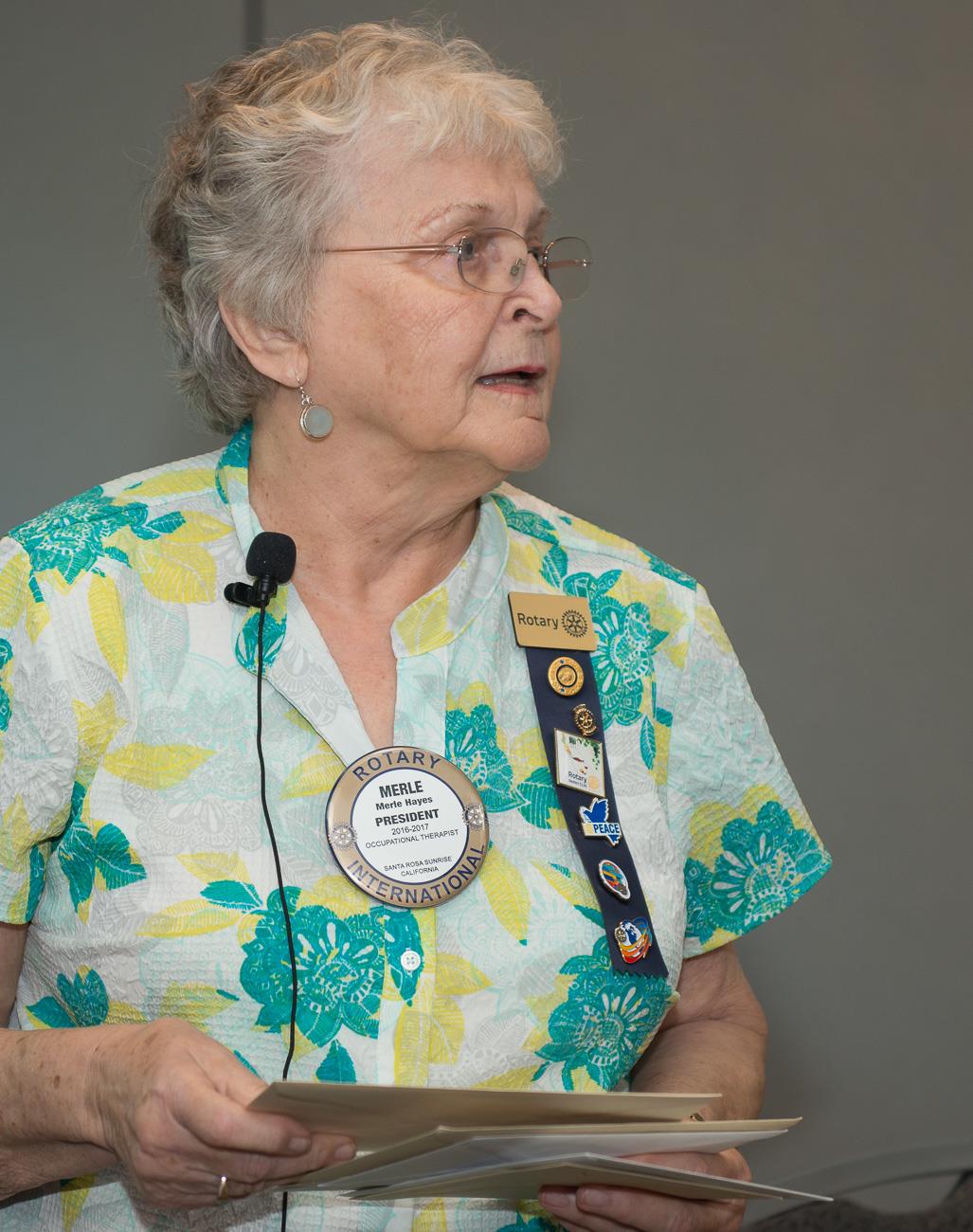
As I reflect on the year that has pasted so quickly I have so many memories of people and things. There are jobs well done by many hands. We have enjoyed laughter and an occasional tear. I remember more that said yes than no when asked to serve. We have gone from celebrating our 30 years to wondering how we can add 30 more and continue to give back to the local community, the greater community, and the international community. We have done a high 5 with the building of the surgery center and we are so close to finishing the dream and providing the reality for a people that couldn’t do it for themselves.
Along the way I have heard about great adventures of the membership and enjoyed treasures brought back so I could enjoy a small part of their trip as well. I thank each one for the tasty treats and regional finds so freely given.
We are a living, changing organization that does do good in the world. Your many acts of serve have been felt by those that received them. I thank you for the privilege of allowing me to lead Sunrise Rotary and represent you this past year. It has filled me with pride to say I was President of Santa Rosa Sunrise Rotary.
Posted by Rich Randolph & Warren Smith on Jun 25, 2017
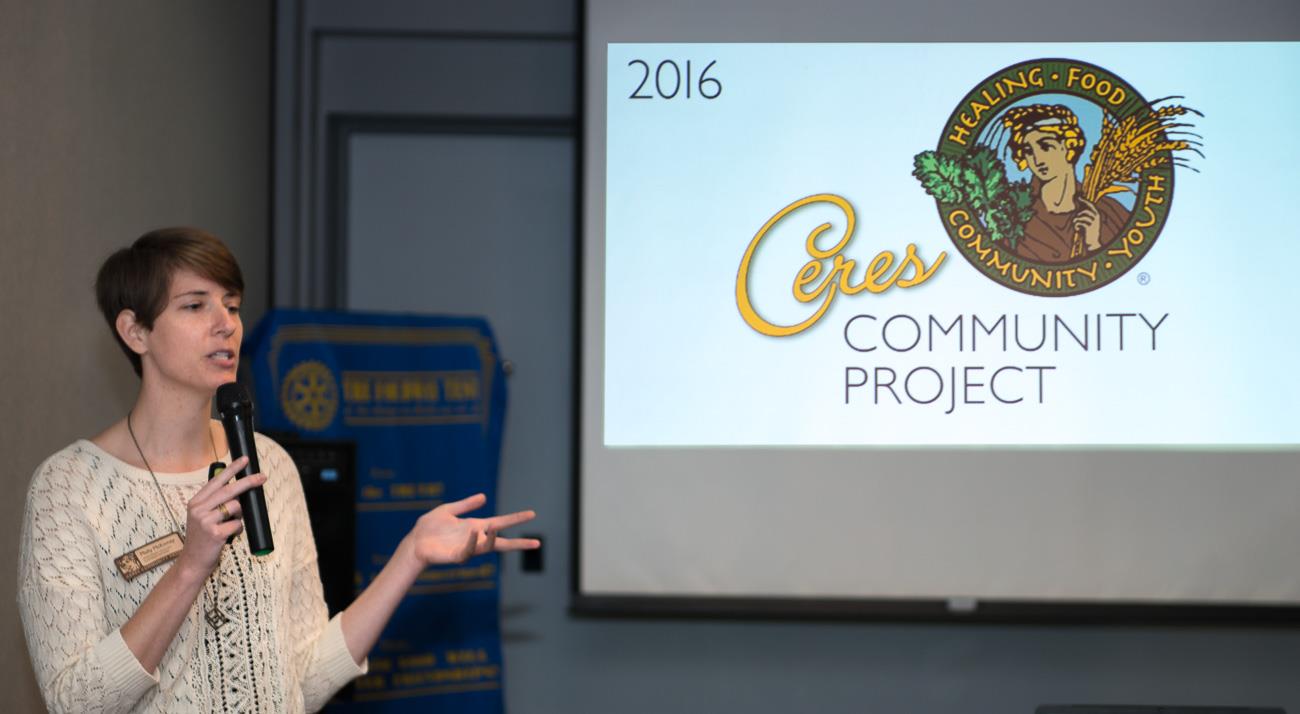
CERES Serves Sustenance
Just ten years ago, CERES was a fledgling concept with three hope filled volunteers including Director Carolyn Couch. Six clients were being provided with a daily meal. Today, the initial hopes are fulfilled and growing: In these ten years 518,000 meals have been delivered, 2,300 passionate teens have learned to grow and cook healthy food and 12 communities across the United States have adopted and replicated the CERES model of empowering teens, building communities and serving healthy meals to neighbors in need.
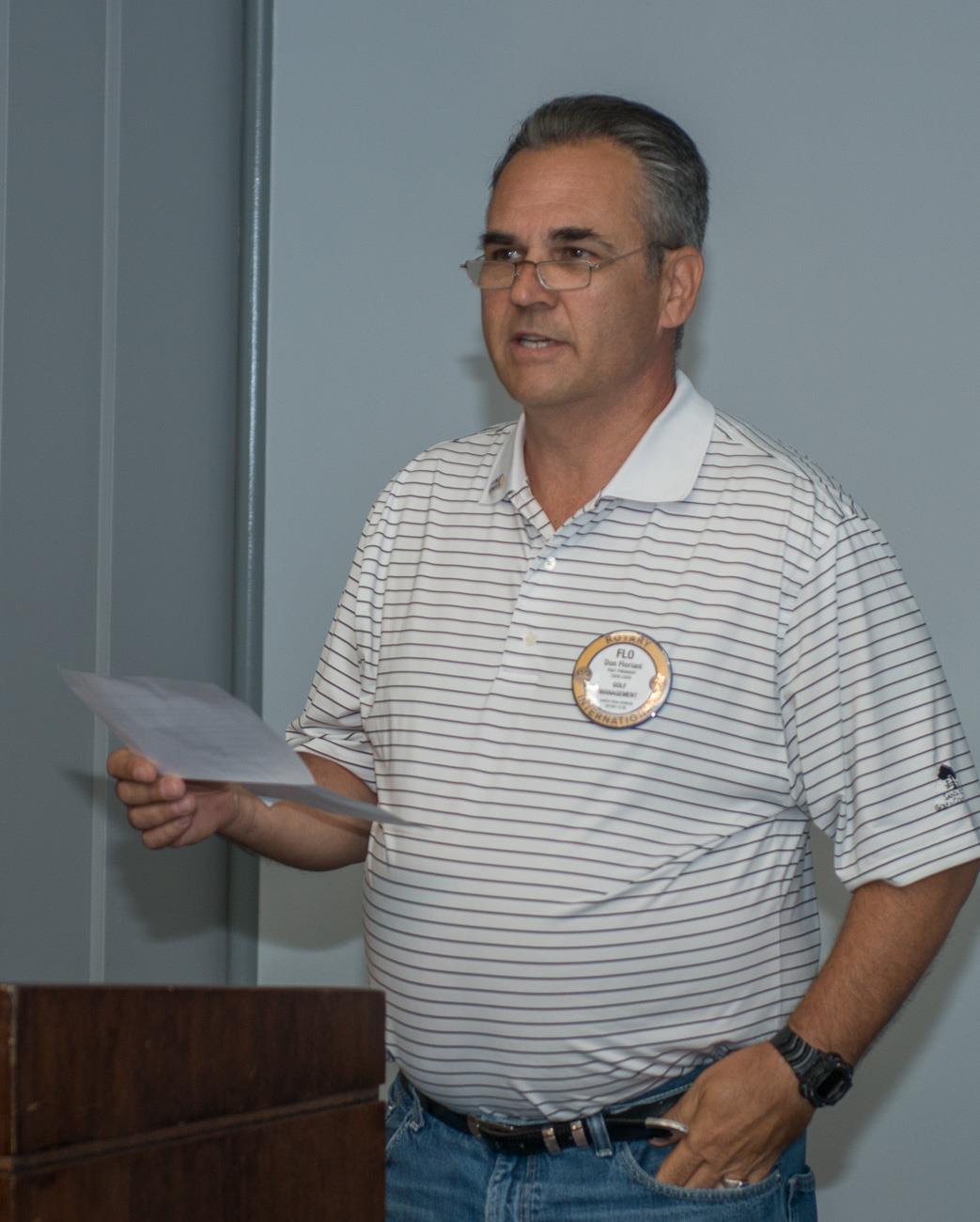
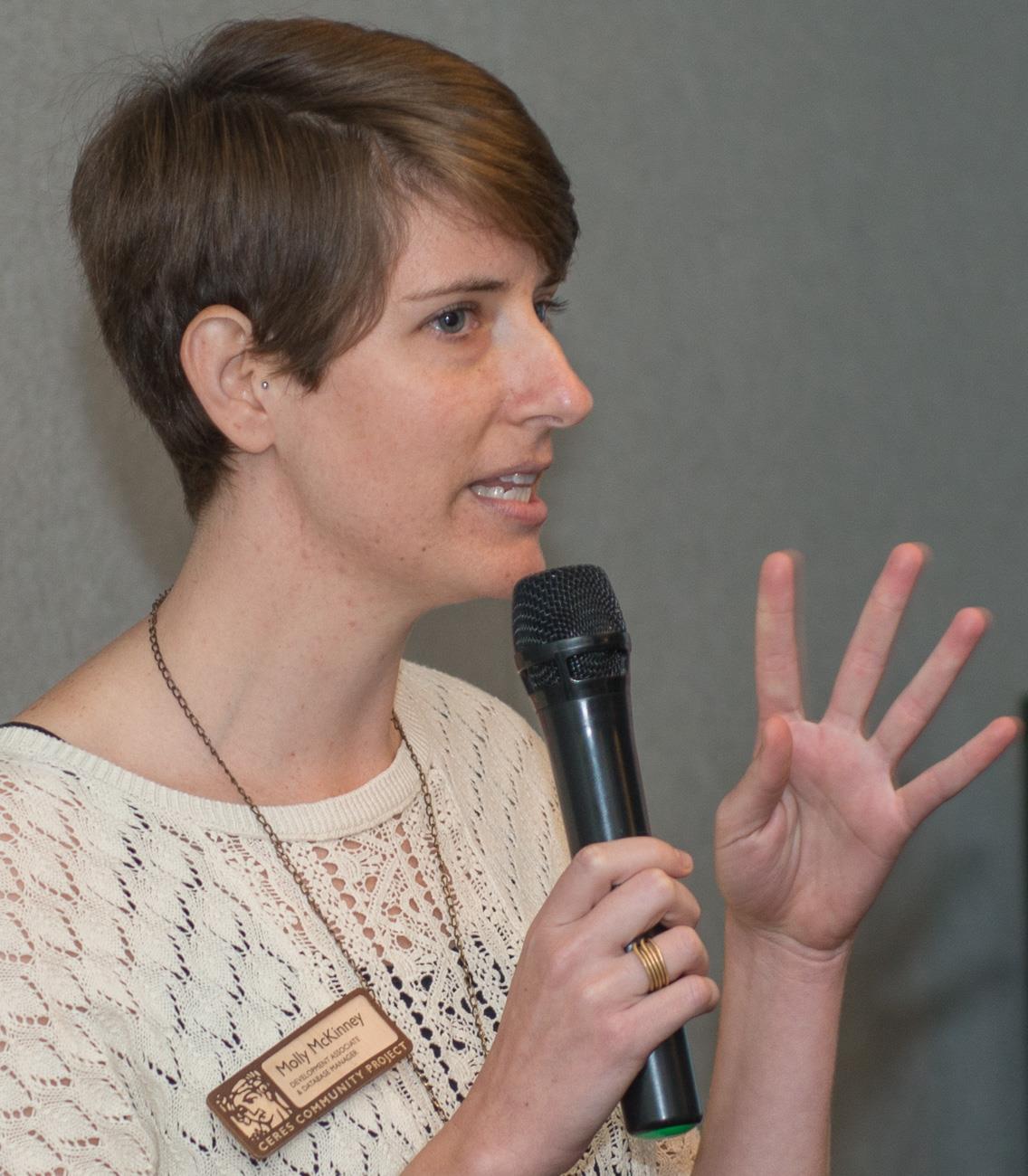
Club Program Coordinator Don Floriani introduces Molly McKinney, Data Base Manager and Development Associate for CERES.
Molly enumerated the extent of CERES activity in Marin and Sonoma County. Success has leveraged replication of CERES model to cities in Illinois, Connecticut and Wisconsin.
Sunrise members Nancy Aita, Max Bridges and John Dolinsek have volunteered in the program, contributing towards the 24,000 hours logged by 508 local volunteers.
Recent accomplishments include partnering with Social Advocates for Youth (SAY) at their Dream Center in opening a Cafe and Catering venture. CERES, named after the Roman goddess of harvest is setting it's sights on the next ten years: Reach one million meals delivered, establish lifelong healthy eating habits, mentor "Lil Chef" education classes in schools and continued extension, aka "Rippling Out" ~ Ukiah here they come!
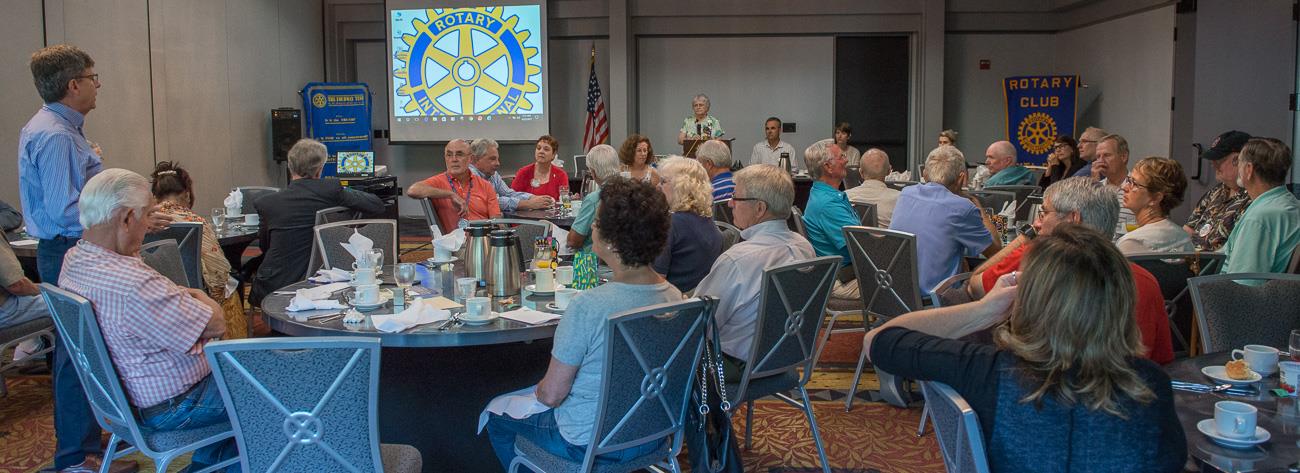
On a regular basis, our resident photo pros Warren Smith and Jack Strange submit pictures of what is going on at the weekly meetings. You can always find the most recent pictures at the websites photo journal called "Meeting Sighting" Please note that all the meeting photos for the entire Rotary year are at this location with the most recent on the last page.
Thanks for all the great pictures Warren and Ross! Link to Meeting Sightings. The most recent are on the last page!
Who knew that our very own Kent Seegmiller was a spokesperson for the Local Union? No one. Not even Kent. But now everyone knows because he is in a photo with Union members on the front page of the P.D. And no. This is not fake news!
Imagine sailing the Caribbean on your own twin diesel catamaran!
Why is this man smiling so broadly? Wouldn't you, if your life-long dream had just come true?
Although Sunriser Peter Banks hated his stint in the Navy, he developed an early love of sailing. Peter and his wife Mary have recently made four major voyages in the North Eastern Caribbean British Virgin Islands on their new 38-foot boat. While sailing in 24 hour shifts, Mary guiding the boat at night.
The cat is now moored at St. Martin, where the Banks left it when they escaped to Antigua during the hurricane season. One cabin is used for supplies, but another cabin is available for paying guests who support the voyage.
During these voyages, when the couple will be away from their Santa Rosa home, Peter plans to attend Rotary meetings in the Caribbean. However, a more formal dress is required at those clubs.
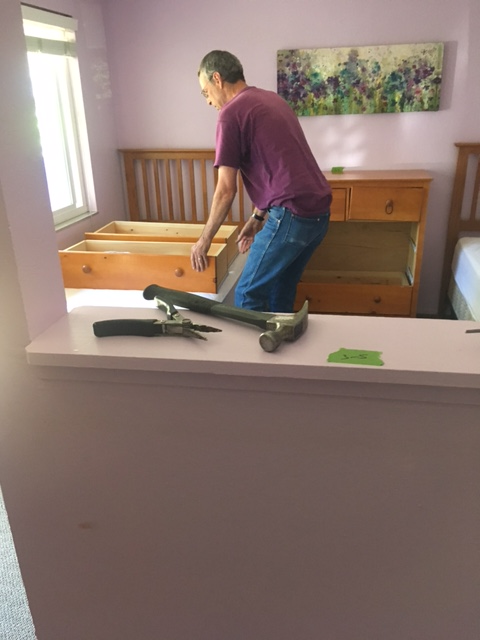
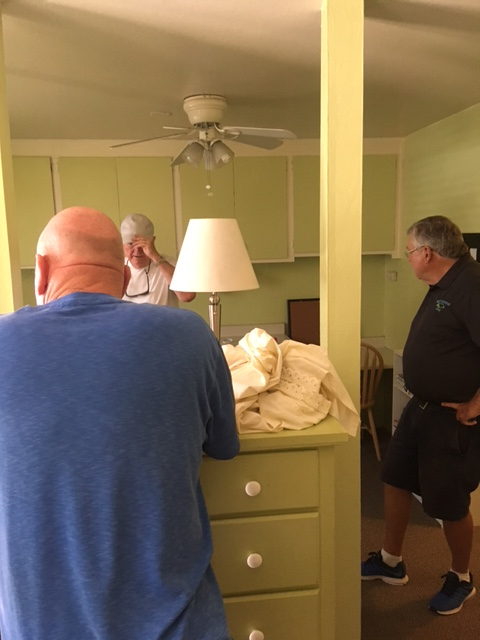
Once again Leroy Carlenzoli's Golden Hammer Crew rose to action and moved furniture out and in of two of the eight units for recarpeting. Above, in a rare moment, the Golden Hammer is idle as Jim Moir adjusts drawers.
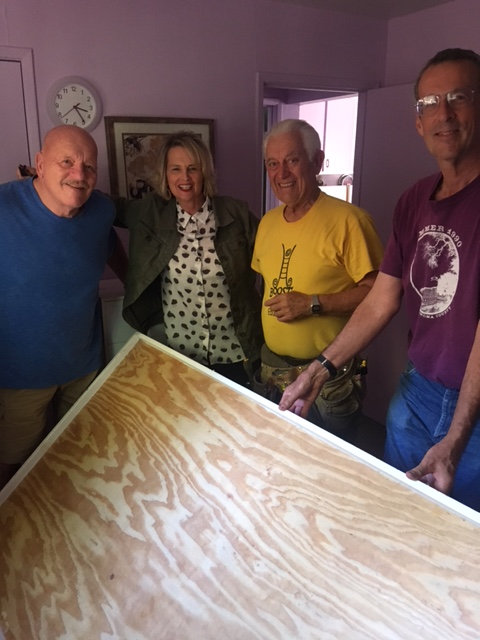
Jim Kirkbride, Steve Amend and Randy Seeley pause after planting a heavy bureau in it's proper spot.
Leroy was onsite from 7:30 AM to 4 PM supervising the "outbound" crew of Warren Smith, with Jim's Kirkbride and Moir. In the afternoon, the "inbound" shift with Jim's again Randy Seelye and Rich Randolph re-arranged the bureaus, beds and tables to their original locations. In the process, Leroy discovered additional areas needing attention. His eye for detail will keep his crews engaged for months to come.
Jim Kirkbride, WRS Director Linda Carlson, Leroy aka Golden Hammer and Jim Moir take 5 as Linda thanked the crew she calls "the GREATEST"!
This project marks the third consecutive workday for Leroy on Rotary related service.
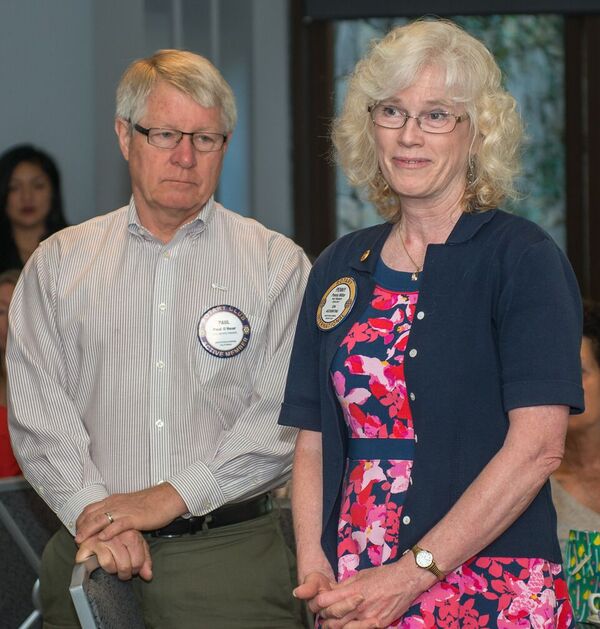
Utilizing a two-week auction item, purchased during a Santa Rosa West Rotary Club fundraiser, Sunrise couple Penny Millar and Paul Rear managed to take a four-week African Safari, that included an amazing trip to Capetown as well as equatorial forests. Paul admits thinking that he might eventually get tired of seeing another wild animal. But now reports that he appreciated each and every one!
Soon to be Past President Merle Hayes reports the positive vote of clubs in three Northern California Rotary Districts, including our own District 5130. Sixty-seven percent of clubs responded. The vote was 97% yes.
President Merle and Incoming President Doug return from Atlanta
President Merle Hayes reports that the recent Rotary International Convention in Atlanta hosted 175 countries on five levels of meeting spaces in at least two buildings. More than 23,000 attended two Opening Sessions to hear amazing speakers, such as Bill Gates (who seemed to be just two inches tall to Merle, who was sitting at the back of the convention hall).
President Elect Doug Shureen also reported that the convention theme and speakers emphasized Rotary's current focus on polio. Five new cases have been discovered in Pakistan, Afghanistan and Nigeria. Bill Gates has pledged a 2 to 1 match, up to 450 million, to make certain the disease is completely eradicated.
The US has pledged 200 million dollars and Canada pledges 50 - 60 million. If we do not annihilate every trace of the disease, now, it will never be completely eradicated.
More than 1.6 million of these funds will be spent gaining access to tribal areas. Tribal chieftains are experiencing the devastation of polio on their people and are softening in their resolve to block intervention and beginning to allow inoculations.
Doug also reported that Ashton Kucher has established a foundation to fight human trafficking -- an issue that fought Doug's attention. Besides the tiny screens and miniature speakers, the convention experience included a downpour of rain on the last day.
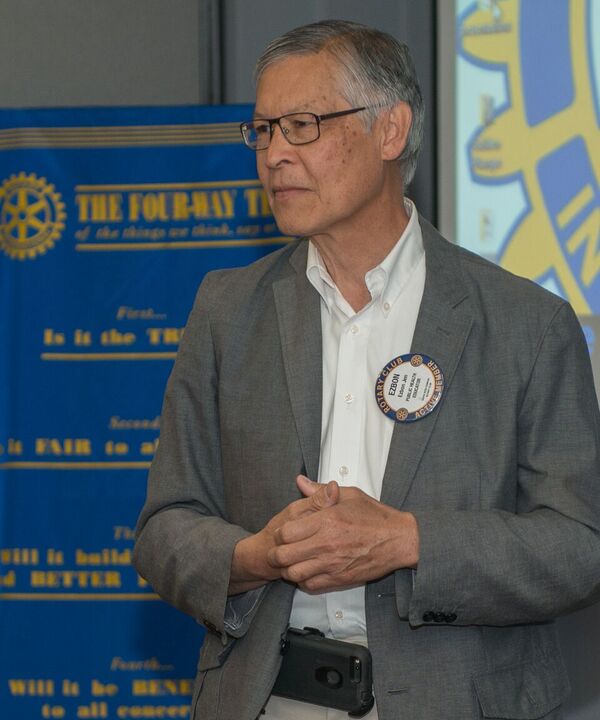
Seemingly undaunted by the breakdown of the trailer used to haul dental equipment, which still languishes in Grananda, Sunrise Dental Project coordinator, professor Ezbon Jen reports the results of this mission to Baja. Twelve Santa Rosa Junior College dental students examined 185 migrant children by day and took classes in Spanish each evening. The trailer, put into service in 2005, blew its engine. A new truck is needed to continue this outreach service.
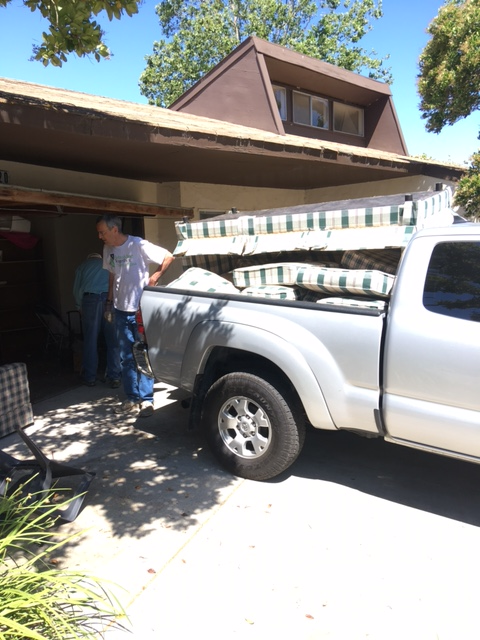
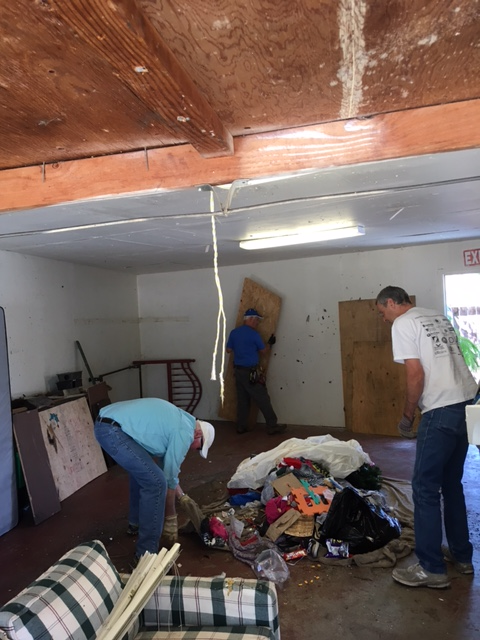
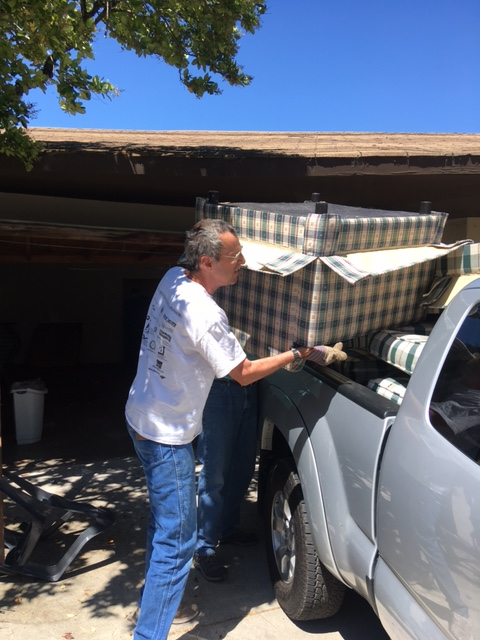
Steve Amend's pickup earned its keep Friday as the hauler at the Women's Recovery Services cleanup day. With loaders Leroy "Golden Hammer" Carlenzoli, Steve Amend driver, Jim Moir, and Rich Randolph laborers, the foursome managed to load and dispose of two couches, 5 dining chairs, numerous discarded garments and recycle toys and electronics to Goodwill.
WRS provides supportive residential care to women and children during substance abuse recovery. Next week at another site, the Golden Hammer crew will be moving furniture out and in for re-carpeting. On any given week, Leroy invests close to 40 hours of skilled labor in maintaining three different properties. He welcomes like minded and handy hands to share in the projects. If you are interested in volunteering for future workdays (hours;), get in touch with Leroy.
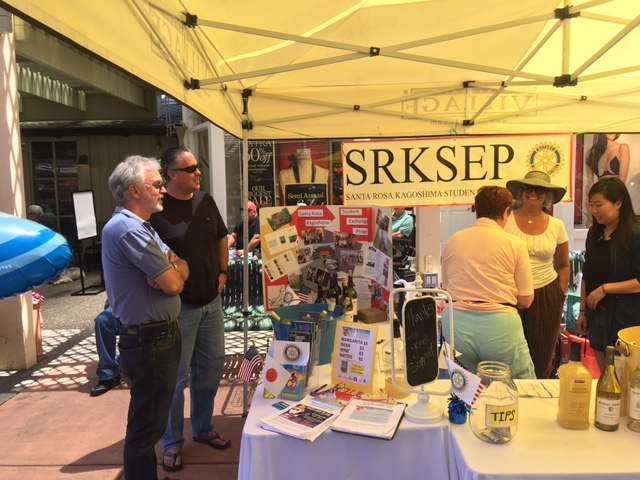
Sayonara Santa Rosa, from July 10 to August 6, nearly a dozen teens will be traveling to Kagoshima Japan for our annual exchange tour. 2017, an odd numbered year, sends students to stay in host homes to travel and learn of Japanese culture.
Above, Dave and Shauna Lorenzen manage this weekend's hydration station at Montgomery Village. Thirst could be quenched with water, wine or beer, with proceeds going to help fund the exchange expenses. Alongside Dave is Ken and Doris Petro's son and attentive dad of his outbound son.
Started in the 1980's by Sunriser Dan Lambert, to date over 200 youth have gained valuable insights into Japanese customs and cultivated lasting friendships, and in some cases careers. Shauna Lorenzen, Steve Amend have continued to organize and support SRKSEP, aka Santa Rosa Kagoshima Student Exchange Program
Outbreaks of vaccine-derived polio have been reported this month in the Democratic Republic of Congo and Syria, according to the World Health Organization.
At least 17 cases were identified in Syria and at least four in Congo. In both countries, health officials are working with the Global Polio Eradication Initiative to respond immediately to the outbreaks with supplementary immunization activities and field investigations.
To prevent the virus from spreading further, investigations and immunizations are also being strengthened in neighboring countries, the World Health Organization said.
Despite the new cases, the push to eradicate polio is stronger than ever, with fewer cases reported so far this year than ever before. It also got a boost last week at the Rotary International Convention in Atlanta, Georgia, USA, where donors pledged $1.2 billion for the effort.
Vaccine-derived cases are rare, and they differ from wild cases. Here’s what you need to know to understand these outbreaks.
Q: What are the two kinds of polio cases?
A: Wild cases of polio are caused by poliovirus that is circulating naturally in the environment.
Vaccine-derived polioviruses are extremely rare and exist under specific circumstances. Oral polio vaccine contains live virus that is weakened so that it will prompt the body’s immune response without causing paralysis. The vaccine is ingested, and the weakened virus replicates in the child’s gut and is then excreted. In areas with poor sanitation, this excreted vaccine virus can spread to other children. This can actually be good because it then immunizes them. When the strain no longer finds susceptible children, it dies out.
The problem occurs in areas of low vaccination coverage. There, such vaccine-derived strains of the virus can continue to circulate as long as they continue to find unvaccinated or otherwise susceptible children. While they continue to circulate, they mutate. Eventually, if they are allowed to circulate long enough — at least 12 months — they can mutate into strains that are strong enough to cause paralysis.
Q: Is the vaccine safe?
A: Yes. The oral polio vaccine has reduced the number of polio cases by 99.9 percent since 1988. The risk posed by wild poliovirus is far greater than the risk of an outbreak caused by circulating vaccine-derived poliovirus. Once wild polioviruses have been eradicated, use of oral vaccine will be stopped.
Q: Are vaccine-derived cases common?
Health workers work diligently to monitor children and test sewage samples for the polio virus.
A: Polio cases caused by circulating vaccine-derived poliovirus are extremely rare. Wild poliovirus remains the far greater risk. Nevertheless, because of the small risk of vaccine-derived outbreaks, use of oral vaccine will be stopped when wild polioviruses have been eradicated.
Q: Are wild cases common?
A: Wild poliovirus occurs only in the countries where polio remains endemic: Afghanistan, Nigeria, and Pakistan. Only six cases of polio caused by the wild virus have been reported so far in 2017. That’s the lowest number of polio cases in history, with fewer cases reported in fewer areas of fewer countries than ever before.
Q: How are polio cases detected?
A: Polio surveillance has two parts: Doctors and health workers monitor children for the virus, and authorities test sewage samples from sewer systems or elsewhere, in areas that don’t have adequate sanitation facilities.
The detection of these most recent cases demonstrates that polio surveillance systems are functioning in both countries.
Q: What is the science behind the vaccines?
A: There are two types of vaccine: oral and inactivated-virus. The original oral vaccine protected against types 1, 2, and 3 of the virus.
Type 2 wild poliovirus was eradicated in 1999 so the current vaccine contains only type 1 and type 3. This allows it to provide quicker and better protection against the two remaining types. The inactivated-virus vaccine, administered by injection, contains virus that is dead. Because the virus is dead, the vaccine cannot cause polio outbreaks.


.png)

.jpg)
.jpg)
.png?_=636341681033538401)
.jpg)
.jpg)
.jpg)
.jpg)
.jpg)
.jpg)