The number of hurricanes in 2023 in the Atlantic was 19. One did enter the Gulf but by the time it was ready to hit landfall, it was no longer classified as a hurricane. That storm came ashore in Florida on the Gulf side to an area that had very little population and industry. The Gulf was spared of hurricanes and instead the “Bermuda high” sent those into the Atlantic seas not close to the States. A hurricane is not classified as such until sustained winds of 74 or higher are present.
So far in 2024 the various forecasting experts are expecting the same as last year’s forecast: 15 to 36 named storms will form in the Atlantic. Greg’s forecast is more specifically decided in area’s that will impact southeast Texas. There will be storms but whether we feel an impact here is questionable. The media will continue to present that number of storms, not what areas are potentially at risk. People only remember major storms that impact their area.
Presently Greg manages 83 weather stations in Southeast Texas. These are set up in specific locations with specific features (i.e. grass opposed to concrete and height). If the stations are not set up to standards, then there will be a bias on weather information. Results will be incorrect if set-up wrong. This area will continue to see storms and varied temperatures as it has in the past (high temperatures and humidity during the summers and possible freezes in the winter). The weather pattern has been mapped since the 1890s but sometimes not accurately as measuring systems were not always available.
Overall, the people who have the most at stake are those close to the beaches (Crystal, Galveston, Sabine, etc.) who see the most structural damage and potential deaths by drowning. In the last evacuation there were more deaths by road accidents and unavailable health care than loss of life by drowning.
Greg Bostwick the Gardner gave Rotarians gardening tips and suggestions for plants that do well in our climate. Hibiscus are plentiful and come in beautiful colors and combinations of colors due to cross breeding of plants. They can take the heat and the sun. We have had hard freezes the last couple of years and plants will survive if they are in pots and placed inside the garage during the freeze. If they are left in the ground, they will need to be replaced.
The Hossinator tomato is one of Greg’s favorite tomatoes and they are great for slicing and they will be up to a pound each. There are many tomatoes on each plant. This plant has been a very popular seller in the area and is becoming a favorite of many.
Esperanza grows well and loves our heat and humidity. It is considered a Texas Superstar but is actually a modified weed that has pretty yellow trumpet-like flowers all summer. Vincas come in many colors as well as white which gives off a glow in the dark. This plant comes in upright and cascading variations. Even though the main plant will die in a freeze, there will be more plants in the spring from seeds of the old plants. An organic fertilizer called Microlife Ultimate is Greg’s favorite mulch and fertilizer.
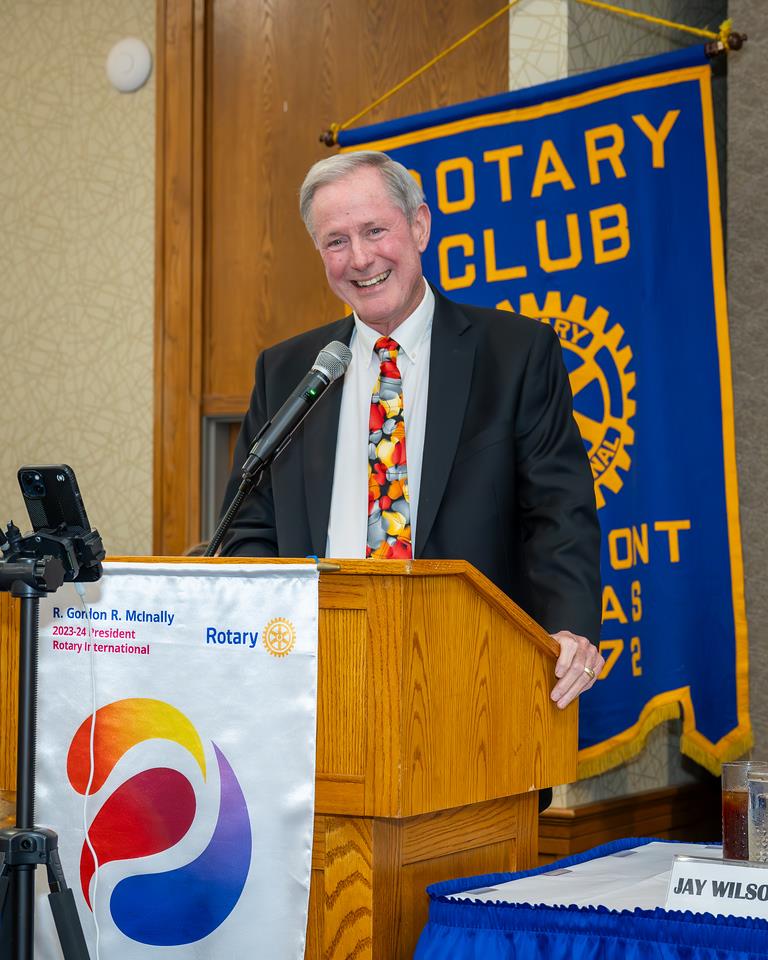
Rotarians enjoyed a good question and answer session with Greg and were happy to have the opportunity to hear him speak and learn about our area’s weather and plants.

.png)