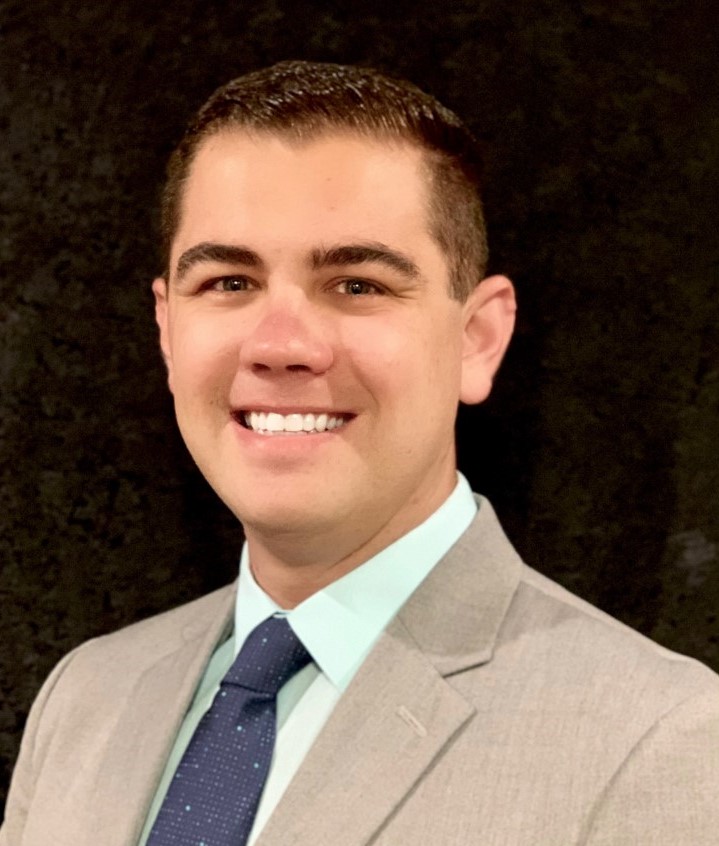
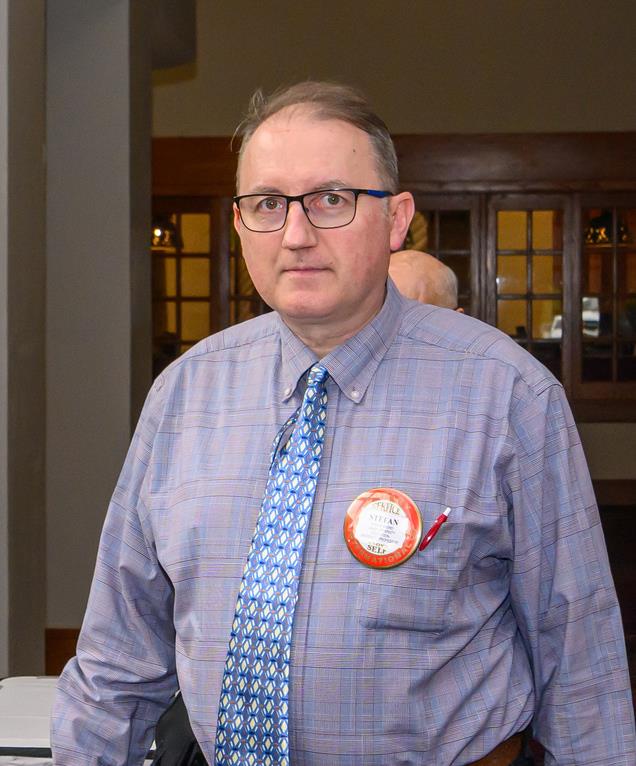
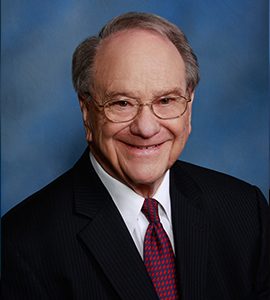
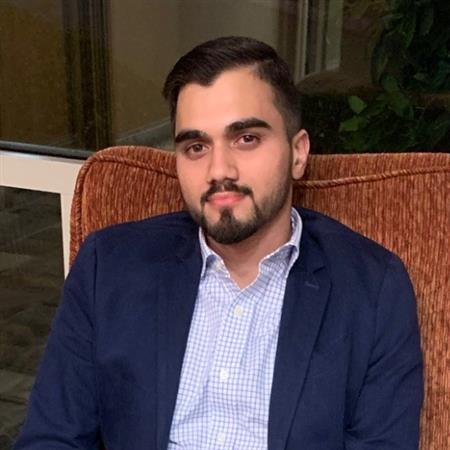
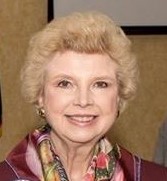
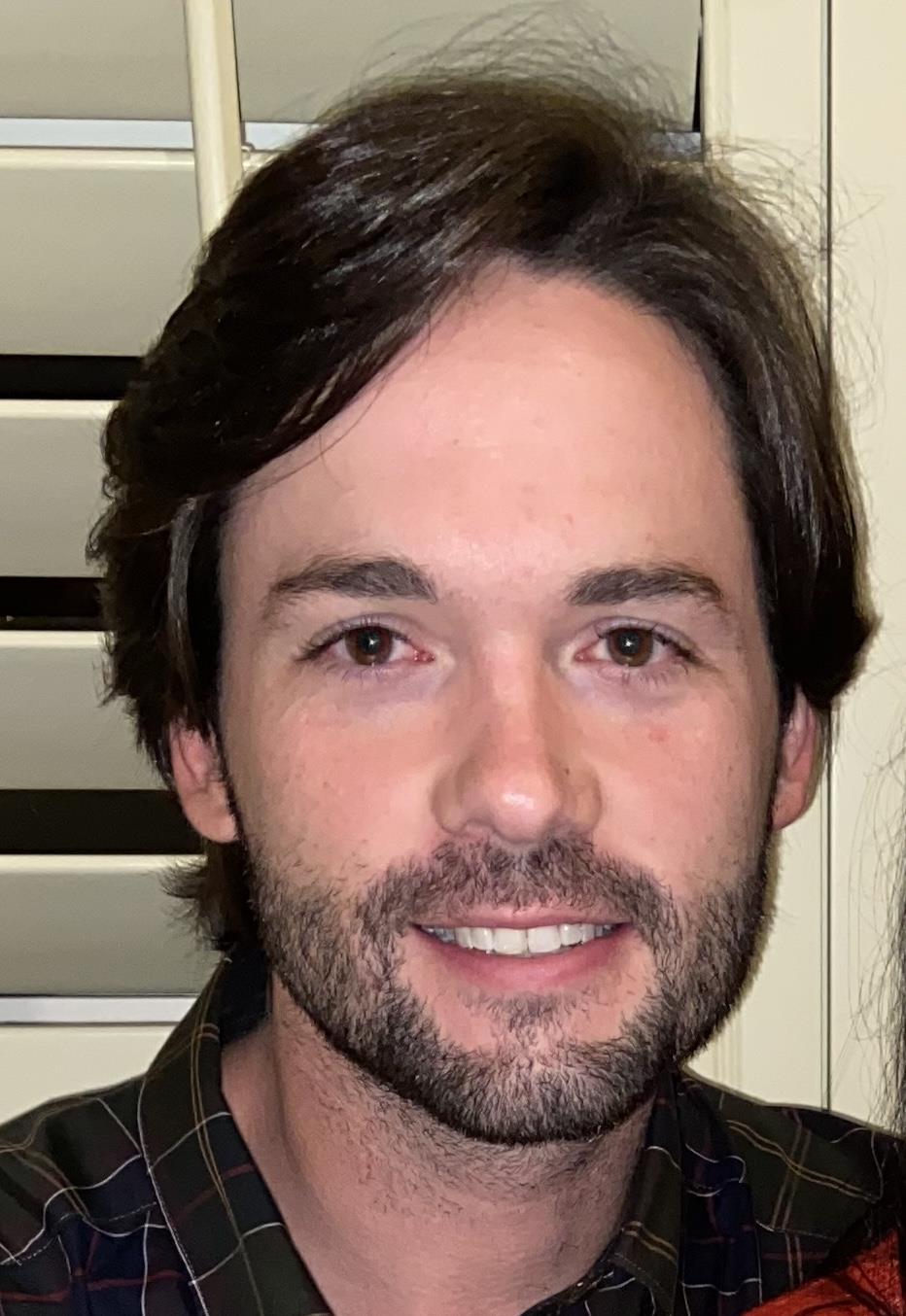
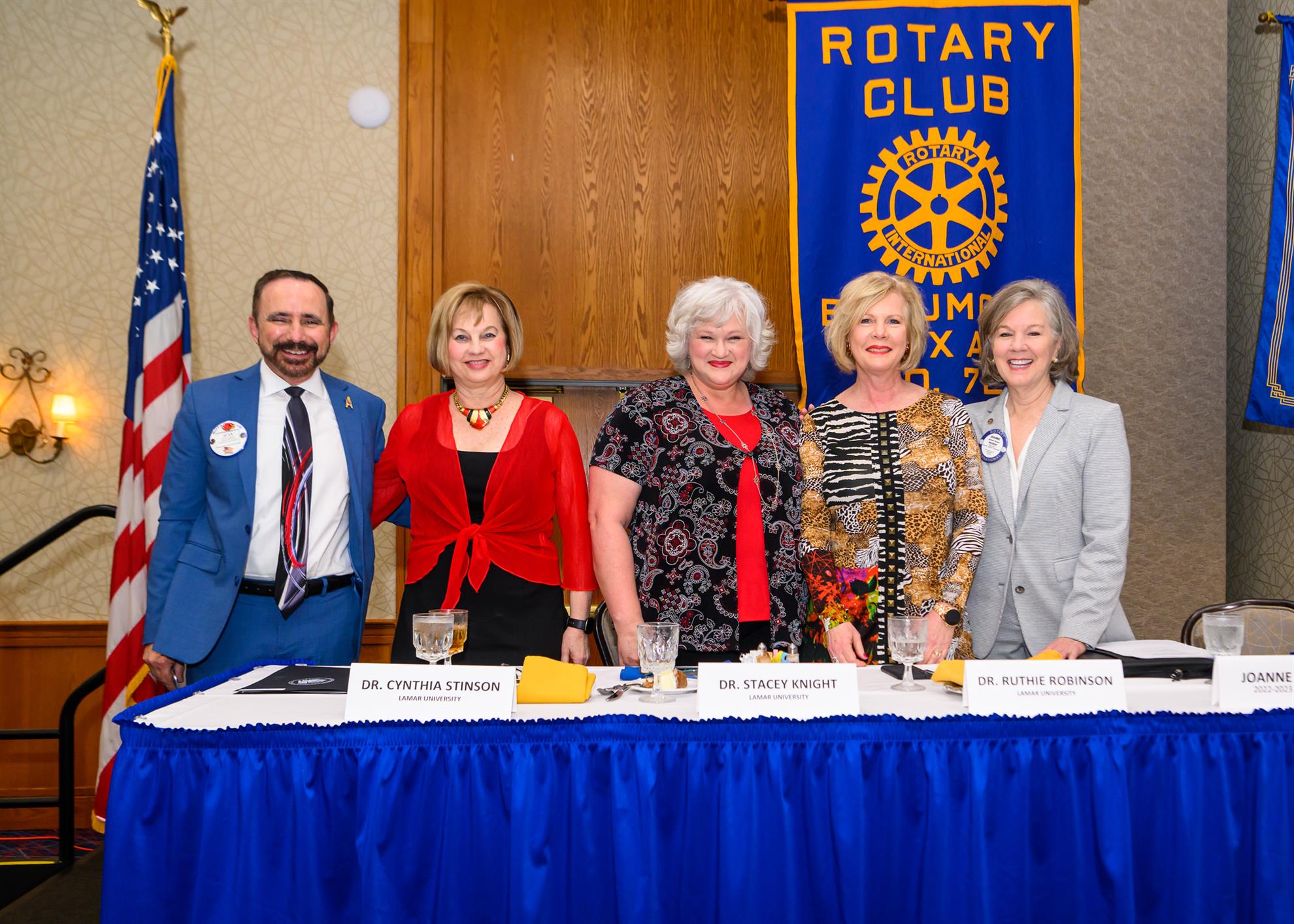
Juan Zabala, Vice President for University Advancement at Lamar University, introduced Dr. Stinson, Dr. Knight and Dr. Robinson. He recognized each of these professionals as exemplary members of the Lamar University faculty. The research they have completed explores the impact that COVID-19 had for patients and families as well as health care workers.
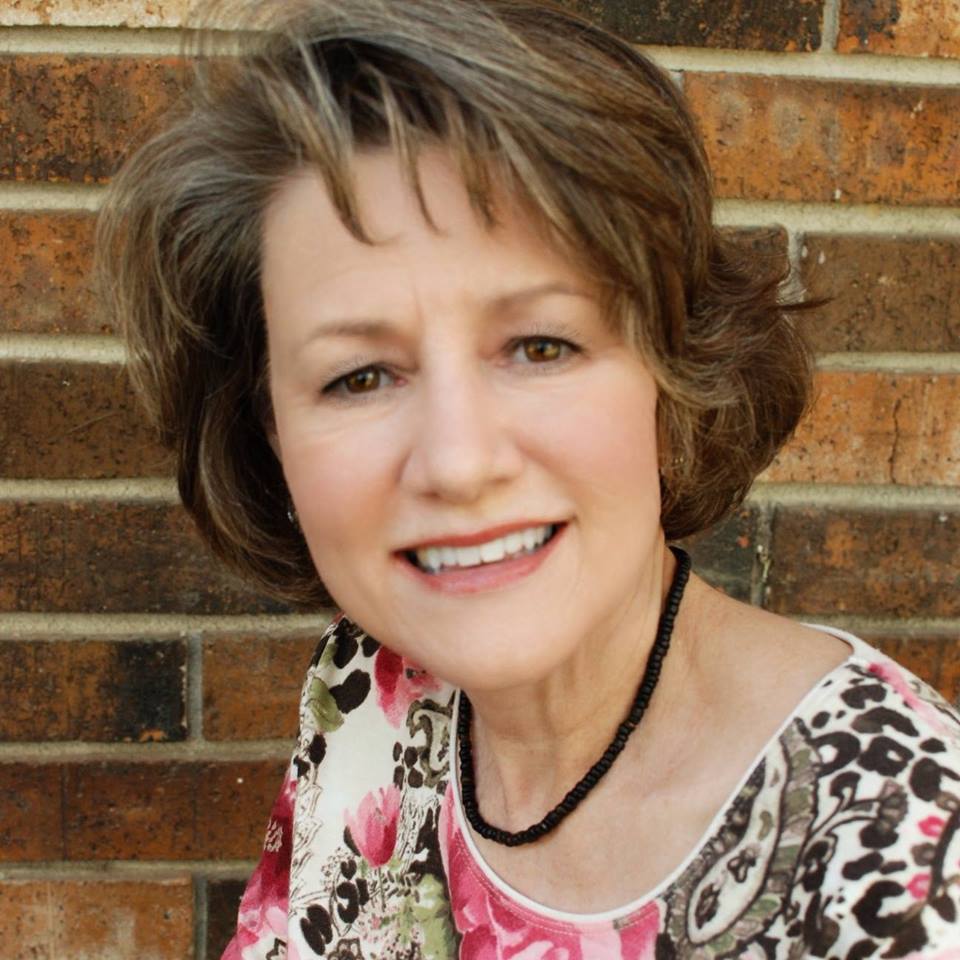
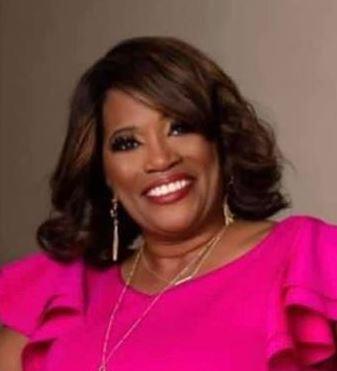
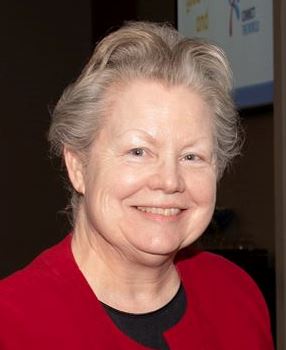
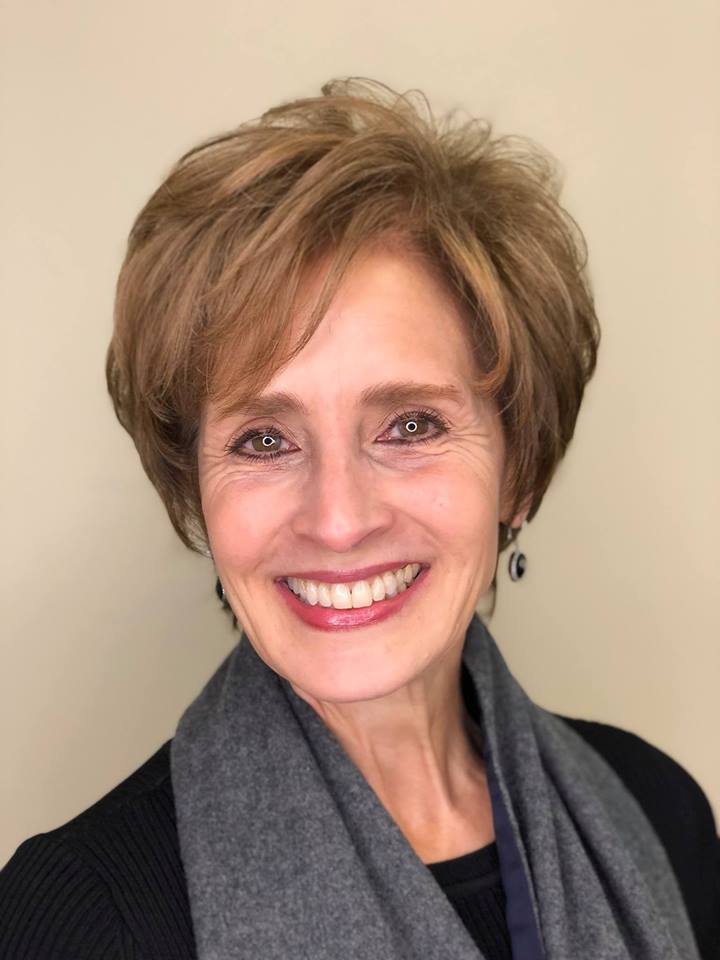
Dr. Cynthia Stinson is the Lamar Dishman School of Nursing Chair and Associate Professor. In 2020 Stinson was appointed to the Texas Health Services Authority Board of Directors. She serves as the only nurse on the board. In 2019, she was awarded the Julie and Ben Rogers Community Service Award. More recently in 2022, she along with Dr. Ruthie Robinson, Director of Graduate Nursing Studies at LU, was awarded the State Research Award by the Texas Organization of Baccalaureate and Graduate Nursing Education for their research focusing on “Compassion Fatigue and Resiliency During the COVID-19 pandemic.” In 2022 she was recognized as a National Hartford Gerontological Distinguished Educator.
Dr. Knight is an Associate Professor for the JoAnne Gay Dishman School of Nursing. She is a Registered Nurse with experience in the areas of critical and long-term acute care, is a Certified Nurse Educator, former Robert Wood Johnson Foundation DNP mentor, and a two-time recipient of the Texas Organization of Baccalaureate and Graduate Nursing Education (TOBGNE) award for both teaching and research. Recently, she has studied family perceptions of separation from hospitalized loved ones during COVID and the impact of disaster on those suffering with Alzheimer’s disease.
Dr. Ruthie Robinson is an Associate Professor in the JoAnn Gay Dishman School of Nursing at Lamar University and the Director of Graduate Nursing Studies. She received her PhD in Nursing Research from Texas Woman’s University. Her previous research includes leadership issues, moral distress, and compassion fatigue.
Restrictions on visitors during the COVID-19 pandemic had major implications for both patients and families, impacting health care outcomes. Individuals who experienced separation from hospitalized family members due to the “no visitor policies” during the COVID-19 pandemic were asked to participate in a qualitive study to elicit their perceptions. Themes derived from this pilot project were of advocacy, communication, emotional upheaval, isolation, and abandonment. Ideas for improved patient and family experience discussed by the authors include visiting contacts for those wishing to spend time with loved ones diagnosed with COVID-19 or other infectious diseases requiring isolation, personal protective equipment for significant others, consideration of visitation policies for those patients without decision-making capabilities, and increased accessibility to communication aids for both patients and families.
The study design incorporated Qualitative Interviews with family members of those who were hospitalized during the COVID-19 lock down. Patients were in acute care facilities and had various reasons for their hospitalizations. Not all of the patients had COVID but all were subject to the restrictions. The interviews were conducted by phone, by virtual means or in person. There were eleven interviews, 100% were female, all Texas residents and all very emotional. Each interview was conducted with sensitivity and compassion. Everyone involved felt the sadness for what had happened and how it happened. Families expressed anger, fear, grief, and mistrust.
During the lock down hospitals were not allowing visitation of even the patients who were at the end of their lives. Most of the restrictions were mandated by the federal government entities. All involved were navigating new territory and were trying to protect health care staff, families and patients. The families had a few suggestions in case there is a next time. As much as we hope there will not be another pandemic, we must be prepared in case there is. Every interviewee expressed a concern about patient advocacy. Who was making informed medical decisions? How were the family members involved in these decisions? How was this communicated to those outside of the hospital? In most cases the patient was in ICU, on a ventilator and without the ability to discuss these life and death decisions with the ones they loved and those who loved them. So how can this be a priority during the next medical crisis?
Another suggestion was to prepare the visitation rules in advance of another extreme situation. How will patients be informed of their rights and the flexibility that is needed in an extreme situation. We know that patients respond to someone in the room who can advocate for them, who can talk to them, sing to them, comfort them, and console them. One family member expressed her willingness to bring her own PPE and to not leave the room once she arrived. She just wanted to be there to advocate and to comfort her loved one. This was denied and the outcome was not good.
Hospitals and staff were overwhelmed, understaffed and fighting for their lives as well as for their patients. No one was prepared. No one could have imagined how devastating this was going to get. The governmental agencies were making decisions that impacted local health care and it was very confusing for everyone. Most of us lost friends, family, co-workers, and employees. We all know that it could have been better but at the time it was not clear what was best. Many will debate the ethics of the decisions, the compassion fatigue that was experienced and the losses suffered for years to come much like the Spanish Flu of 1918. That was our reference, but we have a new reference – COVID-19. We will experience the effects of this pandemic for years to come. We can learn from it and benefit from it if we continue to do the research.
Dr. Stinson, Dr. Knight and Dr. Robinson have shown us the way to a better understanding of how we can look to the future of infection control, health care ethics, compassionate patient care and responsible care of our healthcare workers. Thank you to each of you for speaking with these families about such an emotional experience. We are looking forward to reading the research paper when it is published. Congratulations to all of you and your fellow staff members for teaching and training outstanding nurses. We are proud of Lamar University and your contribution to our community.

.png)