The Rotary Club of Beaumont, TX, is a large and diverse fellowship of inspired business, professional, and civic leaders with significant community connections that foster the ideals of Service Above Self and high ethical standards.
If you are attending in person, we ask that you use this linkto make a reservation by Monday, March 11, 2024.
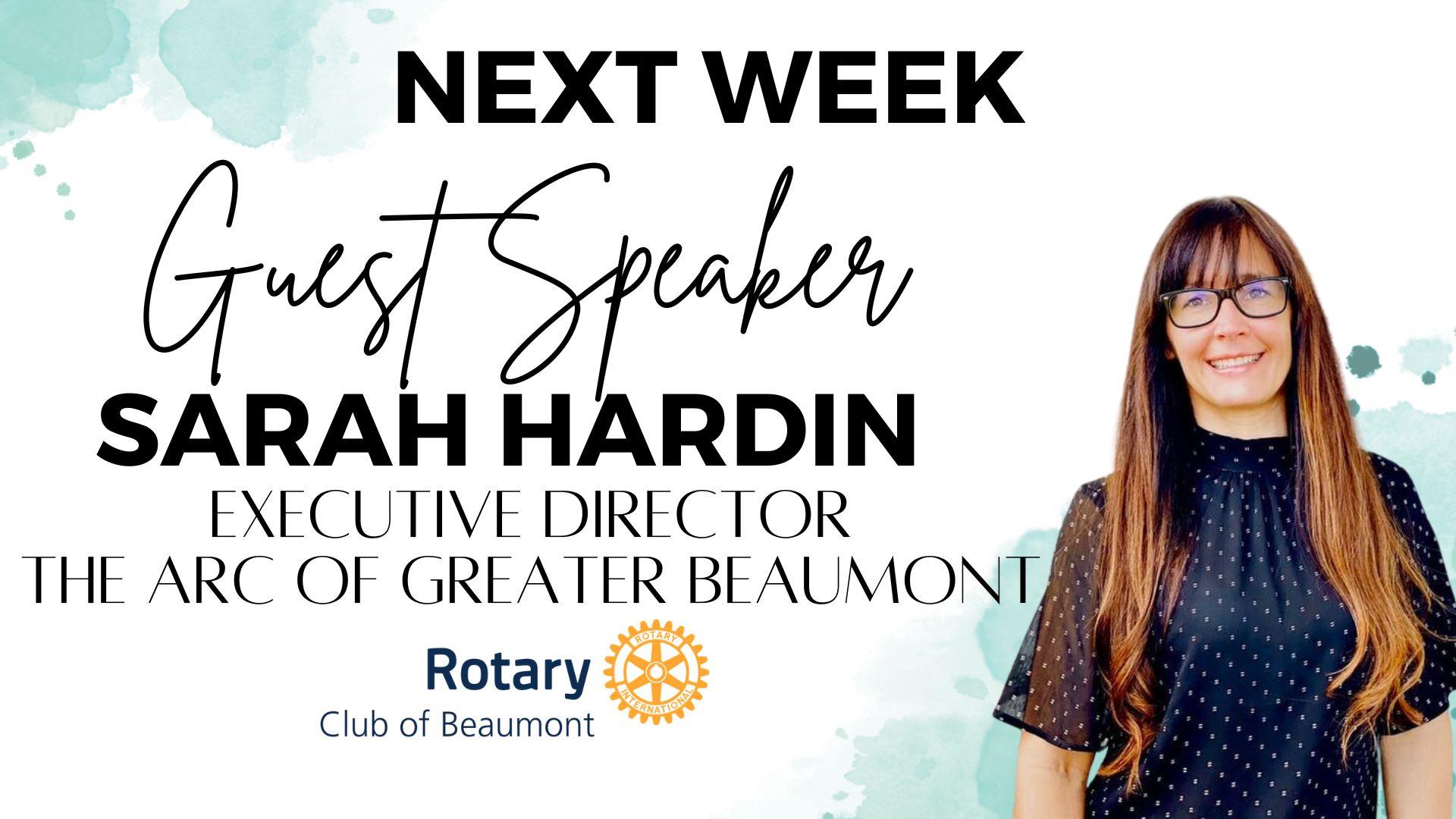
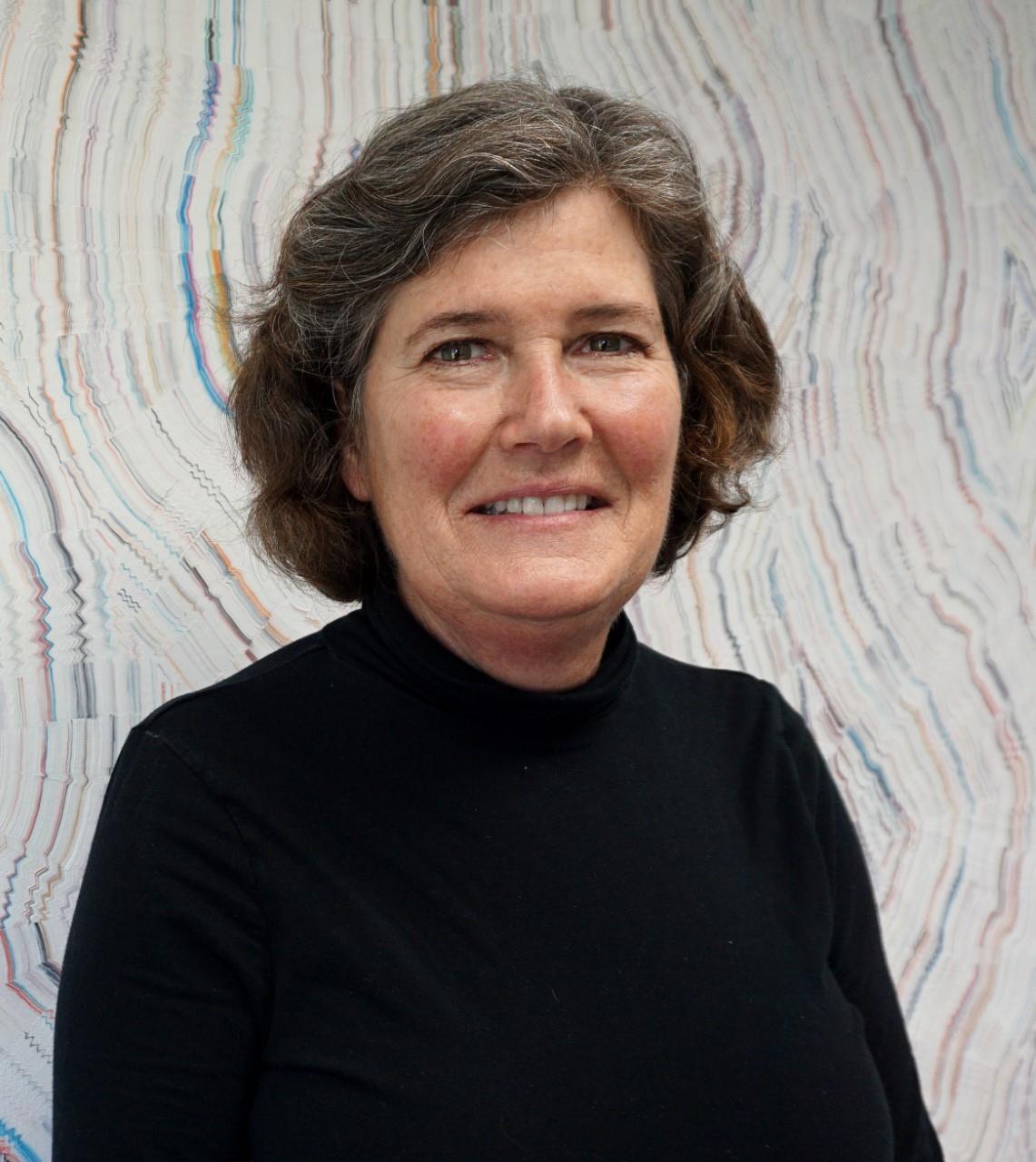
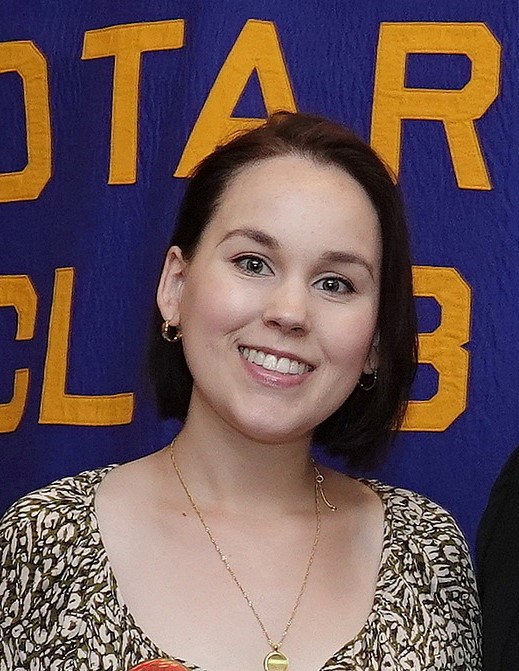
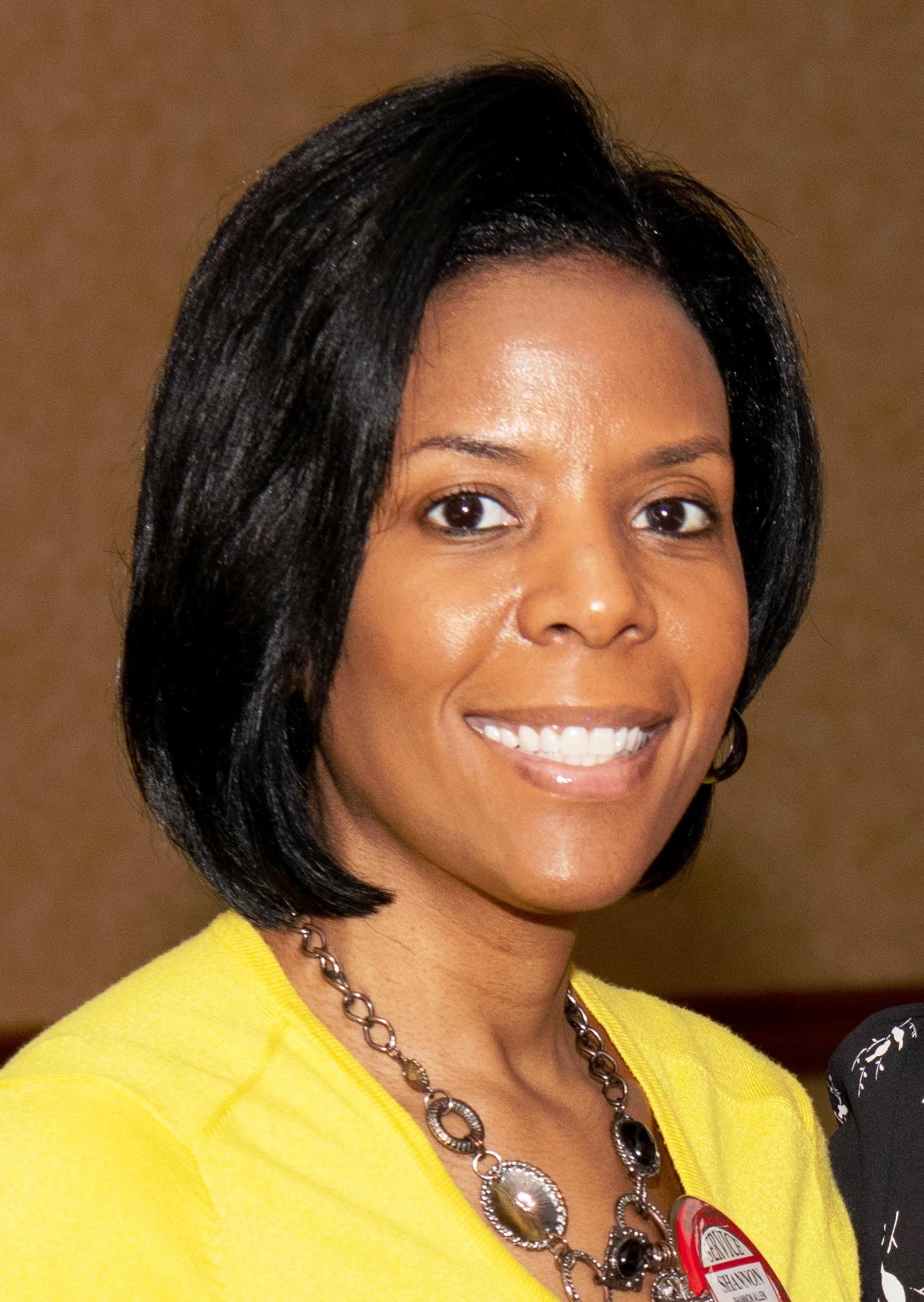
Sarah Hardin is the Executive Director at The Arc of Greater Beaumont. Prior to her time at The Arc, Sarah served as the Public Awareness Coordinator for First Steps Early Childhood Intervention at Spindletop Center in Beaumont, Texas for over 6 years. During this time, she focused on ensuring that families, local organizations, and the surrounding community had access to information about early childhood intervention and the many different types of services that are provided for babies from birth to 3 years old.
While working to educate and help families who are new to the disability community, she has also tirelessly advocated for people with intellectual and developmental disabilities of all ages through her involvement with The Arc. In 2010, Sarah’s daughter, Annie, was born with Down syndrome. Up until that time, she was unaware of the disparity of rights and resources that affect this group of people. Annie’s birth was an eye-opening experience that inspired her to help make change for her daughter and others. She has served in different capacities on The Arc of Greater Beaumont Board of Directors. Sarah is a 2019 graduate of Texas Partners in Policymaking, a program developed to equip people with the skills necessary to partner with policymakers and advocate for disability issues at the local, state, and federal levels. She is also a 2019 graduate of The Greater Beaumont Chamber of Commerce’s Leadership Beaumont Program, where she had the opportunity to became more familiar with our region’s business and civic industries and was able to create lasting relationships with other local leaders.
Sarah graduated with her BS from Texas A&M University in 2003 and went on to earn her MEd from Texas State University in 2008. When not at work, Sarah loves to spend time with her husband, Ronnie, and daughters, Emma, Annie and Claire. She enjoys traveling, being outdoors, reading, running and sewing.
_____________________________
March 13, 2024
Invocation
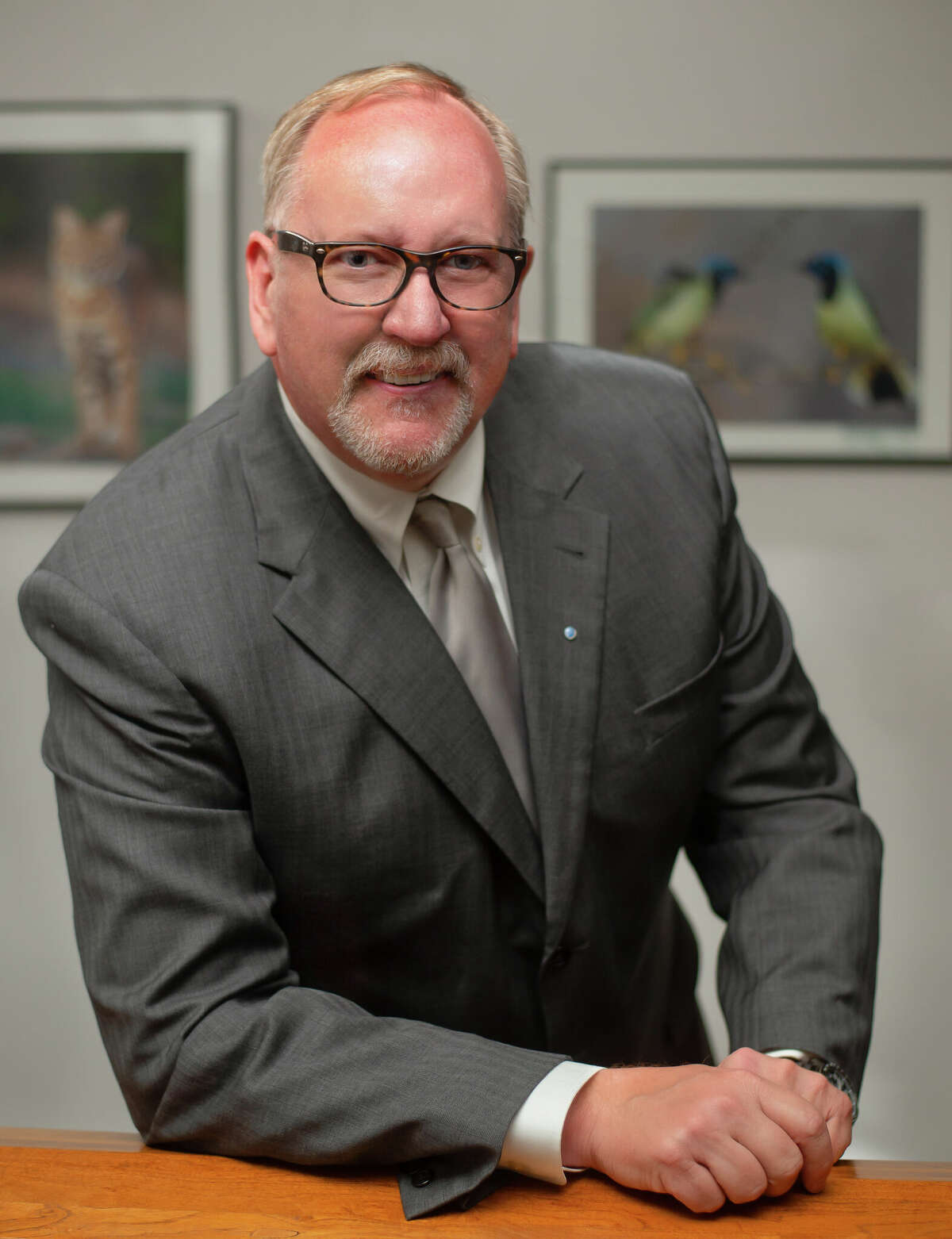
Michael Perez
President-Elect
Pledges to USA & Texas Flags
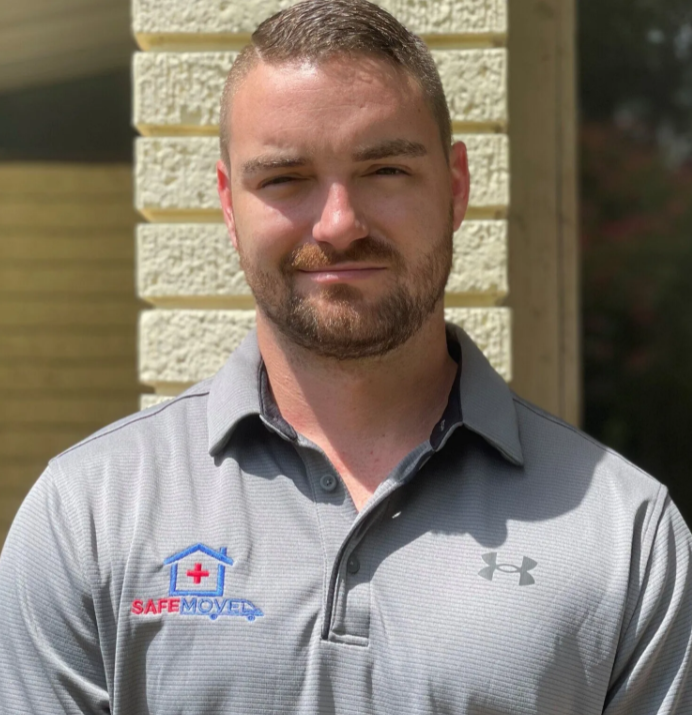
Larry Beaulieu
Retired
Introduction of Guests
Sheree Pierce
Director of Neighborhood Ministries
Wesley Methodist Church
Introduction of Speaker
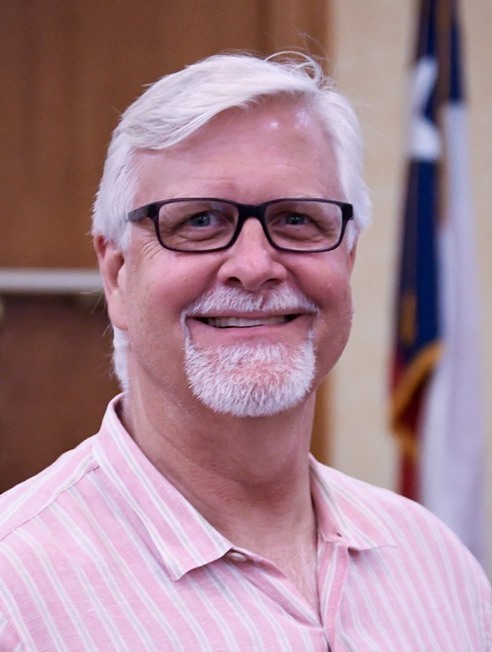
Cindy Jeanis
Operations Manager
Steepmeadow Solutions
Please volunteer for Head Table responsibilities through the
There is another conference while we are at South Shore. Rooms may be limited if you wait too long. South Shore has given us a conference rate of $151.42 per night inclusive of tax.
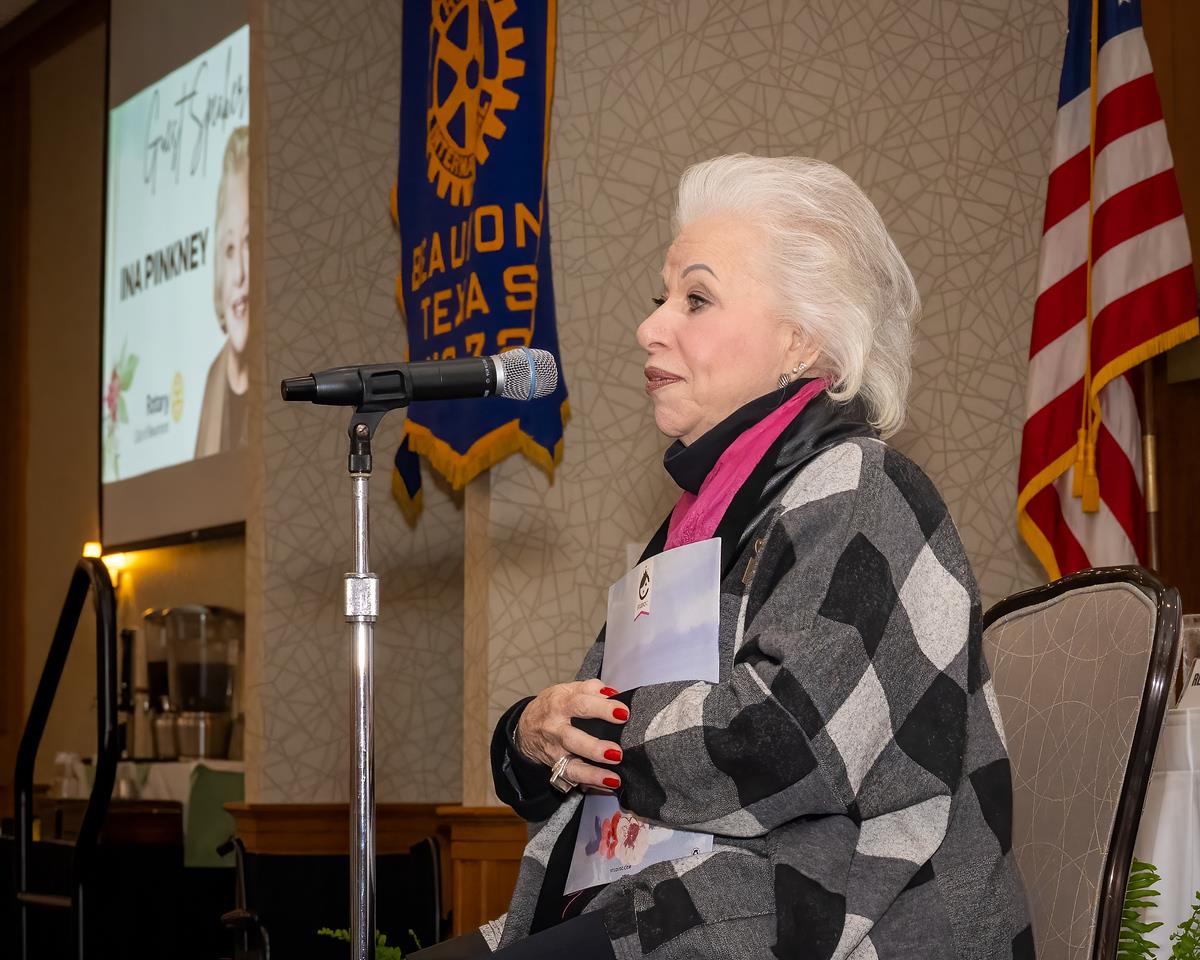
Jay Wilson (Junior) introduced the keynote speaker for International Women’s Day of Rotary, Ina Pinkney. Ina, a polio survivor, and well-known Chicago “Breakfast Queen,” started out in Chicago with a small bakery which developed into a breakfast restaurant in the West Loop. Ina’s restaurant served Chicagoans breakfast until she closed it in December 2013. As a businesswoman, community leader, television personality, and columnist at the Chicago Tribune, Ina told the poignant story of being stricken with polio when only eighteen months old. As Jay noted, Ina encountered speed bumps rather than roadblocks on her journey toward survival.
It was Labor Day, 1944, and Ina was eighteen months old. She had started to walk only a few months before. That day, inexplicably, she could not stand up and fell down from her crib. Her parents knew that the polio epidemic which had been sweeping the nation had seeped into Brooklyn. Her parents took Ina to her doctor’s office, where they performed a spinal tap, and returned with the grim verdict of polio. Her parents wrapped her up and took her to the hospital where she saw other children, some in iron lungs. The hospital informed her parents that families could visit their children only once a week and only for one hour. Ina’s doctor said, “We can’t leave her here.” Her parents took her home to watch over her until the fever broke. Ina’s father called the March of Dimes and they suggested that the fever run its course and then evaluate the damage. The answer, at this time, was to use braces then a cast. But her father wasn’t convinced it was the best solution. He had read about an Australian nurse, Sister [Elizabeth] Kenny [1880-1952] and her controversial approach to treating polio which involved hot compresses and massage to keep the muscle elongated. Ina’s father begged Kenny to see his daughter, but when he admitted that Ina was at a private home and not in a hospital, Kenny would not see her. Ina’s father did not give up. Frantically, he borrowed a car and picked up a large woman with a big hat: then Ina’s doctor arrived and escorted the nurse into their apartment. Ina was sitting against the wall with a cast on her foot from the March of Dimes. The nurse cut off the cast and hurled it across the kitchen. Kenny declared: “We’re treating polio not a broken leg.” They then cut up a war time-wool blanket and immersed the strips in boiling water. With rubber gloves they squeezed out the water from the wool and wound the hot wet wool around Ina’s leg and covered it with an old oilcloth table cloth to keep in the wet heat. What followed was coco butter and massage and more hot packs. Ina admitted that she cannot bear the smell of a wet wool coat to this day.
Polio made life challenging. She could not do a lot but sat with adults and became a committed listener. At that time, having a disability was a fate worse than death and it was general knowledge that you went to a hospital to die. When she was six, she went to the hospital for foot surgery and thought she was dying. She bade goodbye to family and friends and gave her brother her toys. She remembered masked people and the muffled sounds of voices. She woke up from the ether with a wet cast on her leg and immediately thought they had made a mistake. She
wasn’t dead. She was getting a second chance. She retrieved her toys from her brother. Childhood was difficult because in the classroom she was smart, but on the playground, she was prey. In a letter to her marginalized and ostracized young self, Ina had important advice. Get up one more time than you fall. Don’t be a victim. Be fearless but never reckless. Ina noted that she had twenty-one jobs and had been fired from nineteen of them. At age forty-eight, she opened her restaurant in Chicago and observed that there is great power in being underestimated. Ina’s Kitchen changed Chicago. Ina became known as a successful entrepreneur and a well-respected member of the business community. Alas, like many other polio survivors, the late effects of polio have taken their toll, but indefatigable Ina takes the time to share her experiences and words of wisdom to others. She advocates and teaches others to advocate and she thanks Rotary for the hours and dollars they have given to eradicate polio from the world.
In the Q& A time, Ina related that she had danced with Fred Astaire in the early 1970s. During a Lincoln Center film festival in Astaire’s honor, she sat behind Ginger Rogers. At an event with Count Basie’s orchestra, Ina noticed Astaire standing alone with people around him. She thought, “This is my moment.” Unstoppable Ina went right up to Astaire, who responded: “I see you have a little trouble walking so we’ll sway together.”
Could you imagine life without polio? Ina answered that there is no right answer because polio led her to a life she could not imagine otherwise and lead her to being here today.
Ina mentioned that her restaurant had strict rules. Cell phones not allowed. They must be fully turned off. If a phone vibrated on a table, the offender had to go to the front door. She was in the business of creating a nurturing environment with nourishing food. There was no music in the restaurant. People needed to be able to comfortably be able talk to each other without ear-blasting music.
She closed the restaurant eleven years ago. Since she never got a hot meal at the restaurant (she was always interrupted) every day for thirty days thereafter she made the same hot breakfast that she could not have had while running her restaurant.
Ina noted that she fully understands why Rotarians do what they do to eradicate polio. There is great power in being underestimated.

.png)