Morton Rotarian Jack Davis, who served as Youth Exchange inbound coordinator for many years, received the surprise of a lifetime recently from a group of Youth Exchange students he chaperoned in 1990.
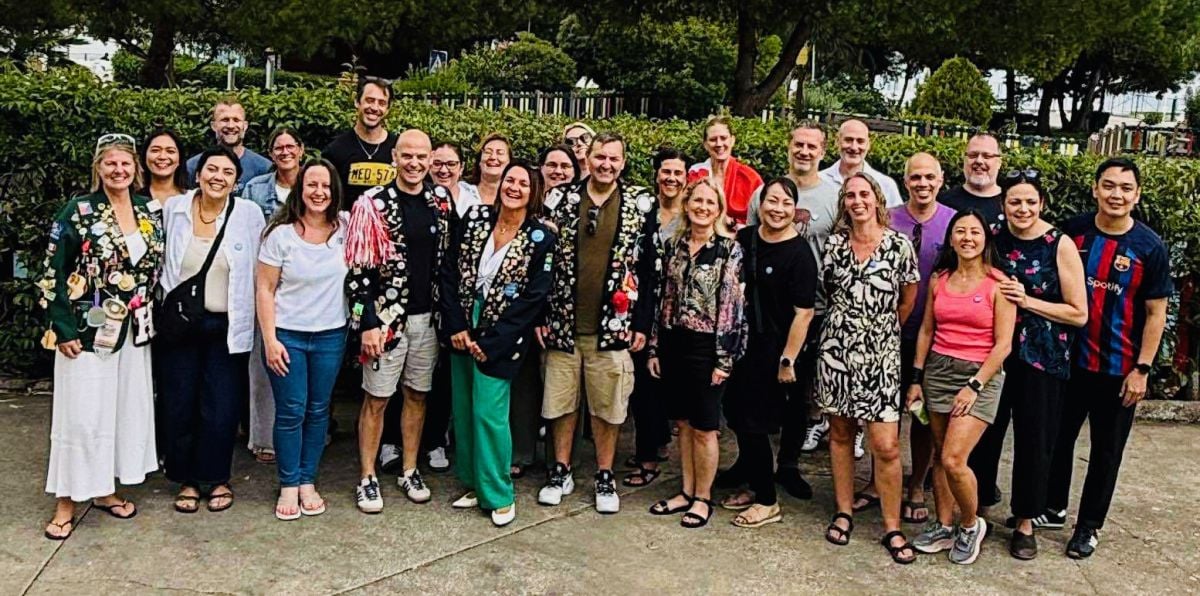
More than 35 years later, on September 19, 2025, Jack received a photo of 26 former Youth Exchange group members who were meeting up in Lisbon. They had remained connected and purposefully planned their reunion in a neutral country none call home.
“This is the best award I’ve ever received,” Jack says.
He quickly tracked down one of the attendees on Facebook Messenger and made a call. The group was still together and passed the phone around to talk with Jack before a Zoom call was set up to make conversation easier. Jack reconnected with the former students for about 30 minutes.
“If you have ever wondered if our efforts with Youth Exchange make a difference, here is proof,” Jack says. On the Zoom call, Jack learned that six of the former Youth Exchange students are Rotarians and six support exchange students themselves.
He is now scheduling calls with each former student to catch up and find out what they’ve done in their lives since the Youth Exchange experience.
What prompted the students to stay connected? Jack credits a plan that he and five other chaperons – including Galesburg Rotarians Harold and Jeanne Watters – put in place during the Central States Rotary Youth Exchange 1990 year-end trip. Students took a bus trip across parts of the United States. Some toured the Eastern U.S. while Jack’s group traveled to the western states.
At each rest stop during the tour, students had to rotate who they sat with.
“We wanted to ensure they never sat with the same person,” Jack says. “Within four days they were rotating on their own.”
Before long, the students were interacting and standing together as one group. “They got the country and cultural thing out of the way,” Jack says.
At one stop along the trip, students had the chance to shop at a mall. Unbeknownst to the chaperones, they purchased a white sheet and lots of colorful markers to make a flag representing their group. Students wrote their names in bright colors across the sheet — in no particular order.
They presented the flag to the chaperons on the last night of the excursion, announcing the country of Youth Exchange. The group made a proper proclamation, declaring their beliefs that:
There should be no borders, so the flag showed no lines.
There should not be discrimination based on color, so the names on the flag are every color.
The group wanted Jack to keep the flag, but he refused, despite what their gesture meant to him. He told the students the flag was theirs and that one of them should keep it. A student from Thailand took it home.
The students kept in touch after their Youth Exchange experience, but Jack didn’t know they were all still connected. For him, it drives home the transformative power of the Youth Exchange experience. Youth Exchange is Rotary International’s oldest continually operating program, having only paused during World War II.
“There’s a saying in Rotary: Once an exchange student, always an exchange student,” says Jack. “These students have carried that out.”