Every November, Rotary International celebrates Rotary Foundation Month to recognize the life-changing work of The Rotary Foundation and encourage Rotarians to support its mission of creating lasting, positive change around the world.
Through the generosity of Rotarians and friends of Rotary, The Rotary Foundation supports humanitarian projects, educational initiatives, and sustainable community development. Contributions to the Annual Fund help provide grants for meaningful projects, while the Permanent Fund ensures that the Foundation can continue making a difference for generations to come.
Every Rotarian is encouraged to support the Annual Fund with a personal contribution every year.
How Can You Support The Rotary Foundation? You can make a difference through a one-time donation or a recurring contribution by visiting the official Rotary International website: www.rotary.org/donate
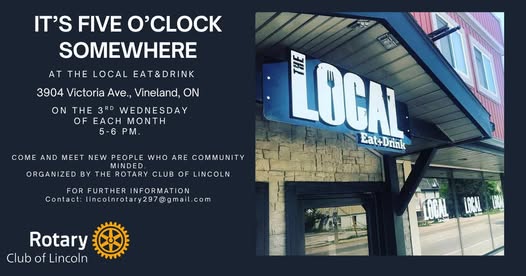
Meet like minded people, share an event or cause you are passionate about & take a break from routine.
Have a conversation enjoy a drink or a bite to eat at your cost.
~ ~ ~ ~ ~ ~ ~ ~ ~ ~ ~
Experience the joy of Christmas with your family and friends by heading to the Grimsby Museum during our event dates to see dozens of decorated seasonal trees, wreaths and prizes. If you’d like to win the displayed items to take home in early-December, you can purchase raffle tickets or bid on our online auction.
Grimsby Museum, 6 Murray Street, Grimsby Thursday Nov 26 – Sunday Dec 6, 2025
Tue – Fri: 10 AM – 8 PM | Sat – Sun: 10 AM – 5 PM Closed Mondays
All the proceeds from the 2026 event go to local registered charities.
~ ~ ~ ~ ~ ~ ~ ~ ~ ~ ~
Discover the magic of the holiday season in Jordan Village
Friday, November 20 | 4 - 9 p.m.
Lit entirely by holiday lights, the Starlight Market features all your favourites: ☆ Artisans ☆ Local eats and craft beverages ☆ Kids’ crafts ☆ S’mores ☆ Santa and the Polar Express train
Shop the market, enjoy local food and drinks, and take part in family activities at the museum.
Then head down Main Street to Inn on the Twenty at 6 p.m. for the Jordan Village Tree Lighting.
Kick off the holiday season with us at the Town of Lincoln’s annual Tree Lighting Celebration!
Join your community for an evening filled with lights, laughter, and festive fun.
Official Tree Lighting 5:30pm
FREE - Please consider bringing a non-perishable food donation for Community Care of West Niagara
~ ~ ~ ~ ~ ~ ~ ~ ~ ~ ~
Join us for an unforgettable evening at our Annual Deep Roots Fundraising Dinner! Where fine food, Niagara wines, and rich culture come together in support of the Lincoln Museum and Cultural Centre: Home of the Jordan Historical Museum of the Twenty.
Thursday, December 3, 2025 @ 6:00 p.m. Inn on the Twenty, Jordan Village $165 per person
Seats are limited, make sure to secure your spot today and be part of this extraordinary night in support of culture! Ticket Sales Close Sunday, November 15.
A New Holiday Celebration Is Coming to Downtown Beamsville
The event will bring together downtown businesses, local vendors and community partners for a full day of holiday shopping, entertainment and seasonal experiences. Visitors can look forward to Santa visits, festive photo opportunities, Christmas crafts, interactive workshops, food and drink tastings and live performances throughout downtown.
Club President Maria Derkacz welcomed 15 Lincoln Rotarians + Guest Speaker, Adam Derkacz. Pod #2 member Teresa Barich opened with the Land Acknowledgment followed her Toast to King, Canada & Rotary and Thought for the Day…
“If my mind can conceive it, and my heart can believe it — then I can achieve it.” Muhammad Ali
For his Point of Pride, John Kralt chose to highlight the following Rotary International (RI) milestones:
1905 - First Rotary Club established in Chicago
1908 - Second club founded in San Francisco
1910 - First RI Convention held in Chicago
1932 - Herbert Taylor introduced the 4-way test, which was officially adoped by RI
1945 - 49 Rotarians participated in the preliminary chartering of the United Nations in San Francisco
1962 - First Interact Club founded in Melbourne, Florida
1965 - The Rotary Foundation launched programs such as Group Study Exchange and Matching Grants
1985 - Rotarians launched the Global “END POLIO” initiative to eradicate polio worldwide*
1989 - RI amended its policies to allow women to become members
1995 - First Rotary Club established in Mongolia
*RI has helped immunize 3 billion children with polio vaccine
*The Rotary Foundation “End Polio” Campaign has raised $2.7 billion and helped secure another $10 billion from partners
50/50 DRAW- No winner
HAPPY BUCKS
Happiness over this morning's sky with the full moon setting in the west and the burning orange sunrise in the east was tempered by thoughts on the outcomes of the municipal elections of the day before, travel stories, accomplishments of young people, etc.
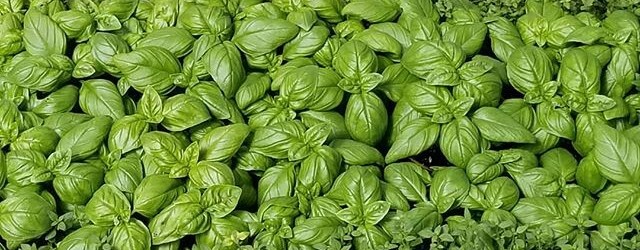
Adam's gift of a FREEMAN's organic basil plant for each member made for a very happy crowd individually & collectively.
ANNOUNCEMENTS
President Elect John Maynard announced that club leaders are currently consulting with club members in their endeavour to refresh the club's strategic plan and streamline the committee structure. He was pleased to report that John Lundrigan has agreed to the nomination of President Elect on the Board of Directors slate for 2027-28. The full slate will be presented at the club's Annual General Meeting on December 8.
PROGRAM
Freeman Herbs with Adam Derkacz
Topic: Business Growth, Innovation, and Operational Challenges
Report by Lindsay Dressel
President Maria proudly introduced her son, Adam Derkacz, Business Solutions Manager at Freeman Herbs. Adam studied Business Administration at Brock University and began his career in consulting before joining Freeman Herbs approximately seven years ago as a Production Analyst. He has helped secure nearly $3 million in grants to support innovation, production improvements, and business growth.
Freeman Herbs received two awards at the Lincoln Chamber of Commerce’s 24th Annual Outstanding Business Achievement Awards: Agri-Business of the Year and Large Business of the Year.
1. Company Overview
Established in 1947, Freeman Herbs has grown from a small family farm into a large-scale greenhouse operation.
The company produces approximately 8.5 to 9 million pots annually, including year-round organic herbs and seasonal conventional vegetables and herbs.
Its products are distributed throughout Ontario and across the eastern United States.
The company employs more than 250 people at peak production.
2. Key Areas Discussed
Innovation and automation: Robotics improve transplanting, harvesting, grading, packaging, and production efficiency while addressing labour shortages.
Energy and heating: LED lighting, climate controls, and thermal water storage help improve energy efficiency and manage greenhouse heating costs.
Water management: Rainwater collection, treatment, and recirculation support water conservation and crop health.
Plant health and quality: Biological pest control and quality monitoring help maintain product standards and shelf life.
Production and growth: Production is highly seasonal, with peak demand in spring. Future expansion will depend on market demand and construction costs.
Partnerships: Freeman Herbs works with technology providers and local robotics companies to develop automation solutions.
Business challenges: Labour availability, energy and transportation costs, tariffs, and economic uncertainty continue to affect operations.
3. Q&A – Audience Questions and Responses
Q1. Bug: Are consumers likely to find bugs in the basil they purchase?
Response: Adam explained that Freeman Herbs uses beneficial insects as part of its biological pest-control program to manage pests such as aphids. Occasionally, a beneficial insect may be noticed by a retailer or customer. The company focuses on maintaining plant health and product quality through biological controls.
Q2. Working with Other Local Businesses: Does Freeman Herbs develop automation systems internally or work with third-party providers?
Response: Adam explained that the company uses both internal expertise and external partnerships. Its internal data and automation team identifies operational needs, while equipment suppliers and local robotics companies help develop and implement solutions. One example is the partnership used to develop the automated harvesting and packaging system.
Q3. Heating: How does Freeman Herbs heat its greenhouses and maintain suitable temperatures for different plants?
Response: Adam explained that the company uses a large hot-water reservoir to store thermal energy. Water is heated using natural gas or other energy sources and circulated through the greenhouse to provide heat. Temperature settings vary according to the plant variety, season, and available light. Different greenhouse zones help maintain suitable growing conditions.
Q4. Production Scale: How much does Freeman Herbs produce, and how far does its product travel?
Response: Adam reported that the company produces approximately 8.5 to 9 million pots annually. Conventional products are distributed primarily within Ontario, while organic potted herbs reach markets across the eastern United States, as far west as Colorado and as far south as Texas. Production increases significantly during the spring.
Q5. Workforce: How many employees does the company have, and where do its workers come from?
Response: Adam indicated that Freeman Herbs employs more than 250 people at peak production. The workforce includes permanent employees with diverse professional backgrounds and temporary foreign workers, including workers from Mexico. Automation helps reduce reliance on labour-intensive processes and address staffing challenges.
Q6. Tariffs: How are tariffs and trade uncertainty affecting the business?
Response: Adam explained that the main effects are indirect, through increased costs for construction materials, equipment, supplies, and transportation. Rising fuel costs and freight surcharges create additional financial pressure. Freeman Herbs is managing costs and collaborating with other local growers through a freight cooperative to help reduce transportation expenses.
4. Key Takeaways
Automation and data-driven decision-making improve productivity and reduce waste.
Energy efficiency, greenhouse heating management, and water conservation support sustainability.
Partnerships with local businesses and technology providers encourage innovation.
Labour shortages, seasonal demand, transportation costs, and trade uncertainty remain key challenges.
Maintaining product quality and shelf life is essential to customer satisfaction and business growth.