Spoke Guest Editor Profile
 Jorge Barrientos
Jorge is the director of marketing and public relations at Chain | Cohn |Stiles law office. He serves on board of directors for a variety of community organizations including The Hub of Bakersfield, Mothers Against Drunk Driving (Kern County Chapter), and Kern County Hispanic Chamber of Commerce Business Education Foundation. When he’s not working or serving our community, you can find him traveling the world (pre-COVID) with his wife Carla and their 2-year-old son Julian.
INVOCATION: Garro Ellis
FLAG SALUTE: President Ken Beurmann
GUESTS:
- Bob Burdette’s guest was David Chesney, CFO of GEM Mortgage, longtime friend and customer.
- Toni Harper’s guests were Misty De La Torre and Jessica Turrubiates.
- Mike Willis’ guest was business partner Jennifer Williams.
NEWS & NOTES
During pre-meeting discussions, President Ken shared that the executive committee will be conducting a test run for in-person meetings. Once we return to in-person, a limited number of people will be able to attend. Stay tuned for RSVP details.
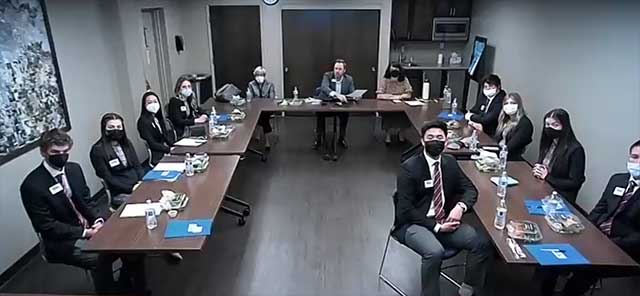
A record 64 people logged on to Zoom for the presentation, but many more were watching and listening, including Joe Hay and group of students.
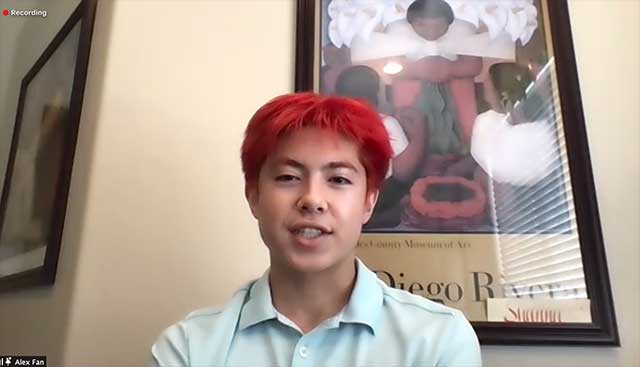
Alex Fan
PROGRAM: The program was brought to us by Rotarian Steve Sanders and student extraordinaire Alex Fan, a finalist for California’s History Day competition. The 17-year-old Centennial High student formed a special bond with the Los Angeles Museum of Tolerance and sits on the Advisory Board for the museum’s youth programs. He also created the Holocaust Education Youth Project, providing discussion and learning opportunities for students in Kern County. And what a program it was …
Holocaust Survivor
Gabriella Karin
Gabriella Karin was just 8 years old when World War II started. Her hometown of Bratislava, Slovakia at that time was peaceful and democratic. Everyone knew everybody else’s names in her town, she said.
“We could not have imagined what could happen,” she said. “But it did.”
In 1942, deportations began by the Slovaks by German orders.
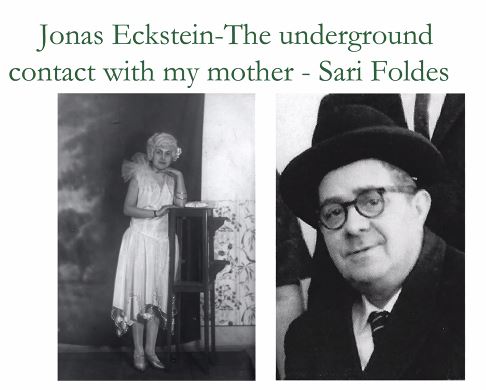
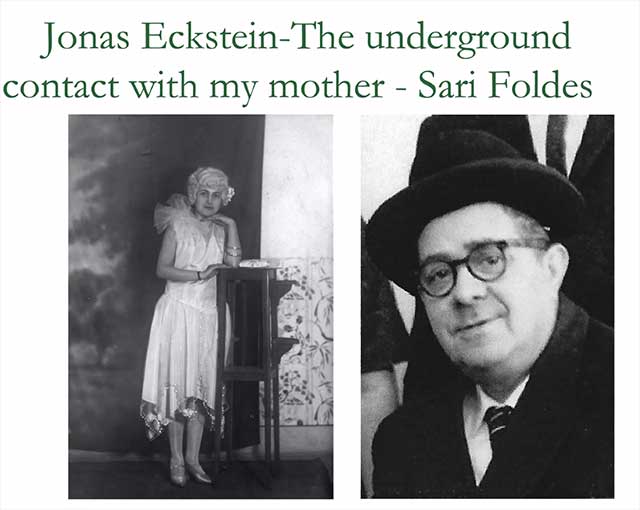
Gabriella’s mother joined the resistance, and had partnered with a police officer, Jonas Eckstein, who gave her mother the names of people who were scheduled to get picked up. A network of brave people spread about to warn others – together they would save thousands of lives. Those who received alerts included Gabriella’s own family members, such as her mother’s first cousin and Gabriella’s second cousin, a little boy of 4 years old.
“They started to cry, saying, ‘We have nowhere to go’”, she said. “We never saw them again.”
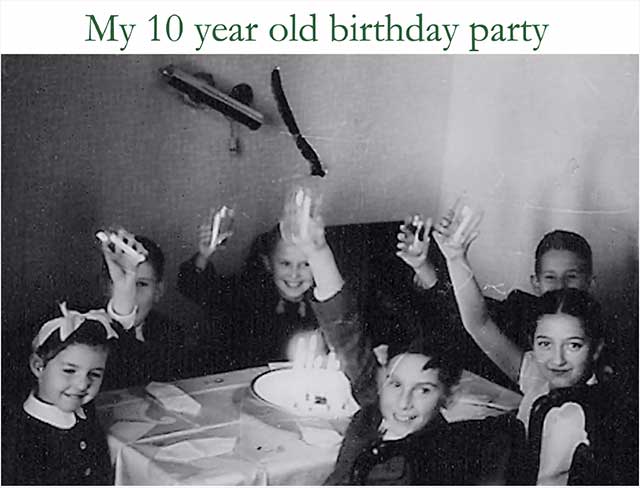
Gabriella is the girl at the right, she was the only survivor in this group of friends.
From 1941 to 1945, 11 million were killed in the Holocaust – that’s 7,500 killed per day. In Slovakia, there were 90,000 Jewish people, 60,000 of which were deported, and just 230 returned in the end. That’s four out of 1,000 who survived. For Gabriella, she lost all of her friends.
“At 8 years old, nobody could make me smile.”
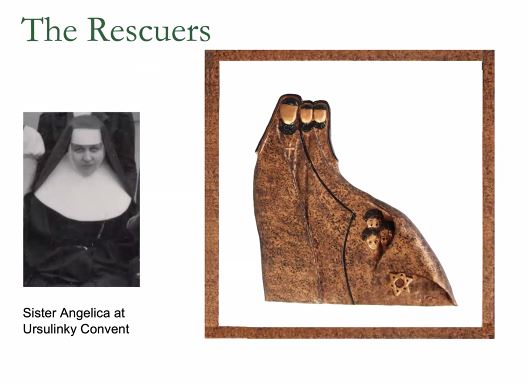
Unable to attend school anymore, Gabriella was placed in a convent boarding school under false papers.
“I didn’t make friends,” she said. “It was hard for me. My name wasn’t my name. I was a different person.”
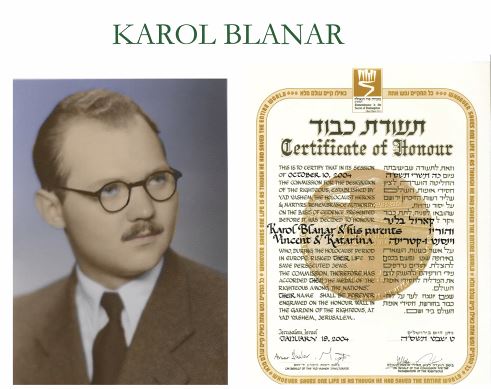
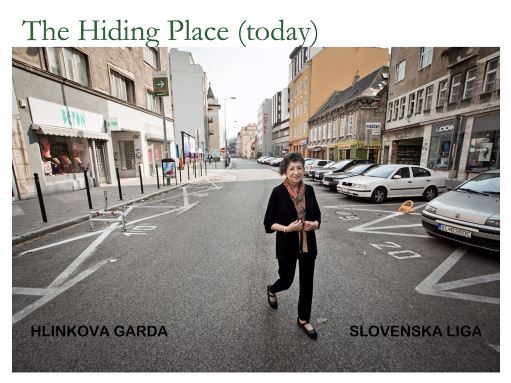
In 1944, Gabriella and her family went into hiding in the one bedroom apartment of
Karol Blanar, and stayed there for 9 months, mostly sitting on a chair, not able to move around, not being able to speak, and only able to read to pass the time. Karol, 25 years old at the time, would bring her history books and classic novels to read.
“Everything can be taken away from you, even the clothes you wear, but nobody can take away from you what you have in your head,” she said. “It’s yours until you no longer live.”
Karol would bring food, but it was not enough for those hiding out. With everyone being watched, Karol couldn’t buy enough food for multiple people.
“We were hungry all the time.”
As Germans went from house to house looking for Jewish people, the only house they never entered on her block was
the house where she hid. She later learned her building’s bylaws banned Jews from living there, so soldiers didn’t bother searching. She survived, she said, because of Karol’s bravery.
As an adult, she was never able to find Karol. When she learned how to use a computer 15 years ago, the first thing she did was Google his name, but nothing came up. However, her brother’s contact information did. He shared with Gabriella that Karol had lived in Ohio, was married, and had no children. But he had died in 1980, and worst of all, he was in an unmarked grave.
“I got so upset. I said, ‘I’m ordering a marker right now’,” Gabriella shared. “He was a righteous person. I wanted to thank him. He gave me a chance to live my own life.”
Gabriella survived the Holocaust physically unscathed, but the emotional toll was severe. Still, she keeps a positive outlook.
“If they did not get my body, they did not get my soul,” she said. “I will smile, and I will be happy. And I am.”
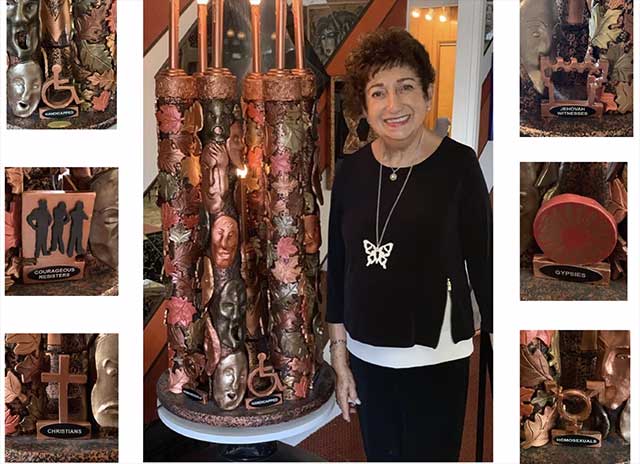
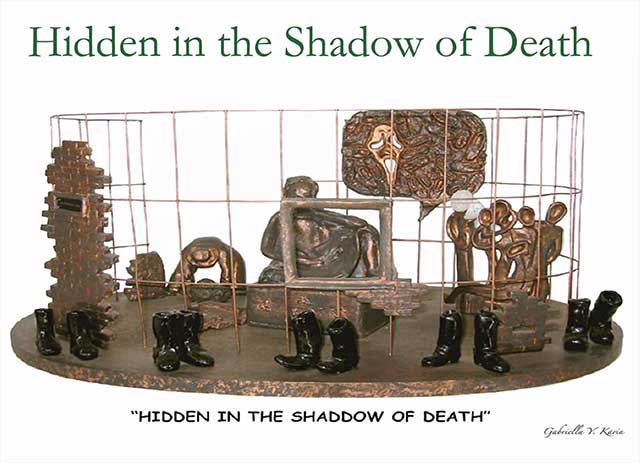
After the war, Gabriella married and moved to Israel, as did her parents. She had a son there. In 1960, they moved to Los Angeles. Gabriella received degrees in business administration and fashion design, and worked as a fashion designer until 1992. At that time she started making art. Today, she expresses her “feelings in clay,” in artwork that represents and symbolizes the 11 million victims of the Holocaust. But she also celebrates the heroes who saved countless lives.
You can find her and her art at Holocaust Museum and the Museum of Tolerance, both in Los Angeles. She is focused on educating young people about the Holocaust and its history, so as to not repeat it. Among her messages shared to youth, and to Rotary Downtown:
- “Don’t be a bystander. Speak up when you hear injustice. Let’s make it a kinder world for everyone, for our children and grandchildren.”
- Regarding today’s climate of hate: “I am hoping that people will think different, that will make us stop. You have to learn from history, and not repeat it. It’s very hard for me to see any injustice.”
- On whether she’s ever bitter: “It doesn’t matter what skin, eyes, hair, we are all the same people. We don’t have to love each other, but respect every person on this earth. We all have a right to be here. No exceptions.”
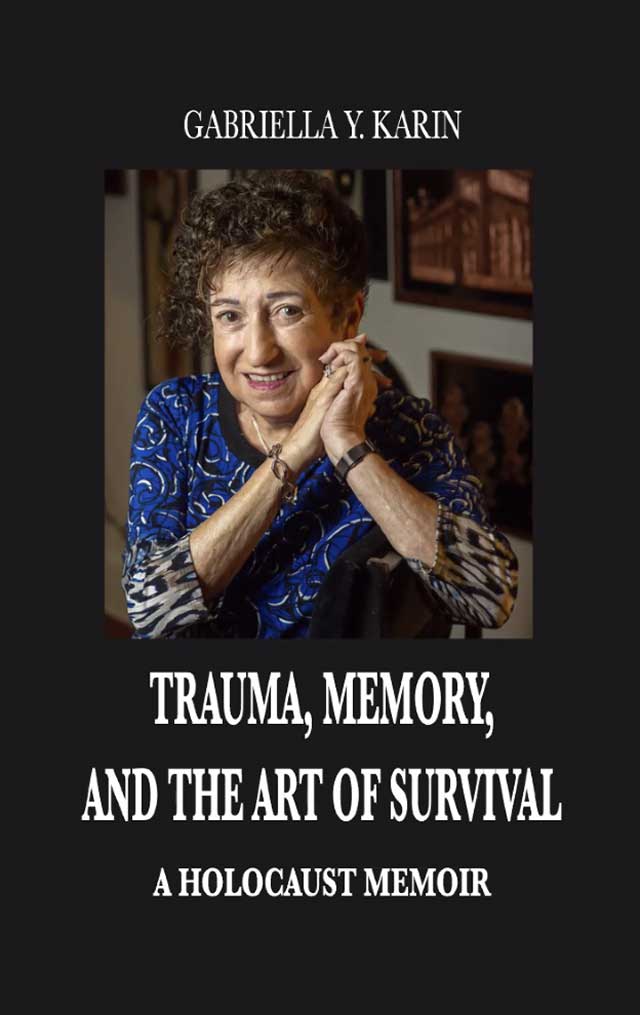
Gabriella has authored two books about her experience:






.jpg)