Flag – Jorge Barrientos
Invocation – Justin Salters
Song – Ed Tomlinson led a rousing Grand ‘Ol Flag
Guest Spoke Editor
 Toni Harper Dougherty
 "We should be shining lamps, giving light to all around us." Catherine McAuley, the Foundress of the Sisters of Mercy and the sponsoring congregation of Mercy Hospitals of Bakersfield.
Visitors & Guests
Toni Harper hosted Milad Vakili
Joe Hay hosted Mira Patel
Jim Damian hosted Don Bynum (Steve Sands wants to thank Don for opening the Temblor Tavern just feet from his office!)
Juan Bustamante hosed Eli Martinez
Good news:
Sam Abiaoui announced that he raised $35,000 for the Morocco Fund! Thank you Sam for living out the service above self!
Jorge Barrientos reported that the MADD Walk/Dash raised $60,000 for education programs in schools to combat DUIs.
Thank you to Sheryl and Lou Barbich and the Margarita Party Committee for ensuring this tradition was once again a success.
October 21 -22 is the District Conference to be held in Bakersfield. If you are interested in sponsoring, please reach out to Jim Damian.
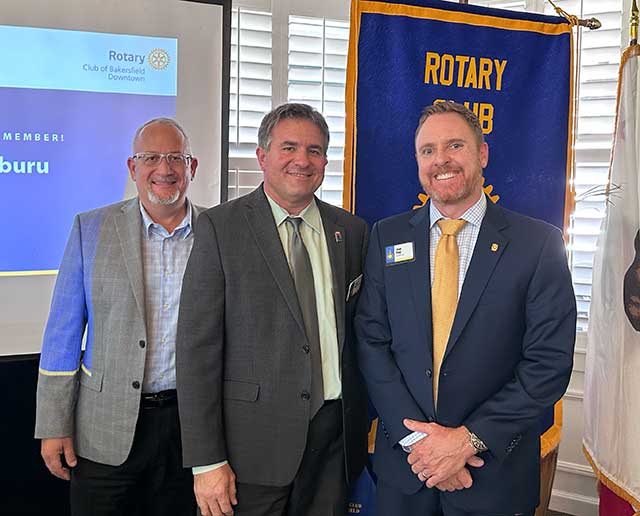
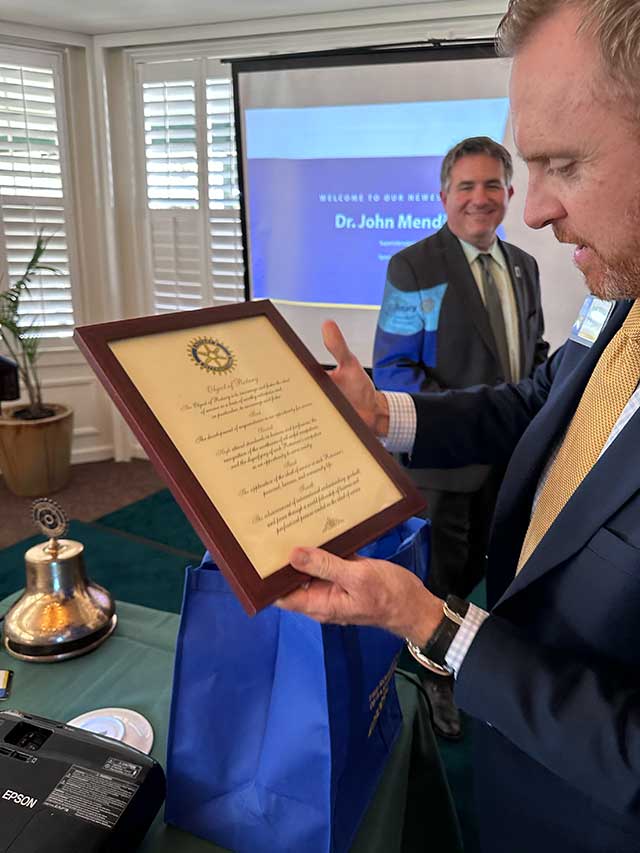
Steve Sanders introduced New Member Dr. John Mendiburu, County Superintendent of Schools. He will be leading more than 240,000 students toward achieving academic excellence. We are excited to welcome him as our newest member!
Program:
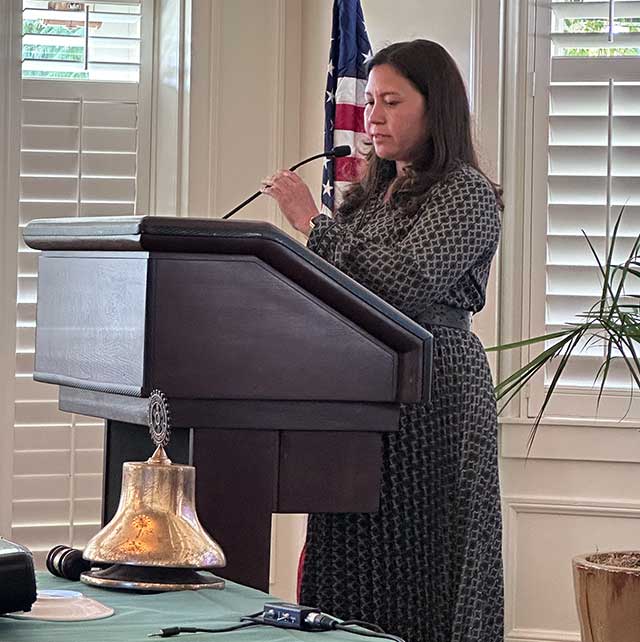
Today's program welcomed Stacy Kuwahara, MFT, who is the Director of Behavioral Health and Recovery Services. She is soon to be the county’s Chief Operations Officer. Stacy was born in Bakersfield and has served in leadership roles for two decades.
The history of providing mental health services in the US began in the 1900s as primarily large institutions with the treatment provided being extreme and experimental. Lobotomies, straight jackets, and padded rooms were common, and the residents would likely spend their entire lives in these settings. In the 1960s, The Community Mental Health Act was passed and more than 3800 people were released from state hospitals. In 1968, the Lanterman Prentis Short Act was passed, which is the guidepost still used today when assessing short-term involuntary mental health care. Funding began to stabilize in 1991, 2004, and 2011 when legislation was started to support ongoing funding of mental health services.
Mental health care is in an ever-evolving state which is a function of the population's changing needs. With newer medications and technologies, many conditions are significantly controlled. However, what is being seen is higher acuity patients, particularly among youth.
KBHRS provides service to those who require specialty mental health care and substance use services. Those with private insurance would likely access therapy and psychiatric care through their private benefits. Those with managed Medi-Cal (KHS and Health-Net) would use their Medi-Cal plans for mild to moderate needs, therapy, and psychiatry. KBHRS is a much higher level of care including intensive psychiatric, case management, and navigation services. The acuity of their population is extremely high and requires a multifaceted approach to stabilization and treatment.
The future of behavioral healthcare in Kern County includes building the infrastructure to support access to care, homeless outreach, and innovative ways to connect people with treatment. KBHRS is also leading awareness campaigns on youth mental health and fentanyl.
Finally, they are working to build the behavioral health workforce through partnerships and innovation.


.jpg)
.png)