|
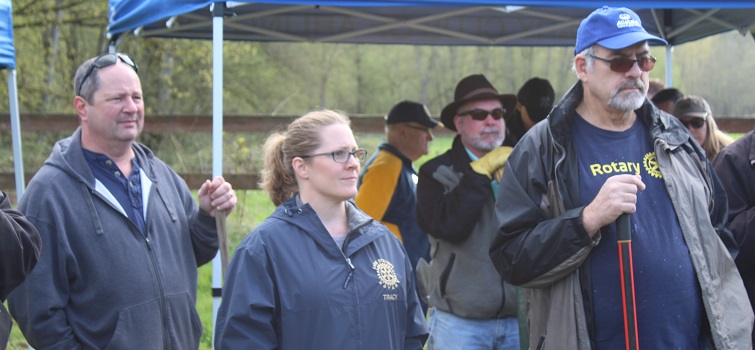
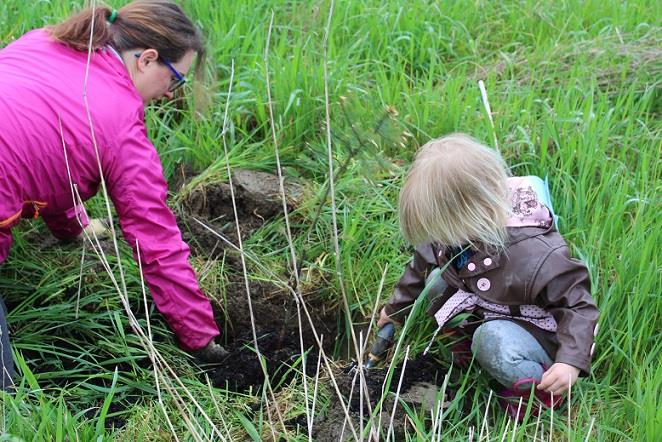
Jason spearheaded the recent tree planting in the Stillagmish River Basin with five Rotary Clubs including Arlington, Lake Stevens, Marysville, Marysville Sunrise and Stanwood-Camano. On Friday, April 27th, Jason visited with our Club and talked about the Riparian Restoration of the Stillagmish River Basin. We have to mention that Jason has been involved in many of our own Club's projects through his wife Gina, as she is a member of our Club. The Mission Statement of the Stillagmish Tribe and his department is to manage, protect and conserve those natural resources. The Stillagmish Tribe owns properties along the river basin for conservation purposes. The purpose of buying property along the Stillagmish River is for fish habitat preservation. Jason is a Riparian Ecologist. There is a transition between aquatic and terrestrial. Riparian areas benefits wildlife, birds, native plants and of course swimming for people. But, riparian restoration really benefits fish and particularly fish. The desired result of restoration is fewer weeds and more native plants. How do they do this? They work in coordination with mother nature. Water cycle, biogeochemical or nutrient cycle and energy flow is a community dynamic. The composition and structure of an ecosystem changes following a disturbance which has to be taken into consideration. Jason and his department, start with a defined target: Conduct vegetation assessment (pre-treatment), define weed control targets, define native plants and establish targets plus conduct vegetation assessment (post treatment), create outputs (maps/plant schedule) are all part of the process. Most of their projects are managed through grants. A site visit is always the most important part of the restoration effort. They count vegetation/trees/plants and prepare for weed control which is a big part of their work program. They always try to limit chemicals and perform a soil assessment as part of the project planning. During the course of a year, they plant somewhere between 10,000-15,000 trees each and every year. Two inmate crews help improve habitat for wildlife and fish, improve ecological conditions, stabilize river banks, planning for less erosion. Trees shade the water keeping it cool and oxygenated. A large number of seedlings were planted on April 27th and our Club was deeply committed to this project even though we had a small turn-out.
|

.png "image")



















.jpg)