


Hero House (Everett & Skagit Clubhouses)
Mental Health Rehabilitation
https://www.everettclubhouse.org/
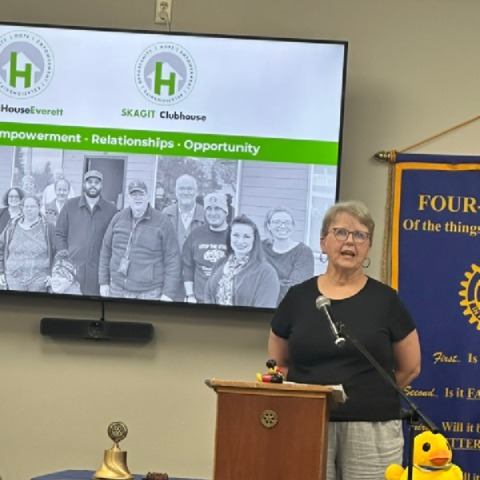
Meg McClure, a former educator and the spouse of our member, Harold, brought us a program about Hero House. Harold and Meg have a son who has benefited from the program, and Meg is on the advisory group for the Everett Clubhouse.
Hero House is a mental health rehabilitation program for individuals with serious mental illnesses. The clubhouse, part of Clubhouse International, operates on a standardized model with over 370 locations worldwide. Keenan Solomon, the program director, highlighted the clubhouse's daily operations, including volunteer-based tasks and employment programs.
Liz Heffern shared her personal success story, noting significant improvements in self-confidence and a reduction in hospitalizations. The clubhouse receives funding from various sources, including the Health Care Authority and grants, and is looking for ongoing support. The facility in Everett is expanding to include a new kitchen and hospitality area.
Keenen described the day-to-day operations of Hero House Everett, where members and staff work side by side on various tasks. The program is volunteer-based, with no strict timelines or schedules, and is open Monday through Friday from 9 to 5. Membership is lifelong and flexible, with no reentry process required if a member takes a break. He explained the availability of crisis lines, including the 988 number for veterans. There is an employment program, which includes transitional, supported, and independent employment tiers. Transitional employment involves part-time work with local employers, with staff support to ensure coverage. Supported employment includes one-on-one meetings for resume building and interview preparation. Independent employment allows members to manage their own work independently, with the clubhouse still providing support.
Here are some other benefits of the program:
• It's cost-effective: noting that one year of clubhouse recovery services costs the same as two weeks in a psychiatric hospital.
• Employment rates at clubhouses are significantly higher than the average for the public mental health system.
Meg mentioned a memorandum of understanding between Rotary International and Clubhouse International to support clubhouses. Rotary clubs can assist clubhouses by providing employment resource development, supporting community service projects, and serving on advisory boards.
Funding sources include contributions, grants, and Medicaid billing. The Everett Clubhouse is currently raising money to buy a van. It was mentioned that a grant request could certainly be made to our club.
To learn more about the Everett Clubhouse, click HERE for its website.