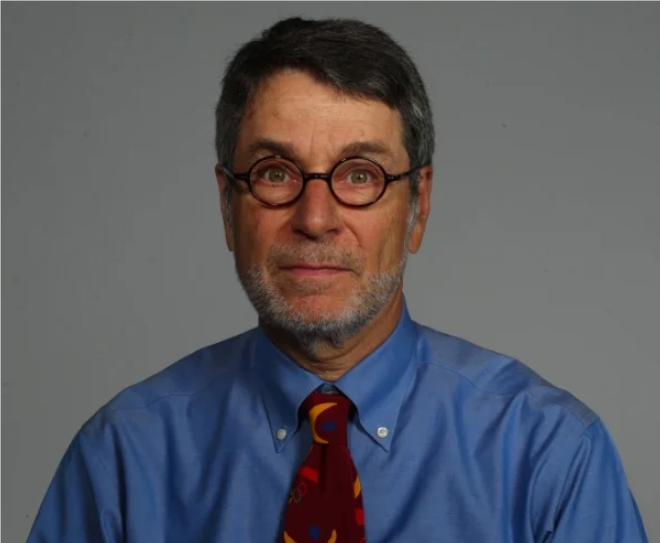
Meet Philip Hersh - Sports Writer with a Focus on the Olympics!
Philip Hersh spent 28 years as Olympic sports writer for the Chicago Tribune and has gone on to write about the Olympics and figure skating for icenetwork and NBC Olympics. He has covered 20 Olympics -- 12 Winter and 8 Summer -- seven soccer World Cups (four men, three women), 38 U.S. Figure Skating Championships, 21 World Figure Skating Championships, 12 World Track and Field Championships, two Pan American Games and more than two dozen other national championships in Olympic sports.
As an internationally recognized expert in the field, Hersh has appeared on the NBC Today Show and Nightly News; NBC's "Winter Olympics Daily" show in 2010 and 2018; the ABC Evening News; CBS Sunday Morning and CBS Olympic coverage; ESPN’s Sportsweek; CNN; Chicago Tonight; Monitor Radio, PBS Radio and NPR.
He also covered many major events in U.S. college and pro sports, including the Super Bowl, World Series, Stanley Cup playoffs, NBA playoffs, the Preakness, NCAA basketball Final Four (men’s and women’s) and bowl games. He has profiled hundreds of leading professional, collegiate and Olympic athletes. Hersh has reported from some 50 countries. His purview has encompassed Olympic politics (including such things as Chicago's failed bid for the 2016 Summer Games). His favorite part of the job has been using sport as a way to write about the culture of a country or an athlete.
Hersh was born in Boston and graduated from Yale University with a B.A. in French and did advanced study in Spanish and Italian. He worked for the Gloucester (Mass.) Daily Times, Baltimore Evening Sun, Chicago Daily News and Chicago Sun-Times before joining the Tribune in 1984.
He has been a four-time nominee for the Pulitzer Prize and a winner of multiple Associated Press Sports Editors annual writing awards, Chicago Headline Club awards and Chicago Society of Black Journalists award. A German publication, SportIntern, ranked him among the 100 most influential people in international sport 15 times. Hersh received a 2016 Distinguished Service Award from the United States Sports Academy "for his commitment to reporting on the global world of sport, including his notable coverage of the Olympic Games."
N.Y. Times columnist George Vecsey wrote that "among the qualities of an ideal journalist is the international vision of Phil Hersh."
“Change is only the beginning. Impact is what endures.”
“Change is only the beginning. Impact is what endures.”
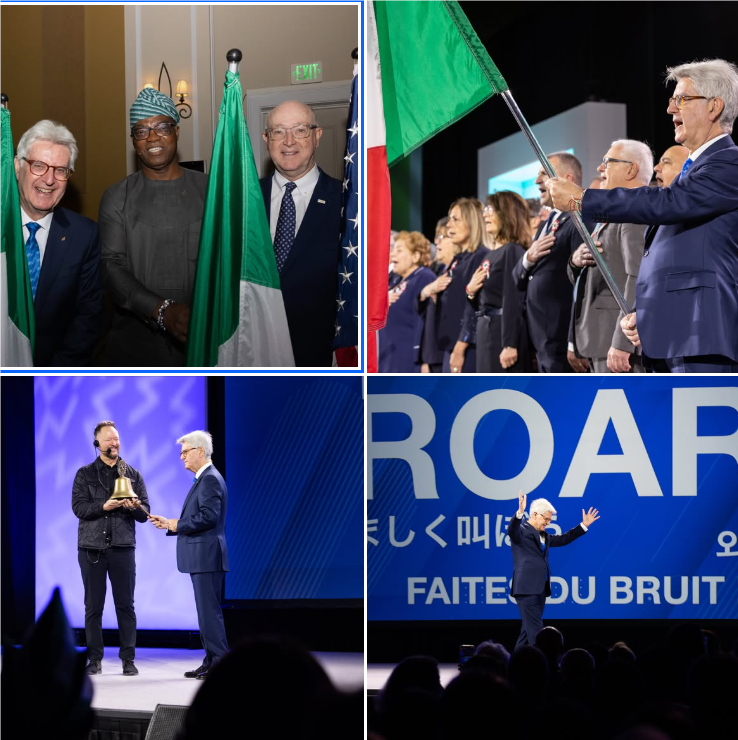
President-elect Yinka opened the 2026 International Assembly today with a stirring call to action. His message, Creating Lasting Impact, brings both continuity and renewed purpose to Rotary’s global mission.
Let’s Unite for Good — for our clubs, our communities, and our world — and create lasting impact across the globe, in our communities, and within ourselves.
The 2026-27 Rotary Peace Fellowship application is now closed. The 2027-28 Rotary Peace Fellowship application will be available online through this webpage in February 2026.
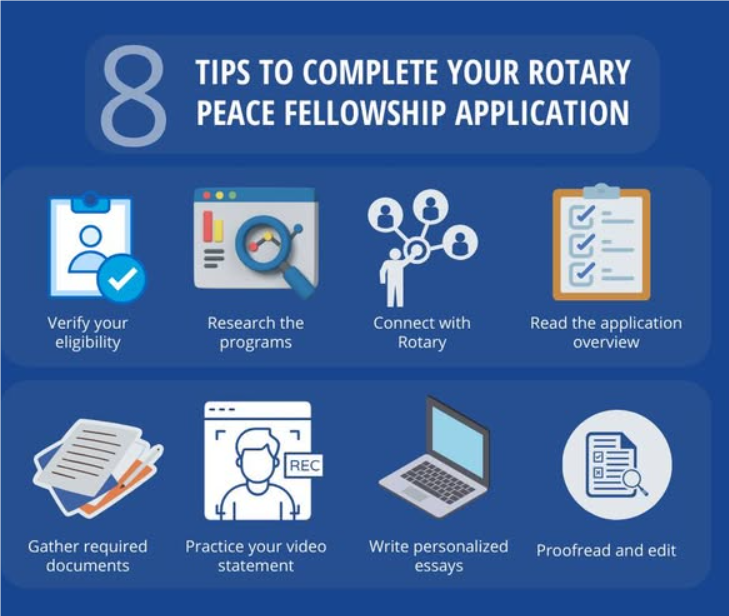
Follow these steps to prepare a competitive application:
Research the curriculum and programs at each of the Rotary Peace Centers. For the master's program, you will be asked to rank the two centers you prefer if you meet the eligibility criteria for both programs.
Engage with Rotary. Use the Club Finder to locate the Rotary or Rotaract club nearest you. Connecting with a Rotary club or district is a great way to learn about Rotary's work in your community and around the world. Many Rotary districts have a District Rotary Peace Fellowship Subcommittee Chair contact who can provide mentorship and advice for your application. A club or district recommendation is optional, but strongly encouraged as part of your application.
Read the Application Overview to learn the steps involved. An overview with more instructions on submitting a thorough and complete application is available when you start an application. Candidates must submit original and authentic content based on their personal experience, knowledge, and motivation. Use of Generative AI content is highly discouraged. Plagiarism will disqualify an application.
Gather required documents. Applications require a resume, academic and/or professional recommendations, personal statement video and essays, transcripts from postsecondary colleges and universities attended (master's only), English language proficiency test scores (master's only), and social impact plan (certificate only). Allow time to request university transcripts and register for IELTS or TOEFL exams if your program requires these. All materials must be in English.
Submit your application between February and 15 May. All applications are considered final upon submission. Ensure your academic and/or professional recommendations and Rotary club or district recommendations (optional) are entered prior to submitting your application.
Await qualification notification and selection results. If you are selected for a fellowship, you will be notified in November which Rotary Peace Center will be the site for your studies.
Apply for admission to the university where your Peace Center is located. Being selected for the fellowship does not mean you have been admitted to the university.
Certificate program eligibility
Candidates for the certificate program at Makerere University, Kampala, Uganda, either must be from Africa, have worked in Africa, work with African communities or initiatives outside the continent, or they can be from outside the region but must demonstrate a compelling interest in learning about peacebuilding approaches within the region.
Candidates for the certificate program at Bahçeşehir University, Istanbul, Türkiye, either must be from the Middle East or North Africa, have worked in the region, work elsewhere around the world with communities or initiatives related to the Middle East or North Africa, or they can be from outside the region but must demonstrate a compelling interest in learning about peacebuilding approaches within the region.
Candidates for the certificate program at Symbiosis International University, Pune, India, either must be from the Asia region, have worked in the region, work elsewhere around the world with communities or initiatives related to the Asia region, or they can be from outside the region but must demonstrate a compelling interest in learning about peacebuilding approaches within the region.
Selection process
Submitted applications are screened for eligibility requirements. Qualified applications move forward for further review and evaluation. The Rotary Peace Centers Committee, composed of Rotary members, and university representatives review the top candidates and select finalists. Top candidates may be contacted by the university for an interview. Selected candidates are notified in November.
Throughout the process, applications are reviewed based on the following criteria:
Qualification based on the eligibility requirements
English proficiency
Commitment to peace and development
Leadership potential
Compatibility with fellowship objectives and fit with Rotary
Academic record and compatibility with preferred university program
Feasibility and impact of Social Change Initiative (certificate only)
Eligibility restrictions
Rotary Peace Fellowships may not be used for doctoral study. The following people are not eligible for the fellowship:
Active Rotary members, or Rotaract members who are also Rotary members*
Employees of a Rotary club or district, Rotary International, or other Rotary entity
Spouses, lineal descendants (children or grandchildren by blood or legal adoption), spouses of lineal descendants, or ancestors (parents or grandparents by blood) of any living person in these categories
Former Rotary members and their relatives as described above (within 36 months of their resignation)
* Rotaract club members who are not also Rotary club members are eligible to apply.
Please note: Candidates must have at least three years between the completion of their most recent academic degree program (undergraduate or graduate degree) and their intended start date for the fellowship. Candidates currently enrolled in an undergraduate or graduate program, or who will be enrolled in the upcoming academic year, are not eligible to apply.
Rotary Peace Fellows who have completed the certificate program, master’s program, or a Global Grant Scholarship, must wait three years between the end date of that program and their intended start date for the fellowship.
As Rotarians and Rotaractors, you joined Rotary to make a difference and connect with others in your communities.
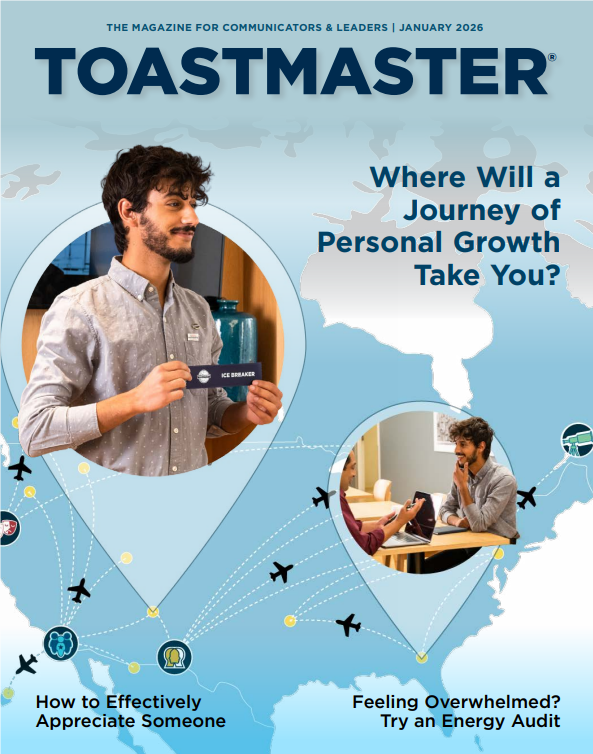
To help you achieve your personal and professional goals, Rotary International is working with Toastmasters International to provide opportunities to grow your networks, your leadership and communication skills, and your impact within the community.
This alliance with Toastmasters is different from Rotary International's relationships with other organizations: It enhances your membership experience through professional development opportunities and making connections beyond your club.
Rotary District 6440 has partnered with its geographic counterparts, Toastmasters Districts 30 and 54.
How can you and your club get involved?
It's easy for Rotarians and Rotaractors to engage:
- Adherence to and promotion of the highest ethical standards in all occupations, including fair treatment of employers, employees, associates, competitors, and the public.
- The recognition of the worthiness of all useful occupations, not just those that are pursued by Rotarians.
- The contribution of your vocational talents to solving the problems of society and meeting the needs of the community.
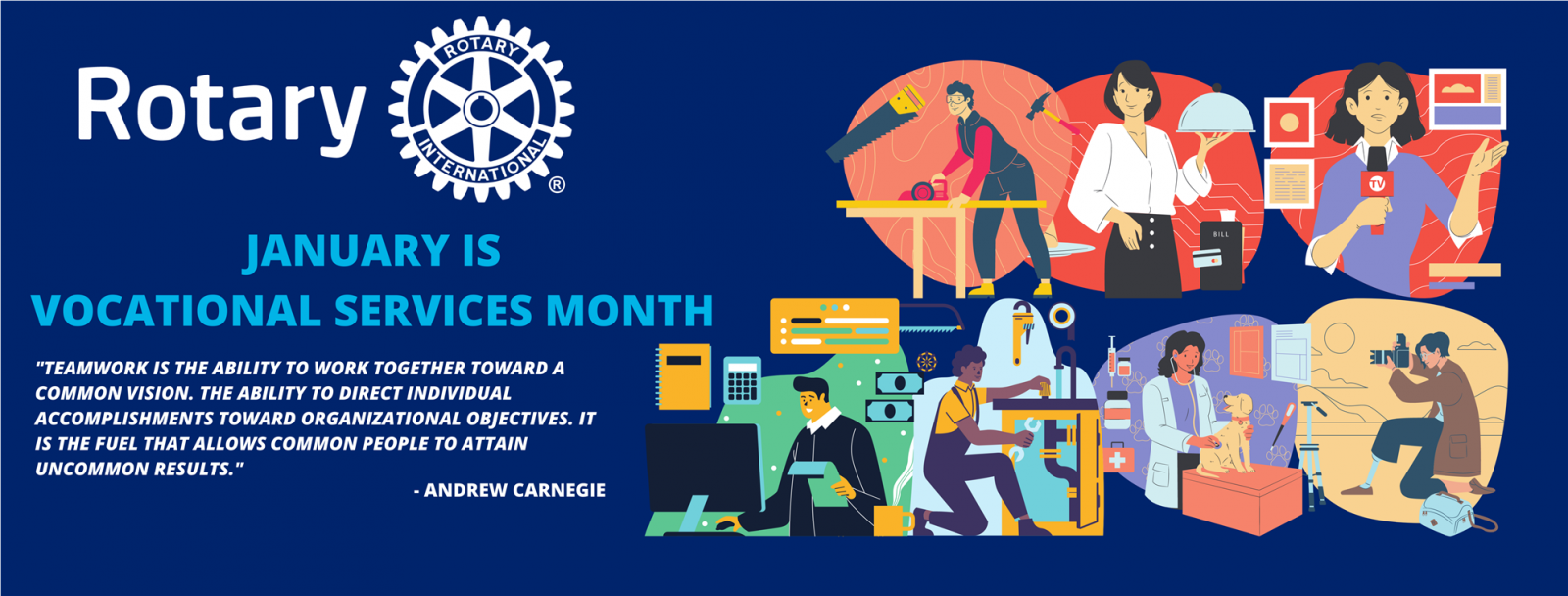
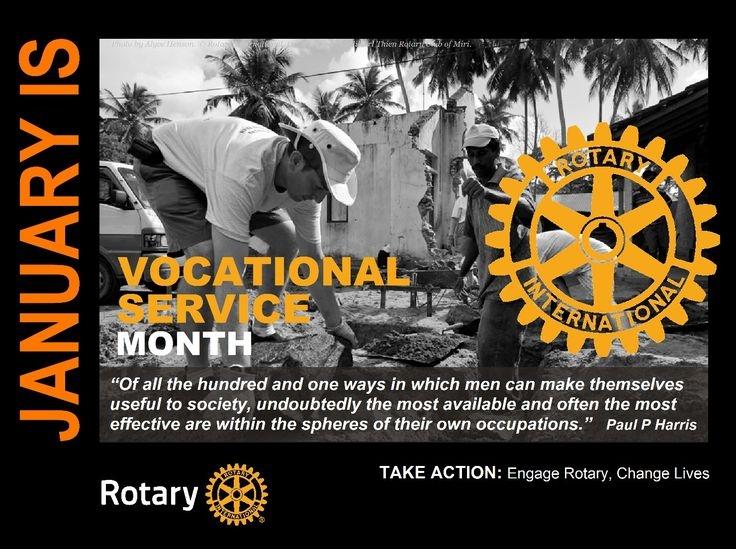
Click Read More to find out how you and your club can focus on Vocational Service this month.
During January, Rotarians are encouraged to focus on this important avenue of Rotary service. Discussions on vocational service can lead to projects that not only develop the ethical consciousness and vocational skills of Rotarians but also the talents within their communities. Vocational Service Month is an opportunity to begin year-long vocational service activities, ranging from Rotary discussions to awards to community projects. Following are some suggested activities to undertake during Vocational Service Month:
Devote a meeting in January to examine the second Avenue of Service, including The Four-Way Test and The Declaration of Rotarians in Business and Professions. After expanding members' awareness, solicit their input in planning projects for the remainder of the year.
Introduce a "mini-classifications talk" series in which each member gives a five-minute talk on his or her vocation. Schedule one speaker for the beginning of each meeting until everyone has made a presentation. The purpose of these talks is to promote vocational awareness among Rotarians and help them recognize the worthiness of all useful occupations.
Present a vocational award to someone in the community who has exemplified outstanding professional achievement while maintaining very high ethical standards. Promote the presentation within the community, and consider making it an annual October event.
Invite experts to give a presentation on the vocational needs of the community and develop a project in response to those needs. Possible projects could focus on developing character, providing career information to youth, mentoring small businesses, or organizing workshops that provide employees with new skills.
Encourage club members to put their vocational skills to work as a Rotary Volunteer.
1st and 3rd Tues of each month 12:15 to 1:30
Max and Benny's
461 Waukegan Road
Northbrook
2nd Tue of each month 5:30 to 7 PM
Acorn Grill
Heritage Oaks Country Club
3535 Dundee Road
Northbrook
4th Tue of each month 5:30 to 7
Social