Bernice King on what it takes to reach across political and racial divides
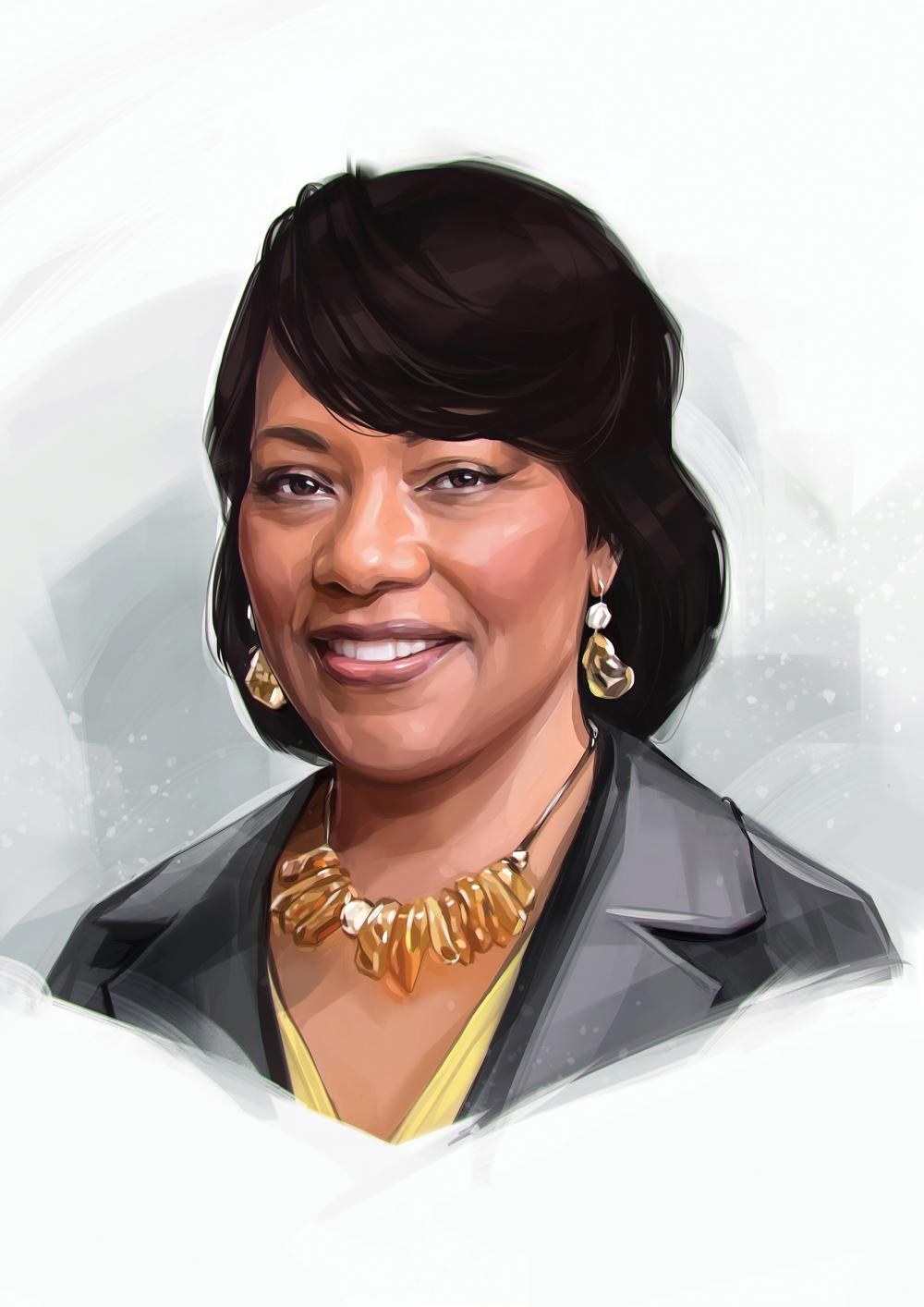
Illustration by Viktor Miller Gausa
A passion for justice...
At the Rotary Presidential Peace Conference in Atlanta last June, Bernice King gave a rousing speech about the hard work of fostering peace. She challenged her audience – both those in the auditorium and Rotarians worldwide – to think anew about how they define peace and how they interact with the people they disagree with. “Every member of our world society, even our adversaries and opponents, is worthy of being looked upon with dignity,” she said.
Addressing the current political moment in the United States, King noted how troubling it is that people are increasingly divided, with Republicans refusing to engage with Democrats and Democrats refusing to engage with Republicans. She called on people everywhere to reach across political divides.
King spoke from deep experience. The youngest daughter of the Rev. Martin Luther King Jr. – assassinated 50 years ago this month – she has embraced the family’s legacy of social activism. Today she is the CEO of the Martin Luther King Jr. Center for Nonviolent Social Change in Atlanta. Founded in 1968 by her mother, Coretta Scott King, the King Center carries on the work of Bernice’s father by searching for solutions to poverty, racism, and violence.
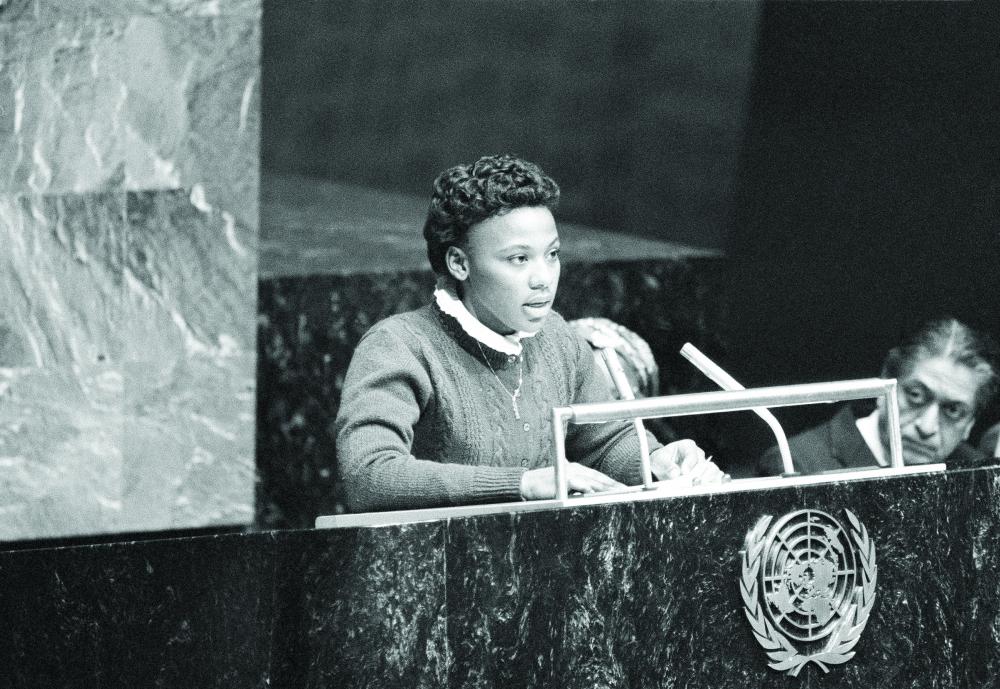
King’s career as a public speaker began in 1980 when she was 17 and, standing in for her mother, gave a speech on apartheid at the United Nations. After college, she earned graduate degrees in divinity and law, a combination that has shaped her vocation and her oratory, which evokes her father in both its style and its ambitions.
As a law clerk in the juvenile court system of Georgia’s Fulton County, King saw the way many teens, already disadvantaged by society, faced a legal system based on retribution rather than rehabilitation. Since then, she has dedicated herself to inspiring young people and teaching them about Nonviolence 365, the King Center initiative that encourages people to emulate her father’s principles every day of the year.
Bernice King continues to speak out: at the White House and in South Africa; at universities, corporations, and the U.S. Department of Defense. How, she asks, can right-minded people hope to change hearts and minds when they insist on casting their opponents as the enemy? In her conversation with senior editor Hank Sartin, King suggested ways we might realize an answer to that vexing question.
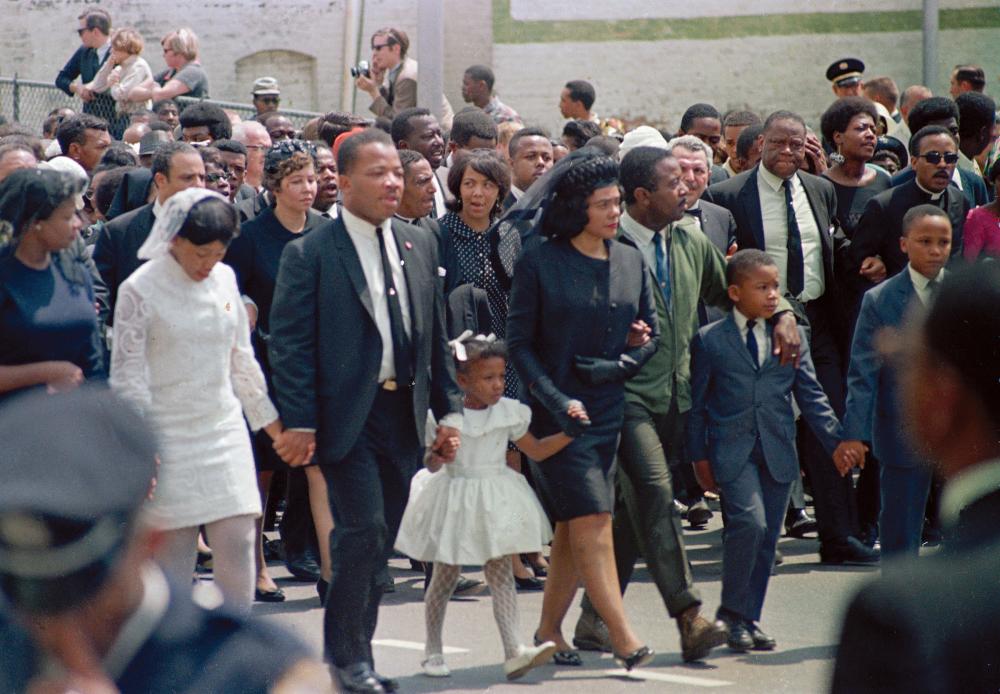
Photos: Left: In 1968, five-year-old Bernice King walks with her mother and other family members in her father’s funeral procession. Right: King speaks against apartheid at the UN as a teenager. Credit: Associated Press photos
Q:How do you win someone over to your point of view when you are reaching out to someone whose actions and ideas you find hateful and wrong?
A: Nonviolence seeks to defeat injustice and not people. We must do something about injustice, but in the process of addressing injustice we always want to preserve a person’s humanity. The decisions and choices that people have made and the actions that they’ve taken may be hateful, wrong, and unjust, but at the end of the day they’re still a part of our human family.
The possibility of redemption is always available for individuals. When your mind-frame is geared toward that, then you go to work trying to find solutions that don’t denigrate and minimize a person. You go in seeking to understand first and then to be understood. Differences of ideology and opinion may not change. However, it’s our job to spend time trying to connect with and understand the other person.
Studies show that people don’t change cognitively; they change because of experience. When we say people are taught to hate, that teaching is also embedded in experience. People only change through a new and different experience. How are they going to get that experience? Those experiences only come from engagement; they come from encounters. So we must have courageous conversations between people of divergent perspectives. It’s not easy work, but it’s necessary work. It doesn’t mean when you leave those encounters that you will necessarily agree with people, but in the end you will develop a better respect for them and ensure that you always leave them with dignity.
Q:In your work, that means talking with people who are avowed racists, for instance. How do you get someone to sit down with you to begin that conversation when we’re in such a divided world and our positions are so firmly fixed?
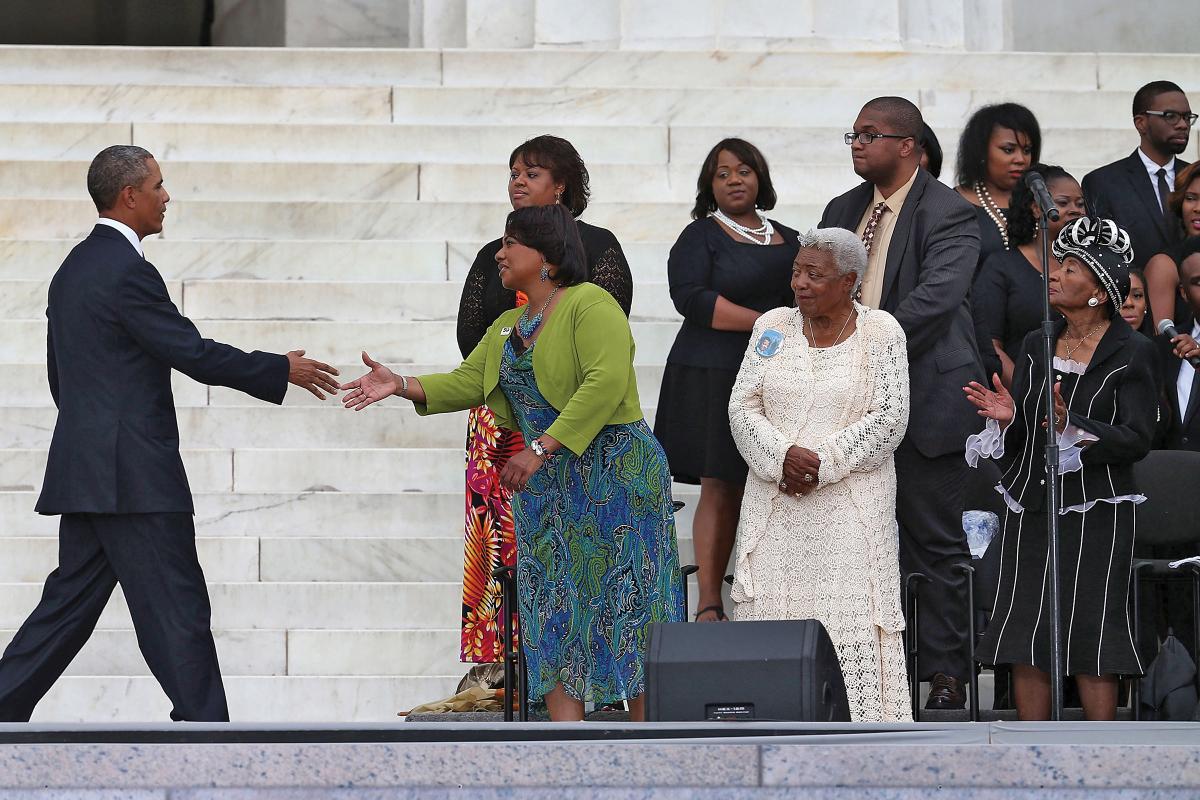
Photo: President Barack Obama greets King in 2013 on the 50th anniversary of the March on Washington. Credit: Mark Wilson/Getty Images
A: We have to disarm. We don’t wait for the other to disarm. If you’re still armed and on the defensive going into the conversation, then it’s kind of like the law of attraction: You attract what energy you emit. There’s a lot of internal work that has to take place within an individual. What has helped me is really getting to know Bernice. When I get to know myself, I’ve had to learn how to love Bernice in spite of the things that I cannot stand about Bernice and the things that I know need to change in me. If I can get to a place where I can embrace and love myself in spite of all of that, then I have the capacity to do it with other people.
Q:What have you learned from working with young people?
A: I believe many young people have a very narrow focus. For them, nonviolence is the opposite of violence. But nonviolence really is a prescription to elevate you to a place where you start with understanding the human condition, the interconnectedness. Once young people open themselves up and are exposed to these ideas, they gain an entirely different perspective and can see how these ideas are very relevant and usable and livable.
Q:Why has racism proven so intractable?
A: First of all, racism at its core creates the notion of privileged versus unprivileged, and people who are privileged have a very difficult time giving up that privilege. Also, we’ve had a lot of people confusing the real issue of racism. Racism is prejudice plus power. The power levels are critical when you talk about racism; otherwise all you have is prejudice. So we just have to keep biting at racism generation after generation. Certainly we have made some inroads, but the systemic part of it is so difficult to address.
Q: How can we change people who are prejudiced?
A: It’s incumbent upon those of us who understand to be sensitive to that and think about how to help people navigate through their fears. Violence is the language of the unheard. We’ve got to think about where people feel unheard, feel that they are insignificant. We have to ask if that’s what they’re acting out of. I’m sure we would discover that in most cases that is true.
It is irresponsible to leave people in their hate. Most people who are very hateful can’t see that they’re hateful, because that’s all they ever knew. As a part of the human race, we have a responsibility to not let people be stuck in that kind of hate. We can’t just cut them off. Most of them are redeemable. Some of them are not, but you won’t know until you engage them. There’s a black man named Daryl Davis in Baltimore, Maryland, who asked, “How can you hate me if you don’t know me?” He decided to start encountering and connecting with some of the Klan in his area. Twenty-five of them ended up denouncing the Klan, turning over their robes to him. One of them, a former grand wizard, is now doing a lot of work in the area of race relations. So people are redeemable. If you automatically assume they’re irredeemable, all you’re doing is leaving the potential for them to sow further seeds of prejudice and hatred.
Q: At the Rotary Presidential Peace Conference, you said, “We need to re-explore the definition of peace.” Then you quoted your father: “True peace is not merely the absence of tension; it is the presence of justice.” How do we act on that insight?
A: Removing the immediate tension and the conflict is one thing, but getting to the root of what created that tension and conflict – and can continue to perpetuate it – is necessary. We need to redistribute power so that it is more equitable. In the work of peace, you don’t want people to just stop fighting. You want them to agree to a new covenant of how to live together with equitable circumstances. That means looking at how power is distributed and agreeing to come up with a strategy and a plan that creates equity among groups of people. It is what Daddy talked about: the revolution of values. We’ve got to reconsider how to embrace a different model of society.
Q: What advice can you give Rotarians?
A: First, I remind people that it is about focus. You have to identify where your passion lies and stay focused in that area. Daddy didn’t set out to change the world; he identified his passions. He was concerned, obviously, about segregation and the way people were treated in his race, and he wanted to see that change. But his calling was ministry, and so he opted to pastor. One thing led to another, and it catapulted him into a leadership role. But he was not seeking to be great; he was seeking to be faithful to the call in his life and the passion that he had. The key word is to focus – to focus in the area of your passion.
We're thrilled to invite you to be a part of something extraordinary in 2024 – Vital Elite, our exclusive recognition status dedicated to celebrating the incredible commitment of donors like you!
Why Vital Elite?
At Vitalant, we've always recognized the power of commitment in promoting blood donation. It's not just about giving blood; it's about going above and beyond, making a lasting impact. That's where Vital Elite comes in – an opportunity for us to honor your unwavering dedication and showcase the transformative influence of your commitment to saving lives.
What Does it Mean to Be Vital Elite?
Vital Elite is more than a status; it's a commitment to changing lives. It acknowledges those who actively support our life-saving mission, whether through volunteering, financial contributions, bringing new members on board, spreading the word about blood supply needs, or hosting a blood drive.
Your commitment is the driving force behind a healthier tomorrow, and as a Vital Elite, you'll be recognized with special perks throughout the year.
How Can You Achieve Vital Elite Status?
If you have a history of blood donation with Vitalant, you're already on the right track! Look out for an email from us in January inviting you to officially become Vital Elite by making your commitment to donating blood and, if you’re able, going that extra step by getting involved in another opportunity to support Vitalant.
Are you ready to commit to a cause that truly makes a difference? Let's make 2024 the year of commitment, impact, and celebration. Become Vital Elite, and together, we can achieve incredible results, one commitment at a time!
Article published for the Vital Donor newsletter.
Our Club Drive is a great way to get started! Give a Pint, Get a Pint and jumpstart your Vital Elite status!!
Whether it's Rotary Basics for your members, The Rotary Foundation, End Polio Now, Membership, Public Image, or Shelter Box, if you are looking for a program for your club, we have District committee members who would be happy to come to your club meeting, in person or virtually.
Need someone to talk to your members about these and other Rotary topics?
Rotary is a large organization to understand and navigate, but our committees want to help!
****District Committees: Please click hereto see the District 6440 organization chart that includes links to contact the people on our leadership team.
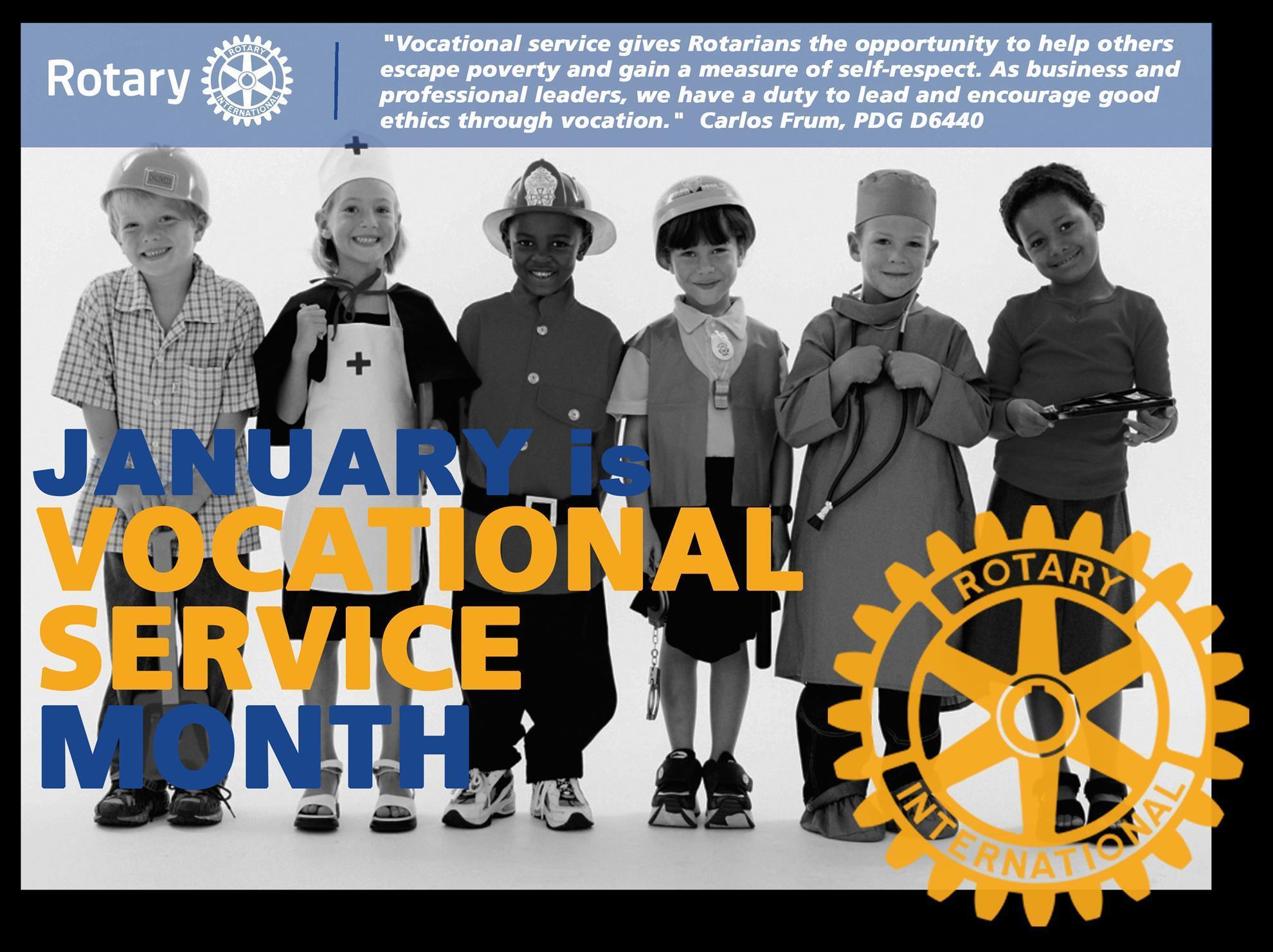
We are pleased to announce that once again D6440 and the Friedman foundation will offer a total of 15 scholarships in the amount of $1500.00 each.
Now is the time to get a recruitment plan together. You will want to start communicating with your local high schools, trade schools and community colleges regarding this opportunity.
Deadline is March 23, 2024 Click the link to get direct access to the Vocational service page and the 2024 forms.
Anyone interested in helping out with the scholarship interviews?
Please reach out to Pat Boquist, Barrington Rotary Club.
>>>Applications for the Rotary Club of Northbrook's Vocational Scholarship are currently available.
Scholarship grants in the amount of $1,500 each will be awarded to support Northbrook residents who are preparing to further themselves in a chosen vocation.
Students who are entering career and technical education programs (CTE), at community colleges, technical training institutions, or vocational training programs may apply for financial scholarship awards.
RI president-elect announces 2024-25 presidential theme
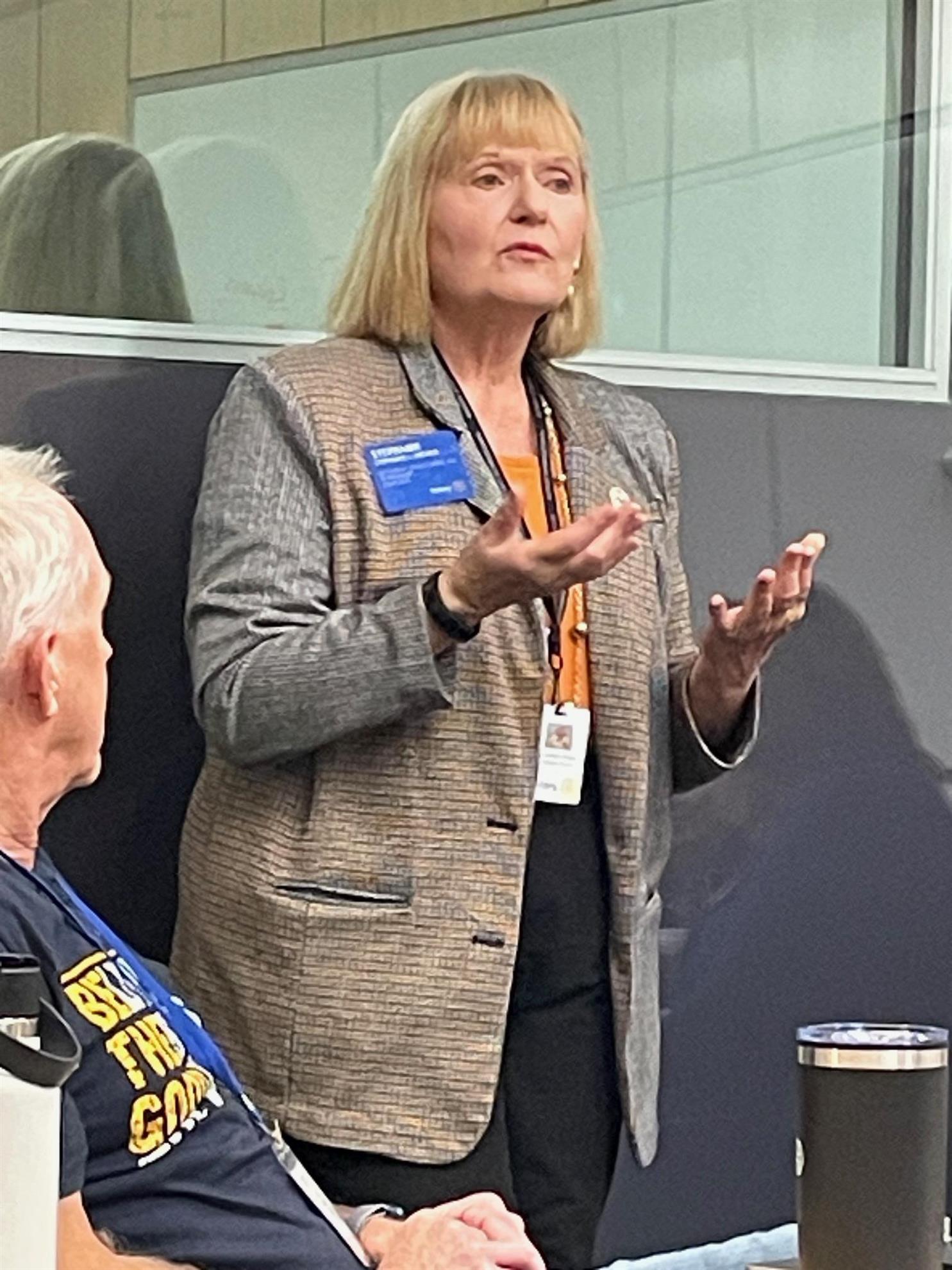
Rotary International President-elect Stephanie Urchick announced that the 2024-25 presidential theme is The Magic of Rotary and called on members to recognize and amplify the organization’s power to save lives.
“Don’t misunderstand me – we are not going to end polio or bring peace to the world by waving a wand and saying some funny words,” Urchick told incoming district governors at the Rotary International Assembly on 8 January. “It’s up to you. You create the magic with every project completed, every dollar donated, and every new member.”
Urchick, a member of the Rotary Club of McMurray, Pennsylvania, USA, said she saw the magic of Rotary on display when she was helping install water filters in the Dominican Republic. Two boys were watching as dirty water entered the filter, then ran out clean at the other end.
“One of the boys grabbed my sleeve and said, ‘Show me the magic again,’” she said. “Obviously, the water filter wasn’t magic. We worked hard to transport those filters, install them, and work with community leaders in the area to maintain them. But those boys knew that easy access to clean water would change their lives. Knowing that I played a small part in that certainly changed my life.”
Prioritizing peace
Urchick urged members to champion Rotary’s Action Plan, find a balance between continuity and change, and work for peace. She plans to host a presidential peace conference in 2025 with the theme “Healing in a Divided World.”
Rotary has a long history of promoting peace through its network of peace centers, Urchick noted. Located at top universities around the globe, the centers have trained nearly 1,800 peace fellows who are now working in more than 140 countries. The newest center, located at Bahçeşehir University in Istanbul, Turkey, will welcome its first class of fellows in early 2025.
“The Rotary Peace Fellowship began more than 20 years ago to equip peace and development professionals from communities around the world to become effective catalysts for ending and preventing conflict,” Urchick said. “This conference will focus on Rotary’s peace efforts and provide opportunities to learn together.”
In addition to emphasizing peacebuilding, Urchick reiterated Rotary’s commitment to eradicating polio. She urged the incoming governors to join or initiate PolioPlus Societies in their districts and do all they can to help end the disease.
“Contact elected officials and other government leaders. Remind them that polio is still a threat. Push them to support polio eradication,” she said. “Polio remains our top priority and requires our fullest commitment, but there is so much important work to do.”
Balancing continuity and change
Urchick also underscored the necessity of balancing continuity and change, both of which animate Rotary’s Action Plan.
“The plan is all about building on our best ideas, not abandoning them,” she said. “We face a tough balancing act. We must change ourselves and stay true to who we are.”
She asked the governors to do whatever is needed to make the club experience irresistible to members.
“That might mean changing how things are done in your district,” she said. “If your district has been doing things one way for 50 years, it’s probably time to reassess. If a club in your district isn’t active or is losing members, maybe it’s time to start a new club that fits better with the community. Just because a club or district hasn’t changed in a while doesn’t mean no one is hungry for change.”
One way to make positive change, she said, is to embrace the principles of diversity, equity, and inclusion within clubs.
“I hope you’ll join me in opening your arms to future people of action, even if – and in some cases, especially if – they don’t look or act like the typical member of your local club,” she said. “With DEI, it is easier to be united in a common purpose. It’s in those moments when we are committed and focused that we are the most effective and relevant.”





.png)