M.M Yale University, B.M. Peabody Conservatory. Christopher has performed extensively across North America and around the world. As a solo performer Christopher Laughlin has toured in 25 countries on five continents, presenting concerts in France in Portugal, Greece, Morocco, Egypt, Israel, Jordan, India, Nepal, the Philippines, Singapore, Thailand, Austria, Yugoslavia, Romania, The Czech Republic, Ghana, Cameroon, Bolivia, and many others.
Christopher has performed as soloist with the Symphony of the Shores, Chicago Chamber Orchestra, the Westshore Symphony, the St. Joseph Pro Musica, the LaPorte County Symphony Orchestra, the Northbrook Symphony, and the Symphony String Quartet. He has made two recordings for Peregrine Records, Danza!, and Simplicio.
Christopher studied at the Peabody Institute with Ray Chester, and at Yale University with Robert Guthrie. He was awarded a Fulbright Grant for study in Paris with Uruguayan guitarist Betho Davezac, continuing his studies for a second year with a grant from the French government. Christopher has won prizes in two international competitions, the Concours International de Guitar in Sable-sur-Sarthe, France, and the Concours International de l’U.F.A.M. in Paris.
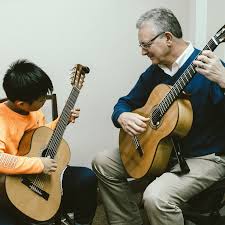
In 1996 Christopher founded the Christopher Laughlin School of Music in Northbrook, where he currently teaches and serves as Program Director. He also teaches guitar and chamber music at Loyola University Chicago.
Every Rotary member has a story. It’s probably the reason you joined Rotary, or at least why you stay.
We started this blog to give people like you a place to share your stories. By doing so, you help us increase the public’s understanding of what we stand for and the impact we make. We welcome posts from members, program alums, and anyone who has worked with us or participated in a service project. We’re also looking for think pieces from thought leaders who are active in our partner organizations or working in fields related to one of our areas of focus. If you have a story or short essay, send it as a Word document to blog@rotary.org.
Below are some guidelines for what we’re looking for:
Add photos
Photos add interest to a blog post. Send action photos (at least 960 x 440 pixels, with captions included) as separate .jpg attachments, making sure to sign and include our artist release form. (Please ensure you have the rights to use submitted photos.) Find tips on taking better photos in these blog posts.
Blog posts should meet the following requirements:
1) Keep it short. Posts should be 300 to 700 words about one topic or idea.
2) Posts should be written for a broad audience and avoid jargon or technical language. Write like you speak using conversational language to explain things clearly, and include specific examples to illustrate a point.
3) Write in the first person “I’ voice and include personal observations and impressions. The best posts tell a story, inspiring other people to want to know more about Rotary.
4) Write for an online audience. Online attention spans are short, and readers scan a page more than they read word-by-word. Keeping that in mind, employ scannable tactics such as:
Short paragraphs (one idea a paragraph)
Short sentences
Highlighted keywords
Sub-headings
Bulleted lists
5) Be direct. Most blog readers decide if an entry is worth reading in just a few seconds. State your main point at the beginning of your post and include supporting information in subsequent paragraphs.
6) Include links to other sites, blogs, and partner organizations.
7) Encourage reader interaction by providing a clear call to action, such as asking readers to post their thoughts in the comments section or to share the piece on social media with their networks.
Blog posts may be edited for clarity and brevity. While we encourage posts, we unfortunately can’t publish every submission we receive. But following these guidelines will improve your chances considerably.
Community Rules (for commenting on blog posts)
We welcome a robust discussion and encourage readers to comment on blog posts. Comments are moderated, so there may be a delay in their posting. Also, to keep this site and its contents cordial and high quality, we reserve the right to reject comments that don’t meet the following guidelines.
Consider The Four-Way Test Before Posting Is it the truth? Is it fair to all concerned? Will it build goodwill and better friendships? Will it be beneficial to all concerned?
Be Kind and Courteous Maintain a welcoming and encouraging environment. Let’s treat everyone with respect.
No Harmful Comments Harmful comments and attacks on a person’s character will not be allowed. Comments that include obscenity or profanity, or degrading comments about things like race, religion, culture, sexual orientation, gender or identity will also not be approved.
No Promotions or Spam This site is about stories of service to others. Self-promotion, spam and irrelevant links will not be approved.
Respect Everyone’s Privacy Do not share personal details and sensitive information such as telephone numbers, addresses, and financial information. If you want someone to contact you, include an email address. (But first consider whether you want to share that information with the entire digital community.)
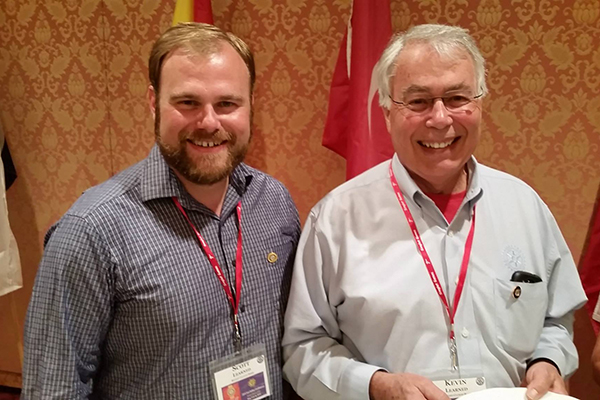
Scott Learned, left, and his father, Kevin, also a Rotarian. Scott Learned, left, and his father, Kevin, also a Rotarian.
By Scott Learned, District 5400 learning facilitator and former president of the Rotary Club of Boise, Idaho, USA.
My parents, both Rotarians, brought me to my first Rotary meeting when I was 6 years old. I even assisted my dad with a presentation on how user-friendly and helpful computers could be. I was engaged even back then!
But participant engagement is not a given. Like many clubs, the Rotary Club of Boise, Idaho, USA sometimes faced challenges retaining members.
In my role as a club leader, I’d look over exit interviews for clues on how to keep people engaged. It became clear that some exiting members hadn’t been fully introduced to the big picture of Rotary. They didn’t understand how they were part of something bigger and how their work could travel far beyond their club and impact lives in other communities and even other continents.
The familiarity I’d grown up with was missing. As my district’s Rotary Action Plan champion, I saw that gap as an opportunity to support the plan’s priority of enhancing participant engagement. I started by talking about engagement with our club members and other clubs in my district, rounding out what I’d learned from the exit interviews I’d conducted.
I learned that many other clubs faced the same situation, and several had started revamping their club’s introductory and welcome tools. These ideas and materials formed the basis of Rotary 101, a program designed to ensure that all members have the baseline understanding of Rotary so they can find meaningful ways to be engaged.
Our goal is to educate and empower members. We want every Rotarian to understand the avenues available to them to make an impact locally and globally.
This Rotary introduction covers essential aspects of our global network, including local club dynamics, Rotary International’s structure, and the work of The Rotary Foundation. By clarifying Rotary’s structure and highlighting transformative projects, members get a deeper understanding of Rotary’s global impact.
Newer members might discover that there’s more to Rotary than what comes up at social events and in early conversations. And long-term members might find new ways to remain people of action for life.
A valuable component of the course is the participant survey. Through this survey, we can continue to refine course content to reflect member interest and needs. This is similar to Rotary’s customizable Member Satisfaction Survey. By regularly asking members for feedback and responding to their input, clubs can identify what members like and dislike about their club experience and address concerns and preferences.
This “take a leap and make it your own” mentality is one of the key ideas our Rotary introduction seeks to spark and nurture. If there’s a project or issue that interests you, it’s very likely there’s a Rotarian working on it, and you’re within an introduction or two from meeting them and taking action. Rather than six degrees of separation, at Rotary it’s only two or three degrees of separation, because our global network connects people all over the world with a common intent to do good. To me, that truly is the power of Rotary that I hope everyone sees.
Visit the Action Plan page on Rotary.org to find the Action Plan Toolkit and resources to help enhance engagement, including the Member Satisfaction Survey.
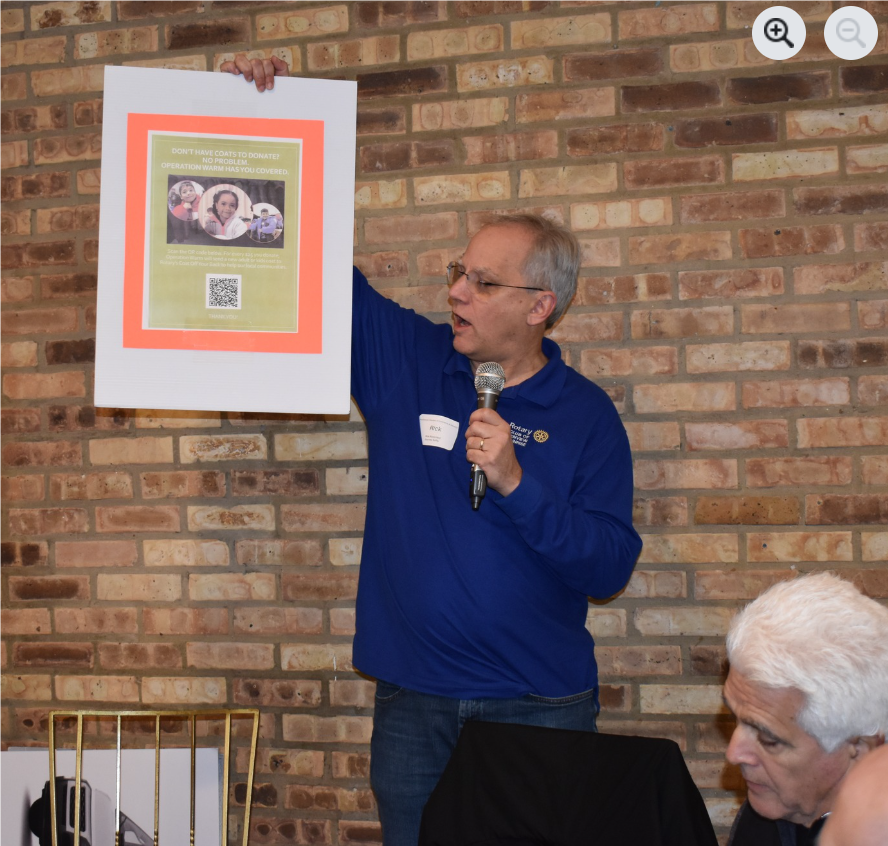
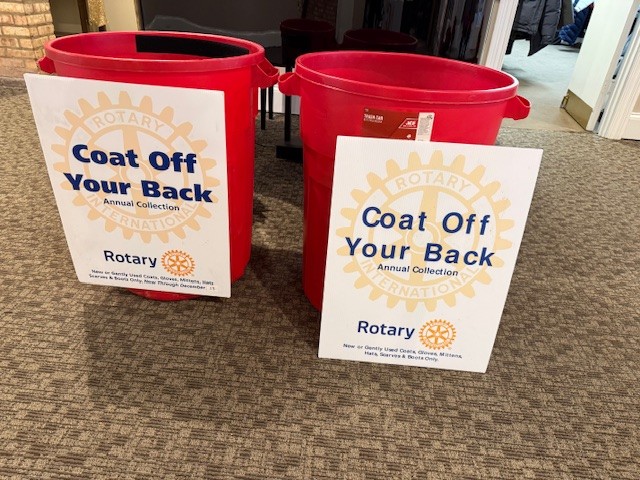
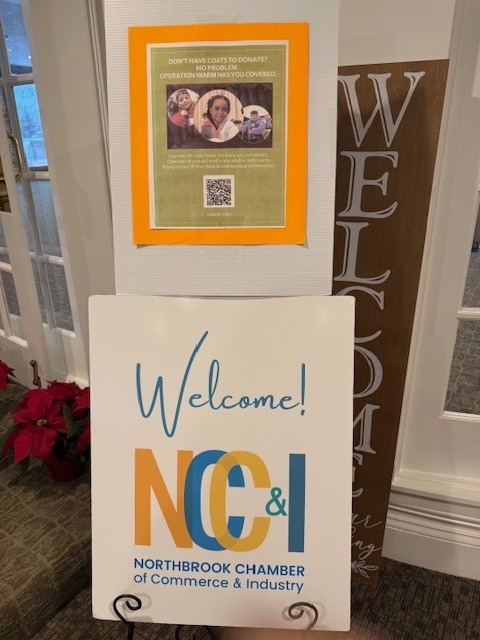
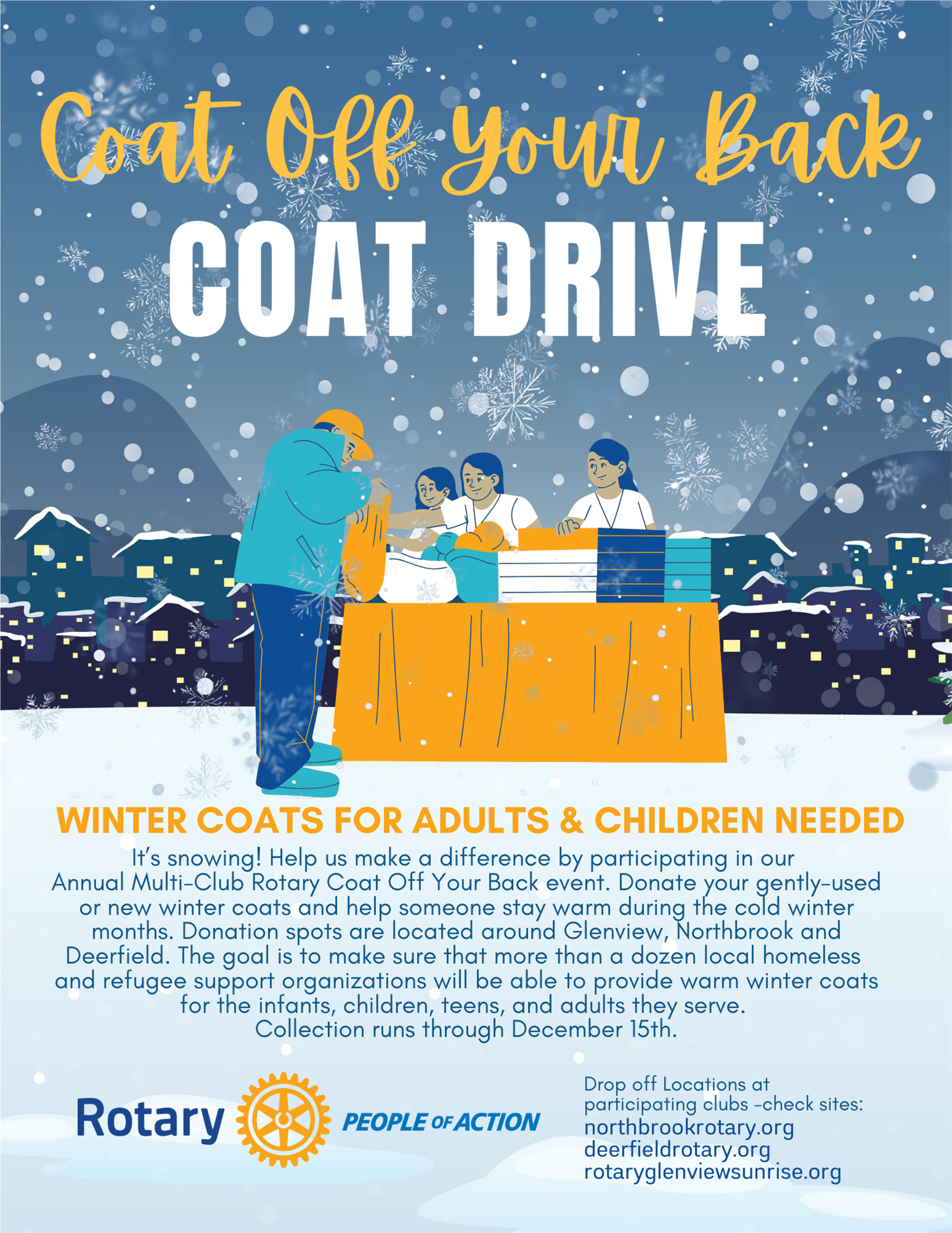
As one of the charity announcements, Rick Rosenfeld had a collection at the First Friday networking event. In addition to a few coats collected - Rick and a couple of helpers got donations to Operation warm for some additional coats. We are getting close to our 2,000 number!!
Friday 12/5 - Collection & QR Campaign at the chamber's First Friday 7-9 AM
Saturday 12/6 - Sorting at Holy Cross – 9 a.m. until hopefully done by 10:30 a.m
Use this link to buy through our partner "Operation Warm"
Operation Warm is a national nonprofit that manufactures brand-new, high-quality coats and shoes for children in need.
We partner with compassionate individuals, community organizations, and corporations to provide emotional warmth,
confidence to socialize and succeed, and hope of a brighter future.
For those who don’t have coats to donate, we are partnering with Operation Warm where new winter coats can be purchased and donated to our drive for $25.
1st and 3rd Tues of each month 12:15 to 1:30
Max and Benny's
461 Waukegan Road
Northbrook
2nd Tue of each month 5:30 to 7 PM
Acorn Grill
Heritage Oaks Country Club
3535 Dundee Road
Northbrook
4th Tue of each month 5:30 to 7
Social