banner
 
Stories
WEEKLY LUNCHEON MEETING - OCTOBER 8, 201
Join us this coming Tuesday at Jameson's Charhouse Restaurant 9525 Skokie Blvd.  Skokie, IL 60076 - located next to the North Shore Center for the Performing Arts and Doubletree Hotel - Phone: 847-673-9700.
 
 
Luncheon features:
  • Salad: Mixed greens, cabbage, carrots, and tomatoes.  Accompanied by your choice of dressing; Balsamic, House, and Ranch
  • Entrée: The menu is rotated weekly with following entree  - Artichoke Chicken, Crusted Tilapia, Broiled Cod and Chicken Marsala. To find our today's entree call Jameson's Charhouse at 847-673-9700
  • Dessert: Assortment of Chocolate Chip Cookies or Brownies
 
Alternative Selections:
  • Hamburger or Cheeseburger with French Fries
  • Caesar Salad with Chicken
  • Pasta Primavera
Lunch is $18 for members, visitors and guests.
Meetings begin at 12:15 PM & end at 1:30 PM every Tuesday.
 
Prospective Members:
Prospective members are invited to attend their first two meetings at the Rotary Club of Skokie Valley free of charge. Advance reservations are not required.
 
CLUB MEMBERS, CHECK BELOW TO VIEW WHEN ITS YOUR TURN TO PROVIDE THE SPEAKER AND FUN & FROLIC
 
Fun & Frolic:
Click Here to view schedule.
Program Speakers:
Click Here to view schedule
 
 
Read more...
Guest Speaker Kris Tsau - October 1, 2019
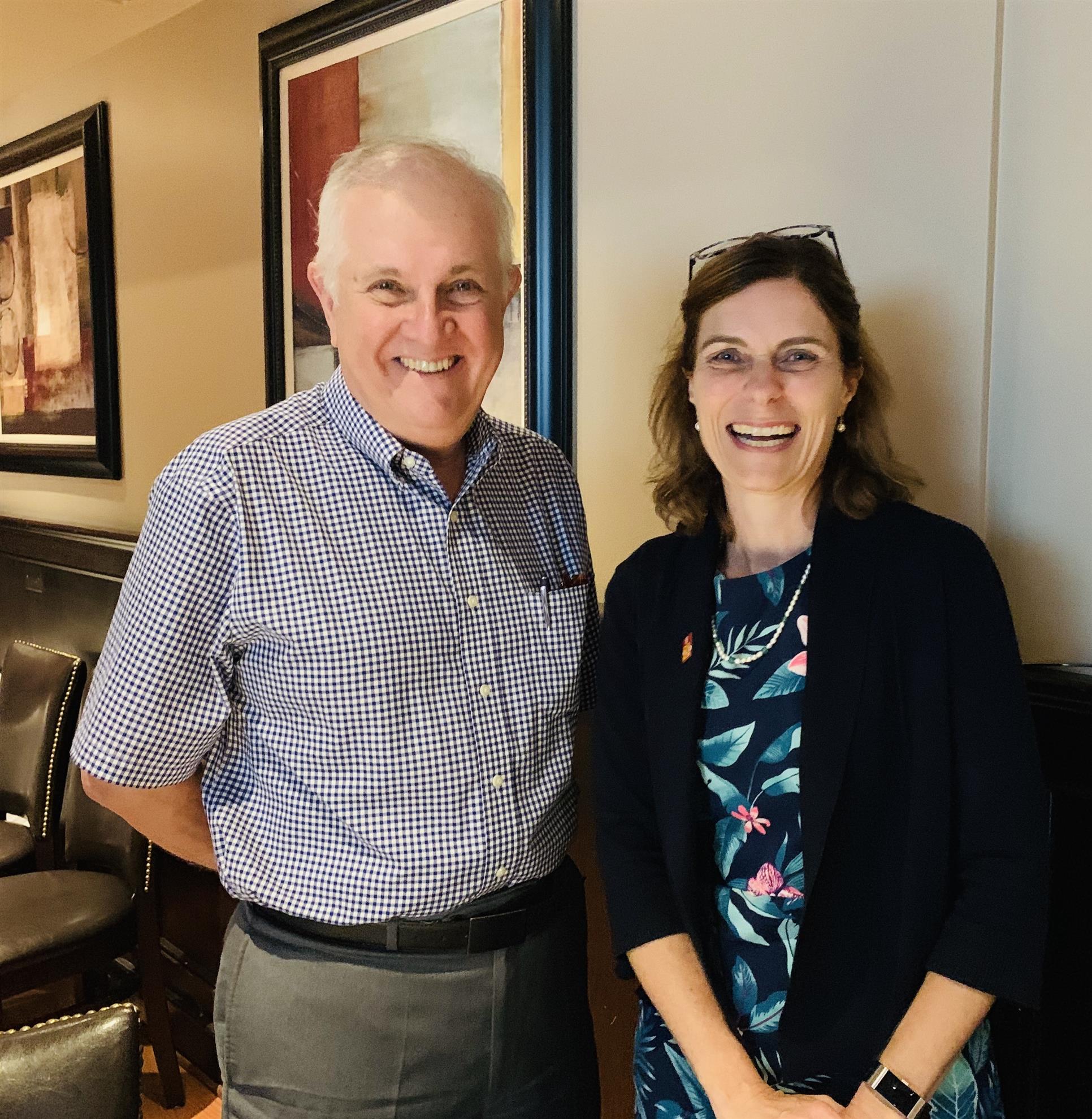
Club Member Joaquin Mejia, and his guest speaker Kris Tsau
 
Kris Tsau, Rotary International Advocacy Specialist PolioPlus, was the guest speaker at our October 1st weekly luncheon
 
WHERE WE WORK
 
Global Polio Eradication Initiative (GPEI) partners work all across the globe to ensure no child is paralyzed by polio ever again.
 
Stopping all poliovirus
Today, the three countries of focus are Afghanistan, Nigeria and Pakistan as they have never stopped transmission of endemic wild poliovirus.  The countries are working to deliver vaccination services to their people, to carry out sensitive disease surveillance and to cooperate to immunize migrating populations across their common border. GPEI also supports countries that experience or are vulnerable to the rise of vaccine-derived polio viruses (VDPVs), which are rare and only occur when polio vaccination rates are low. When VDPV cases occur, high levels of vaccination, robust surveillance, and rapid outbreak response are critical.
 
Keeping the world safe
GPEI is also working to strengthen surveillance and immunization systems in the African and Eastern Mediterranean regions of the World Health Organization to ensure that polio has truly ended and immunity against the virus improves. In many countries of the world, surveillance against polio is maintained through the GPEI, and vaccination activities continue, to make sure children remain protected as long as there is polio anywhere.
 
Closing in on the Virus
 
  • In 1988, there were 350,000 annual cases of wild poliovirus from 125 countries. In 2018, there were 33 cases reported in only two countries - Pakistan and Afghanistan. While this exceeds the number of cases in 2017 (22), wild polio transmission has remained at unprecedented low levels in recent years.
  • Today, wild polio exists in the smallest geographic area in history. The world has not experienced any outbreaks of wild polio outside the three remaining polio-endemic countries – Afghanistan, Pakistan and Nigeria – since August 2014. In fact, Nigeria has not seen a case since 2016. If the country reaches three years without detecting the virus, the entire WHO AFRO Region could be certified wild polio-free as early as 2020.
  • Only one of the three wild polio virus strains appears to survive Wild polio virus type2(WPV2)was certified eradicated in 2015, and type 3 wild poliovirus (WPV3) has not been detected since 2012.
Program Achievements
 
  • Thanks to polio eradication efforts, more than 18 million people are currently walking who otherwise would have been paralyzed by the virus. Ending polio is a critical step toward improving the lives of the world’s most vulnerable children.
  • In 2019, the WHO South East Asia Region marks five years since being declared polio-free following eradication of the virus in India. India was once described as the most challenging place in the world to end polio and just over a decade ago was responsible for almost 70% of all wild polio cases globally. Stopping polio in the country is one of the most significant achievements in public health and serves as evidence for what is possible in the remaining endemic countries.
  • The tools, infrastructure and knowledge developed to eradicate polio have been used to fight every vaccine-preventable childhood disease, deliver malaria prevention tools and improve disease surveillance worldwide. Polio workers have also delivered 1.3 billion doses of Vitamin A since 1988 that have saved an estimated 1.5 million children’s lives. In 2014, the polio vaccination infrastructure in Nigeria was also used to stop the Ebola outbreak in its tracks.
Protecting Gains
 
  • If we don’t end polio now, we could see a resurgence of up to 200,000 cases annually within a decade. The world could also risk losing upwards of US$50 billion in estimated savings that eradication would generate by 2035 – with these savings primarily concentrated in developing countries.
  • To protect global progress, the program vaccinates more than 400 million children across dozens of countries every year and conducts disease surveillance in more than 70 countries. Since 2001, there have been wild polio outbreaks in 41 countries that were previously polio-free. While each outbreak has been stopped, each one is a reminder that as long as polio exists, every country—and every child—is at risk.
  • Through its ongoing surveillance, the program investigates more than 100,000 suspected cases of polio each year using a community reporting network. It has also expanded environmental sewage testing to help vaccination campaigns target areas where the virus is circulating even before any child shows symptoms of polio.


Read more...
A new debate on nuclear arms

A new debate on nuclear arms


"There are nine nations sitting on top of 15,000

nuclear weapons."

Tom Sauer


The threat presented by nuclear weapons is dire, with nuclear-armed nations maintaining enough firepower to destroy the world many times over. But nuclear disarmament expert Tom Sauer, associate professor of international politics at the University of Antwerp in Belgium, says there are reasons to be hopeful — if you know where to look and are willing to act.

For two years in the late 1990s, thanks to a Rotary Ambassadorial Scholarship (sponsored by the Rotary Club of Tessenderlo, Belgium), Sauer was a research fellow at Harvard’s Belfer Center for Science and International Affairs in the Kennedy School of Government — "an academic paradise," he says.

Sauer has written on the Nuclear Non-Proliferation Treaty, nuclear terrorism, and NATO’s role in nuclear policy. In June, at the Rotary International Convention in Hamburg, Germany, he received the Rotary Alumni Global Service Award.

THE ROTARIAN: How dangerous are nuclear weapons to the world right now?

SAUER: Nuclear arms control is not in the news much except for stories about North Korea and Iran, so-called rogue states. North Korea has nuclear weapons, and Iran probably would like to. But there are nine nations sitting on top of 15,000 nuclear weapons. In the Nuclear Non-Proliferation Treaty of 1968, nucleararmed states promised to get rid of nuclear weapons. Based on this promise, more than 180 states agreed never to produce nuclear weapons. The states that don’t have nuclear weapons feel that they fulfilled their obligations, while the five states that had nuclear arms at the time of the treaty [China, France, Russia, the United Kingdom, and the United States] have not fulfilled their obligations. These nuclear nations have kept their nuclear weapons and have not eliminated their arsenals as agreed.

TR: What are non-nuclear states doing about it?

SAUER: Two years ago, 122 states negotiated the Treaty on the Prohibition of Nuclear Weapons, or "the ban treaty." It bans nuclear weapons because they’re too destructive. If that treaty enters into force, then the states that have signed this treaty will regard nuclear weapons as immoral, inhumane, and illegitimate, but also illegal.

TR: What do supporters of the treaty hope it will accomplish?

SAUER: The purpose of the treaty is to strengthen the taboo on the use of nuclear weapons and even the possession of nuclear weapons, and to start a new debate, especially inside the nuclear-armed states like France, Russia, the United Kingdom, and the United States.

We can see already some positive indications in this regard. The managers of Norway’s pension fund, one of the largest in the world, decided to stop investing in nuclear-weaponsrelated business. The biggest Dutch pension fund followed last year. And I was involved in convincing one of the biggest Belgian banks, KBC, to do the same. Why did the banks decide to switch? Because of pressure from the public. People who have savings accounts can email their banks.

You have to think about the longer term and ask: Do we want a world with more nuclear weapon states and maybe nonstate actors — terrorist organizations — acquiring nuclear weapons, and then risk that they will be used? There’s only one way to eliminate the possibility that they can be used: eliminate the weapons systems. I know that it will be very difficult. I’m not talking about tomorrow or the day after. But if you want to do that, we have to start to think about it now.

— FRITZ LENNEMAN

Russell Hampton
ClubRunner
ClubRunner Mobile
Bulletin Editor
Al Anile
Subscribe to Bulletin
Subscribe to our eBulletin and stay up to date on the latest news and events.
Speakers
Oct 08, 2019
Book about Congressman Sid Yates
Oct 15, 2019
Keeping ourselves and our loved once safe
Nov 05, 2019
School District 219
View entire list
This weekly electronic bulletin is intended to keep club members, friends of Rotary and bulletin subscribers up to date with weekly luncheon meetings and other club activities. Feedback, (positive or negative), is welcome!
 
Thank you
Al Anile, Editor