Rotary Club of Casper WY
Meeting Summary
11/11/2019
President John Griffith called the meeting to order promptly at 12:24, with the ring of the bell and welcomed everyone to today’s meeting. Since today is Veteran’s Day he asked all to sit and then asked all of our Veterans to stand and be recognized for their service.
Inspiration, Pledge, 4-Way Test:
Sabrina Foreman
Greeters:
Leah Varela and Miamie Sleep were our greeters today and Leah introduced the members who brought guests:
- Steve Loftin introduced John Ralph (71 Construction);
- Errol Miller introduced Sherley Crawford;
- Bill DeGraeve introduced Martin Axlund (Real Estate);
- Eric Easton introduced Mike Britt (Principal KWHS);
Song and Merriment:
Gary Pehrson was not here today so no song!
Family of Rotary:
Deb Theriault let us know that former member of our club Barry Floyd passed away last week, he is also the Father-in-law of Chastidy Greenwood our fellow Rotarian.
Brad Cundy let us know that his wife had her Kidney and spleen removed and is home from the hospital and they hope this will be the end of the health issues she has been facing with her kidney.
President John gave us an update on Vickie Diamond saying that she is up at Elkhorn and hoping to be out by the end of the week or next week and hopes to be back at Rotary before the Christmas party. She said to tell everyone she if doing well.
Jim Porter said that his wife will be going through knee replacement surgery.
Miamie Sleep announced that her 79-year-old grandfather got married last week.
Charlie Shopp congratulated Mike Britt and KWHS for their win of State 4A Volleyball this weekend for the third year in a row.
Bill DeGraeve announced that we lost another great Rotarian last week, Crystal Mueller Past President of the Five Trails Club passed away after a long battle with Cancer.
Rotarians of the Week:
President John nominated those who attended RILA over the weekend, Sabrina Foreman, Kendra Ziler, Joe MacGuire, Eric Schlidt, and Miamie Sleep.
Steve Loftin nominated all of those who helped pack meat at the Food Bank of the Rockies last week, Jim Gleason, Jim Porter, Miamie Sleep, Steve Loftin, Al Scroggins, Bob Tarantola, and Edis Allen.
Kendra Ziler nominated Susan Thomas for being nominated as a PRCA John Justin Committeeperson of the year.
Mike Stepp nominated Jim Anderson who was nominated as a Casper College Exemplary Alumni.
Announcements:
President John reminded us that Rotary Foundation Paul Harris Dinner that will be on Thursday November 21st, signups are on the table and Mike McIntosh set up online signup and sent out an email with the link and Lori sent out an email with the flier.
Richard Schwahn announced that it is crunch time for the outbound exchange student applications so if you know anyone that is interested please let him know ASAP. He also said that Bill DeGraeve’s son Gabe has applied. He then asked for volunteers to do an interview tonight with Gabe.
Membership:
Richard Schwahn and Becky Byron were awarded their Paul Harris Fellowship Pins today, Becky, PH + 1 and Richard PH +5. Congratulations and Thank You!
Student of the Month:
Our SOM this week is from KWHS, Caleb Eastlund, a great young man.
Program (David Pope and BlockChain):
President Elect Lisa Scroggins, introduced our speaker today, a long time Rotarian, David Pope. He is here to explain to us what Blockchain is and the legislation in Wyoming to use Blockchain.
Blockchain is what drives blockchain but he focused on blockchain without the crypto currency like bitcoin. He said that across the world 50-60% of people have bank accounts but if you take away the industrialized world that number drops to about 25%. Without a bank account a person is unable to store their wealth or build their future by acquiring more wealth. About the same number of people have Birth Certificates, without that it is very easy for you to be taken into human trafficking and you can’t get a bank account. There are 2.7 billion smart phones in the world and there are great networks around the world. Crypto Currency is a great way for people to store their wealth on their cell phones. Blockchain was invented in 2009 by Sakoshi Nakamoto, who wanted a way to safeguard a financial transaction over the internet. So he invented a database that is a combination of hardware and software. With the current centralized server, it can be hacked by different means and is something that has been a problem since the beginning. Blockchain combines the server system with software so that on each of the chained together systems is a copy of the database and the only changes that can be made have to be approved by everyone in that system. It is a database that exists across an entire network and if anyone wants to make a change, they all have to approve the change before it can occur. A minimum of 51% of the users in the bitcoin blockchain have to approve of any transaction. The added security is the blockchain software itself which is divided up into blocks, the foundation block is the original and then as data is added it adds it into an additional block, so you know that all of the blocks have been authorized according to the set parameters and you know that each additional block adds to the original block. Then if any of the blocks are changed without permission by somehow getting past the security and they change one of the blocks it will in turn invalidates every single block after that one. So, it is a system that is impervious to hacks. There is a $137 Billion bounty on anyone who can manage to hack the Bitcoin Blockchain and in the past ten years nobody has been able to do so. When you combine the Blockchain with smart phones you have a form of currency that can be easily and safely transmitted over the internet, there is no anonymity with it anymore. So, you have a system that is completely secure, completely traceable and completely auditable which operates over the internet. This will at some point be applied to different types of transactions such as Real Estate, supply chains of all types from beginning to end user. He gave an example with stocks, how transactions in trading stocks can take up to 3 days so you can end up having more than one person owning the same stock for a short period of time, Blockchain technology can make those transactions occur in 3 milliseconds thus eliminating that problem. Another use would be for food safety, where they can track food from its source all the way to the consumer thus making recalls more accurate and quicker. It can also allow the restaurants to show exactly where their food comes from. Walmart is now requiring their produce producers to go on the Blockchain technology. Wyoming has taken the extraordinary step of welcoming this technology and heavily promoting it. Normally new technology is backwards compatible with the legal system but Wyoming has decided that they want the laws to be ahead of the technology so through the legislature has so far passed 13 laws, and there are 5 more that will be presented this year. These are the first laws in the world to address the legal framework around Blockchain technology. In 2018 the WY legislature defined a Utility token, which is an offshoot of Blockchain which is almost a physical component of crypto currency that allows you to fractionalize interest in anything, presell services, or presell inventory for example a piece of land that you can sell off a small percentage of that piece of land. He gave the example of buying a cup of coffee at Starbucks using a token that represents a percentage of that land you own. Wyoming defined the Token as being tradeable for a good or service or property, whether real or personal property. The SEC believes that a token of any sort is a security and therefore regulated by the Government. Wyoming disagreed with this and passed legislation that says if the token represents property, especially property in Wyoming then the State has purview over that token. In 2019 Wyoming created an entirely new type of Bank, based around both the ability to deposit their crypto currency and custody arrangements for digital assets. In 2014 there was an initiative called operation choke point which used the FDIC to put legal businesses out of business by putting more legislation on the banks, if they were to bank any of those industries they would perform special audit procedures on those banks thus forcing the banks to no longer do business with those certain industries. Wyoming felt this was not fair and thus the new Special Purpose Depository Institution was born and it is not restricted to just digital assets, it is for any industry that can not be banked in a traditional bank. It allows a non-FDIC insured institution to be a bank without the ability to perform loans. In 2020 they are looking at lots of other things like digital identity and changes to past legislation to tighten them up.
He then opened the floor for questions and there were some very good ones. In Wyoming the legislation specifically states that the Business that wants to do business with one of these SPDI banks has to be a legal business in both the state they are in as well as the state of Wyoming, thus for now the marijuana industry can’t create a SPDI in Wyoming. This all got started because Wyoming was in last place for venture capital for blockchain and some of his friends got together and wanted to get more venture capital into the state. Wyoming will make money on this by getting venture capital and new companies into the state that will create jobs etc. with economic development. Also, this is a process that will lead to more tax income for the state as more companies that want to take advantage of these laws and thus move to Wyoming or at least do more business here. Just in corporate registrations we will see an increase in revenue for the state. He gave an example of a rancher needing to take out a loan in order to produce the cattle for the year then when you sell you pay off the loan, with the crypto currency and tokens thus you can finance your operations in a different way by selling tokens of the property then buying them back a the end of the year after selling the cattle. He said that 84% of the value of a dollar is restructured debt because the fed propped up the value of the dollar by simply printing more money. So, bitcoin is not a restructured debt but is not backed by anything, much he same way the dollar is, so the value is whatever a person is willing to pay for it. This is a fascinating technology that will revolutionize a lot of industries.
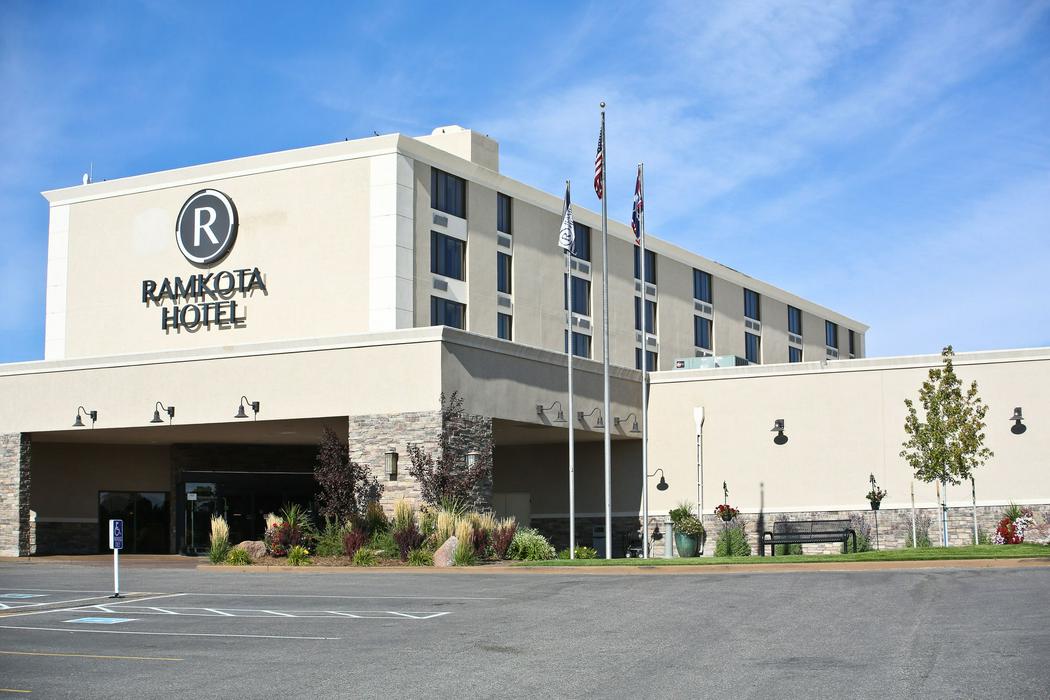
President John Griffith concluded the meeting at 1:25 letting us know that next week we will be back at the Ramkota and we will have an update on the Casper Rotary Foundation.
“Use Rotary to connect your world”