banner
Stories
Recap from February 3, 2020
The Casper Rotary Club
 
This week's meeting will be held: Monday, February 10, 2020
 
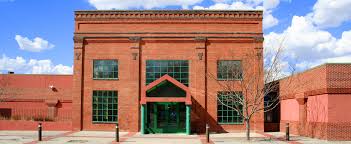
at the Nicolaysen Art Museum
400 E Collins Dr,
Casper, WY 82601
 
Greeters: Jed Shenefelt and Chastidy Greenwood
 
Inspiration: Jed Shenefelt
 
Program: Our speaker will be Tess Mittlestadt, Executive Director of Habitat for Humanity.   
 
_____________________________
Meeting Recap unavailable at the time of Rig publication. 
Read more...

Rotary Tidbits

The Rotary Club of Casper is committed to the fight to fully eradicate Polio. Since 1988, we've experienced a worldwide reduction in polio cases of 99.9%!! For more than two years now, wild polio cases have only been evident in two countries - Afghanistan and Pakistan. Once again, monies raised this year by Rotary will be matched 2-to-1 by the Bill & Melinda Gates Foundation!! 
 

Fun Reading Worth Sharing

7 Reasons Young (and Young-ish) People Should Join Rotary

50 Things Every Rotarian Should Know About Rotary

(by Steve Garret, District Governor 1994-1995)
Click here for full article or stay tuned to future Rotary Tidbits for more!

38 - ROTARY FLOAT IN ROSE PARADE
The Rotary International float in the annual Tournament of Roses Parade is undoubtedly the largest public relations project of the Rotary clubs of the United States and Canada. Since 1924 a Rotary float has been entered 18 times including every year since 1981. The famous Pasadena, California, parade is seen by an estimated 125 million people via worldwide television.
Funds for the construction of the Rotary parade entry are voluntarily given by Rotarians and clubs in the U.S. and Canada. The cost of designing, constructing and flower covering a Rose Parade float begins at about $120,000.
A multi-district Rotary committee in Southern California coordinates planning of the Rotary float and provides hundreds of volunteer hours of service. The Rotary float must portray the annual parade theme, usually depicting one of the worldwide service programs of Rotary International.
Each New Year's Day, Rotarians take pride in seeing their attractive float and realize they have shared in its construction by contributing a dollar or two to this beautiful public relations project.

39 - THE ROTARY FOUNDATION'S BEGINNING
Some magnificent projects grow from very small seeds. The Rotary Foundation had that sort of modest beginning.
In 1917 RI President Arch Klumph told the delegates to the Atlanta Convention that "it seems eminently proper that we should accept endowments for the purpose of doing good in the world." The response was polite and favorable, but the fund was slow to materialize. A year later the "Rotary Endowment Fund," as it was first labeled, received its first contribution of $26.50 from the Rotary Club of Kansas City, which was the balance of the Kansas City Convention account following the 1918 annual meeting. Additional small amounts were annually contributed, but after six years it is reported that the endowment fund had only reached $700. A decade later, The Rotary Foundation was formally established at the 1928 Minneapolis Convention. In the next four years the Foundation fund grew to $50,000. In 1937 a $2 million goal was announced for The Rotary Foundation, but these plans were cut short and abandoned with the outbreak of World War II.
In 1947, upon the death of Paul Harris, a new era opened for the Rotary Foundation as memorial gifts poured in to honor the founder of Rotary. From that time, The Rotary Foundation has been achieving its noble objective of furthering "understanding and friendly relations between peoples of different nations." By 1954 the Foundation received for the first time a half million dollars in contributions in a single year, and in 1965 a million dollars was received.
It is staggering to imagine that from those humble beginnings, The Rotary Foundation is now receiving more than $85 million each year for educational and humanitarian work around the world.

40 - AMBASSADORIAL SCHOLARSHIPS
The Rotary Foundation Ambassadorial Scholarships Program is the world's largest privately funded international scholarships program. In 1947, 18 "Rotary Fellows" from 11 countries were selected to serve as ambassadors of goodwill while studying in another country for one academic year. Since that time, approximately $242 million has been expended on some 25,000 scholarships for people from more than 125 countries, studying in 105 countries around the world.
The purpose of the Scholarships Program is to further international understanding and friendly relations among people of different countries. Scholars are expected to be outstanding ambassadors of goodwill to the people of the host country through both informal and formal appearances before Rotary and non-Rotary groups.
Beginning with the 1994-95 program year, The Rotary Foundation offers two new types of scholarships in addition to the Academic-Year Ambassadorial Scholarship offered since 1947. The Multi-Year Ambassadorial Scholarship is awarded for two or three years of specific degree-oriented study abroad. The Cultural Ambassadorial Scholarship provides three or six months of funding for intensive language study and cultural immersion in a language other than their native language.
Rotarians know that Rotary Foundation scholarships are very worthwhile investments in the future and one important step in seeking greater understanding and goodwill in the world.

Russell Hampton
ClubRunner
ClubRunner Mobile