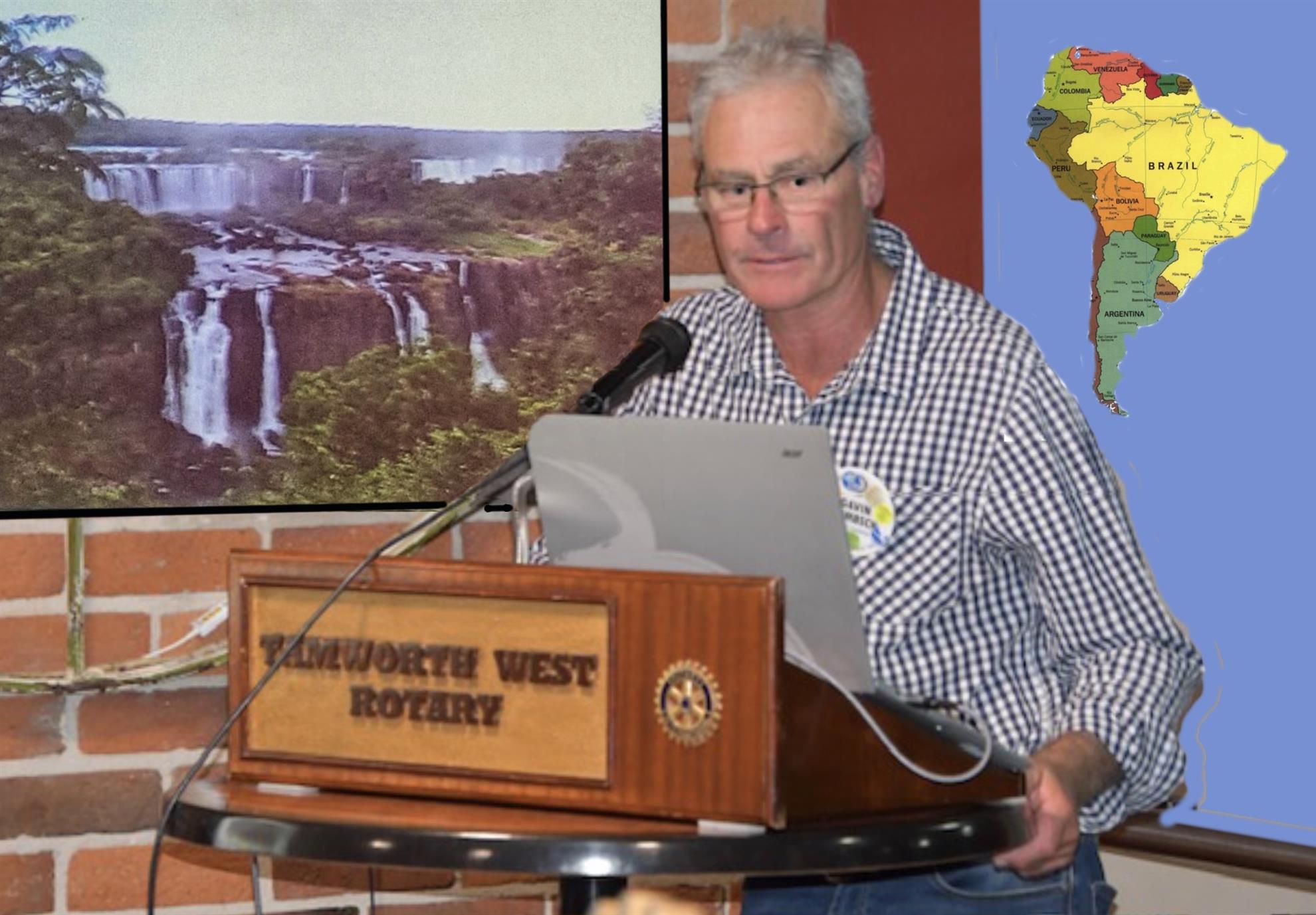
Gavin Hombsch gave members a fascinating and entertaining presentation on his recent trip through Argentina and Brazil, with a brief stopover in Chile on the way home.
Gavin began with a light-hearted overview of South American colonial history, explaining how the Spanish settled Argentina and the Portuguese settled Brazil. He described Argentina as a highly urbanised country of around 46 million people, with Buenos Aires home to a large share of the population. He also spoke about Argentina’s once-great wealth, built largely on exports of grain, beef and wool to Britain and Europe in the late 1800s and early 1900s. During this period, overseas investment funded major infrastructure, including roads, ports and a railway network that grew from around 1,000 kilometres to more than 33,000 kilometres.
However, Gavin also explained that Argentina has struggled with political instability and severe inflation. He gave the example of salaries needing to be adjusted every pay cycle in some industries just to keep skilled workers from leaving the country. Despite these challenges, Buenos Aires still shows signs of its former prosperity through its grand buildings, theatres, parks and botanical gardens.
A highlight of the Argentina leg was the Tigre Delta region, where people live among the waterways and travel mainly by boat. Gavin described houses built along the riverbanks, water taxis taking children to school, regular flooding, and iron-rich water that quickly corrodes steel.
From Argentina, Gavin travelled to Iguazu Falls on the border of Argentina and Brazil. Although locals described conditions as dry, Gavin said the falls were still spectacular, with water cascading across a vast area. He also visited a nearby bird sanctuary, where he saw flamingos and macaws.
In Brazil, Gavin spent time in Rio de Janeiro shortly after Carnival. From his hotel rooftop he had views over Copacabana Beach, and he spoke about the pressure Carnival places on the city’s infrastructure. He also outlined Brazil’s colonial history, including the arrival of the Portuguese, the use of enslaved African labour, and the move of the Portuguese royal court to Rio in 1808. Gavin visited Christ the Redeemer, where a large crowd had gathered for Mass and where a public marriage proposal received a huge cheer from onlookers.
Gavin was particularly impressed by Rio’s botanical gardens, which cover around 22 hectares and preserve native plant genetics, as well as plants from around the world. He also visited rural Brazil, including an organic dairy farm and nearby cropping areas. He described soybean, corn, sorghum, wheat, coffee, potato and garlic production, noting that some yields were surprisingly high compared with Australian averages.
There were also plenty of humorous observations about local infrastructure, particularly electrical work and roadside practices that would raise eyebrows under Australian safety standards.
On the way home, Gavin spent a short time in Chile, which he found noticeably more modern and better organised than Argentina and Brazil. He noted Chile’s strong copper and lithium industries, as well as its wine, flowers and agriculture.
Gavin’s presentation was a terrific mix of travel, history, agriculture, economics and humour. It gave members a vivid insight into the beauty, contrast, hardship and opportunity across South America.
Thanks to Pete Dillon for the notes