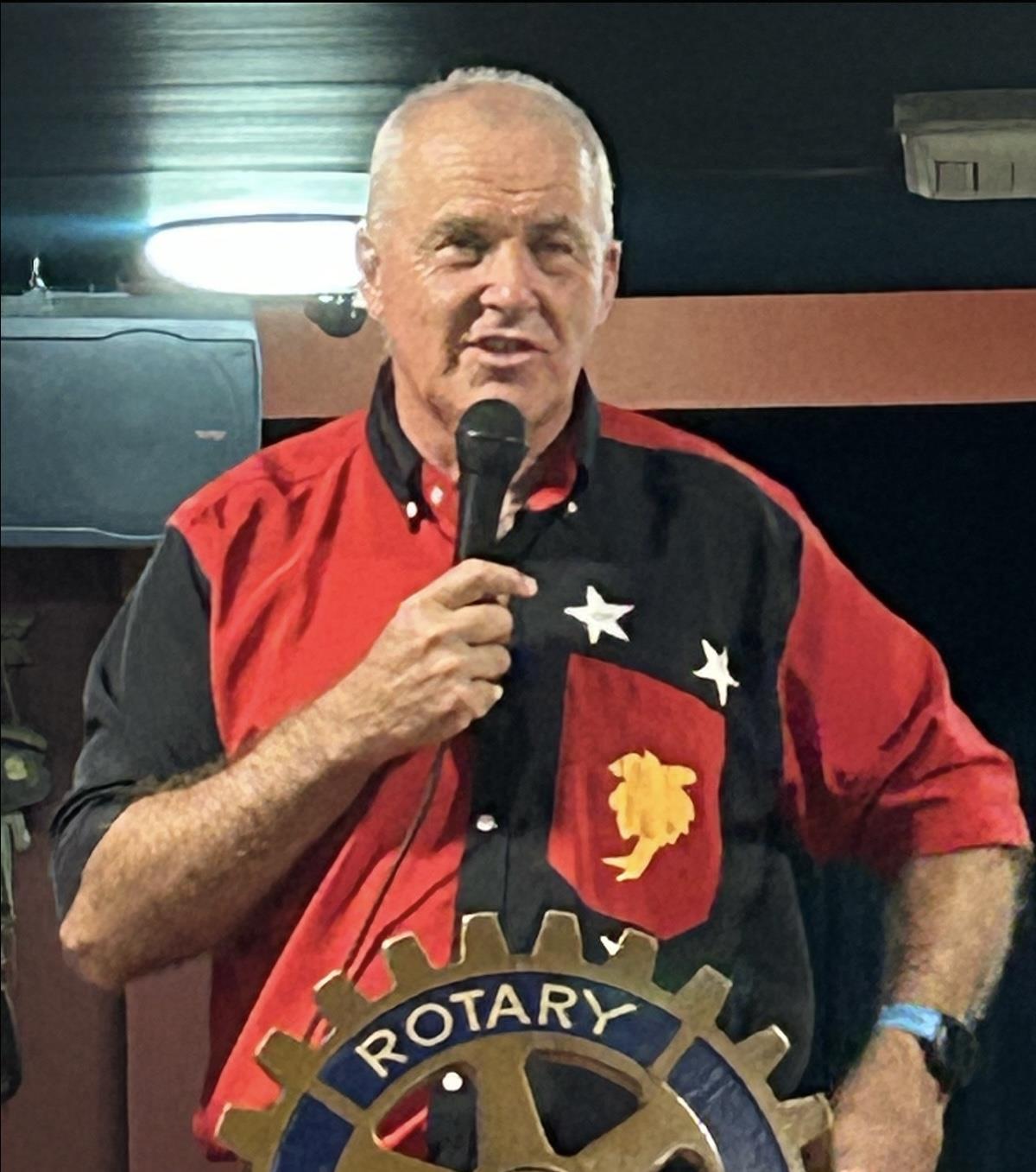
 LAST MEETING: Paul Sullivan gave a fascinating and inspirational talk on his project of empowering Kip villagers in Southern Highlands in Papua New Guinea (PNG) with a water Pipeline.
Paul grew up in Gosford and he and his wife Lois have lived in Tamworth for 45 years during in which Paul has worked as a weeds scientist for NSW DPI. For the last 12 years Paul has also conducted voluntary work in PNG and Arnhem Land. This has included sending a shipping container of supplies to PNG and facilitating the creation of 36 businesses in PNG through his Microlend finance project along with maintenance and construction work.
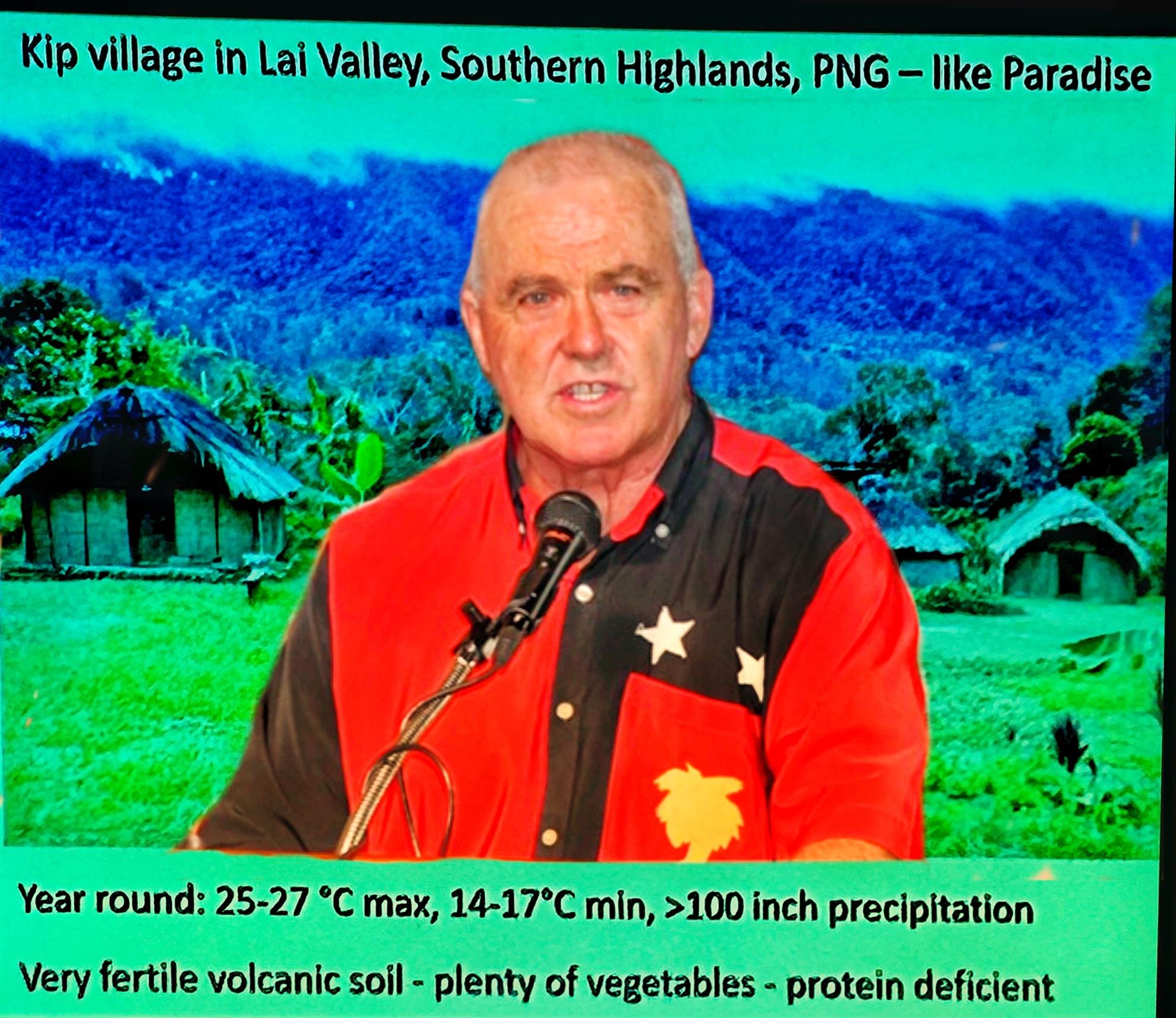
Most of this work has been focused in the Southern Highlands in the village of Kip. A very fertile valley which is 5-6000 feet above sea level with volcanic soil and situated in a high 100 inch rainfall. Paul explained that poverty prevails here in every aspect with 95 to 98% unemployment and the average income is only $1-200 per year. There are no utilities, no water, no TV and very poor communication. Life expectancy is 20 years less than in Australia with very poor hygiene, high incidence of communicable diseases such as diarrhea, tuberculosis, respiratory diseases, malaria and HIV/Aids. Houses are built out of bush materials and a whole family will live in small 4.2 x 4.5m houses with thatched roof tied with grass rope (essentially grass huts with dirt or grass floors).
The staple food source is the sweet potato (known locally as cow cow) which grows well in the rich volcanic soils. Protein however is very deficient with wallabies, bandicoots and birds caught and eaten to fill this requirement. Paul advised a favourite past time of the locals is sitting around waiting for kau kau to cook for breakfast.
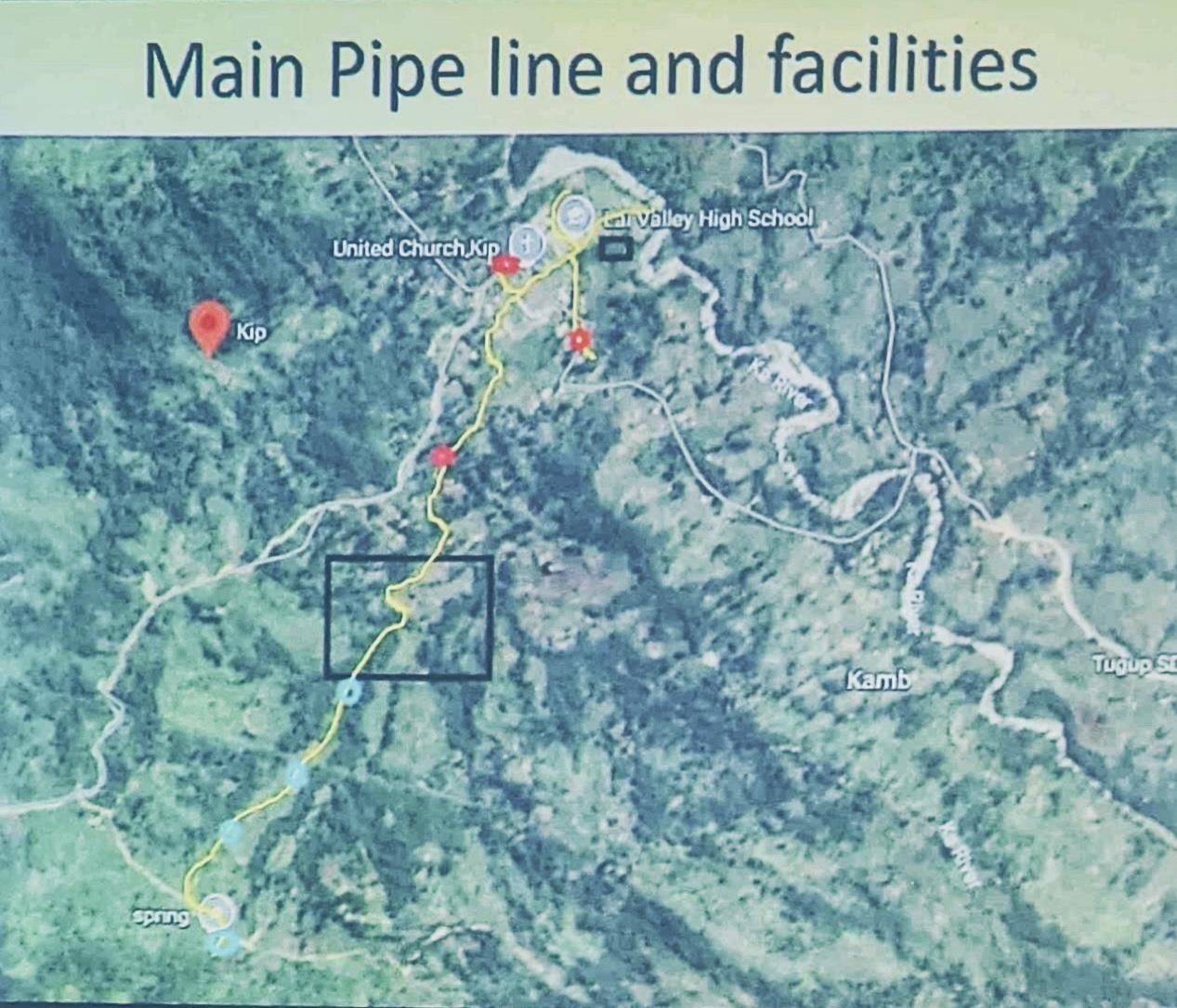
Pauls most recent project of 6 years in Kip has been to secure fresh water to the area. This has been sourced from a spring which is high above the village and drops away to the valley 1000 feet below. This pipeline provides 432,000 litres of fresh water daily to three villages, two boarding schools with up to 1000 students, a medical centre and hospital, three additional schools, the homes of all the teachers and medical staff and more than 300 households along the 2.5 km route.
The project is quite a feat of engineering being constructed entirely by hand without machinery. The trenches were all dug by hand and all materials and tanks carried in by hand. This included hand mixing a concrete base for 8 x 10,000 litre storage tanks to enable 2 days of back up supply and the installation of pressure reducing tanks which were required at every 50m drop in elevation due to low quality polypipe being used. Just to make life a bit more challenging, the route also needed to traverse a 85m deep gorge with 6m steel poles concreted in to keep the pipe out of reach of flooding.
After all this you might think Paul would be ready to take a step back. However, with his Microlend Australia project being so successful encouraging local markets and trade stores he has plans for more businesses to come. Next on the agenda is a shopping complex with 5 shops and 10,000 coffee tree seedlings have been planted to try and generate new business in the area.
We thank Paul for providing our members with such an interesting talk and wish him the best with his future endeavors.
Thanks to James Hindmarsh for the notes.