Officials from Great Britain, the Soviet Union, and the United States met in Moscow in 1943 and called for the creation of an international organization to maintain peace and security.
The next year, representatives of those countries plus China held conferences in Washington, D.C., to discuss how to go about this monumental task. Those sessions became known as the Dumbarton Oaks conference, where delegations from the four countries developed a proposal for the structure of the new organization.
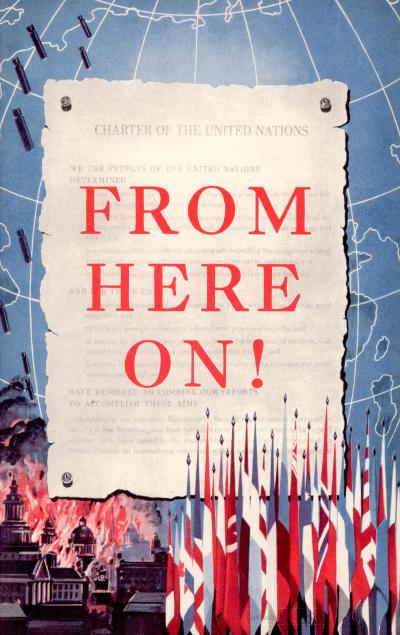
After the conference, Rotary published “What Can Rotarians Do Following Dumbarton Oaks?” It included the proposed charter, talking points, and suggestions for discussing with club members how the United Nations would relate to Rotary’s goal of advancing international understanding. It also emphasized the importance of having a plan ready for when the war ended, rather than waiting until the fighting stopped.
After World War I, “proposals for international cooperation failed because of lack of enlightened public opinion to support them,” it explained. Discussions among members “will help to create an informed public opinion.”
“Timely Questions on Dumbarton Oaks” followed to help Rotarians understand the complexities of the proposed charter. The flyer presented different perspectives on the security council and other aspects of the UN as topics for Rotary club programs or discussions. At the same time, governments around the world were carefully studying and reacting to the work done at Dumbarton Oaks.
From April to June 1945, delegations from 50 nations attended the United Nations Conference on International Organization in San Francisco (often known as the San Francisco conference). Their task was to write a charter acceptable to all of them. The delegations were assisted in this historic effort by a large number of staff, advisers, and consultants.
Rotary International was one of 42 organizations the United States invited to serve as consultants to its delegation at the San Francisco conference. Each organization had seats for three representatives, so Rotary International’s 11 representatives served in rotation. The people officially representing Rotary included the general secretary, the editor of The Rotarian, and several past presidents. Other Rotarians from Africa, Asia, Europe, and North and South America served as members of their own nations’ delegations. Rotarians also served as consultants to their national delegations.
Just before the meetings began, Rotary International published and distributed the “Pattern for the San Francisco Conference” pamphlet. “It is a splendid opportunity for the individual Rotarian to fulfill the objective of International Service,” the document proclaimed, “by taking part in the debate on this scheme of world government.”
Read more here about Rotary History and the United Nations, on Rotary.org
 Rotary and the United Nations have a shared history of working toward peace and addressing humanitarian issues around the world.
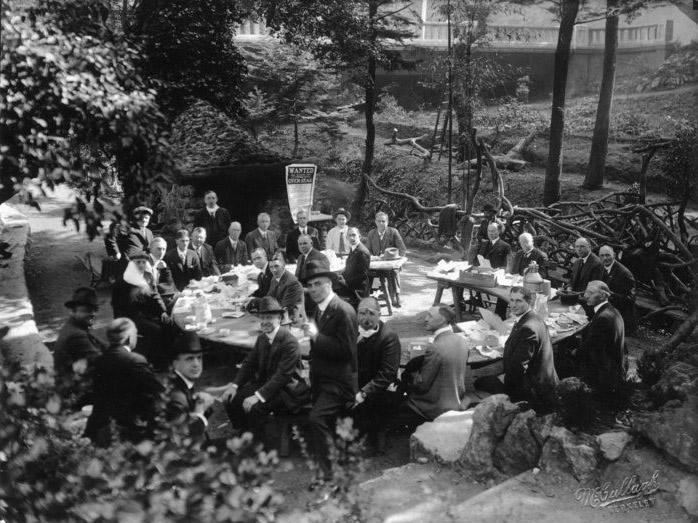 An estimated 500 million people worldwide became infected. Many cities closed theaters and cinemas, and placed restrictions on public gatherings. Rotary clubs adjusted their activities while also helping the sick.