Six-monthly Environmental Exchange
Thursday, 14 August 2025 3:00PM-4:00PM
City of Moreton Bay – Strathpine Office
Rotarians and ESRAG (Environmental Sustainability Rotary Action Group) members, Colin Scobie and Peter Row met with Cr Karl Winchester and acting/ CEO Matt Anderson from the City of Moreton Bay Council to talk about all things environmental.
Karl was elected as a Councillor for Division 6 in 2020 with a campaign focused on reforming the planning scheme, infrastructure to support growth and reducing council costs to households and businesses. He currently shares the Planning and Development Portfolio with Cr Mark Booth (Division 2) as part of Council's Futures Function.
Matt is the Executive General Manager City Operations and is currently acting CEO in Scott Waters absence. In his customary role he is accountable for Operations, Community and Environmental Services, and Project Delivery and Waste.
Our discussion centered on:
1. Monthly Community Awareness Eco-forums
Monthly Community Awareness Eco-forums run by Rotary-ESRAG-REF have been very successful.
Two upcoming eco-forums: Talking about Tilapia and Sumino Oysters, a collaboration with Biosecurity Qld; and Moreton Bay - A Sea Country Showcase, a collaboration with The University of the Sunshine Coast.
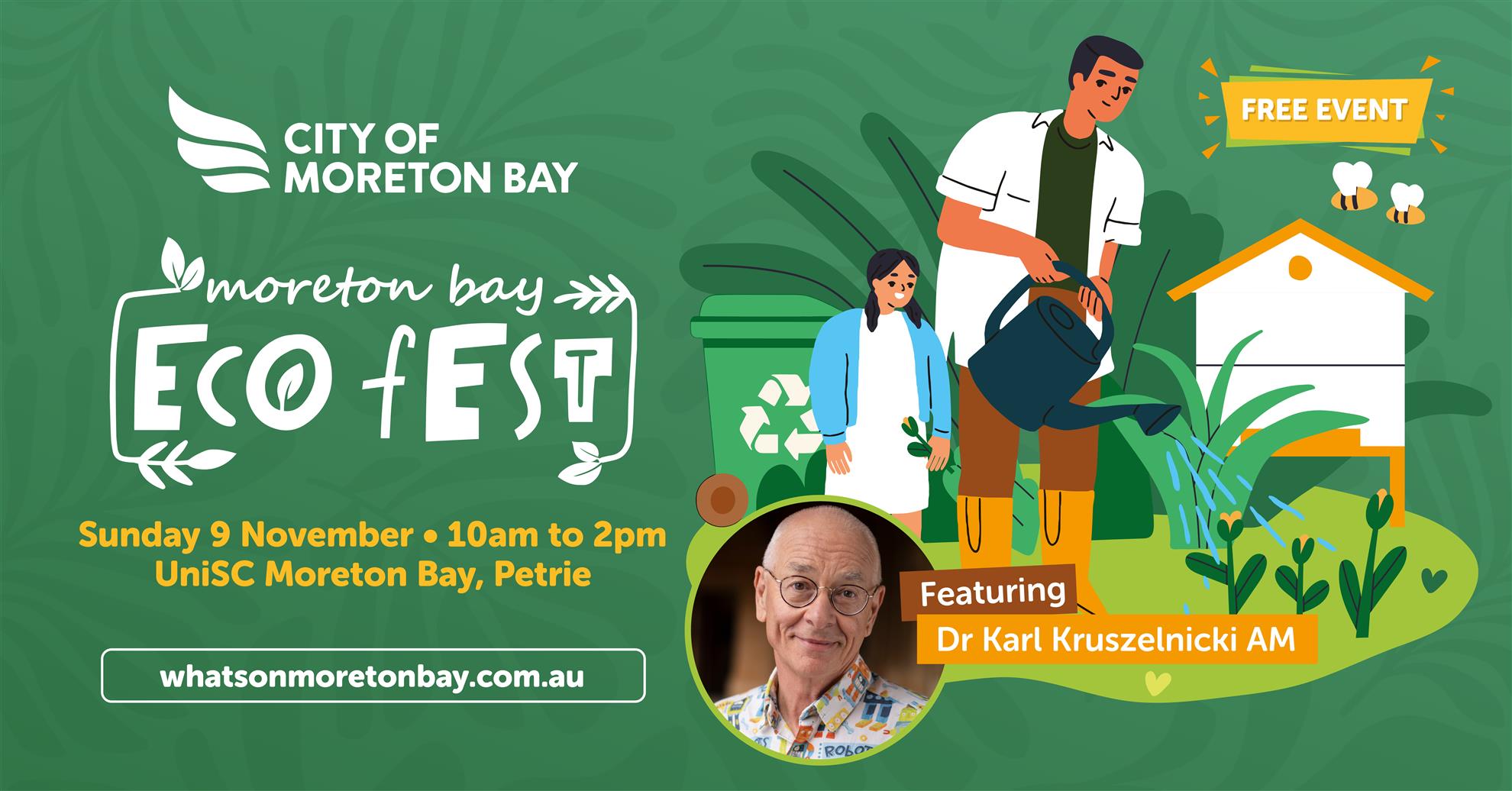
2. Moreton Bay Eco Fest (Sunday, November 9) at Petrie campus.
Inclusion of The University of the Sunshine Coast’s Forest Research Institute Research Centers as an exhibitor [Event organisor advises too late for this year. On the list for next year].
 3. Integrated Water Management | Catchment Management
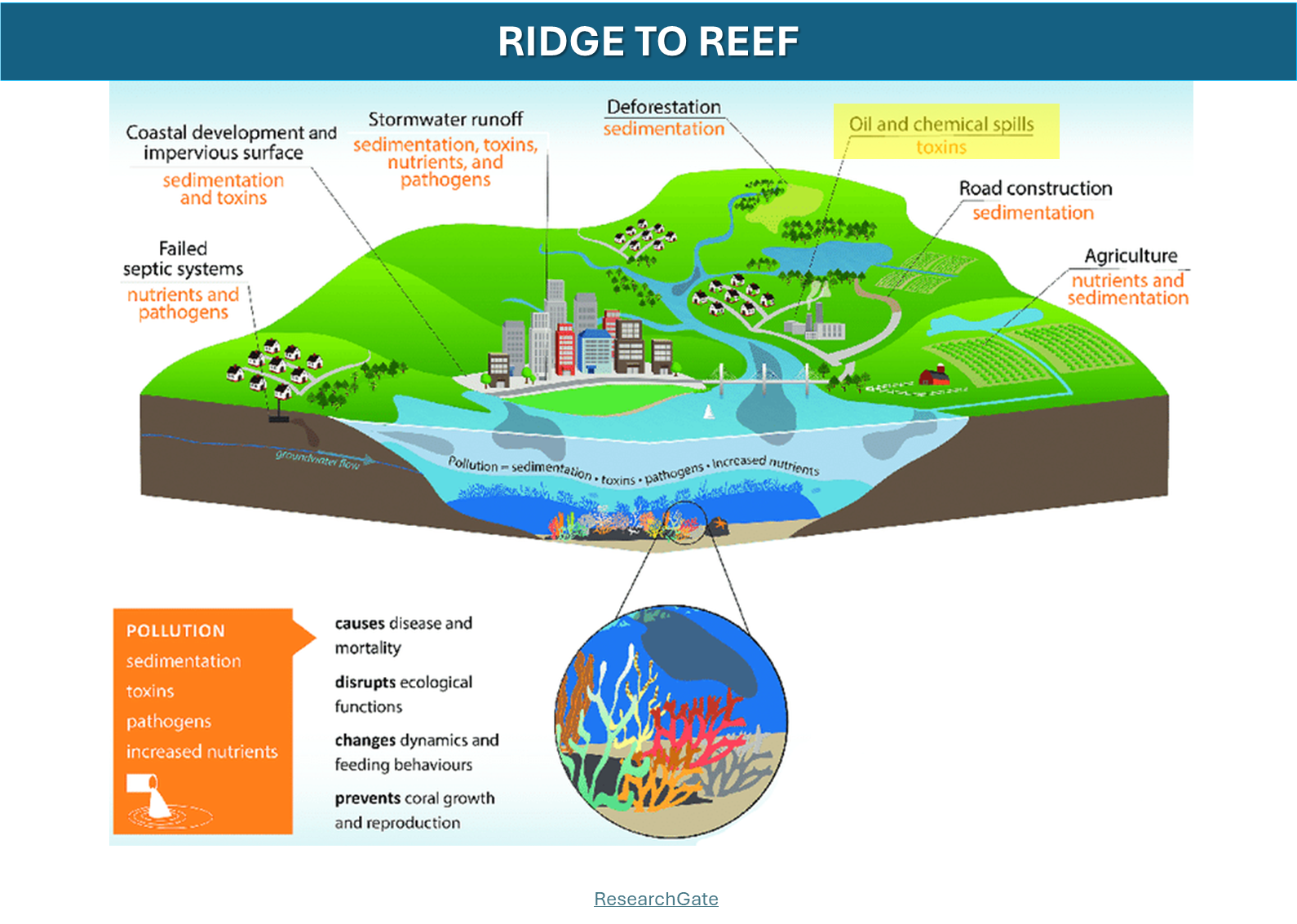
Request for Council to publish its Integrated Water Management Plan soon; and establish a Catchment Management Reference Network for the Pines Rivers and Caboolture River catchments as part of the Resilient Rivers program much like the existing Pumicestone Passage Catchment Network Reference Group. Reference groups to develop an actionable plan.
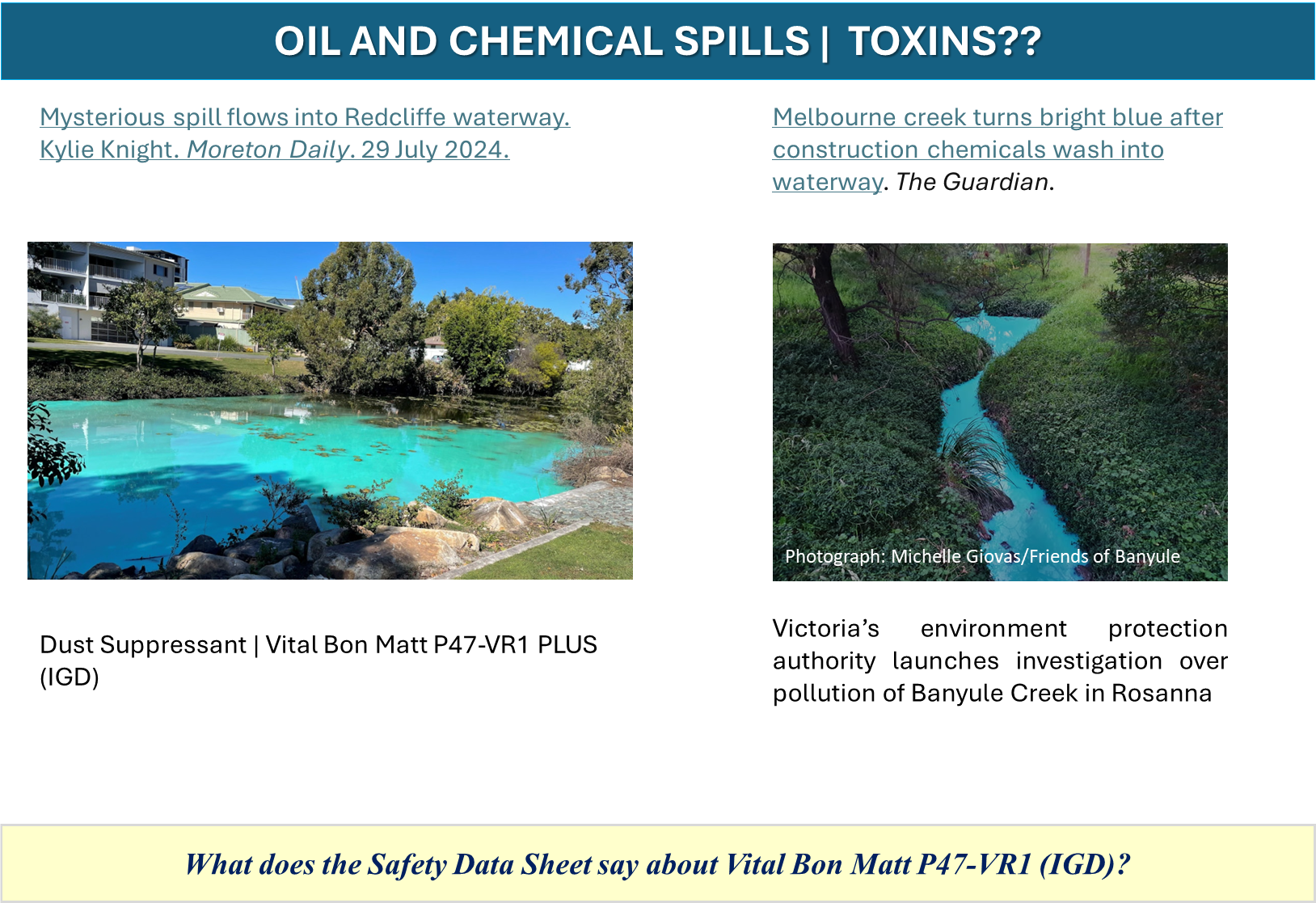
 4. Blue spill in Humpybong Creek
Name of chemical responsible for the blue discolouration in Humpybong Creek over 12 months ago disclosed.
Vital Bon Matt P47-VR1 PLUS (IGD) is a dust suppressant used in construction work and is regarded as “an inert and environmentally sound formulation”. However, the Safety Data Sheet states “no information provided” {from the manufacturer] for toxicity, persistence and degradability, bio-accumulative potential, mobility in soil and other adverse effects.
5. Effective Sediment Management on construction sites complying with the (State Planning Policy (SPP July 2017) a requisite.
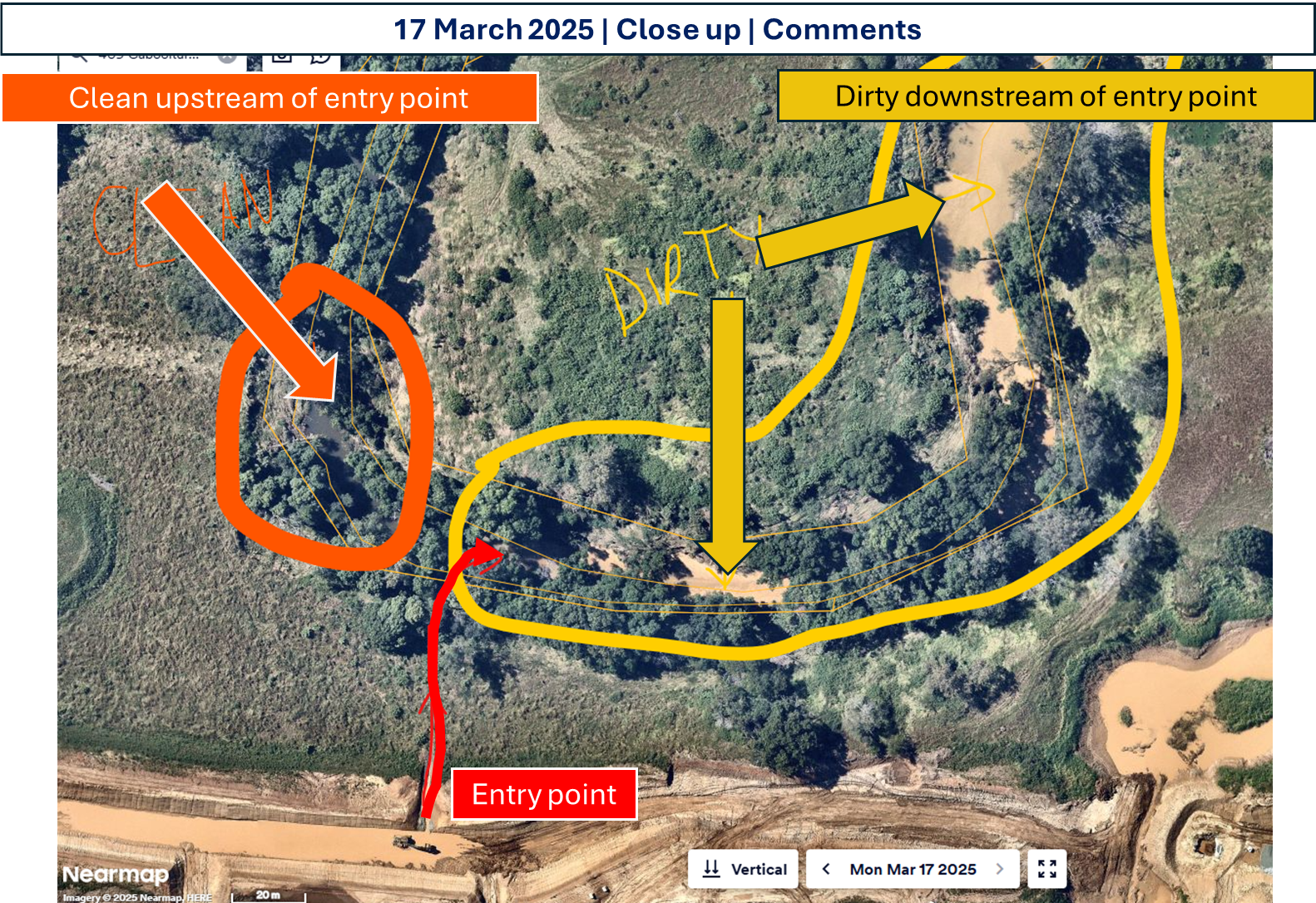
Shared aerial photograph (17 March 2025) of Waraba development showing sediment runoff exiting a sediment control basin and entering an adjacent waterway.
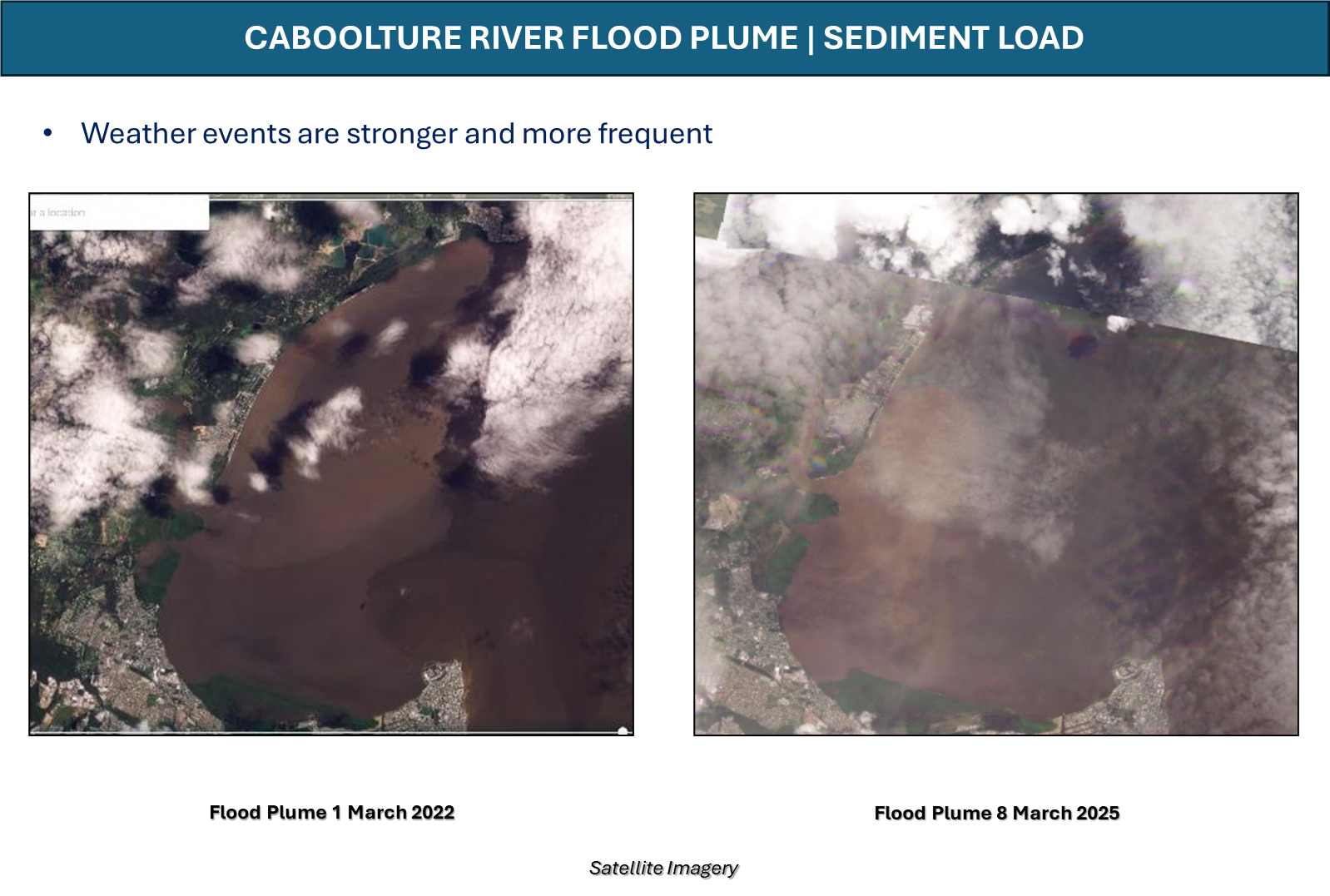
Shared satellite photograph (8 March 2025) showing flood plume existing the Caboolture River and turning Deception Bay brown.
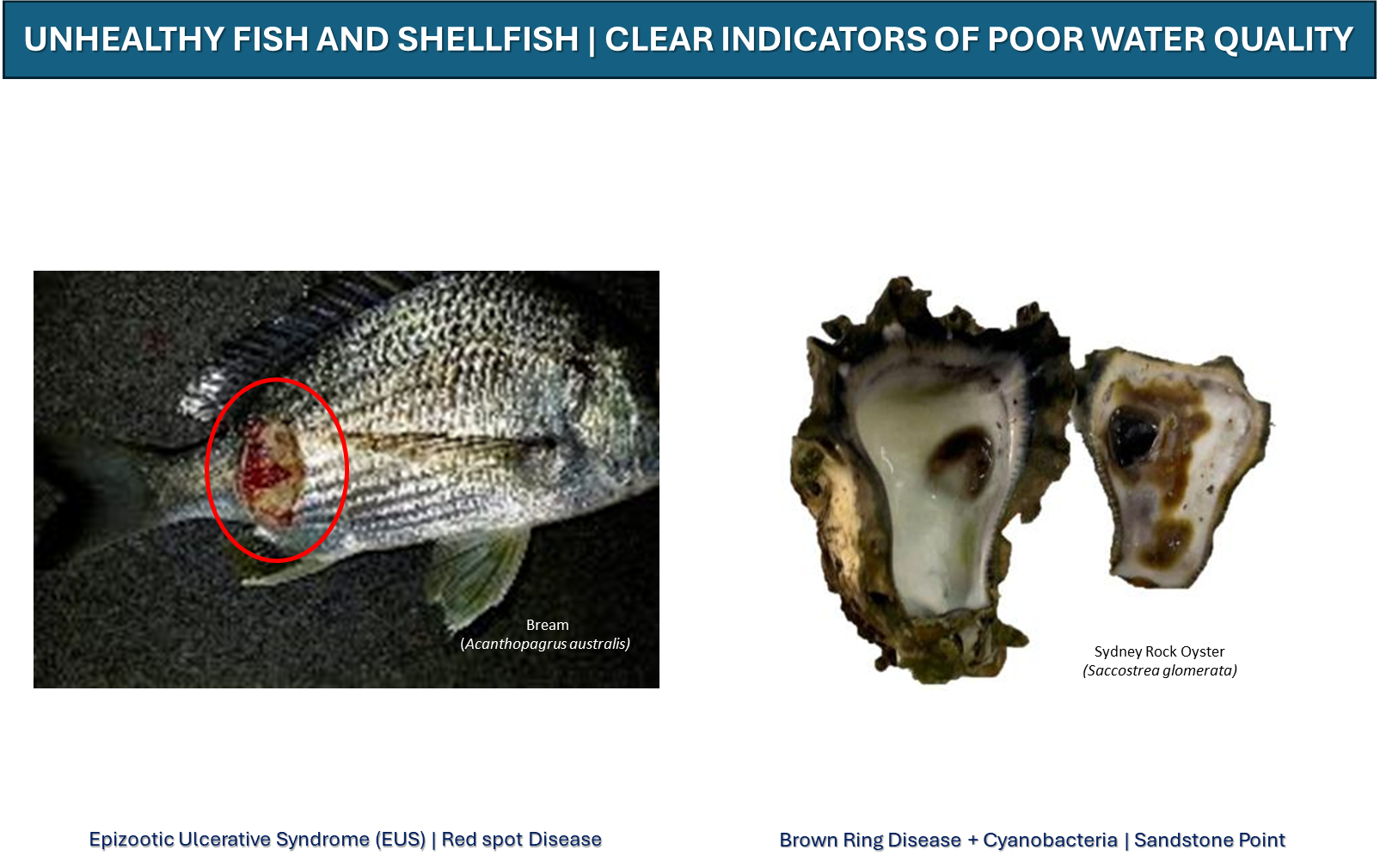
Emphasized the detrimental impact of runoff toxicants. Shared photographs of unhealthy fish and shellfish, clear indicators of poor water quality.
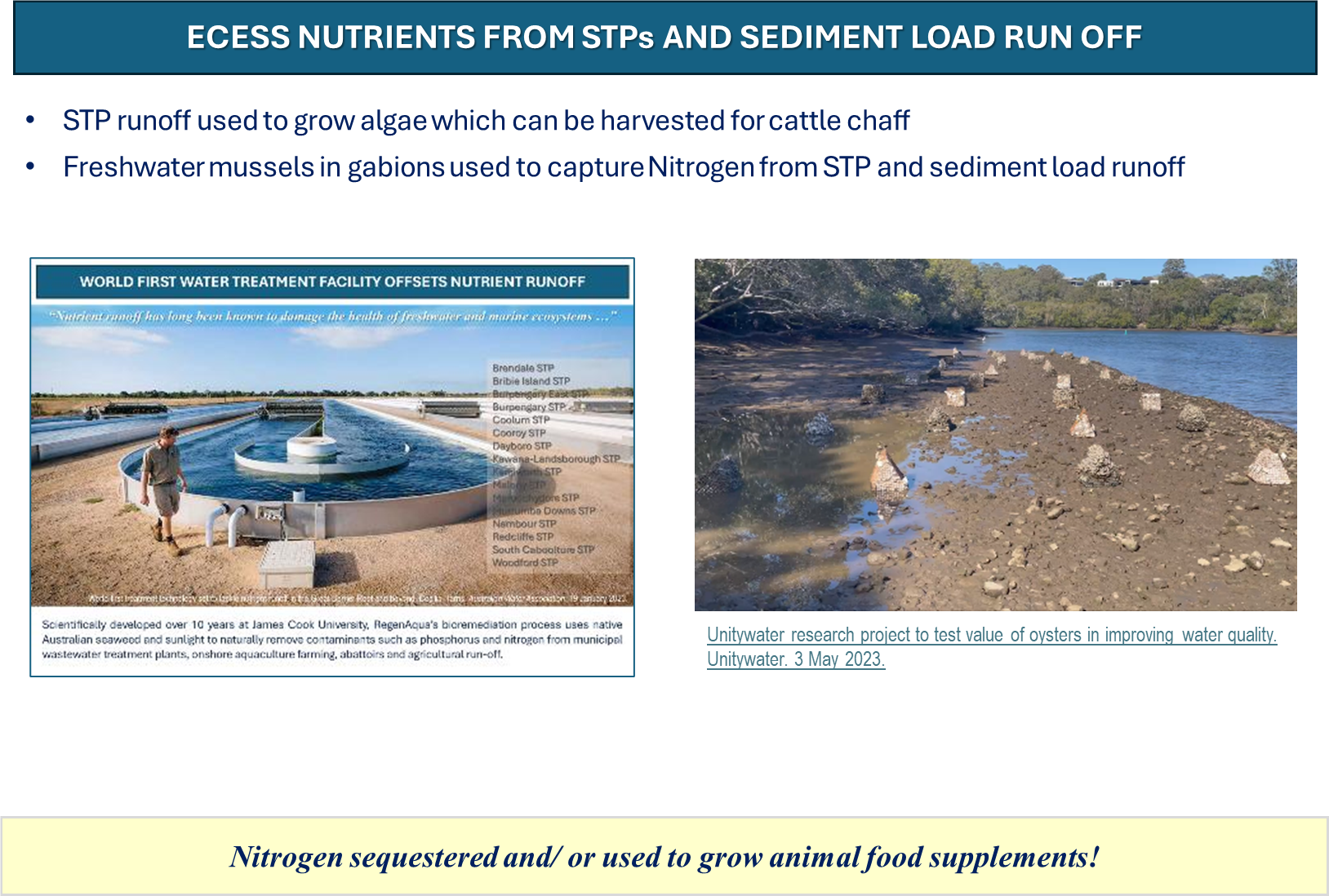
Shared examples of excess nutrients from Sewage Treatment Plant outflows utilised at source to grow algae cattle food supplements and nitrogen sequestration farther downstream in freshwater mussels proliferating in gabions.
6. South Australia – An unprecedented ecological disaster (A Case Study)
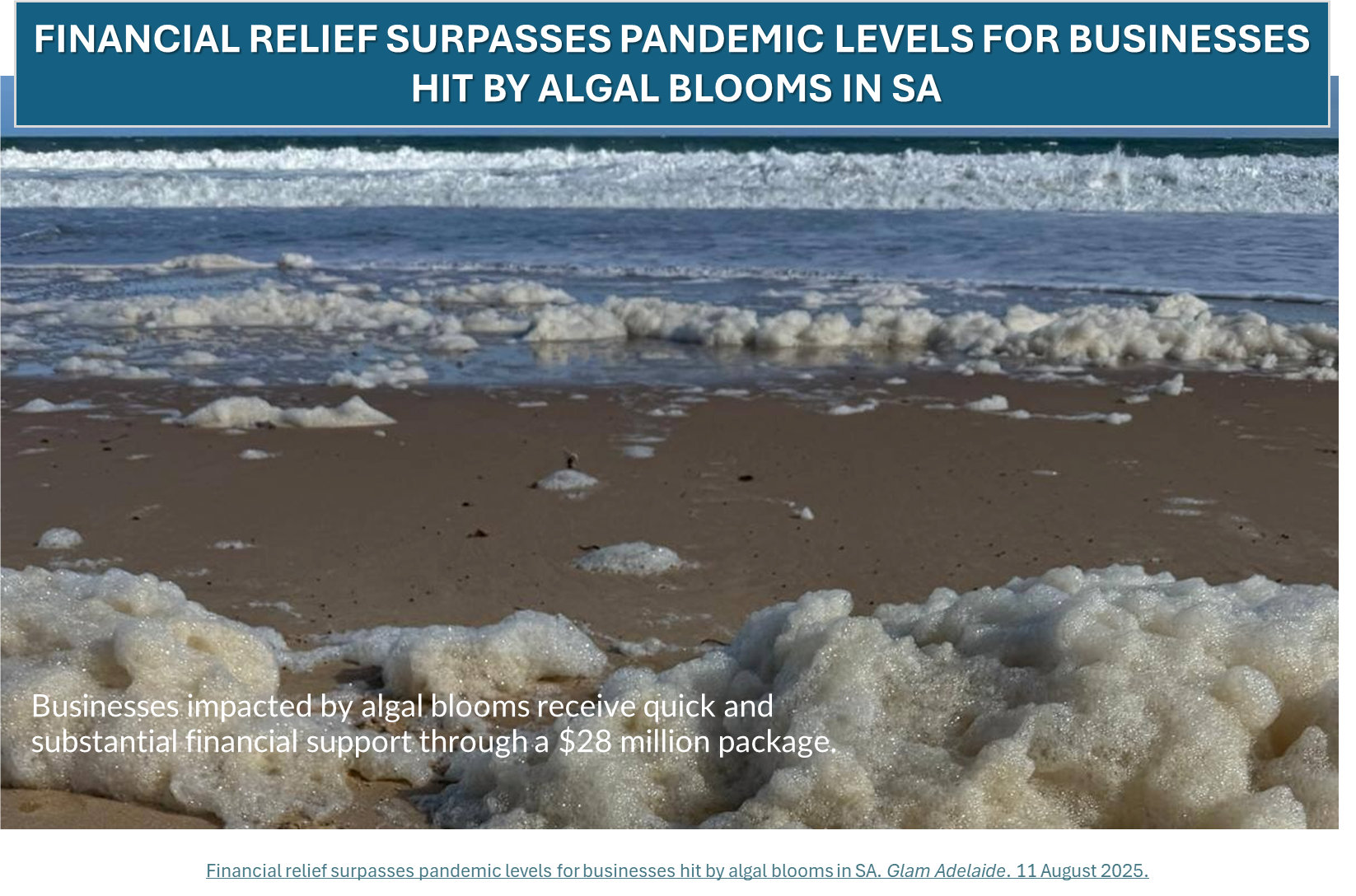
Consider: Focus on Inputs rather than outputs and outcomes. Although exacerbated by Mother Nature, SA’s toxic algal bloom can be attributed to excess nutrients carried by ‘agricultural waters’ to the South Ocean as a result of the River Murray floods in 2023, providing a food source for algae. Associated toxic algal blooms are “unlikely to end soon”.
 7. Plastic Pollution
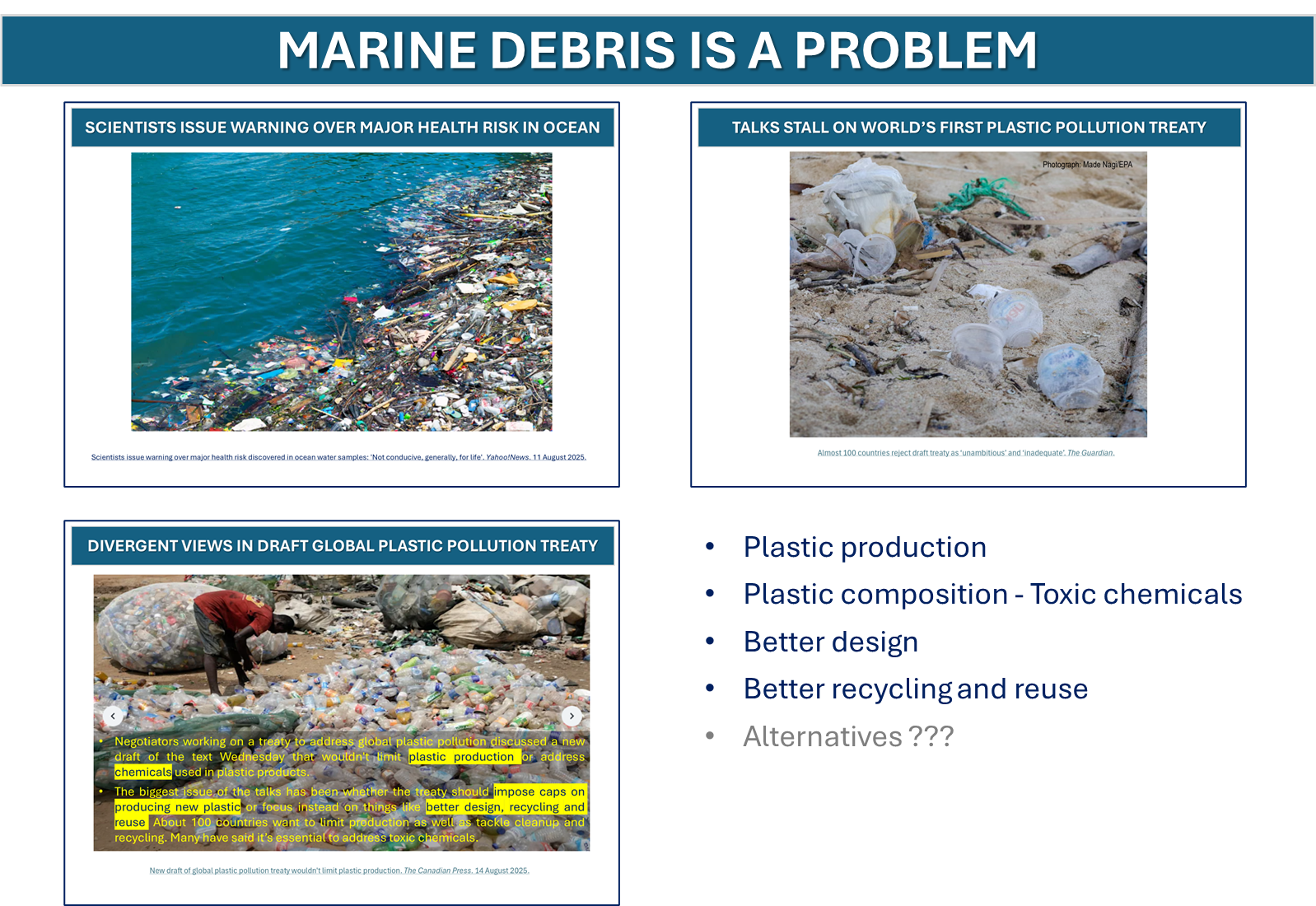
Marine Debris is a problem. There are eight billion tonnes of plastic polluting the earth. Countries worldwide cannot agree on capping plastic production, minimising toxic chemicals in plastic, more effective recycling and reuse, or better alternatives.
The two biggest sources of microplastic pollution are not bottles or straws. Synthetic fibres and tyre particulates account for 63% of all plastic pollution.
Humans consume at least 50,000 microplastic particles a year. Fragments of plastic have been found in blood, semen, lungs, breast milk, bone marrow, placenta, testicles and the brain.
Council ’Discretionary Funds’ were used to purchase signage, which was placed along three Scarborough beaches as part of the Redcliffe Beautiful Beaches program in an effort to reduce marine debris on three Scarborough beaches. The July 2025 marine debris audit will be submitted to Council on late August as well as associated funding ‘acquittal’ forms.
8. Planned changes to 7 Joseph Crescent
The Hub and surrounds is at the coterminous of the Internationally-listed RAMSAR Wetlands and the Moreton Bay Marine Park. The Ramsar listing highlights the area's significance for biodiversity, ecological functions and services, including its role as a habitat for migratory shorebirds and various other species. The Moreton Bay Marine Park further protects the bay's marine and coastal environments and the flora and fauna within. The Hub is the current venue used for educational events and workshops (an extensive educational program, citizen science projects, wetland rehabilitation, bush care, koala care and marine strandings). It is the venue for the monthly Community Awareness Eco-forums.
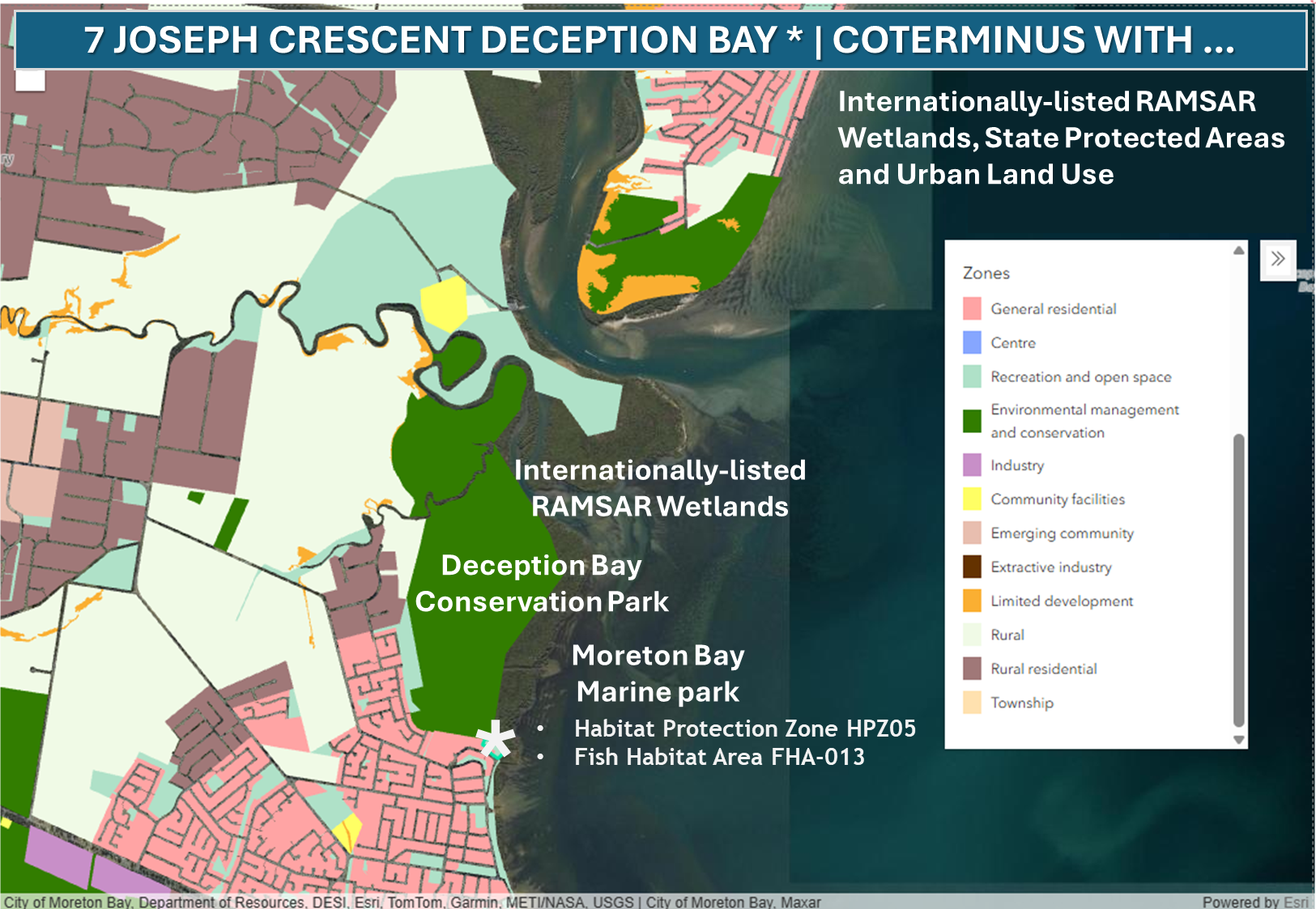
Strengthening the emphasis on the ecology, flora and fauna and biodiversity of the region is a must. Adding further community and recreational facilities is excessive, given the area already has much of this infrastructure close by.
9. City of Moreton Bay | Biodiversity Plan
The Biodiversity Plan will help Council and other stakeholders to work together to connect, protect and enhance habitats and the diversity of animals and plants in the region.
When will the CMB Biodiversity Plan be published? It will be interesting as to how it addresses 'Beach Nourishment' i.e., adding sand from (mostly) external sources to an eroding beach to widen it.
10. DRURY POINT SCARBOROUGH - $1.5M of Council and Federal funds
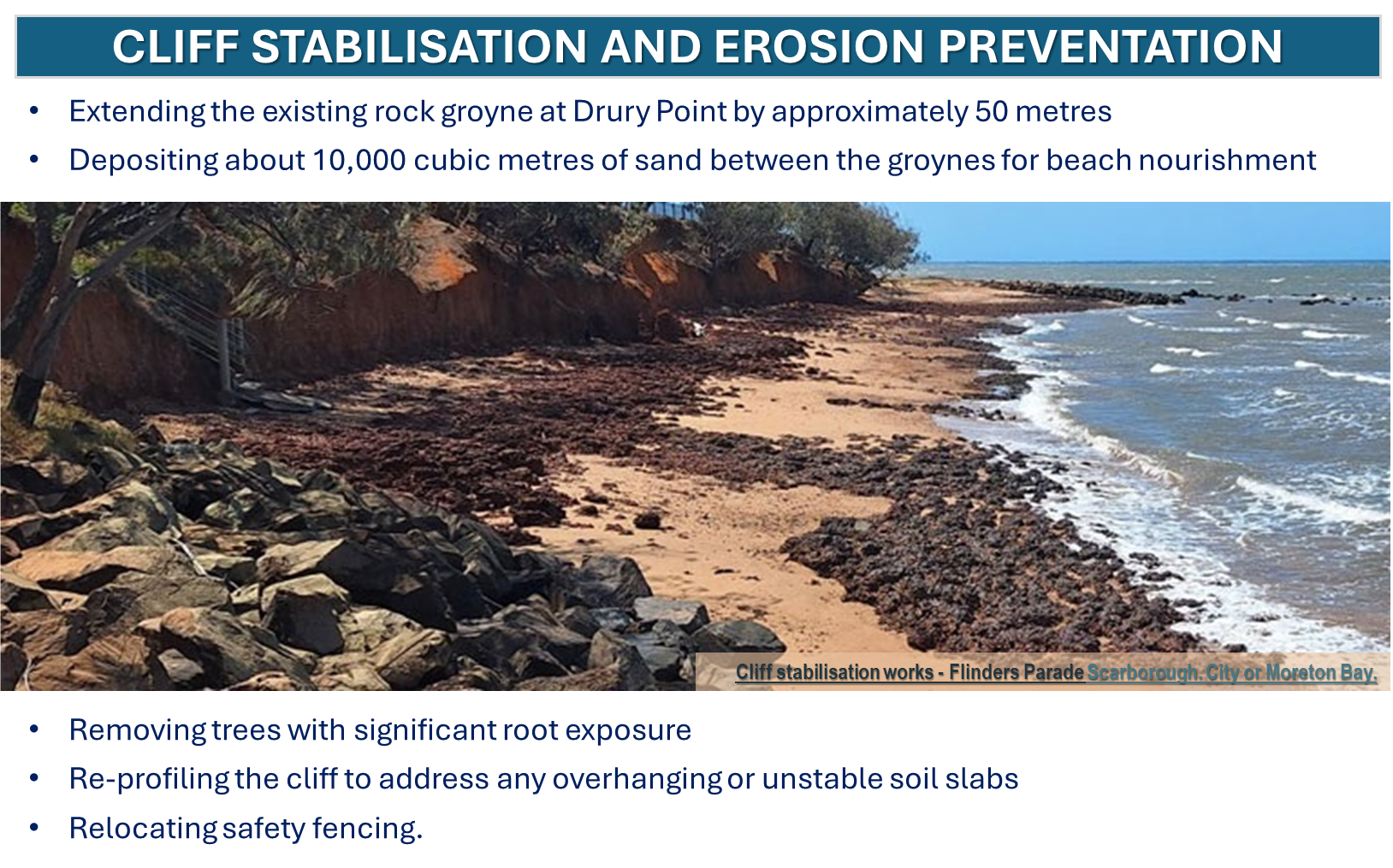
Programmed Works: Extend the existing rock groyne at Drury Point by approximately 50 metres; deposit about 10,000 cubic metres of sand between the groynes for beach nourishment. The sand was transported from Brendale.
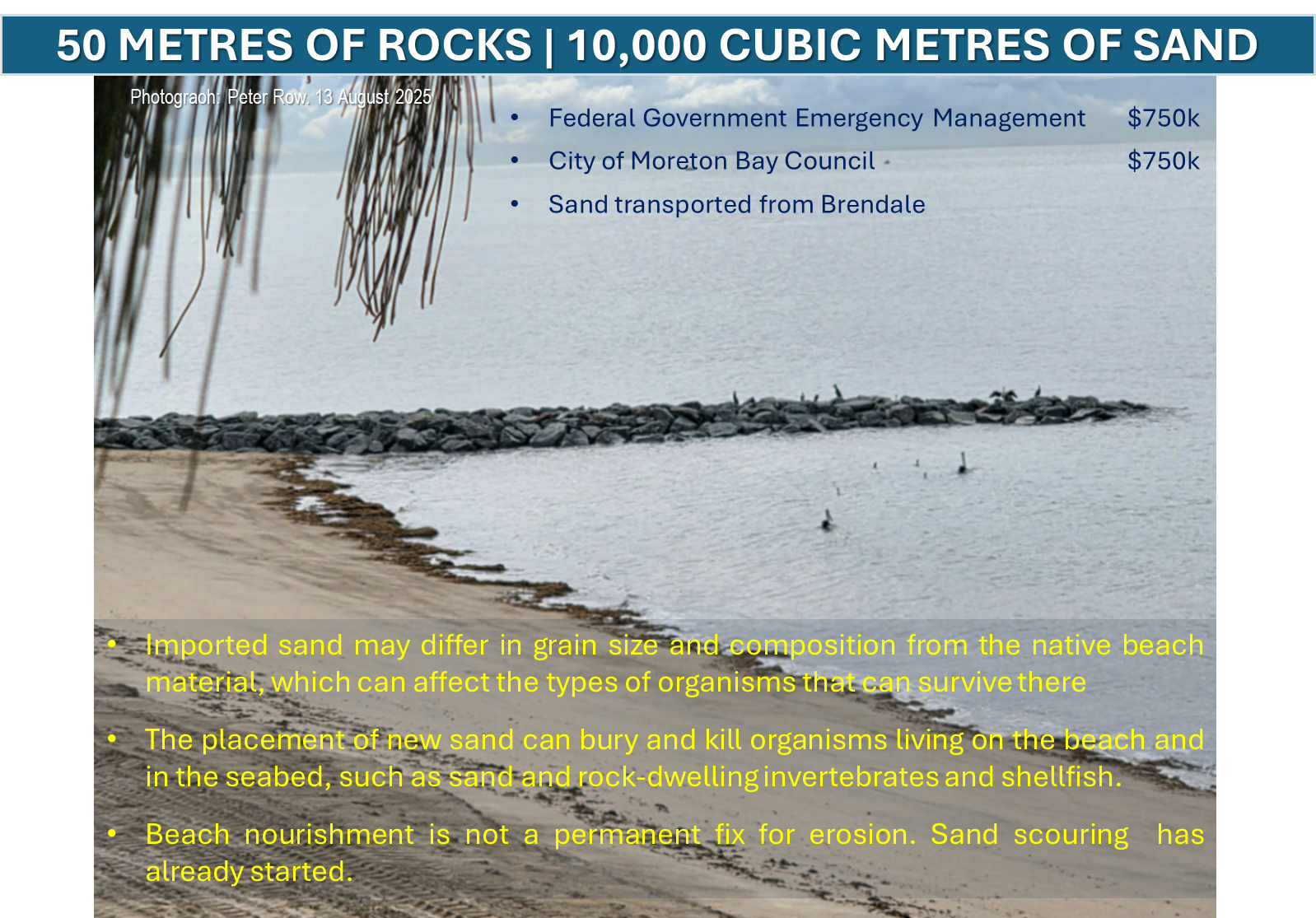
Rotary-ESRAG is concerned: The imported sand differs in grain size and composition from the native beach material, which will probably affect the types of organisms that can survive there.
The dumping and grading of new sand buried and killed the existing organisms living on the beach and the seabed of nearshore waters, such as sand and rock-dwelling invertebrates and shellfish.
The food chain – from microbes to shore birds – has probably been affected. Beach nourishment is not a permanent fix for erosion. Sand scouring has already started.
Council will monitor foreshore changes over time.