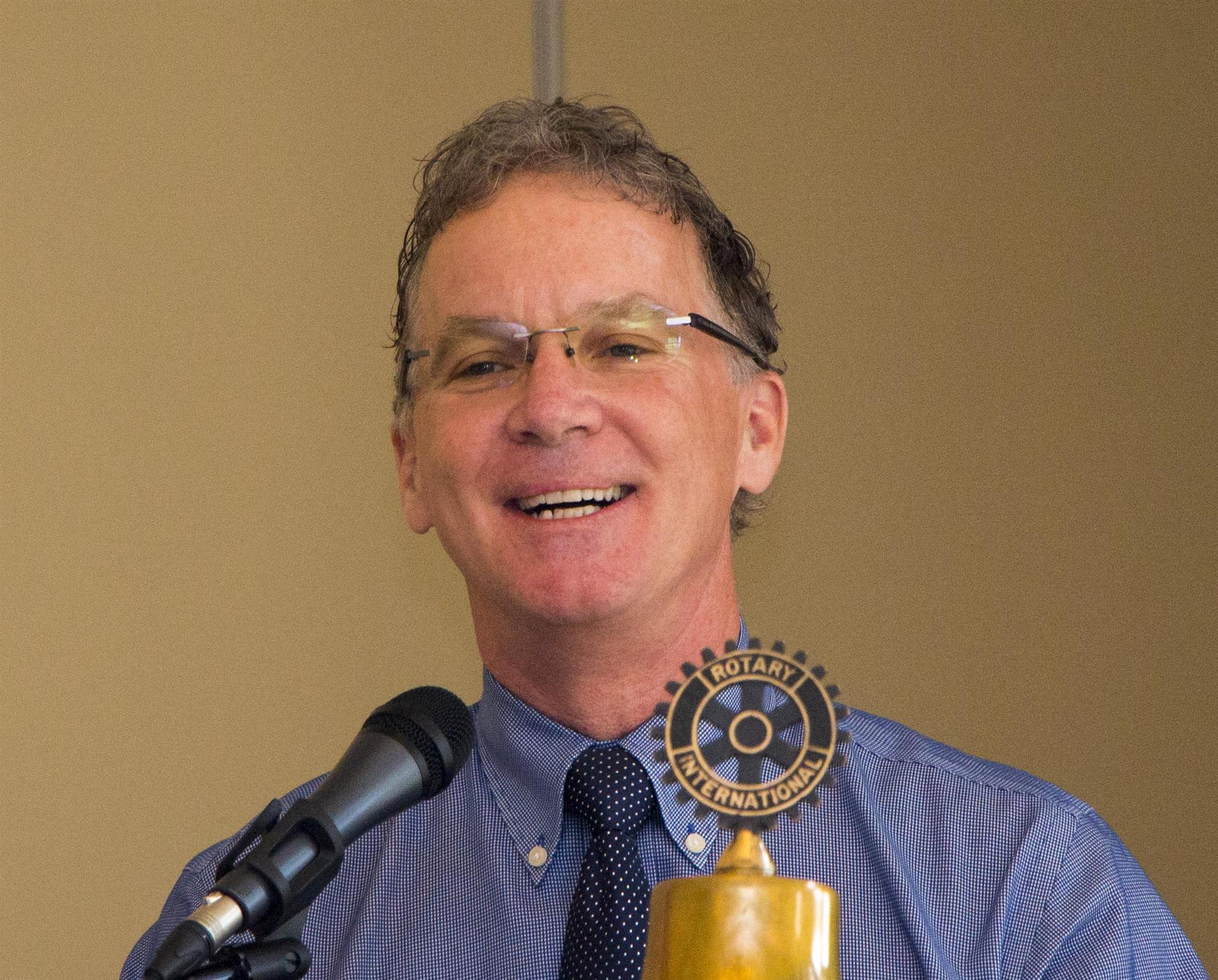
This weeks speakers’ topic was one of those presentations that leaves you contemplative, somewhat saddened but somewhat thankful that ‘they should do something about ’ something that should be done.
Our guests in a very full house were Mike Foley of RC Stoney Creek (here to sell raffle tickets for a Harley Davidson), Wiktor who told us about a great week that included attending a Toronto FC match, taking a jet-boat ride up the Niagara River and going camping “…Somewhere north where there are many flies around your head.” I know exactly where he means.
Catherine Brady has a new twist on the old complaint that there’s nothing to do around here. She and others on the Lakeside a la Carte silent auction committee are coming up with 150 Things to do in Burlington; and they need your help. Noting that the tried and true silent auction model has run out of steam and now seems to attract bottom feeders, the committee is planning to create auctionable bundles of gift certificates. So… think of those who provide you with a service and ask them to donate a gift certificate. Think of your hairdresser, your oil-changer, your window cleaner, your car washer; and ask them for a gift certificate.
Our speakers, David Hayward and Mitisha Patel told us about the Community Treatment Court, an alternative approach to justice for people who have crossed the line but for whom classic punishment just doesn’t fit the mold.
David a colleague of Bob Martin, is a lawyer who specializes in personal injury work and criminal defence. Mitisha is a Court Support Worker (CSW) with the Ministry of the Attorney General.
The Community Treatment Court works slightly differently and handles what you might call sad cases. Imagine if you will, an 83 y/o man who, after a long, productive and peaceful life, suddenly strikes out and hurts someone, often his wife; not because he’s a violent type but because well, it’s the onset of dementia.
He’s arrested, the Crown prosecutes and says he’s committed a crime and must be tried and punished.
From the common sense perspective he’s a sad case and classic punishment is inappropriate.
Enter the Community Treatment players: a Crown Prosecuter, a judge, a Court Support Worker (Mitisha) a defence lawyer (David) and Lady Justice blindfolded and holding the scales at arm’s length. What to do?
On the strength of the facts of the case they will often work out a deal at Community Treatment Court . Represented by the defence lawyer, the accused pleads guilty on the understanding that he will work with the CSW. Court designs a support plan that fits the person and the circumstances. The plan includes counseling, may involve finding a suitable job and regular check-ins at court and with that, sentencing is put over for six months or a year.
Our sad case works with the CSW following the plan and if all goes well at the end, at the final day in court, the judge hears from all and may withdraw the charges. No jail time, no fines just a humane approach to righting a wrong.
Mitisha outlined the circumstances of an actual case of hers involving an unstable young woman with suicidal and parricidal thoughts. It was a complex case that necessitated hospitalization, therapy and educational support. It had a happy ending.
This joint presentation had us captivated. If it had ever crossed your mind that someone should do something about the sad souls who don’t deserve traditional punishment; well someone has:. It’s Community Treatment Court .
P. Scribe