Emmah's Garden a Potential Water Project in Kenya
Caleb Wolfe was introduced by Bill Secord. Bill met Caleb through his interest in weight lifting. Through conversations at the gym, Bill learned about Caleb's passion to make a difference in a village in Kenya. Caleb Wolfe is a resident of Lebanon and has lived here in the Upper Valley for over 40 years. He is both a life-long educator and life-long learner and is passionate about helping people via education. He is passionate about helping the village of Nyandocke Ibere and the non-profit Emmah's Garden that supports this village. His goal is help this community resolve problem they face having good, clean water.
Caleb’s connections to Africa include his wife Sue having spent 4 years there. Her advice to him was that “nothing works the way you think it will in Africa.”
Caleb is trying to develop a project with a strong chance of substainable success. The real test of the project is the quality of the people involved. We have a very solid group of people in place in the Kenyan village where we’re trying to solve their serious water problem. Everything depends on them and they are a major part of the story.
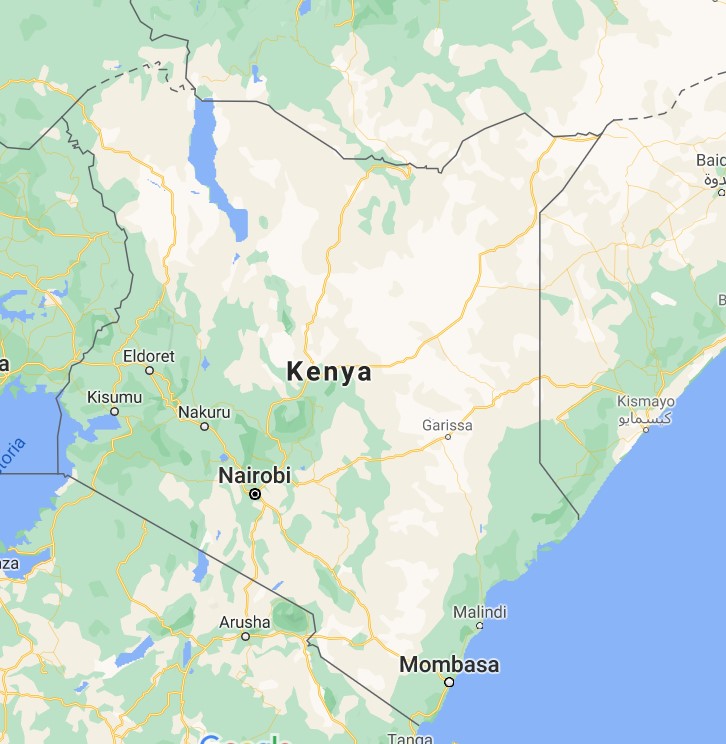
The location is the village of Nyandoche Ibere, located in an area that looks more like Vermont than NH. We saw a picture of Emmah and a friend carrying water home.
The problem is that drinking water comes from seasonal pools or has to be hauled from a source that is a 4-mile round-trip walk for the women whose job it is to fetch the water. When Caleb heard about the situation from Emmah’s brother, Alloys, Caleb came up with the idea of supplying water filters for each home in the village.
What makes Emmah special? She graduated from college with a degree in agricultural business. Caleb said there were 900,000 college grads in Kenya last year but only 10% found regular jobs. Emmah teaches biology and agricultural science in the local regional high school.
Emmah sent a letter to the Village Elders which said, in part: “Many of my villagers don’t believe that a girl my age can do anything to change things. I realize I have a lot to conquer, including the attitudes of the village men. They will believe only by seeing what I can do, not by hearing.” Emmah’s motto is, “Be yourself – they will adjust.”
Emmah became concerned about hunger in the village so her first service action was to distribute food. The village comprises 2,400 persons, all of whom know each other. A building in the photo we saw houses 70 people with no water, no privacy.
Emmah also asked the “local government representative” to gift the town with 5 milk cows. Emmah’s plan is to make milk available to the grade school in the town. She’s a person of initiative and courage. She is also involved with an experimental farm. She put in a large amount of tomatoes – “Emmah’s Garden” – which was provided with a water pump to help extend the growing season, allowing her to plant at the beginning of the dry season.
Emmah’s brother, Alloys, is on the board of Emmah’s Garden. He worked with orphans and abandoned children while he was attending college. He brought them “new clothes and smiles.”
Caleb says that many of the folks in east Africa get by by “hustling” – here, it is not a pejorative, but the name for running around to create an enterprise to earn money.
The food shortage results from a shortage of money. When people can work in the field for $2/day, they can afford food. When farming ends during the two dry seasons, their income also dries up.
Alloys has a graduate degree in community development from Loyola University in New Orleans. Has been working with Caleb for about 6 months. He is homesick, having not been back to Africa for 3 years. We think his being back in Kenya would help organize things for the filter project, so his ticket has been purchased.
“Harambee” (the word is a national holiday which means “we all live together”)
Alloys has assembled a strong group of younger folks to oversee the project in Africa. Each has a college degree (in varying fields) but not one of them has a job. Alloys is now working for Emmah’s Garden. One of his team has a computer science degree, another is a communications specialist, and so on. Alloys is reaching out to another 10 who also want to start businesses. Cal thinks this is a strong group to work with as the core of a group that will sustain the project once it gets under way..
The village elders can order a “harambee session” where everyone brings something to donate to whatever the cause may be. It could be a young couple getting married, for example. Caleb says the village is much more communal than where he lives today; it’s more like the village he grew up in instead of today’s “Bowling Alone” villages where little social capital is exchanged among the residents.
When a hustler’s income rises from $60/month to $90/month, most will hire another person, said Caleb.
So, how Lebanon Rotary can help?
The project depends on American Technology – the “Berkey Filter” (a water purifier, not just a filter). Caleb said that two filters will take out 99.999% of impurities including viruses, typhoid bacteria, etc. If we can get filters to people in the village and they use them in sufficient numbers, we can eliminate the risk of typhoid and other serious health problems.
The original Berkey comes in a steel container which made shipping costs exorbitant. His organization sent a container of them but the shipment was turned around by Covid. Their new approach will be to construct the filters using the plastic water buckets such as Emmah and her friend used to fetch water. The system will be gravity-fed to eliminate pumps. Shipping costs will be 40% lower, and jobs are created in the assembly of the product in Africa.
The stages of Caleb’s Picture of Success:
Stage 1 – Clean water for everyone. There are about 50 houses in the Village, each of which would have its own system
Stage 2 – next step after filters are installed for everyone – create water storage for the village to avoid the 4-mile walk for water in the dry season.
Stage 3 – Harvesting and storing sufficient water to extend the growing season.
Unit costs for the project:
$ 83.36 filter and attachment
$ 15.00 shipping
$ 1.00 manufacturing per unit
$ 99.36 – total per family
For 50 homes = $4,968 — to provide clean water for all.
Expectations
Use Harambee to raise matching funds within the village; fundraising would be a job for Alloys. Leverage matching funds from the Maryknoll Brothers in Kenya. JoAnn has mentioned reaching out to other Rotary clubs in NH and VT, if Lebanon decides to go forward.
Caleb spoke about his joining Rotary; he said Bill Secord’s pitch was very persuasive. He wouldn’t join just to get his project funded. He said he’s seen situations similar to what he saw in Kenya right here in NH during his many years of teaching in this state. Once, when he had students prepare and expenses spread sheet for a home, one girl didn’t put in anything for electricity. She told him that there wasn’t electricity in her parents’ home, and that she wouldn’t have it in her house either.
Caleb has heard from Listen that income has gone down so much that their food requests have gone up 300%.
Questions:
Hank: How often do the filters need changing, and what’s the replacement cost?
Caleb: Replacement cost is similar to a new filter. Caleb hasn’t changed the one in his own home for 3 years; his water comes from his own well. The company recommends annual filter changing. He said the hardest filtering job is for the unit in the US results from plastics and chemicals that do not occur in this village’s water. The muddy pond water we saw will indeed clog the machine quickly, but Caleb said the filter is washable and the stuff can be removed without harming the filter. (If one needs the filter to make clean water, with what does one clean an exhausted filter?)
Wrap-up
- We need to make the project self-sustaining. If each family would set aside a one day’s pay from each week ($2), they could afford to replace their filter annually.
John Yacavone: Don’t you still have to walk to get the dirty water to the town?
Caleb: Alloys’ grandmother has a tank in her yard. They collect water from their metal roof. Caleb checked with the Berkey company which the filter should have no problem handling water from such a source. The Village will have to purchase containers – the yellow ones cost $2 (non-discounted) for families to store a few gallons of water. Caleb says his order of accomplishment is, “filtration first; storage second.”
John Yacavone: Why haven’t you approached digging a well? We helped with such projects in Ghana and the Carter Foundation helped Rotary with cost and oversight.
Caleb: The dug wells I’ve seen in East Africa are almost all non-usable after 3 months. To dig a deeper well is a much more expensive thing. All over East Africa there are wells no longer productive or containing high levels of arsenic. In some areas the water table is drawn down so much that the wells are no longer productive. Wells on a small scaler are unreliable and expensive; on a large scale, water systems can become very expensive, especially if something goes wrong with the pumping machinery.
There are hundreds of these villages. I feel there’s got to be an affordable solution.
Garlan Hoskin: In 1966, when I was last in Africa, these same problems existed. I’m so disappointed in the governments which are not picking up on this problem. USAID put in hundreds of thousands of dollars to create good wells and I’m so frustrated that the problem still exists. We’ve done a lot for them and it just hasn’t worked.
Caleb – Maintenance on these things is extraordinarily low and they can be fixed locally. The biggest problem for E. Africa is that the population in 1955 was 8.,5 million; in 2020 pop. Is 53 million and they just haven’t been able to keep pace with the growth. Caleb’s focus: What can they do un the village without the government.
Other Rotary involvement?
Emmah found the nearest Rotary club to the village, and there’s a brand new Rotary starting in Kisumu, the nearest moderately-sized city. Emmah was planning to join that club, but her father said she’d have to come home from the meetings at night, walking 5 miles from the bus stop to home in the dark and it’s not safe. Alloys has been in touch with that club and will be joining them, so there may be a partner in that club.
Paul Tierney — Suggested that Caleb contact Walter Hughes about how he sustains the wells he has put in.
Cindy Jerome — I commend you for your efforts to help people in this community. Have you heard about Pure Water for the World? They face some of the same challenges and have made effective systems out of concrete produced locally using local ingredients and easily replenished materials. Water purification has many ramifications for children’s health and progress.
Book Donated in honor of Caleb Wolfe that will go to the children's collection at the Kilton Library:

The book is Almost Time by Gary D. Schmidt and Elizabth Stickney, illustrated by G. Brian Karas.
A tender father-and-son story about the passage of time, the change of seasons, and the excitement of reaching a goal.
Eager for maple syrup, Ethan can’t wait till sugaring time rolls around. And he can’t wait till his loose tooth falls out. But his father keeps telling him it’s not time yet, and no matter how hard he tries, he can’t make time pass more quickly. The closeness of father and son is evident throughout as they wait and then celebrate the end of waiting. The brief, lyrical text is illuminated by G. Brian Karas’s beautifully composed, evocative illustrations.
Eager for maple syrup, Ethan can’t wait till sugaring time rolls around. And he can’t wait till his loose tooth falls out. But his father keeps telling him it’s not time yet, and no matter how hard he tries, he can’t make time pass more quickly. The closeness of father and son is evident throughout as they wait and then celebrate the end of waiting. The brief, lyrical text is illuminated by G. Brian Karas’s beautifully composed, evocative illustrations.
Bill Secord reflected that the book might relate to Cal's talk on the farming taking place in Emma's Garden in Kenya, as opposed to the kind of farming here in the Upper Valley.