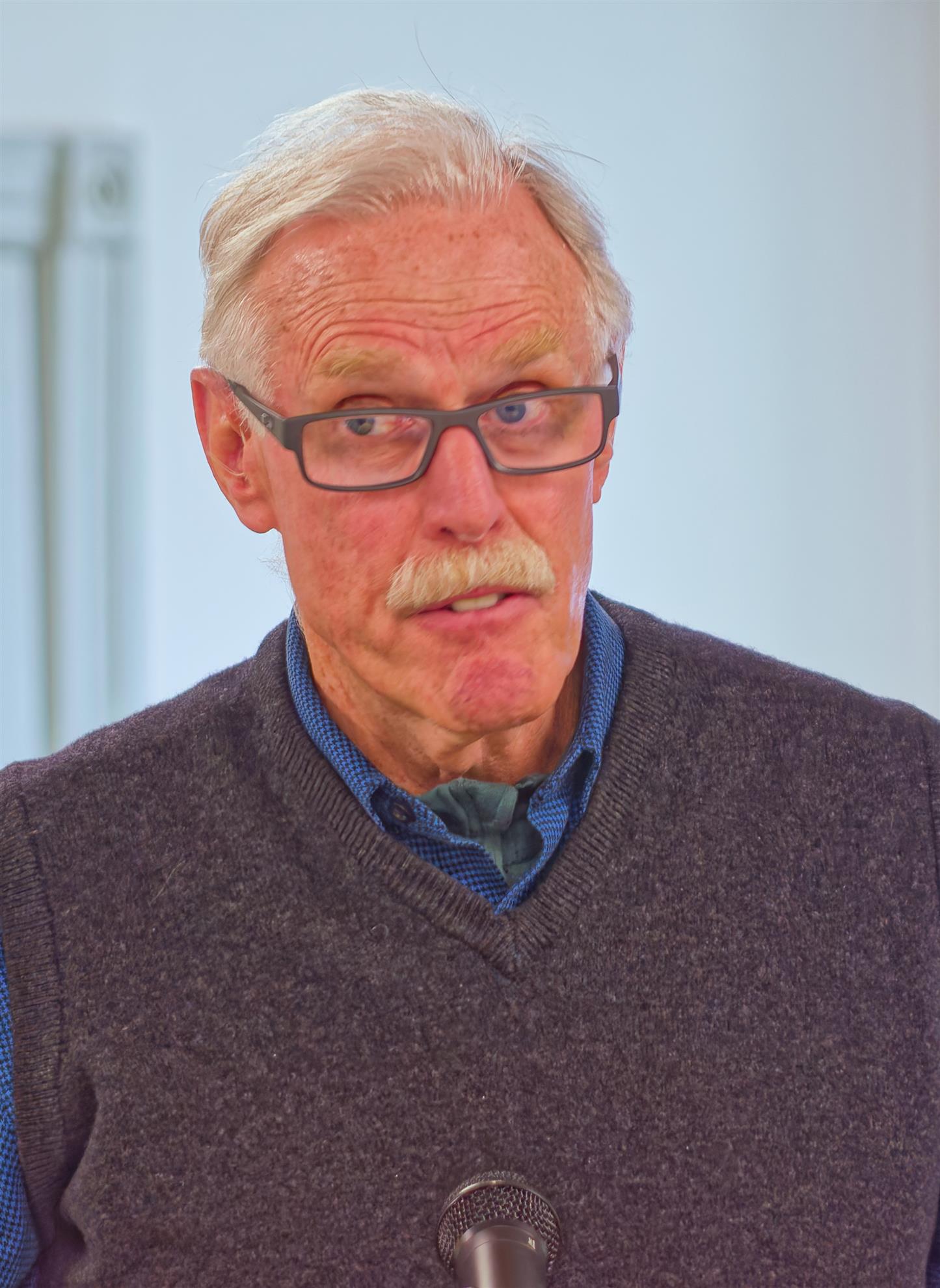
Our speaker today, Bruce James, retired director of the Environmental Science & Policy Program at the University of Maryland, explained how our eating habits lead to the production of carbon dioxide and methane—direct causes of climate disruption.
Rotarians attending the meeting in person:
William Babineau, Marilyn Bedell, Ron Bedell, Bruce Bergeron, Phil Bush, Keegan Carpenter, Bill Chabot, Dave Clarenbach, Hank Clarke, Dave Crandall, Nick Gaffney, Steven Grant, Tim Guaraldi, Andy Jones, Carol Keeffe, Will Koppenheffer, Dustin Lester, Christian McDonald, Daniel Nash, Ernst Oidtmann, Bruce Pacht, Nate Reichert, Philip Rentz, Bill Secord, John Stalvey, and John Yacavone. Attending remotely: Dustin Lester, Jane Mason, and the renowned Jimmy Brock calling in from Bermuda.
President Marilyn rang the bell and called the meeting to order at 12:01 p.m.
Recitation of the "4-Way Test of the Things We Think Say or Do" was led by Dave Crandall.
Pianist Ernst led us in singing the “Rotary Welcome Song" and another song we sang well but whose title skips my mind in retrospect.
PRESIDENT MARILYN’S THOUGHT OF THE DAY:
April is RI’s “Protecting the environment month.” The first Earth Day was April 22, 56 years ago. Landmark environmental laws in the US followed. Rotarians have long fought pollution and come up with creative solutions to safeguard our vital resources.
Program Chair Dave Crandall introduced Bruce, who graduated from Williams College with a bachelor’s in chemistry and environment. He has a doctorate in Soil Science, and for 29 years he served as a professor at the University of Maryland. He serves on the Lebanon Conservation Commission and teaches OSHER courses. He enjoys being outside.
Bruce said he would not give us his opinions but would rather present facts about “climate disruption” and the effects on climate disruption from our current practices of agriculture, systems of food provision, and the diet we choose. Bruce may be reached here for further conversation:
Bruce proved to be one of our most articulate and easily understood speakers, his long years of teaching experience standing him in good stead with complicated subject matter. If you’d like a copy of his slides, please ask brucepacht67@gmail.com.
Climate Disruption is HERE!
Earth’s atmosphere is warming, but not uniformly.
Changes—colder, wetter, warmer, drier.
Glaciers are melting and some will cause sea level rise.
The ocean “conveyor belt” that carries warm water to high latitudes from the equator is slowing.
Methane CH4 (natural gas) is much more destructive than CO2, carbon dioxide
Meat vs. Plants – How do all these things stack up?
Humans have been agricultural animals for the last 10,000 years.
Most of what we grow is beans, grains, and nuts. We mostly eat grass seeds such as corn and wheat; also, we eat animals that eat these seeds. We also eat vegetables and dairy products.
These are the six animals we typically eat: goat, pig, sheep, cow, horse, deer.
All but the pig and horse are “ruminants” with cleft hooves and a “rumen”—a four-chamber “fermenting digestion ecosystem” far different from our stomachs and intestines.
Ruminants can survive on grass and forage (cellulose) from relatively infertile soil. Humans cannot digest cellulose (fiber).
Ruminants are not well-adapted to eat grain such as corn—grass is more healthy for them.
Unfortunately, cows' belches include carbon dioxide and methane made by microorganisms that live in the rumen, making these animals significant greenhouse gas emitters.
Per capita emitters of caron dioxide (CO2)—
Most human-caused comes from heating, electricity, and transportation.
Per capita emitters of methane (CH4), a much more powerful pollutant than CO2.
#1 Agriculture.
#2 Fugitive emissions from natural gas in the earth that escapes, such as that which had been trapped in increasingly melting Arctic ice and permafrost. Also fracking and other sources.
#3 Waste in landfills and food.
Up to HALF of all global emissions of methane comes from our food system.
There actually isn’t much methane in our atmosphere now compared to when the earth was first forming. When earth was forming, there was a lot of methane, and it was super-hot.
Everything we eat has an impact, but some things are more impactful than others.
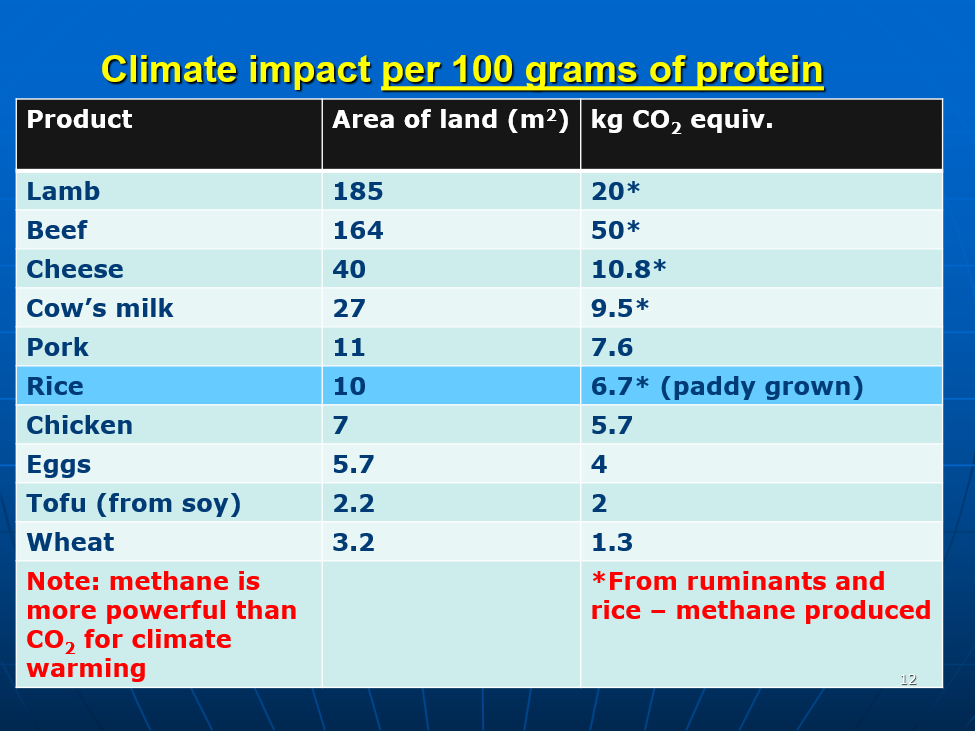
Here is the climate impact per 100 grams of protein derived from the following sources:
*Lamb = 20 kilograms (kg) CO2 equivalent and 185 square meters (SM) of land.
*Beef = 164 SM and 50 kg and 164 SM.
*Cheese = 60 SM and 10.8 kg and 60 SM.
Pork = 7.6/11.
Rice = 6.7/10.
Chicken = 5.7/7.
Eggs = 4/5/7.
Soy = 2/2.2.
Wheat = 1.3/3.2.
* = ruminants.
Rice had major and early effects on climate:
Humans probably started cultivating rice about 8,000 years ago in Asian countries.
Deforestation for rice planting caused CO2 releases to increase.
5,000 years ago, flooded rice (paddy) production caused CH4 releases to increase. Warm, wet soil that’s full of organic stuff produces methane (“swamp gas”). If there’s no oxygen in the soil (“anaerobic”), there will be methane. The microbes that make methane don’t live on oxygen.
Transplantation of rice seedlings in a flooded paddy is labor-intensive; water must be managed to alternate flooding and dry periods. The land, therefore, must be flat which meant that in mountainous regions, the land has terraced.
About one-third of the world’s population eats rice daily, some three times a day.
Energy efficiency and food waste:
In terms of 1,000s of BTUs (“British Thermal Unit” is the amount of heat required to raise 1 pound of water 1 degree, about 0.25 kcal).
Grains and vegetables require the lowest energy levels to produce with about 32% wasted.
Meat, poultry, fish, and eggs require 2-4 times as much energy to produce and generate 16-32% waste.
In our modern society, most of this waste is created pre-consumer; in most other countries, waste is post-consumer.
Fish waste is also a source of methane.
Fish and seafood production is measured in the sum of seafood from wild catch and fish farming (aquaculture, in metric tons (t).
Top four population countries: India, China, USA, Indonesia
Biggest seafood and fish consumption is China, India, and Indonesia— containing 38% of the world’s population. They are also countries that eat a lot of rice.
Biologically sustainable fish species have declined from 90% to 65% of the fish we eat; overexploited stocks are up from 10% to 35%, though many fish stocks in Africa Asia and South American have not been fully assessed.
Where does seafood come from especially in high-consuming countries from 1960-2020+?
Aquaculture soared from almost nothing to 120 million tons/year.
“Capture fisheries” (hook and net in open waters) from 40 to 100 million tons.
This marks a huge change in where we are getting the fish we eat. There are environmental impacts from both capture and aquaculture.
Close yield gaps: raise actual yields to match what is possible.
Use resources more efficiently: energy, water, fertilizers, land.
Create personal and regional responses.
Shift human diets away from meat; make different choices and reduce quantities.
Question: Rice production in US vs. rest of the world?
Bruce—We are the biggest exporter of rice (mostly because we don’t eat as much). For a while, Japan had a ban on US rice. Rice is typically still grown in a wetland in order to get the highest yield. When people were enslaved in the US, rice was grown extensively in the south; today it’s mostly California.
SPEAKER’S BOOK: Moon Song—by Michaela Goade, an Alaskan woman from Stika (a temperate rain forest) about various environmental indications for different names for the moon. The book spotlights “TEK” – “traditional ecological knowledge” of humans who have inhabited a place for a very long time.
On an island at the edge of a silvery sea, when the moon rises and night falls, a girl spins a story for her worried cousin to help him find comfort in the wintery dark. She invites him to see moonlight glittering in the forest, bioluminescence sparkling by the shore, and northern lights blazing in the sky. In the dark of the night, the whole world sings.
Michaela Goade (born 1989 or 1990) is a Native American illustrator and author. A member of the Tlingitand Haida tribes, she is known for her work on picture books about Indigenous people. She won the 2021 Caldecott Medal for her illustrations and is the first Indigenous artist to receive the award.
SOCIAL EVENT
Monday, April 20, Galloway Room at Salt hill Pub. “Fireside Chat”—Orientation opportunity for new members, refresher for current members. Appetizers provided by the Club; drinks are on you. Bruce Bergeron and President Marilyn will lead. Let Marilyn know if you are coming to adjust food quantities.
SERVICE AND OTHER ACTIVITIES
April 11th, Saturday, 9 a.m. - 12:30 p.m. Lebanon Styrofoam Collection. Lebanon High School. Looking for 12-15 volunteers. Drive to Gilford 12-3.
April 21st, Tuesday, 9 a.m. - 11 a.m., Set up tables for 5 Colleges Book Sale at Lebanon High School. Looking for 8-10 volunteers.
April 26th, Sunday, 4 p.m. - 6 p.m., Take down tables for 5 Colleges Book Sale at Lebanon Hight School. Looking for 8-10 volunteers.
April 18, Saturday: District Assembly at Northern Vermont University, Lyndonville. Meet other Rotarians! Learn about what other clubs in the district are doing and what role the district plays in supporting clubs! Third Round of Speech Contest with Lebanon High Student Benjy Madory competing!
June 12-14, 2026, Friday-Sunday: District 7850 Conference at Hotel Estrimont, Magog, Quebec. Widen and deepen your Rotary friendships and network! Lebanon Rotary Club will provide stipends up to$400 to attend; actual amount to be determined based on the number of members who want to attend.
One more great reason to plan to attend the annual district conference in Quebec!
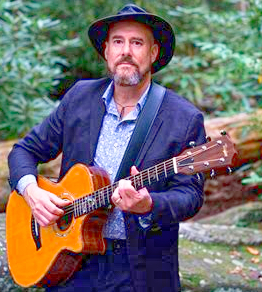
District Governor Luc has been able to arrange for David LaMotte to be at the District Conference. David was featured at the 2025 Rotary Convention in Calgary. Hearing him would be worth the "price of admission".
Here is background for the program with Musician and Rotary Peace Fellow David LaMotte.
"Songs in the Key of Change"
by Geoffrey Johnson
David LaMotte understands the power of a good story. Need proof? Look no further than the opening chapter of his book, You Are Changing the World: Whether You Like It or Not. There you will find the gripping account of a sudden illness that, in 2001, seemed like a stroke and left the 32-year-old LaMotte incapable of speaking and feeling sensation in his extremities. The things taken from him, as he explains in the book, were his words and his hands, a catastrophic loss for a man who made his living, and found spiritual sustenance, as a guitarist, singer, and songwriter.
Spoiler alert: LaMotte survived the ordeal, though that should be evident given that, 23 years later, he’s still around to discuss what happened. “As a professional musician, it’s easy to get self-absorbed,” the Rotary Peace Fellow says today. “What happened to me in 2001 made me reevaluate where I was putting my energy. I resolved to turn my focus outward.”
But if LaMotte understands the power of a good story, he also recognizes the importance of closely examining the stories we tell, what we hope to accomplish with them, and the truths they contain or perhaps, unintentionally, conceal. To ensure that people make good decisions, he says, it’s important to be cognizant of the stories we’re telling and the stories we’re hearing.
CLUB FUNDRAISERS—ALL HANDS ON DECK NEEDED TO MAKE THESE SUPER SUCCESSFUL!!
June 3, Wednesday: Bedell Classic Golf Tournament. It’s time to make your approach to potential sponsors or donations of raffle prizes. Also, possible setup assistance the afternoon of June 2, Tuesday. Handouts are on the table—unassigned people to approach for sponsorships/ads.
September 5, Saturday of Labor Day Weekend: 2026 Brew Fest.
HAPPY DOLLARS:
Bruce Pacht paid a buck because there are rarely three Bruces to be found in one room as there are today with our speaker’s visit.
Ernst –
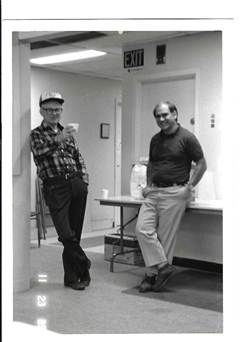
Ernst Oidtmann visited Herb McKinney in Concord. Herb is a past president of Lebanon Rotary (1985-86) who worked for many years as our region’s Boy Scout Executive and then United Way executive director, following in the footsteps of his mentor, Pete Mason (father of current member Jane). Herb is suffering from diabetes type 1, from which his cerebral circulation has been severely affected. Herb lives in a nursing home and no longer recognized Ernst. (Photo Nov.1985)
Dave Burgess and Herb McKinney
Ernst called attention to a major article in the Rotary magazine on work toward the development of malaria vaccines. Two Rotarians in this country are working on a vaccine which still seems far away.
While in Concord, Ernst visited the State House where he saw a portrait of fellow Dutchman Johannes de-Graff in the main hall.
John Yacavone presented a check (to Charities? The Rotary Foundation?) for $89 in honor of his own birthday.
Hank Clarke
Connected with a friend in St Albans who always calls on his birthday; they had lunch together.
His 12-year-old (we assume grandchild) is still in AAU basketball and starting baseball practice this weekend.
Phil Bush offered a Five-Euro brag including three for missing three Rotary meetings. He noted that last week’s Currents posted photos he sent of a cathedral in France which was covered inside with paintings all around. One of the paintings was vibrant and clean, with a little plaque beneath it noting that a Rotary Club had donated funds to clean the work.
CARD AND CAR WASH RAFFLE:
Steve Grant’s number was chosen, and he drew the losing Five of Hearts.
714—Phil Bush’s number was drawn for a free ride through the Enfield Car Wash, thanks to Bruce B, but Phil requested that another number be pulled since he has three numbers he hasn’t yet used! Our other Phil (Rentz) won the day.
NEXT WEEK’S SPEAKER: Andrew Bostwick, Intern/Resident at D-H after a military career as a drone pilot. He is today a member of Hanover Rotary.
President Marilyn reported that our District 7850 scholar, Grace Gray, is thriving in Italy.
President Marilyn rang the Rotary bell at 1:18 p.m.; we ended the meeting with a recitation of RI’s motto:
One profits most who serves best
FUTURE PROGRAMS:
Apr 9: Andrew Bostwick, USAF drone program
Apr 16: Diana Griffin, AARP
Apr 23: BOD/Classification Talk by Carol Keeffe
Apr 30: Nenia Ballard, Ms. Wheelchair New Hampshire
Program Team for remainder of Rotary year 2025-2026: Hank Clark (Jan, Feb, March) and Dave Crandall (April, May, June).
HEY, IT’S SPRING AND TIME TO CHECK OUT THE ROTARY SPRING JACKETS AND VESTS FROM TOP STITCH.
 Program Chair Dave Crandall introduced Bruce, who graduated from Williams College with a bachelor’s in chemistry and environment. He has a doctorate in Soil Science, and for 29 years he served as a professor at the University of Maryland. He serves on the Lebanon Conservation Commission and teaches OSHER courses. He enjoys being outside.
 humans who have inhabited a place for a very long time.