A link to the next web meeting will be sent by e-mail
Reminder, you can join the meeting by desktop computer, tablet, smart phone, and landlines
Our Speaker will be
John Higgins of Ledyard Charter School
Ledyard Charter School is a New Hampshire public high school of choice that re-inspires the reluctant or disengaged learner. Established in 2009, LCS offers students an individualized, alternative educational program. We actively engage students in a robust, personalized course of study, applying 21st century concepts, skills and dispositions to real world problems. Students who graduate from LCS earn a standard high school diploma.
&
Our Speaker on May 7, 2020 will be Bob Sherman,
Great Eastern Radio
Great Eastern Radio, based in West Lebanon, owns 16 stations spanning Central Vermont, New Hampshire’s Lakes Region, and the Upper Valley. Whether you’re looking for oldies, talk radio, sports, or the best hits of today, Great Eastern has it all. Q 106, KIXX 100.5, Kool 93.9/96.3, GXL 92.3, ESPN Radio 94.5 (1230AM-1400AM), and The River 106.7
*******************
Moorings
President-elect Paul Tierney called the meeting to order with the ringing of our Rotary bell coming from the Bedell household.
The following members were at our meeting:
Dan Affeldt, Bill Babineau, Marilyn Bedell, Ron Bedell, Bruce Bergeron, Paul Boucher, Steve Christy, Hank Clarke, Joy Gobin, Tim Guaraldi, Will Koppenheffer, JoAnn Lemiux, Don MacMeekin, Shaun Mullholland, Ernst Oidtmann, Bruce Pacht, Phil Renz, Bill Secord, Paul Tierney, Rich Wallace, Steve Whitman, John Yacavone, and our guest Maggie Cassidy and Past District Governor Larry Vars
Our Speaker
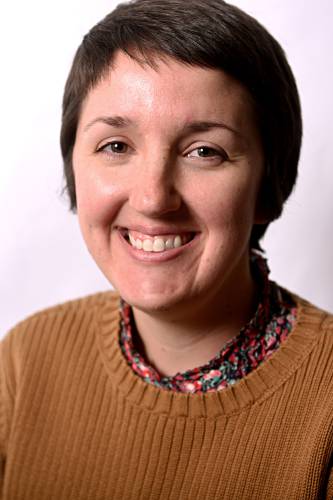
Maggie Cassidy, Editor at the Valley News
A sign of the times, Maggie did her presentation In front of her sewing machine at her home - - -
As a little background, Maggie shared that she grew up in a newspaper family, and got to hang out in newsrooms from an early age. Her father was the editor of the Framingham, Massachusetts daily newspaper. She shared that after the family’s dinner, every night, they would wave goodbye as her father left to put the paper to bed. She decided early on that she wanted to be a journalist and eventually an editor.
Maggie worked at a number of papers including a very small newspaper, the Hawaii Molokai Dispatch, were she did everything including delivery; she did an internships at Boston Globe.
She has been at the Valley New for 8 years. Her first job was reporting on activities in Hartford, VT. When Maggie started her role as editor in 2019 she shared, she started a road show to introduce herself to various communities and groups in the Upper Valley. The most important part of the various gathering was to listen and learn how folks interacted with Valley News. She wanted to learn what parts of the paper are most important to readers:
Front page stories, national and international news, local news, sports, editorial page, local business updates, obituaries, comics, Sudoku, crossword puzzles, transaction ads, etc.
She talked of a typical day at the VN prior to COVID-19. A lot has changed in just a few weeks. There are fewer people at the paper. A portion of the staff have been furloughed as advertising revenue has taken a big hit, as so many businesses are not operating. Deadlines have been moved up and staff that worked in the evening is now starting their work earlier in the day. The majority of staff is working remotely. Many of the stories are directly or indirectly related to COVID-19.
She shared some of the challenges of sustaining daily newspapers. She shared some research statistics:
Nieman Lab Harvard – 71% American adults believe that local news outlets were doing well; only `14% had paid for news of any kind in the past year.
UNC School Media and Journalism – 1,800+ papers had closed, 1/3 of them rural.
The challenge is how to do something meaningful for less. Can changes be made that will increase readership. Currently, the Valley News has about 10,000 subscribers.
Maggie then responded to a variety questions and reflections about the Valley News.
It was evident that our membership values our local newspaper, The Valley News.
*********************
Bill Secord shared that we will be donating a book to the children's collection at the Kilton Library in honor of our speaker, Maggie Cassidy, The title of the book is Because, byMo Willems, illustrated by Amber Ren.
Willems book traces a child’s path to her musical vocation as the consequence of a string of events and contributions: “Because a man named Ludwig wrote beautiful music—/ a man named Franz was inspired to create his own.” For the love of Schubert, present-day musicians form an orchestra. They practice and schedule a concert, and because “someone’s uncle caught a cold,” a brown-skinned girl in a red sweatshirt gets a ticket, and the experience changes her. She floats out of the concert hall; vignettes show her practicing multiple instruments diligently. Because “she worked very hard”—and because “she was also very lucky”—she becomes a composer, and the performance of her work joins the chain of events that change lives.
Willems’s story celebrates making music while acknowledging those whom celebrations of high culture sometimes ignore: “Because workers checked the lights and the seats....” Debut illustrator Ren takes the sprightly energy of The Philharmonic Gets Dressed and adds depth, with distinctive expressions for each diverse face and a wonderful vision of the powerful emotions that music evokes—building on the idea that it takes multiple players to create something wonderful.
Ages 3–5
*********************
SHARING HAPPY THOUGHTS OR CONCERNS:
JoAnn Lemiux is planning to go back to New Zealand next February, inviting anyone else who want to come along. She spoke to Rotary Friendship Exchange hosts, and they are welcoming her back for a visit. JoAnn stated. Rotary Friendship Exchange, This is what Rotary is all about.
Steve Christy: Once again he showed us his grabber. He was proud to report that it helped him pick up 6 bags of assorted trash on the roadside of Sunset Rock Road. The grabber can be purchased at Tractor Supply in Lebanon for $22.99. Steve shared that you can pick up anything from a full bottle of water and mud to a little piece of paper. He gave a shout out to the to City of Lebanon's landfill employees. He took all the bags down, most was recyclable. They thanked him and didn’t charge him to throw every thing into the dumpster.
JoAnn LeMieux then added that her neighbors picked up all the rubbish on her road and she then took all the rubbish to the transfer station.
Jane Mason proudly announced that March 2, 2020 was her 25th anniversary of being a Rotarian.
Hank Clarke wants to know where Willy's dog is. Willy shared the dog is enjoying the last few rays of sunshine.
Bill Babineau shared that he called Paul Boucher to get him to hit the red box on his computer to give back screen share.
*********************
ANNOUNCEMENTS/UPDATES
Charities Giving Guidelines and The Budgeting Process for Charitable Giving
Steve Whitman reviewed the revised Charities Giving Guidelines and The Budgeting Process for Charitable Giving.
Charities Giving Guidelines highlight that we will focus our giving on Youth in the Upper Valley, Scholarships for Lebanon High School and Mascoma High School, Family and Children’s needs in the Upper Valley, and Rotary International programs related to Literacy, Health and Clean Water.
Generally we will not give to for profit organizations and individuals, programs and projects that get most of their support from taxes, start-up programs and projects the do not already have significant support, brick and mortar projects, ticket purchases, event sponsorship, projects outside of our service area, and blind mailing.
The Budgeting Process for Charitable Giving describes that fund requests can come from three of our committees (Youth Service, Community Service and International Service). Each of these committees will be asked to develop a budget annually by 15 March for review by the Finance Committee. We can also receive formal requests for funds from other organizations/groups. The guidelines outline the steps to be taken by the requesting organization or individual.
The guidelines will be posted on the Club's web page under the tab For members. A copy will be sent to members too.
Rotary Foundation District Grant
John Yacavone initiated contact with Listen and The Haven to better understand the increase in food insecurity in the Upper Valley. Demand for food is on the rise, and both organizations have acute needs for more food. With the help of Marilyn Bedell, John helped write a Rotary International District Grant requesting $1,000 to be split between the two organizations. John and Marilyn then asked the Finance Committee if they would support matching this donation, even though it wouldn’t be required since we were only asking for $1,000 from the District’s DDF. The Board agreed that the club would match the money requested in the District Grant and authorized payment of the club's funds now to both organizations. If the grant is approved, additional money will be sent at that point in time
Scholarships
Tim Gauraldi reported that he has reached out to both Lebanon High School and Mascoma High School to let them know that we will be giving each school $2,000 for vocational/technical scholarships. This year we will let the schools select the student(s) to receive the award as it isn't possible to hold interviews at this point in time.
Fundraising
Paul Tireney discussed that our opportunities to fund raise in our typical ways (Pie Buffet, Brew Fest, Golf) are not practical this year. Members at this Zoom meeting were in agreement with the evaluation of our current social distancing climate. Events that require people to be in close proximity to one and other most likely will not be permitted this year. We will have to consider new ways of raising funds to do our charitable work this coming Rotary year.
We have already received a note of thanks from the Haven:
Dear John,
Thank you so much for this special grant from the Lebanon Rotary Club. We're extremely grateful and proud that you have selected the Haven and our good friends and partners at LISTEN for this award. Together, we continue to serve the people of the Upper Valley with the greatest needs and challenges. The support of local community organizations is especially gratifying as it is testimony to the esteem of our neighbors and those who see our work up close. Thanks again and I look forward to the day when my thanks can be in person. Stay safe!
Sincerely,
Michael
Michael Redmond
Executive Director
Upper Valley Haven
(802) 478-1802
Membership Committee
Paul Tierney announced that Paul Boucher will not be continuing as our membership committee chair. A new chair will need to be identified. Rich Wallace and Paul Tierney will be discussing this.
*********************
Listen Dinners 2020
NEXT DINNER (very tentative) June 9, 2020
Cook team to arrive at Listen at 3:30 PM
*****************************
Gathering on Thursday, May 14, 2020 - Cancelled
*****************************
27th Bedell Classic
GOLF TOURNAMENT
Cancelled
Goal is to reschedule later in the year. Stay tuned for the Golf Committee's new plan
**************************
2020 Holiday Party and Yankee Swap
It's never to early to plan...Mark you calendars now, our 2020 Holiday Party and Famous Yankee Swap! It will be on Thursday, December 17, 2020, at the Quechee Inn at Marshland Farms. Cost will be the same as 2019...$40/person.
*********************
Rotary International
Polio Eradication Staff Support COVID-19 response
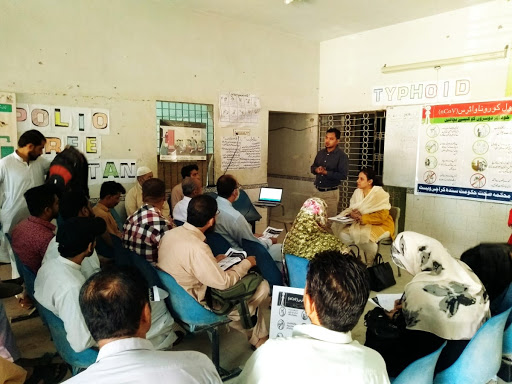
Using the vast infrastructure developed to identify the poliovirus and deliver vaccination campaigns, the polio eradication program is pitching in to protect the vulnerable from COVID-19, especially in polio-endemic countries.
Story Written By:
Global Polio Eradication Initiative
Story Photography By:
WHO Pakistan
Mar. 13, 2020
Using the vast infrastructure developed to identify the poliovirus and deliver vaccination campaigns, the polio eradication program is pitching in to protect the vulnerable from COVID-19, especially in polio-endemic countries. From Pakistan to Nigeria, the program is drawing on years of experience fighting outbreaks to support governments as they respond to the new virus.
Pakistan
Few health programs have as much practice tracking virus or reaching out to communities as the Pakistan polio eradication program. This means the polio team is in a strong position to support the Government of Pakistan in COVID-19 preparedness and response.
Currently, the polio team is providing assistance across the entire country, with a special focus on strengthening surveillance and awareness raising. Working side-by-side with the Government of Pakistan, within three weeks the team has managed to train over 280 surveillance officers in COVID-19 surveillance. It has also supported the development of a new data system that’s fully integrated with existing data management system for polio. All polio surveillance staff are now doubling up and supporting disease surveillance for COVID-19. Through cascade trainings, they have sensitized over 6,260 health professionals on COVID-19, alongside their polio duties, in light of the national emergency. These efforts will continue unabated as the virus continues to spread.
Adding to the capacity of the government and WHO Emergency team, the polio team are also engaged in COVID-19 contact tracing and improving testing in six reference laboratories. They have been trained to support and supplement the current efforts, preparing for a sudden surge in cases and responding to the increase in travelers that need to be traced as a result of the rise in cases. The regional reference laboratory for polio in Islamabad is also providing technical support to COVID-19 testing and has been evolving to cater to the increased demands.
As this is a new disease, polio staff are lending their skills as health risk communicators – providing accurate information and listening to people’s concerns. The government of Pakistan extended a national help line originally used for polio-related calls to now cater to the public’s need for information on COVID-19. The help line was quickly adapted by the polio communication team once the first COVID-19 case was announced. The polio communications team is using strategies routinely used to promote polio vaccines to disseminate information about the COVID-19 virus, including working with Facebook, to ensure accurate information sharing, and airing television adverts. As time goes on, the teams will train more and more people ensuring the provision of positive health practices messages that can curb the transmission of the virus.
Afghanistan
Currently, community volunteers who work for the polio program to report children with acute flaccid paralysis (AFP) are delivering messages on handwashing to reduce spread of COVID-19, in addition to polio. UNICEF is similarly using its Immunization Communication Network to disseminate information on personal hygiene.
Field staff have taken the initiative of using their routine visits to health facilities, during which they check for children with AFP, to check for and report people who may have COVID-19. Meanwhile, program staff are building the capacity of health workers to respond to the novel coronavirus.
To coordinate approaches, the WHO Afghanistan polio team has a designated focal point connecting with the wider COVID-19 operation led by the Government of Afghanistan. The polio eradication teams at regional and provincial levels are working closely with the Ministry of Public Health, non-governmental organizations delivering Afghanistan’s Basic Package of Health Services and other partners to enhance Afghanistan’s preparedness.
Nigeria
“In the field, when there is an emergency, WHO’s first call for support to the state governments is the polio personnel,” says Fiona Braka, WHO polio team lead in Nigeria.
In Ogun and Lagos states, where two cases of COVID-19 have been detected, over 50 WHO polio program medical staff are working flat out to mitigate further spread, using lessons learnt from their years battling the poliovirus. Staff are engaged in integrated disease surveillance, contact tracing, and data collection and analysis. Public health experts working for the Stop Transmission of Polio program, supported by the US Centers for Disease Control and Prevention, are using their skills to undertake COVID-19 case investigations.
The WHO Field Offices -which are usually used for polio eradication coordination- are doubling up as coordination hubs for WHO teams supporting the COVID-19 response. The program is also lending phones, vehicles and administrative support to the COVID-19 effort.
In states where no cases of COVID-19 have been reported, polio staff are supporting preparedness activities. At a local level, polio program infrastructure is being used to strengthen disease surveillance. Polio staff are working closely with government counterparts and facilitating capacity building on COVID-19 response protocols and are working to build awareness of the virus in the community. Specials efforts are being undertaken to train frontline workers as they are at high risk of contagion.
Beyond polio-endemic countries
Trained specialists in the STOP program, part of the Global Polio Eradication Initiative, are actively supporting preparations or response to COVID-19 in 13 countries worldwide. The WHO Regional Office for Africa’s Rapid Response Team, who usually respond to polio outbreaks, are aiding COVID-19 preparedness in countries including Angola, Cameroon and the Central African Republic. Meanwhile, polio staff in other offices are ready to lend support, or are already lending support, to colleagues working to mitigate and respond to the new virus.
In our work to end polio, the program sees the devastating impact that communicable diseases have. With this in mind, we are fully committed to supporting national health systems by engaging our expertise and assets to help mitigate and contain the COVID-19 pandemic, alongside continuing concerted efforts to eradicate polio.
For the latest information and advice on the COVID-19 disease outbreak visit the WHO website.
Learn about the progress we’re making to eradicate polio.
Sign up and help us make history today.
********************************
From the Bill and Melinda Gates Foundation as reported in their publication from February 29, 2020:
The Optimist
Twenty years in the making: The foundation’s response to COVID-19
This year marks the twentieth anniversary of the Bill & Melinda Gates Foundation. With a pandemic bringing painful human, social, and economic costs, it’s not a time for celebration. But it does feel that the investments we’ve made, expertise we’ve built, and experience we’ve gained over the last two decades has prepared us for this moment.
From day one, the foundation has embraced a data-led, evidence-based approach to improving health, reducing poverty, and expanding opportunity. We rely on scientific and technical expertise. Together, these building blocks mean that in addition to our financial resources, we have the capacity and capability to play a significant role in the COVID-19 response.
This is a unique situation; we are in a unique position to help. And today, we are announcing additional funding of $150 million that brings our total commitment so far to more than $250 million.
Even in an emergency like this, the starting point for how to use our resources is where it’s always been: Our fundamental belief that all lives have equal value. And since we know that epidemics hit the poorest and most vulnerable communities hardest, that’s where our funding is chiefly directed.
At its best, philanthropy can take risks that governments can’t, and corporations won’t. It can put wind in the sails of ideas, innovations, and initiatives with the potential to save lives. Governments and industry can then take the successful ones forward at scale. In this way, philanthropy doesn’t supplant the public and private sectors, it supports them.
It’s a concept led by Bill and Melinda known as “catalytic philanthropy.” The idea is that organizations like the foundation become the investor. The difference for non-profits is that they neither expect nor receive a share of the benefits. Instead, those go to vulnerable people—or to society in general. To put it another way, our bottom line is lives saved.
This approach, underpinned by our core belief, has guided our entire response to COVID-19. Taken together, most of our work to date has focused on supporting countries in Africa and South Asia, developing and delivering treatments and vaccines, accelerating detection and containment of the virus, and protecting vulnerable communities in the United States.
Strengthening the response in Africa and South Asia
The poorest communities in Africa and South Asia already struggle to access even the most basic health care. And an epidemic can quickly overwhelm overstretched health systems, meaning the potential for death and disruption is strikingly more pronounced than in wealthier countries.
So, even before the first cases were reported in Africa and South Asia, we took immediate steps to help countries prepare. And as the crisis increases, so does our support to help save as many lives as possible, and prevent vulnerable communities falling back into hunger and poverty.
This won’t just help people in those countries because what is now crystal clear to the world is that an epidemic anywhere is a threat everywhere. The only way we can prevent a resurgence of this disease is to help the poorest countries strengthen their ability to stop the virus.
Developing and delivering treatments and vaccines
While R&D has the potential to consign humankind’s biggest health threats to the history books, we need to unwind the pandemic paradox that viruses spread rapidly, but developing treatments and vaccines moves slowly.
The speed with which companies have begun work on a vaccine—the only way to definitively end the pandemic—is partly a result of the rapid action of the Coalition for Epidemic Preparedness Innovations (CEPI), which we co-founded in 2017 and continue to support. Through the COVID-19 Therapeutics Accelerator, trials of potential treatments are also already underway.
But even vaccines and the most effective treatments are useless if they never leave the lab. So, we are working to ensure that when they are developed, they can be mass-produced quickly, and—most important—are accessible, available, and affordable. Achieving that, requires a commitment to international cooperation across governments, the private sector, and multilateral institutions on an unprecedented scale.
Accelerating detection and containment of the virus
To start to turn back the tide of this disease, we urgently need to answer two crucial questions: How many cases are there? Where is the virus being transmitted? The number and source of COVID-19 cases are the two most important data points informing the response. They can help determine where governments and health bodies should focus their resources, and the actions needed to stop the spread.
That’s why we are funding modeling to help predict the course of the virus, and providing technical assistance and funding to develop more effective diagnostics. For example, an easy-to-use swab that could lead the way to home-testing. We’re also looking at different approaches to physical distancing and stay-at-home policies in those places where such measures are less practical.
Subscribe to receive stories, research, and news from the Bill & Melinda Gates Foundation.
Protecting vulnerable communities in the United States
Our commitment to equality extends to our work at home. And as the virus not only threatens people’s lives but their livelihoods, we are supporting organizations local to our hometown of Seattle, which are helping protect those most likely to suffer disproportionate social and economic costs. At the same time, our foundation employs incredibly knowledgeable professionals in the public health field. So, we’re taking a two-pronged approach by deploying both our dollars and expertise.
Nationally, we’ve focused on the virus’s impact on education. As part of a first wave of measures announced last month, we’re providing funding that will enable emergency aid to help mitigate the impact of campus closures on students—particularly low-income students who could be losing their access to housing, food, and wages. In our K-12 work, we’re supporting the development of online learning and support for students who rely on schools for day-to-day services. We’re also thinking about the consequences of this pandemic on students over the longer term.
Beyond these four broad areas, the foundation is also leveraging the financial instruments of its Strategic Investment Fund in the form of equity investments, loans, and volume guarantees to catalyze the rapid procurement of essential medical supplies for low- and middle-income countries, and to help pharmaceutical companies produce COVID-19 products.
It’s not just our financial resources and technical expertise that we’re deploying. We’re also providing knowledge and assistance to industry, multilateral institutions, and governments around the world—and making the case for global cooperation and coordination. For example, last month leadership from 15 global pharmaceutical companies convened and decided to open access to their antiviral compound libraries for screening against the virus. The more compounds we can test, the greater our chances of success.
We also have set up ways to allow anyone to contribute to the fight against COVID-19.
This crisis is testing us. And individuals and institutions are stepping up in some astonishing ways. It’s also clear that much of what the foundation has done over our history, from building healthcare capacity in developing countries, to reducing the impact of preventable diseases, to establishing and supporting the Global Fund, CEPI, and Gavi, is now all part of the solution to this crisis.
But philanthropy is just one part of the response. Only when all sectors work together and do their part, do results come faster and reach more people. And it’s that which is ultimately our way out of this pandemic
Upcoming Programs
All in person meeting are Cancelled!
Harvest Hill is Closed to the public due to Covid-19.
Stay tuned for news of our first web based meeting in the near future