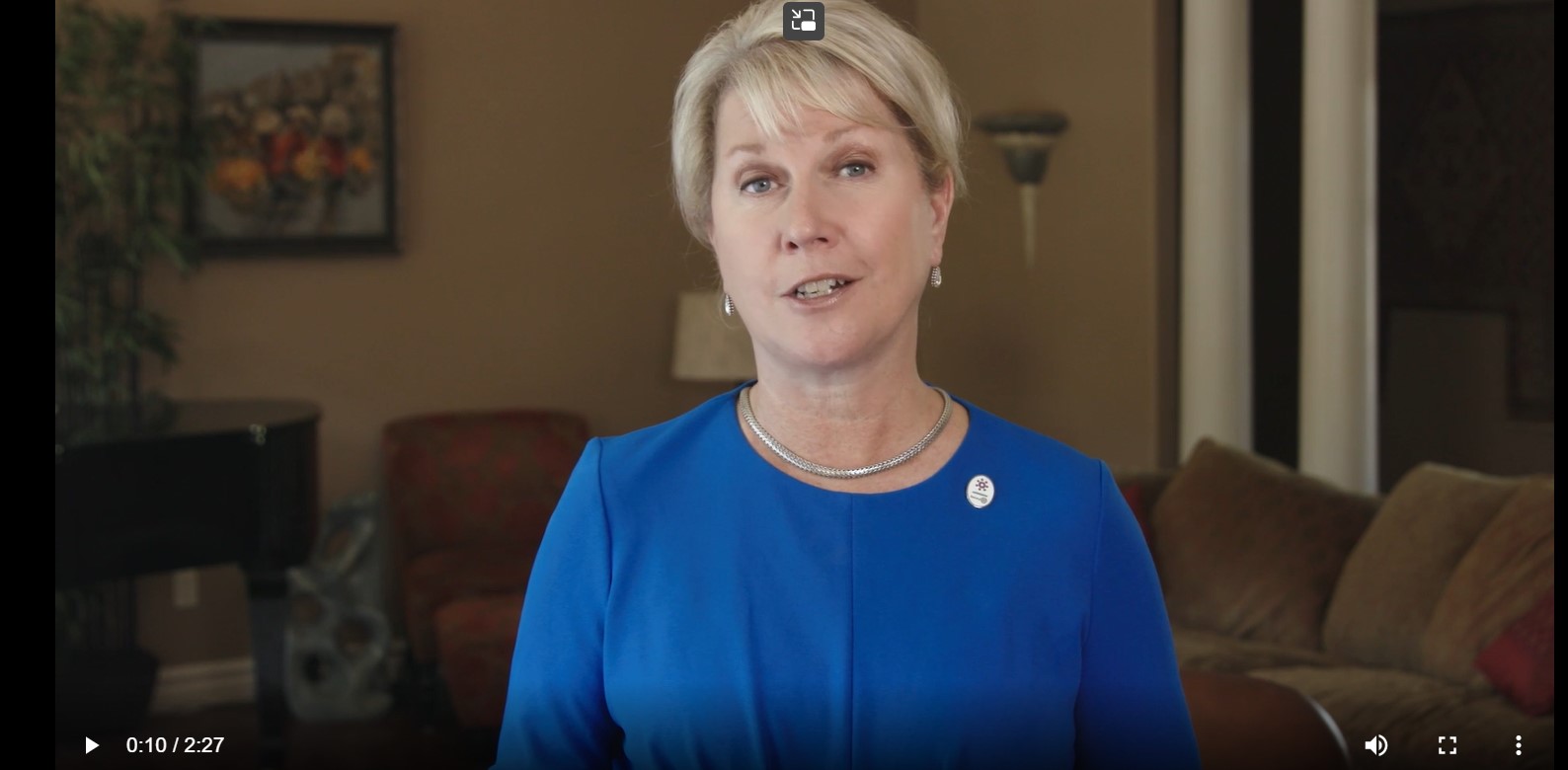
Our Speaker today, October 13, 2022 was Kris David, End Polio Now Coordinator Region 39 East, President-Elect Rotary Club of Providence, Rhode Island, District 7950 Governor 2015-2016. KD7950@gmail.com Kris David Bio: Kristine David is a retired educator who worked as an advocate for individuals with intellectual and physical disabilities in California, Massachusetts, and Rhode Island. She also worked as the marketing manager for the Rhode Island Flower Show. Kris has been a Rotarian for 30 years. Her home club is the Rotary Club of Providence where she is currently the President-Elect. Kris served as District Governor for District 7950 during the 2015-2016 Rotary year. She has also served as the District’s Foundation Chair from 2018-2021 and the Youth Exchange Chair from 2010-2015. She currently is serving as one of Rotary International’s End Polio Now Coordinators for 11 districts in the northeast of the United States. Eastern section: Southern Quebec, New England and all but one district in NY, New Jersey and Long Island, NY. Kris is a Major Donor of the Rotary Foundation and a recipient of the Rotary Foundation Citation of Meritorious Service Award. World Polio Day will be October 24, 2022. Kris provided and overview of Rotary's ongoing efforts to eradicate polio and the current challenges we are facing to make eradication a reality, but the bottom line was that eradication is still possible, and we mustn't give up our efforts to make this a reality. What is Polio? Polio, or poliomyelitis, is a disabling and life-threatening disease caused by the poliovirus. The virus spreads from person to person and can infect a person's spinal cord, causing paralysis (can't move parts of the body). Polio is transmitted by ingesting contaminated water or food. In its most severe form, it damages nerves of voluntary muscles, can cause paralysis of involuntary muscles as well, such as the diaphragm Rotary’s involvement in the fight against polio began when a single Rotary club in the Philippines Club applied for a 3-H (Health, Hunger and Humanity) Grant (now Global Grants) to vaccinate all children in the island nation. This vaccination effort was successful and our Rotary leaders decided to make it the #1 project. Polio cases have dropped worldwide over 99% since the late 1980s. A new concern is that the poliovirus is showing up in some US cities’ wastewater. The same is true in the United Kingdom. So we cannot stop our efforts to encourage parents in the USA to keep vaccinating their children. COVID pandemic has caused the greatest sustained disruption to public health and immunization in a generation. Combined with conflicts and climate challenges, we are threatened with seeing our gains reversed. Malawi and Mozambique have had outbreaks that are linked genetically to a strain from Pakistan. We are still pushing in Pakistan and Afghanistan to eliminate the wild virus. New cases show polio is still a threat. Floods disrupted immunization services and other gains. Health experts continue to be worried about a few hard-to-reach areas in Africa. Two types of vaccine - Oral polio vaccine – contains the virus itself in a weakened dose, but sill alive.
- Inactivated Polio Vaccine IPV – a killed version of the virus. This is the type given in the US since 2000. The CDC recommends that children get four doses of polio vaccine. They should get one dose at each of the following ages: 2 months old, 4 months old, 6 through 18 months old, and 4 through 6 years old. Children who have not completed their polio vaccinations should see their healthcare professional to complete the vaccine series
As of October 5, there have been 29 known cases of wild polio in 2022. Only 1 in 100 folks who are infected have full paralysis, but many of the rest have flu-like symptoms. In 2021, there were only 6 cases the whole year. How many countries around the are affected? 2020 – about 33 countries reported Vaccine-derived polio. 2022 – In Rockland County NY, a case in an unvaccinated man who has never been out of the country was genetically linked to a case of vaccine derived polio in Israel. Rockland County is well below the US average of 80% immunization rate; Rockland is only 30%. Last year there was a measles outbreak there among unvaccinated persons. This illustrates the worth of widespread vaccination. The virus has been detected in NYC sewer system. Again, a reason for polio vaccines to be administered in the United States. What must we do? Global Polio Eradication Initiative (GPEI) – partnering with Bill and Melinda Gates Foundation, WHO, CDC, governments throughout the world. New tools and approaches - New vaccine nOPV2 vaccine (Bio Farma, Indoniesia) – Type 2 novel oral polio vaccine. It is believed that this new vaccine will help eliminate vaccine derived polio. Global Polio Eradication Initiative (GPEI) 2022-26 strategy accelerates rollout of this new tool.
- Novel oral polio vaccine type 2 (nOPV2
To better address the evolving risk of type 2 circulating vaccine-derived poliovirus (cVDPV2), GPEI partners together with countries are deploying an innovative tool – novel oral polio vaccine type 2 (nOPV2). The vaccine is a modified version of the type 2 monovalent OPV (mOPV2), which clinical trials have shown provides comparable protection against poliovirus while being more genetically stable and less likely to be associated with the emergence of cVDPV2 in low immunity settings. This means that nOPV2 has the potential to be a significant tool to help stop outbreaks more sustainably. nOPV2 is being deployed under WHO’s Emergency Use Listing procedure (EUL) to enable its rapid field availability. Even after meeting rigorous EUL criteria for safety and immunogenicity, nOPV2’s performance in the field is being closely monitored in line with EUL standards and data collection continues with the ultimate goal of WHO prequalification and full licensure To read more, click here.
- Herd immunity – if we adequately vaccinate a population in an area, it will stop the disease from spreading.
Herd immunity occurs when a large portion of a community (the herd) becomes immune to a disease. The spread of disease from person to person becomes unlikely when herd immunity is achieved. As a result, the whole community becomes protected — not just those who are immune. Often, a percentage of the population must be capable of getting a disease in order for it to spread. This is called a threshold proportion. If the proportion of the population that is immune to the disease is greater than this threshold, the spread of the disease will decline. This is known as the herd immunity threshold. What percentage of a community needs to be immune in order to achieve herd immunity? It varies from disease to disease. The more contagious a disease is, the greater the proportion of the population that needs to be immune to the disease to stop its spread. For example, the measles is a highly contagious illness. It's estimated that 94% of the population must be immune to interrupt the chain of transmission What can Rotarians do to increase awareness and help increase vaccination rates - Target pockets where vaccine coverage is low
- Talk to communities to find solutions to get some societal and social problems of vaccine refusal
- Support vaccination clinics in areas where there are low rates
- Maintain environmental surveillance where wastewater is tested to see the strains of viruses within the community. 6 months prior to an outbreak, we can tell that it’s coming.
Gates Foundation will match $100 million through 2026 – Rotarians need to match it with $50 million. - Every district and club continue to focus on PolioPlus efforts
- Commit to increase individual and club giving by 10%
- Use social media for small or event gifts
- Start a district/club PolioPlus Society. The Polio Plus Society is an organization of like-minded Rotarians and Friends of Rotary who have committed to contribute $100 or more each and every year to Polio Plus until the world has been declared free of the Wild Polio Virus. Kris encouraged us to think about being a PolioPlus Society Club.
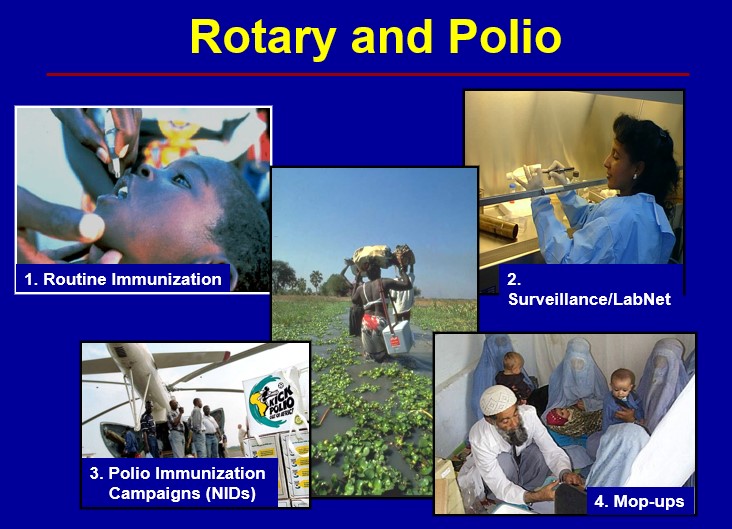
The “Plus” in PolioPlus When we talk about PolioPlus, we know we are eradicating polio, but we often don't realize how many added benefits the program brings. The “plus” is something else that is provided as a part of the polio eradication campaign. It might be a hand-operated tricycle or access to water. It might be additional medical treatment, bed nets, or soap. A 2010 study estimates that vitamin A drops given to children at the same time as the polio vaccine have prevented 1.25 million deaths by decreasing susceptibility to infectious diseases. Rotary and our partners have developed an active global surveillance system. There are 145 laboratories in 92 countries testing water for wild virus PolioPlus methodologies are used to detect and respond to outbreaks of COVID-19, measles, yellow fever, neonatal tetanus and avian influenza. Money goes to research and 5 other areas — Routine immunization, transportation of vaccine, surveillance, and "mop-ups" when polio reappears in a community that has been polio free. |


.jpg)






.jpg)

.png)