May 31, 2019, 09:00am Forbes
Why Bill Gates Partners With Rotary To Eradicate Polio
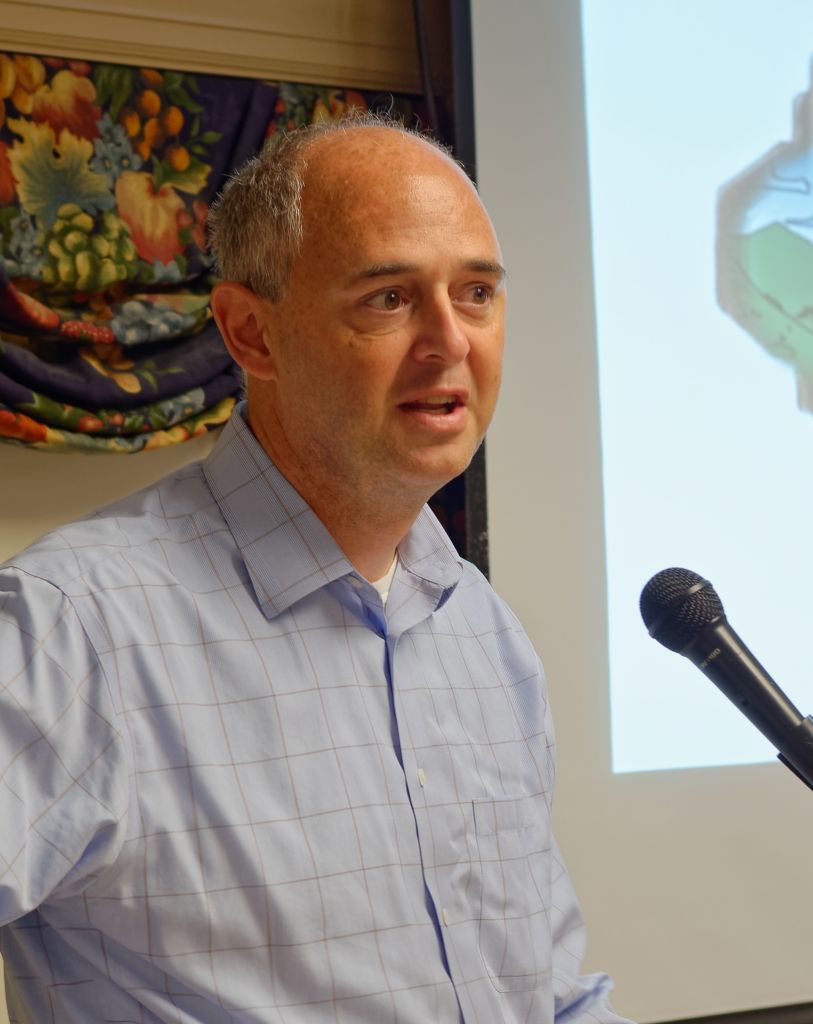
When I asked Bill Gates, 63, co-chair of the Bill and Melinda Gates Foundation, why polio, he began, “Polio is a terrible disease.” An hour later, speaking to a group of Rotarians in Spokane, Washington, he said,
“You know, we're going to get to the end of this and Rotary will be the reason that will happen.”Before continuing, I must note I am a Rotarian who has occasionally been paid to speak at Rotary events. Even for me—perhaps especially for me—the pairing of the Gates Foundation with Rotary seems unlikely, almost akin to the well-known viral story of the elephant who
befriended a dog.
Rotary International President Barry Rassin and Bill Gates at the joint District 5080 and 5030 Conference May 18, 2019
Rotary led the formation of the GPEI, as it is commonly known within polio circles, in the mid-1980s, formally launching in 1988. The Gates Foundation joined the effort in 2000. Over the ensuing years, the GPEI has functioned effectively, reducing polio cases by more than 90% since Y2K. Within that framework, however, a special partnership between the Gates Foundation and Rotary has emerged.
In a discussion with Rotary President Barry Rassin and Gates, which you can watch in the player at the top of this article, I asked Rassin how he’d respond to a request from the Gates Foundation to help with another project.
“We’re in. I’ll tell you that right now. This is a wonderful partnership,” he said.
Still, the implementation partners for the fight to eradicate polio are UNICEF and WHO, which together receive the bulk of the money raised. Through January 2019, Rotary has provided $1.9 billion, funding the partners on a roughly quarterly basis.
Of the $1.9 billion Rotary has raised and funded since the mid-1980s, $885 million has come from the Gates Foundation in the form of matching grants. For the past several years and for the foreseeable future, the Gates Foundation matches donations raised through Rotary on a two to one basis, such that a $1 donation becomes $3 to fight polio.
The Gates Foundation’s total giving for the fight against polio was approximately
$3.7 billion, through the end of 2018. Roughly a quarter of its polio funding is made in the form of matching grants to Rotary. Together, Rotary and the Gates Foundation represent more than 28% of all polio funding, including funding from governments.
Gates, accustomed to the spotlight, is quick to share credit. “The March of Dimes was all about polio. They funded the creation of the very first vaccine,” he said, referring to the work of Jonas Salk.
Gates says of the collaboration, “The two partners who talk the most are Rotary and the Gates Foundation. You know we both talk to governments. We both talk to philanthropists.”
The GPEI is unique in the global health world and may not have a parallel in any sphere. You can’t visit the offices of the GPEI because it essentially exists only on paper. Each of the members controls its own funds and operations. The umbrella organization serves as a tool to facilitate collaboration.
Jay Wenger at the Gates Foundation is the most senior person there with a dedicated focus on polio. He explained that one feature of the GPEI is that there is coordination among the five partner organizations—and governments around the world—at every level, from the top brass at headquarters to far-flung field operations. He noted a benefit of the unusual structure, “It's quick,” he said. Adding, “Usually. I mean, for an international organization to actually respond to things, it's pretty quick.”
Gates acknowledged the importance of the decision not to create a new institution for the polio fight—made before the Gates Foundation joined the effort. He credits low overhead, regular meetings and good leadership—pointing to Rotary—for the GPEI’s success.
Wenger notes that the structure works well. “Over the last 15 years—you know we're friends—and when someone in the group has gotten too strong there's a reaction and now there's a resetting of the way it works.”
Since the mid-1980s, the success has been remarkable—so much so that its success is one of its greatest challenges. While the number of polio cases has been reduced from about 350,000 per year to 33 in 2018, the disease has not been eradicated though many people assume it has been. There hasn’t been a case in the Americas or Western Europe since before the GPEI was launched.
The success is problematic even in Pakistan and Afghanistan, the last two countries where one can catch polio. With just 33 cases spread across a population of 300 million, Wenger notes that most people don’t see cases of polio anymore.
He says the top people in the Taliban, which controls areas of Afghanistan where the fewest children are vaccinated, support efforts to eradicate polio. In practice, however, leaders on the ground are not enthusiastic, arguing that they don’t see cases of polio, but their children are sick and dying from other causes. They want improved healthcare across the board.
To address that concern and bring polio eradication to a successful conclusion, a revised five-year endgame strategy was recently published. Wenger highlights the “integration” efforts to bring other vaccines and health services to vulnerable communities in both Afghanistan and Pakistan.
An early example of this was finding a hospital in a troubled, ethnically distinct neighborhood of 100,000 in Karachi where a hospital and clinic had been constructed but no equipment, medicine or people ever arrived there. Polio cases still pop up in the community. The GPEI has opened the hospital along with nine other clinics within the community.
Another aspect of the endgame strategy highlighted by Wenger is expanded surveillance. While the GPEI has assiduously tracked cases of polio for decades and has been monitoring environmental samples pulled from sewage, the collaboration is taking this to the next level. Wenger says, “The benefit of the of the environmental sampling is that we can find the virus—we don't require it to paralyze a kid.”
The Gates Foundation itself plays an interesting strategic role beyond funding. Gates himself is key. He attributes his foresight to patience learned at Microsoft (disclosure: I own shares). While new products there sometimes took five or six years, he says ten years is often required in global health.
Gates personally drove the development of a new polio vaccine that is now in the final stages of testing. When the idea was put forward about the time of the last case of polio to happen in India, many were thinking the vaccine would play no important role in eradication, but Gates insisted.
The new vaccine is a variant of the oral vaccine developed by Albert Sabin, that can be administered with drops and which delivers a more potent form of immunity than the injectable Salk vaccine introduced earlier.
The problem with the Sabin vaccine is that in rare cases, perhaps one in five million doses, the vaccine reverts to an active form and the disease can spread. These cases are known as vaccine-derived poliovirus or VDPV cases.
There are three types of polio, only one of which—type 1 as it is cleverly called—still circulates. Type 2 was officially declared eradicated in 2016 after the last documented case in 1999. No cases of Type 3 have been documented since 2012.
One key to India’s success, was the early adoption of a bivalent vaccine that lacked the Type 2 immunity, apparently making it more effective for the other two. In 2016, the world switched from the trivalent to the bivalent vaccine, recognizing the risk that by so doing, a few cases of type 2 VDPV would emerge.
That tail has been more difficult to cut off than anticipated. If proven successful, the vaccine now in development with the Gates Foundation would provide the same protection as the current oral vaccine, but without the risk of mutating into a form of the virus that can cause new cases.
It is this new vaccine that exemplifies Gates’s thinking about global health. He notes that diseases that affect only poor countries have no market-driven solution. Whose job is it to create new “tools” as Gates calls the vaccine? “It really was obvious that we were the ones who should push that forward,” he says.
The work on the vaccine changes the direction of the light on Gates and the Foundation, shifting the view from philanthropist to social entrepreneur. The Foundation he leads with Co-Chair Melinda Gates isn’t merely a grant-making organization but also an innovation engine.
Gates attributes the partnership with Rotary to its breadth. “Rotary plays a lot of different roles.” He highlights volunteers, fundraising and advocacy with governments around the globe.
Having the ability to write big checks and innovate itself, the Gates Foundation’s close partnership with Rotary within the GPEI is all the more interesting. Whatever the reasons for the partnership or its success, the children who will one day live in a world without polio won’t much care who gets the credit.
Discover the true spirit of aloha and Rotary with your family, friends, and fellow Rotarians in Honolulu. It’s the perfect setting for the entire family of Rotary to celebrate, collaborate, and connect while experiencing the warmth and welcome of Honolulu.
The convention is one of the only times when people of action from around the world gather in one place to celebrate Rotary. Our engaging speakers will boost your passion for service and provide new perspectives on our work in the world.
Make new friends and connect with old ones while you explore all that Honolulu and the convention has to offer. You’ll return from our convention refreshed and inspired to continue your service and community leadership.





.png)
.jpg)



.JPG)