Jane Mason introduced our speakers Nancy Clark from the Zienzele Foundation. Jane met Nancy's husband, Jim when he was officemate to Jane’s best friend at CRREL and when he was a membrer of the Lebanon Rotary Club.
Nancy is co-founder of Zienzele Foundation of Vermont/Zimbabwe. Nancy is Zooming in from Topsham from where, she reports, the snow is gone.
Nancy Clark grew up in Vermont, graduating from the University of Vermont with a degree in nursing. Even in nursing school she gravitated to community health and activitism. Her entire career has focused on the health and well being of women and children through her work in pediatrics in NYC, and then in home care, first in Connecticut and then Vermont, developing programs to meet the needs of young families. It has been a natural transition to this same type of work in rural Zimbabwe
From the Zienzele' web page:
OUR MISSION: SELF RELIANCE FOR WOMEN AND CHILDREN IN ZIMBABWE.
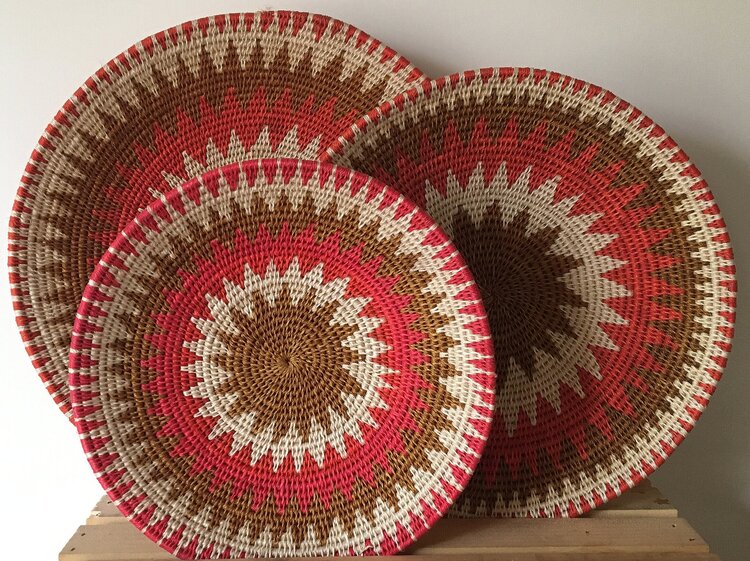
The Zienzele Foundation works in some of the poorest villages in Zimbabwe. Through basket-weaving and other projects, our women's groups earn money to help support themselves and care for over 1,000 orphans.
Remarks from Nancy:
She reflected on the first time she spoke to Rotary Club of Lebanon – it was in the earliest days of the Foundation, some 20 years ago. The changes she’s seen have been amazing, horrible, wonderful, challenging, but mostly the changes she and her co-founder have have been for children in school and the caregiving women who’ve become the powerful people in their community has been rewarding.
For Nancy, 2020 felt like a missed year. She canceled her trip to Zimbabwe in March 2020, then tried to rescheduled to September 2020, and then once again canceled again in March 2021. She is now planning a return in September 2021. She is eager to get back to Zimbabwe.
Nancy and Prisca Nemapare are the co-founders of Zienzelel. The are helped by her husband, Jim. Prisca Nemapare grew up in rural Zimbabwe, living with her grandmother. She was a hard-working and determined student, and eventually she won scholarships to continue her education in the U.S. After eleven years Prisca received her PhD in nutrition. Shortly thereafter she became a professor of nutrition at Ohio University in Athens, Ohio.
Priska is a nutritionist and Nancy is a nurse.
In 1998, Nancy went on EarthWatch project on nutrition for women and children. In 1999, EarthWatch pulled out. In 2000, Nancy went by herself. Women had had numbers of grandchildren dropped off with them as their children died of AIDS.
Zienzele means “do it yourself,” the premise of all our work – it’s the women and children who have done all the work.
There are three prongs of the work:
- Educating children
- Empowering women and
- Building community.
- Empowering women
In 2000 they started with 2 basket groups — now we have 52. Baskets are brought to the USA for resale and to help support the women in the community
In 2005 they started garden groups. They needed seeds and fertilizer. They have grown from 5 groups to 46 completely. They are now independent of our help.
In 2000 there was 1 sewing group; now 6 making children’s school uniforms.
Their women's initiatives started with 25 women, now 350 in cooperative groups.
Nancy goes 2x/year to purchase baskets she shells. All the proceeds go back to pay school fees for children.
- Educating children:
In 2000 they raised funds to pay school fees for 20 HIV/AIDS orphans. In 2020 they were able to pay for 1,000 children’s fees in primary, secondary and post-secondary.
Child-headed households (CHHs) were described as the most vulnerable population. These are young children who have become head of households when both parents have died. In 2000, they supported one family of six children with 7th grade daughter in charge of getting sibs to school and growing the garden; in 2020 they supported 110 CHHs.
“Chicofa” Primary School – requires uniforms. Children wear these uniforms with pride.
- Building community
Nancy shared that they have built relationships with local chiefs (political hierarchy) whose respect we have gained from the success of our work. Connections also with headmasters at schools who depend on us to help keep orphans in school.
Each time we go we hold workshops — one with secondary students on reproductive health. Also helps build a sense of camaraderie with other children. Women’s group celebrating winning a prize in “chicken-raising project.” Another huge gathering of the community around its own progress.
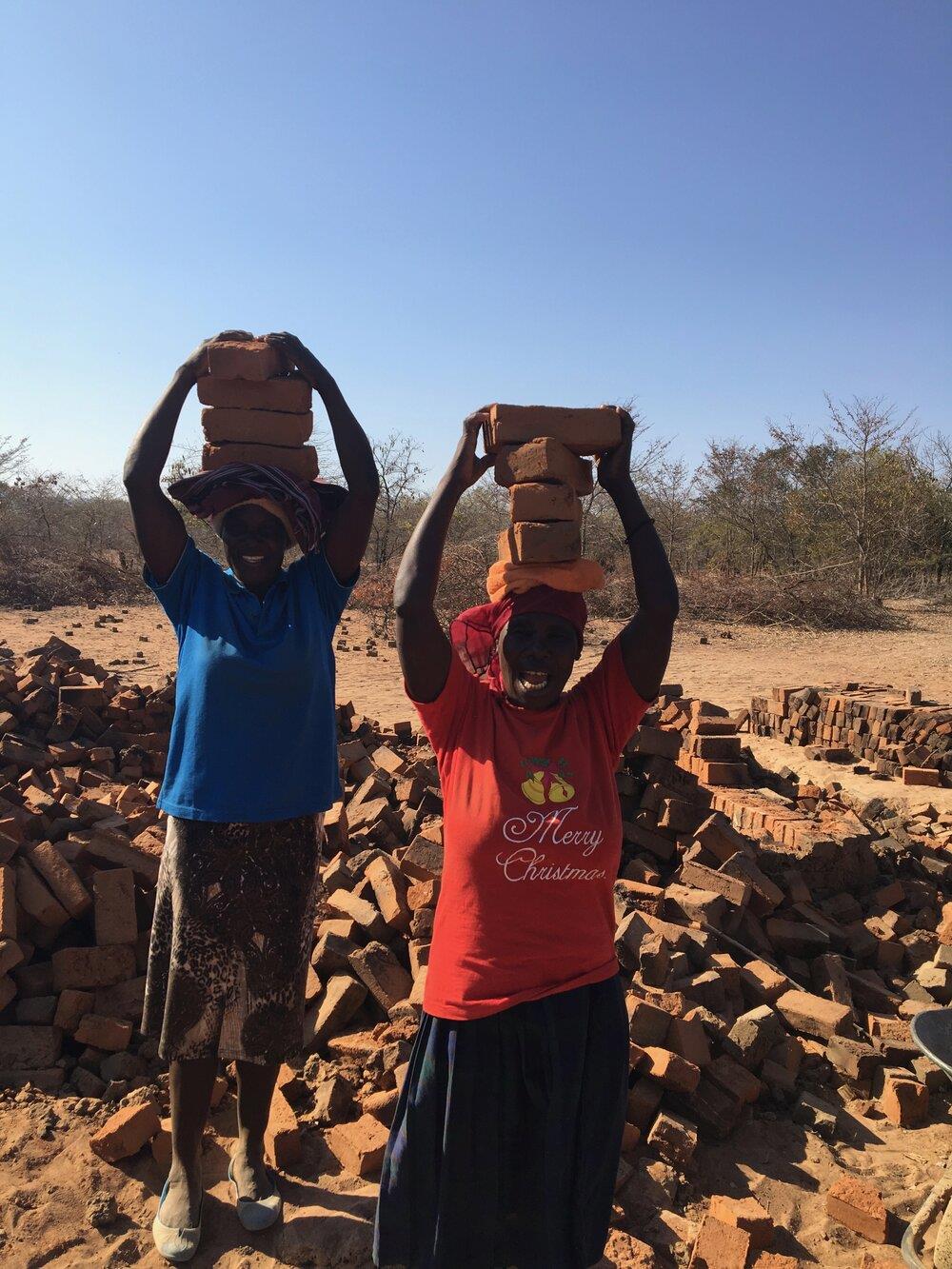
Zienzele Community Center was a major undertaking in 2019. Funding from US donations. All bricks made by women. Men did the building. They bought roofing and windows. Local folks designed it and chose the site – a “major blue ribbon” for this community to be the first to have such a center. Meetings, basket shows, other community uses in this building which connects folks more.
Large numbers of students from several different schools come together for these workshops.
Zienzele Post-Secondary School Fund: Some post-secondary students are teachers, nurses, electricians, plumbers, mechanics, environmental and computer scientists, and conflict resolution specialists. Also trade certifications, nursing degrees, associate degrees, BAs, MAs and soon, an acceptance into PhD program at Boston College in international development!
Fundraising – we usually do 12 per year but did none in 2020. Just about to have our first. Child sponsorship is $300 a year. Post-Secondary Fund — a large new commitment for which we hope to start a scholarship program which will need more money than the basket sales can supply.
Zienzelefoundation.org – website has all kinds of photos and interesting information.
Questions:
John Yacavone: Over the years, I’ve bought baskets and feel I’m part of Zienzele. If that area of the world creates saints, you and Jim will be two of them.
Caleb Wolfe: I’m in year 2 of a similar effort in Kenya. Awe-struck about your accomplishments in 21 years.
The soil seems dry – how succeed with planting?
Nancy: Definitely arid. They’ve had years of persistent drought. Have to choose specifically when to plant and harvest. We try to situate gardens near a water source – women carry the water on their heads to the gardens. Most recent rainy season washed away seeds, roads – Africa seems to be always on the edge of climate change. Soil is fertile but dry.
Caleb: I’d like to talk with you about capturing water for agriculture.
Jane Mason: Plug for the baskets — they have become works of art, very sophisticated. There are now baskets with covers. Check out the website!!
Children's Collection at the Kilton Library...this weeks donation in honor of our speaker:
Bill Secord presented today's speaker book is Bringing Back the Wolves: How a Predator Restored an Ecosystem by Jude Isabella. Illustrated by Kim Smith.
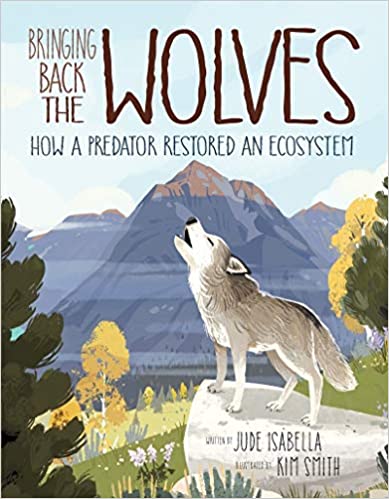
The connection to the Zienzele Foundation is the importance the Zienzele Project places upon the health of the local ecosystem in Zimbabwe -- the establishment of community gardens and the preservation of local crafts, especially basketmaking. The attached nature photo shows the shade trees that provide some of the material used in the local basketmaking industry.
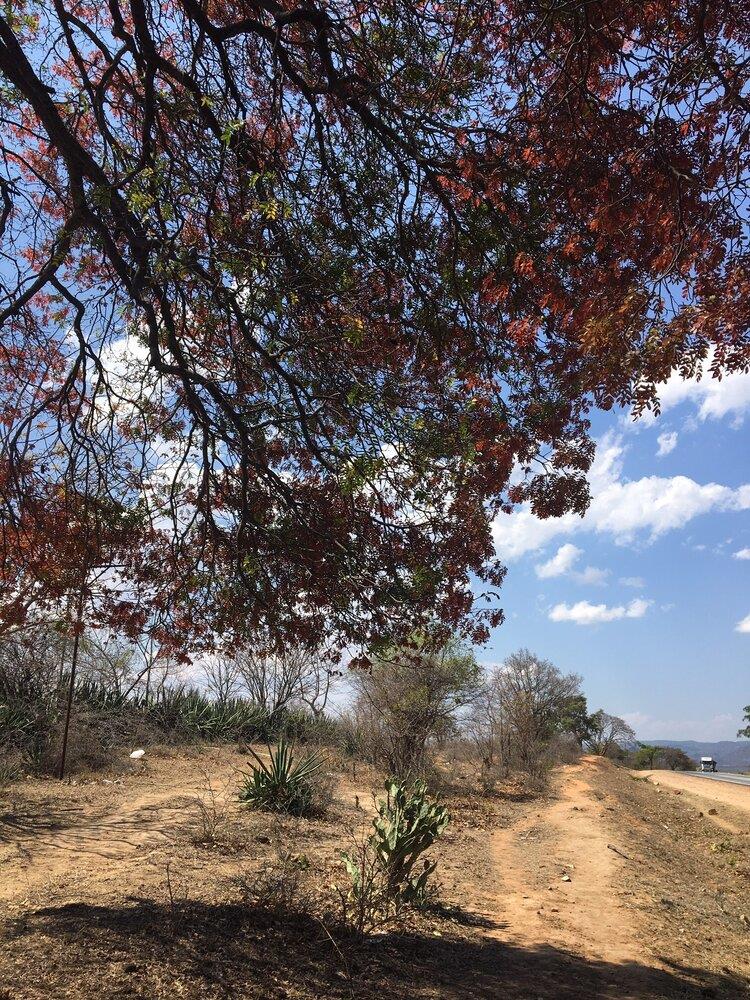
The caption for the photo reads:
The Mtechani tree provides color, nice shade, and its seed pods provide a lovely grey color for baskets.