Our Speaker today was Barry Glennon from the NH Attorney General Office.
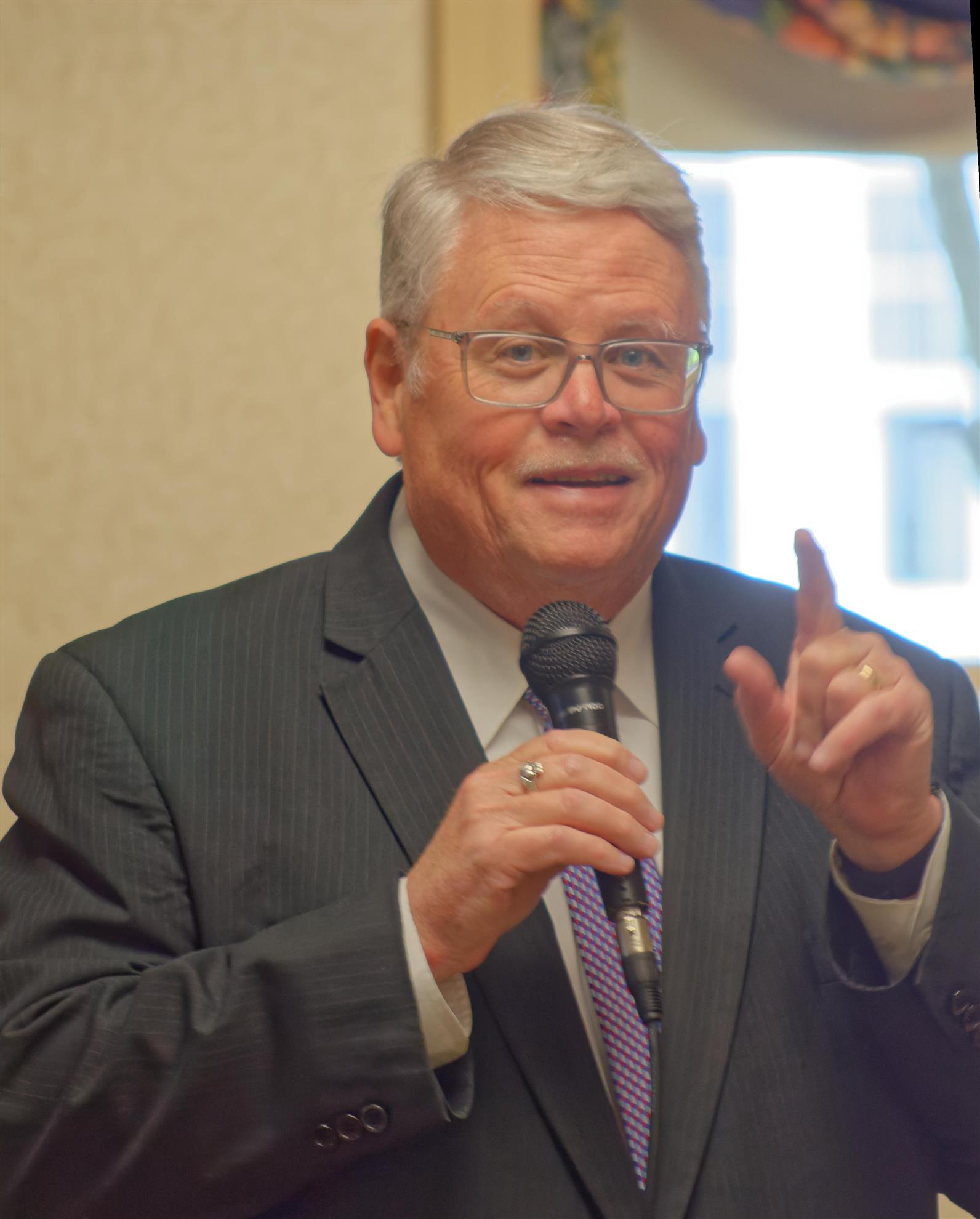
Barry Glennon
Barry Glennon joined the New Hampshire Bureau of Securities Regulation in 2001. He was later appointed Deputy Director of Licensing & Administration, and then Director in 2012. Barry was previously employed by the former Chubb Life/Jefferson Pilot Financial Insurance Company in Concord, N.H. and is a lifelong Manchester resident.
He began our talk with a story of a 68 year old woman who had invested her money with a person who she discovered had taken all her money when she went to withdrawal funds from the account for a "trip of a lifetime". Although 99.9% of financial planner are reputable, there is a fringe element that is totally unethical. He shared that in New Hampshire there are over 40,000 financial advisors registered with the state. Some are local, and there are others who are located out of state but doing business in New Hampshire.
The Bureau of Securities mission is to protect and educate investors. His organization has several responsibilities: License Brokers, Regulate Securities, Conduct Field Exams, Investor Education and Enforcement of Regulations.
The Bureau has published a free, 68 page book New Hampshire Investor Guide published in both English and Spanish. Copies were given to members at the meeting. If you missed the meeting you can a free copy to be mailed to you by calling the Bureau of Securities at 603-271-1463, or by email at securities@sos.nh.gov. It is available online too at www.InvestSmart.nh.gov
Barry described the typical victim as a male, educated, somewhat knowledgeable and often is the primary decision maker for his business and/or home finances.
He described the typical fraud types:
- Ponzi Schemes — Think Bernie Madoff, but on a smaller scale.
- Unscrupulous sales people (again this represents less than 1% of the industry.
- Affinity Fraud — praying on member of groups...asking the members to keep the "opportunity exclusive" to their group.
- Internet Fraud
- Speculative ventures
- Cryptocurrency
He reminded us that seniors are a particularly vulnerable group, as they are readily available in NH (we are the 2nd oldest state); they have assets and rich in investments.
Typical ways they reach individuals are through phone calls, group asks, internet, mail, and seminars.
One way to check to see if the person you are working with is legitimate is to use the tool, FINRA Broker Check. Click her for the link. Barry reminded us that it we should be asking our investment professional questions about their experience. A list of questions is provided on page 57 of the New Hampshire Investors Guide. I would be wise to review you investors credentials every year, and you can call the Bureau if you have additional questions for concerns. Another link you can use is Invest Smart NH.
From Invest Smart NH:
Traits of a Typical Perpetrator
Understanding some of the tricks and techniques used by perpetrators and how to spot them.
It is important to recognize whether a person presenting themselves to you as a financial professional or seasoned expert is legitimate, or simply out to defraud you of your hard-earned money. Here are some of the common signs of a con artist:
🚩They will use every trick in the books to convince you to invest, and when they do, they’ll take you for everything you’ve got. Don’t let it happen to you! Investigate before you invest.
🚩They become quick friends and take an interest in your personal life. They may even invite you to dinner or attend events they know will interest you.
🚩They dress for success , creating the appearance of wealth, prestige and accomplishment.
🚩They like to blend in with others and quickly become friends with as many people as possible.
🚩They seem to know a great deal about you, but you know very little about them.
🚩When discussing an investment opportunity, they will downplay any risk associated with the investment.
He closed with a few 'nevers":
- Never make an investment check out the the individual selling the product
- Never accept "trust me"
- Never provide passwords or other access to financial accounts
- Never accept words like guaranteed, "safe as bonds", or solid downside protection.