Dr. Jennifer Scott, the executive director for Southern Vermont Area Health Education Center, is a licensed clinical psychologist and a well-established educator and administrator in the field of higher education. She has contributed to the fields of psychology and education with numerous presentations, publications, and professional service and has been recognized at the local and state levels for excellence in teaching and clinical practice.
Jennifer earned her doctorate in clinical psychology from Xavier University in Cincinnati, OH.
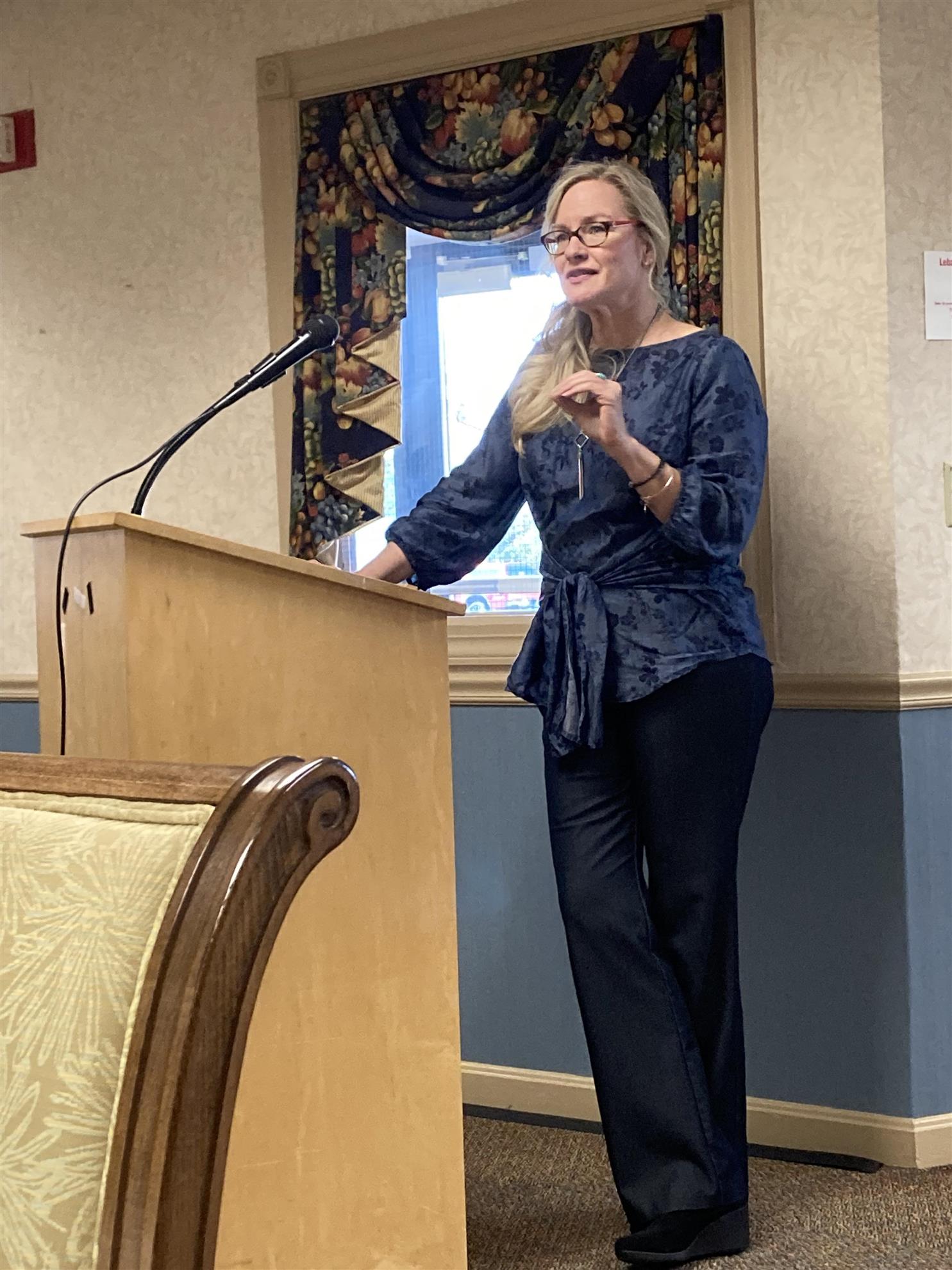
Jennifer Scott
As a leader, educator, clinician, and advocate, Jennifer is committed to the education and training of students and young professionals, creating opportunities for all to succeed, and serving the needs of individuals, families, and communities. She lives in Rutland and enjoys spending quality time with her family, connecting with friends, reading, hiking, and watching football.
Dr. Jennifer Scott provided an overview of the Area Health Education Center (AHEC) in Southern Vermont. There is a AHEC that covers Northern Vermont too.
What is AHEC?
Area Health Education Center. Since 1999, the Vermont AHEC Network has engaged academic and community partners to improve the distribution, diversity, supply, and quality of the health workforce in Vermont, especially in our rural and underserved communities. Southern Vermont AHEC is one of two independent nonprofit regional AHEC centers in Vermont.
Southern Vermont AHEC (SVTAHEC) is one of two independent not-for-profit regional AHEC Centers in Vermont funded by federal, state, and community support. A robust health workforce creates jobs, serves communities, and spurs economic activity.
Primary Goals of the Vermont AHEC Network:
- Strengthen Vermont’s health workforce development infrastructure through academic and community partnerships.
- Helping to train and develop a diverse healthcare workforce prepared to deliver culturally appropriate, high-quality team-based care with an emphasis on primary care for rural and underserved populations in Vermont.
She shared that there are AHEC across the country. They are federally funded by grants that are given for 5 years.
At 300 locations across the country, Area Health Education Centers are working to improve the quality of our health care, in a rural or underserved area. They do this by training students and healthcare professionals for our communities.
All though AHECs have a national focus, the goal is for each region to translate this focus to meet local needs.
Southern Vermont’s AHECs work to bring students into the healthcare pipeline from an early age. The hope is a that by interesting students at a young age in healthcare, they will pursue this as a path as the graduate from High School. The goal is to grow our regional healthcare work force and keep those new healthcare professions involved in the providing care and services in our region.
From the Southern Vermont AHEC’s web page. Here are ways AHEC works to support the healthcare pipeline. These areas were described by Dr. Scott.
High School & Middle School
Are you curious about the health care field? Do you have a desire to work at improving the lives of others? We have youth programs that are engaging, fun, and hands-on. You get to shadow health professionals and build your skills. Students in Grades 10-12 can experience all this in our summer signature program, MedQuest.
Undergraduate Students
Will you be earning a degree in Health Sciences? Internships can open doors to many career possibilities. Undergraduate students in our College Student Healthcare Internship Program (CSHIP) gain valuable work experience in community-based internships in our region. We offer paid internships that can be in-person, remote, or hybrid depending on the project.
Health Professions Students
Working and living in rural communities where your clinical expertise is greatly needed, offers a deeper connection to the people and their culture. We have numerous community projects that provide rewarding and meaningful experiences that can positively impact underserved populations. Graduate and Medical Students can take advantage of our homestay program to support their housing needs while on clinical rotation in Southern Vermont.Health Professionals
Looking to train the next generation of health professionals? Southern Vermont AHEC is committed to connecting practitioners with continuing medical education, collaborating with community partners in the recruitment and retention of qualified health professionals, and participating in the education loan repayment program administered by the UVM Office of Primary Care & AHEC Program. Health professionals can sharpen their skills and increase their organization’s capacity by serving as preceptors and site supervisors for our student programs.
Health Professionals
Looking to train the next generation of health professionals? Southern Vermont AHEC is committed to connecting practitioners with continuing medical education, collaborating with community partners in the recruitment and retention of qualified health professionals, and participating in the education loan repayment program administered by the UVM Office of Primary Care & AHEC Program. Health professionals can sharpen their skills and increase their organization’s capacity by serving as preceptors and site supervisors for our student programs.