Tyler Hagen Classification Talk
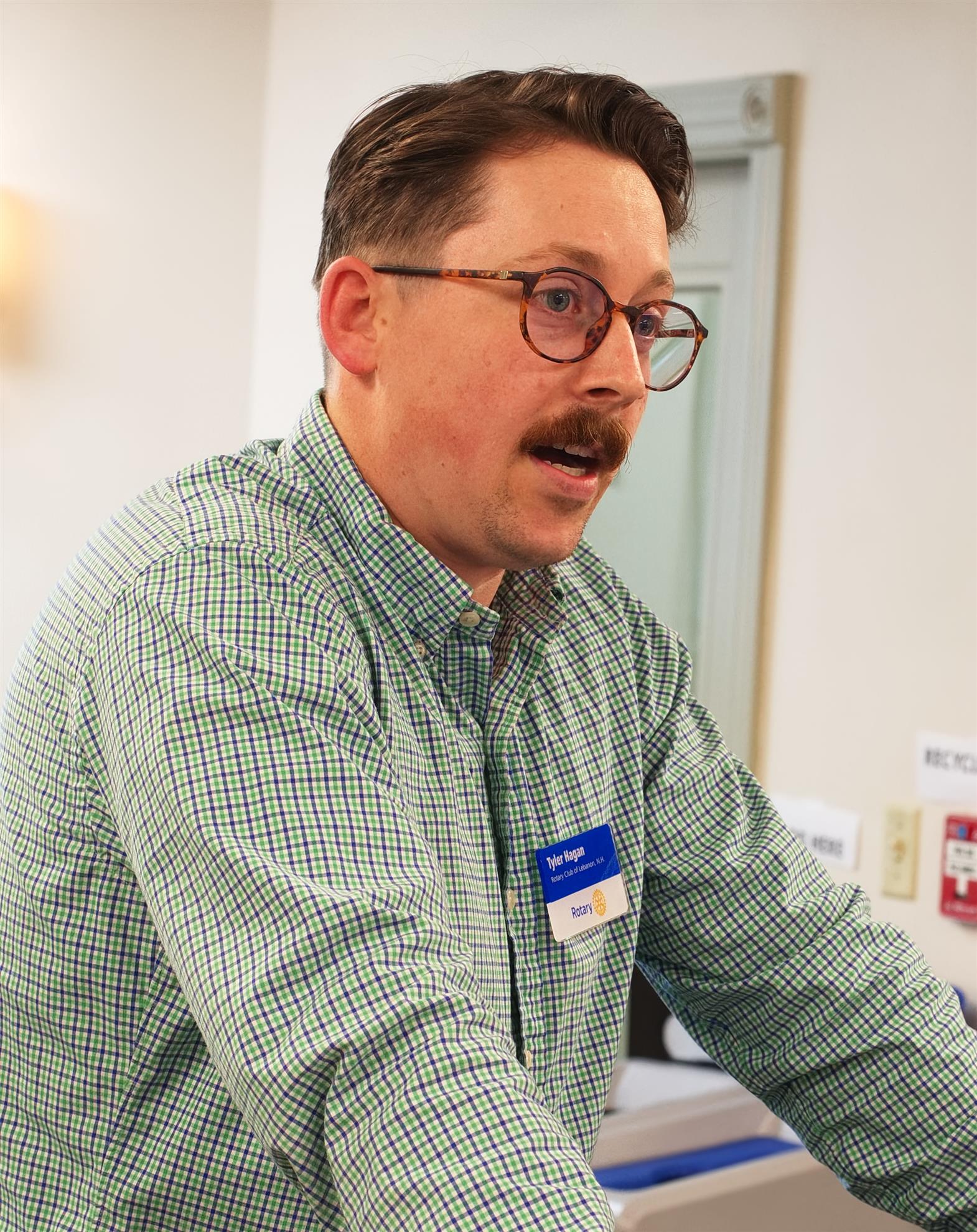
Tyler Hagan
Short Biography
Tyler was born in Trenton, NJ, which was about 10 minutes from his parent’s home in Yardley, PA. They moved to Sandwich, MA, where he attended grade school, and then they moved to Worchester, MA. Here, he attended Middle School and High School. He played Lacrosse, and this led him to seek a sports management degree from Anna Maria College.
He spent volunteer time in Jamaica coaching 200 Jamaican youth and high school students.
He held a variety of seasonal jobs including being a ski instructor. He worked in hospitality. He was a bartender at Applebee’s in West Lebanon. He grew tired of working many late evening getting home after 1 AM.
Tyler then accepted a full-time position with Global Rescue in Lebanon, working in sales. He shared that while there he learned a lot about operations and working with customers and fellow staff members. He was there for 5 years prior to accepting his current position with Casella
Before telling us about his current position, he let us know that a friend encouraged him to travel with him to Colby-Sawyer College. The pitch was that his friend’s girlfriend had 6 roommates. This is where he met his wife, Justine. It sounds like they had a whirlwind romance. They have now lived in Lebanon on Poverty Lane. They love living in Lebanon and plan to be here a long time. He describes their home as “a money pit” …by choice.
Justine and Tyler have a son, Henry who was born prematurely in January 2025. He spent his first few months in the ICN at DHMC. He described this as a stressful time, but so happy that they were so close to the ICN. Henry is now thriving and entering his toddler stage. He has learned how to throw things. Tyler is looking forward to Henry learning more words so they can better understand what he is saying. Tyler’s cellphone is loaded with pictures if you want to see a picture of Henry.
Tyler, Justine and Henry have a “fur baby”, a dog that they adopted from Texas, named Addy.
Now on to his work with Casella Waste System, Inc.
Tyler has been an accounts manager for 2 years working out of White River. Until recently, he had a territory that included Brattleboro, but they hired an accountant’s manager for this area, and now he covers down to Rockingham, VT.
[With full disclosure, this portion was written with an assist from WebEx AI.]
Casella, a waste management and recycling company operating in 46. He explains the company's history, facilities, and innovative approaches to recycling, highlighting their engineering capabilities and regional operations.
Casella was founded by Doug Casella and his brother in Vermont and has grown to operate 46 facilities across 46 states.
- The company employs over 5,000 people and invests heavily in facility upgrades, such as a $64 million upgrade in Charlestown.
- Casella's engineering department develops solutions for complex recycling challenges, like separating components of medical syringes.
- Facilities operate 24/7 with advanced sorting technologies including disc screens, robotics, magnets, and glass breakers.
Recycling Process and Facilities [Take a Tour − CLICK HERE …You'll learn a lot!]
Tyler explains the material recovery process at Casella's facilities, detailing how recyclables are sorted and processed. He discusses the journey of materials from local collection points to regional sorting centers, emphasizing the importance of proper sorting and the challenges posed by contaminants. This information clarifies how recycling is managed and the infrastructure involved.
- Recycling trucks from Lebanon deliver materials to a local transfer station where initial sorting and baling occur before shipment to larger facilities in Rutland, Charlestown, or Arbor.
- Advanced sorting equipment separates materials by type, including cardboard, plastics, metals, and glass, with some materials repurposed, such as glass used for road aggregate.
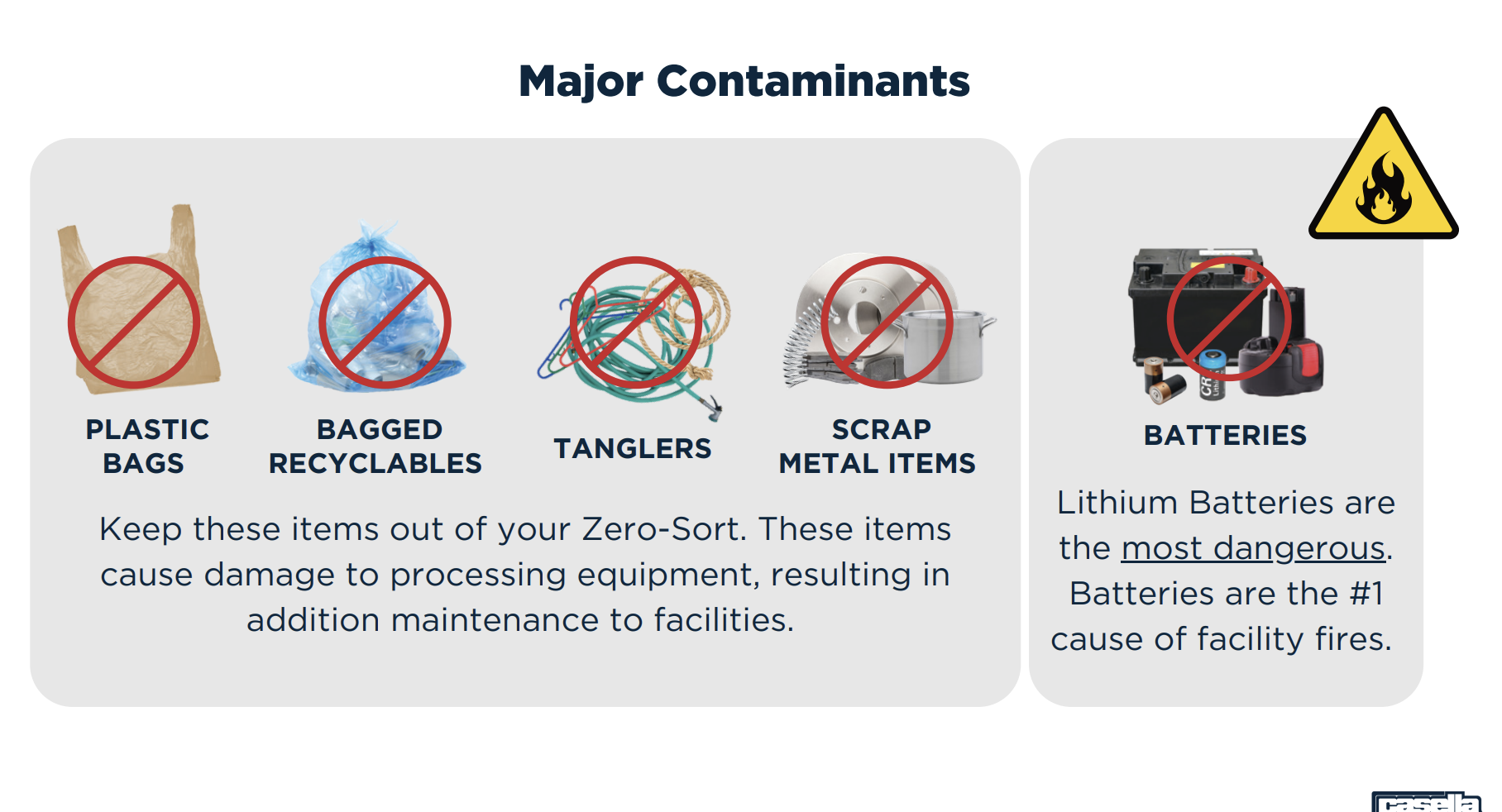
- Contaminants like ropes, hoses, and plastic tubing can disrupt sorting equipment and must be diverted.
- Casella invests in zero-sort facilities where mixed recyclables are sorted onsite, contrasting with regions where materials are pre-sorted before pickup.
Accepted and Non-Accepted Recyclables
Tyler clarifies what materials are accepted in residential and commercial recycling streams, emphasizing that while many items are technically recyclable, only certain materials are accepted due to facility capabilities. He highlights common misconceptions and provides guidance on proper recycling practices to reduce contamination and improve efficiency.
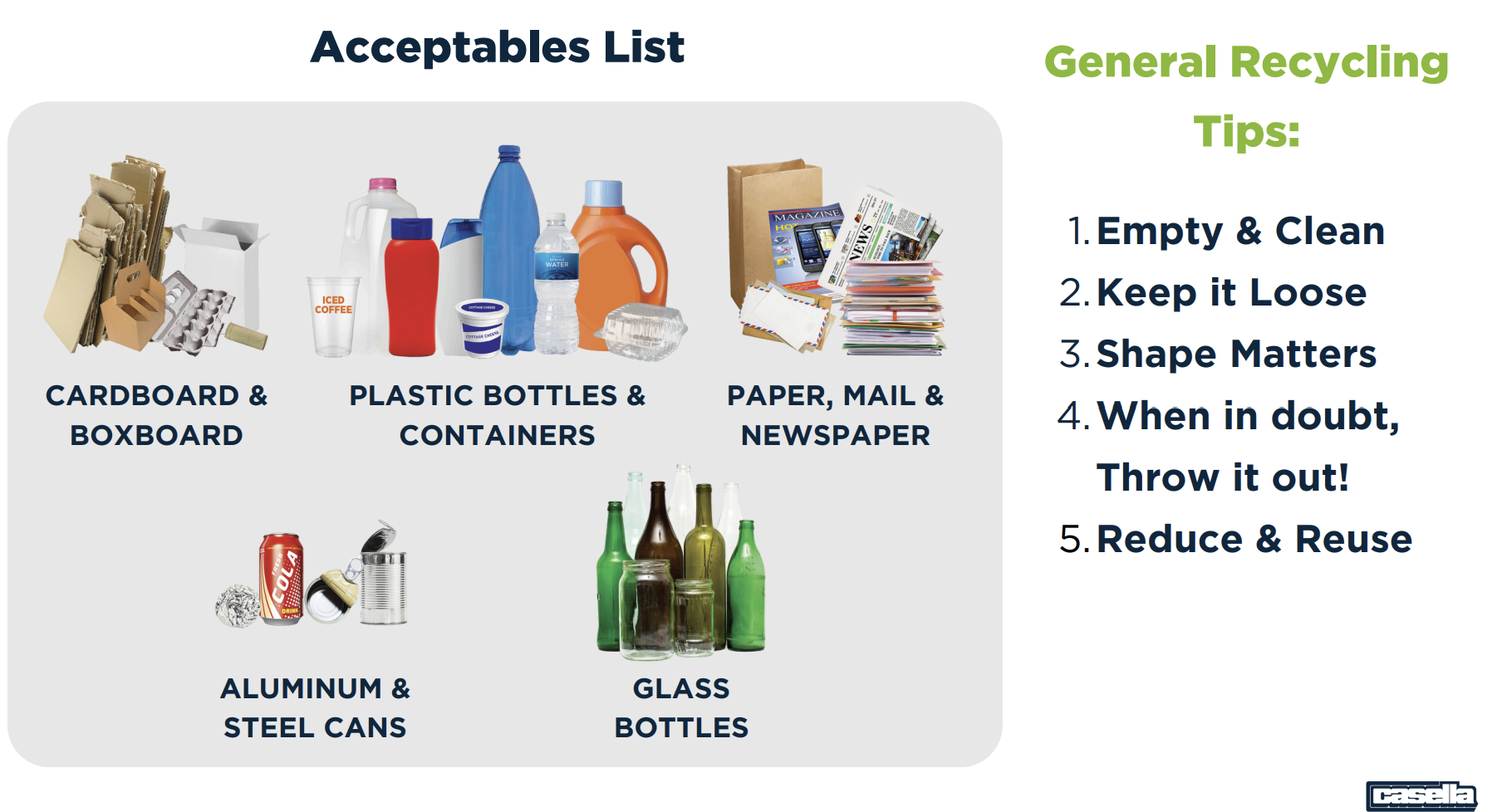
- Tyler prefers to use 'accepted' rather than 'recyclable' to describe materials suitable for local recycling streams.
- Amazon packaging and certain plastics like kids' toys and rigid plastic storage containers are common contaminants and often not accepted.
- Cardboard must be corrugated and clean to be accepted; cereal boxes and other mixed paper go into different streams.
- Rinsing containers helps keep facilities clean but are not always strictly necessary.
- Tyler notes that plastic bags, bubble wrap, and brown bags with plastic liners are not accepted in recycling streams.
- He highlights that hoses, scrap metal, machinery, and batteries, especially drill batteries, are major contaminants and fire risks in facilities, requiring extensive fire suppression systems including AI-driven extinguishers.
Recycling Market and Challenges
Being “peppered” with questions, the discussion covers the economic aspects of recycling, including commodity markets, contamination standards, and the impact of international policies. Tyler explains how market fluctuations and stricter contamination limits affect recycling operations and the importance of community education and large-scale participation to improve recycling rates.
- Cardboard remains the most consistent and profitable recyclable commodity.
- China's 2018 policy restricting contaminated recycling imports forced facilities to improve sorting and reduce contamination rates.
- Tyler estimates that large organizations like Hypertherm achieve up to 90% waste diversion through dedicated programs, while residential recycling rates vary.
- Community education and collaboration with major waste producers are key to increasing effective recycling.
Community Education and Engagement
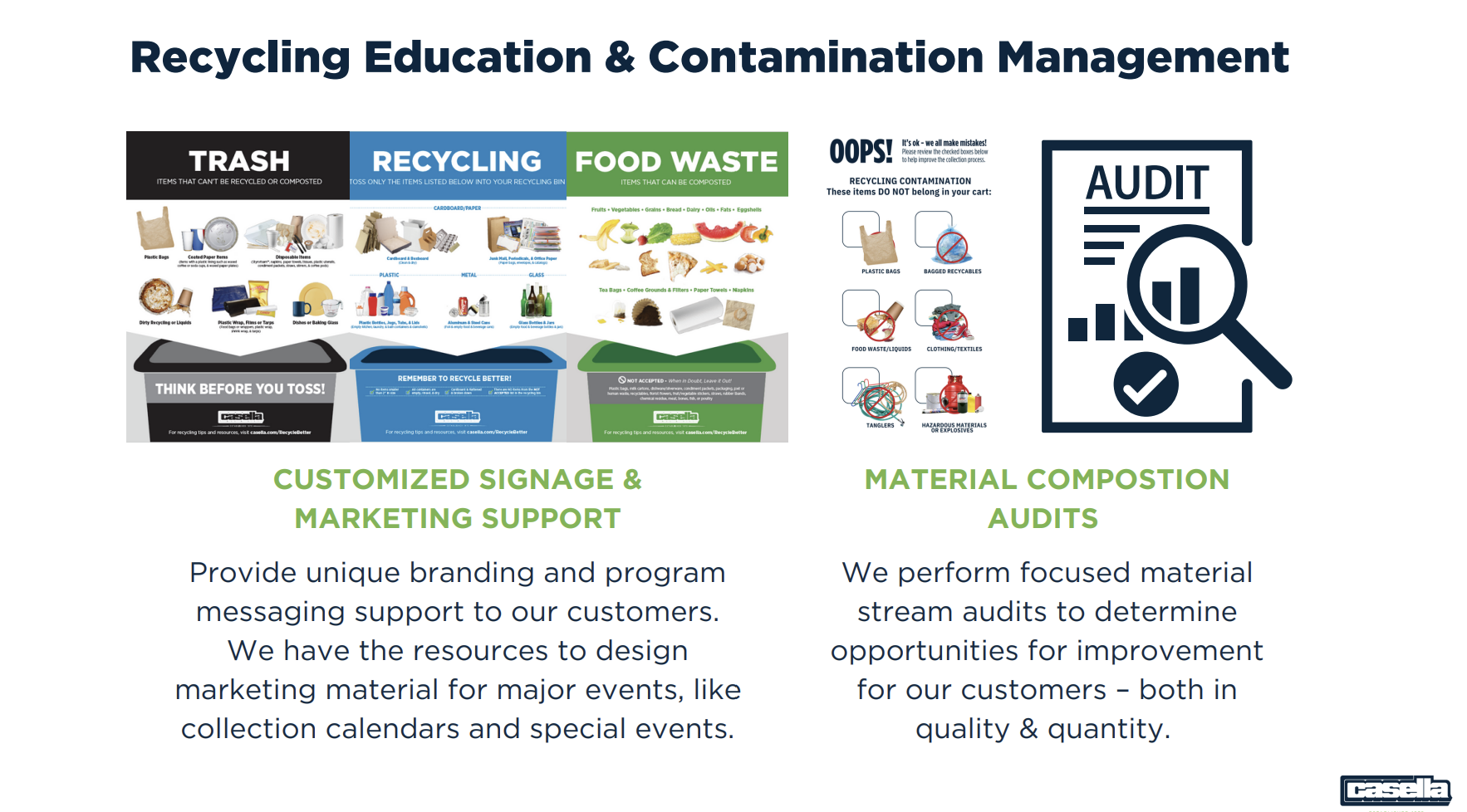
Tyler emphasizes the critical role of education in improving recycling practices and reducing contamination. He offers to provide marketing materials and suggests hosting educational events or webcasts to engage the community and stakeholders. This focus on outreach aims to enhance understanding and participation in recycling programs.
- Tyler offers to share marketing materials for offices to promote proper recycling practices.
- He discusses plans to run a series of educational events or webcasts featuring experts to deepen community knowledge.
- Tyler highlights the importance of collaboration with landfill and energy professionals to provide comprehensive waste management education.