Our speaker today was Marilyn Bedell. She gave us an update on Rotary International's work to eradicate polio.
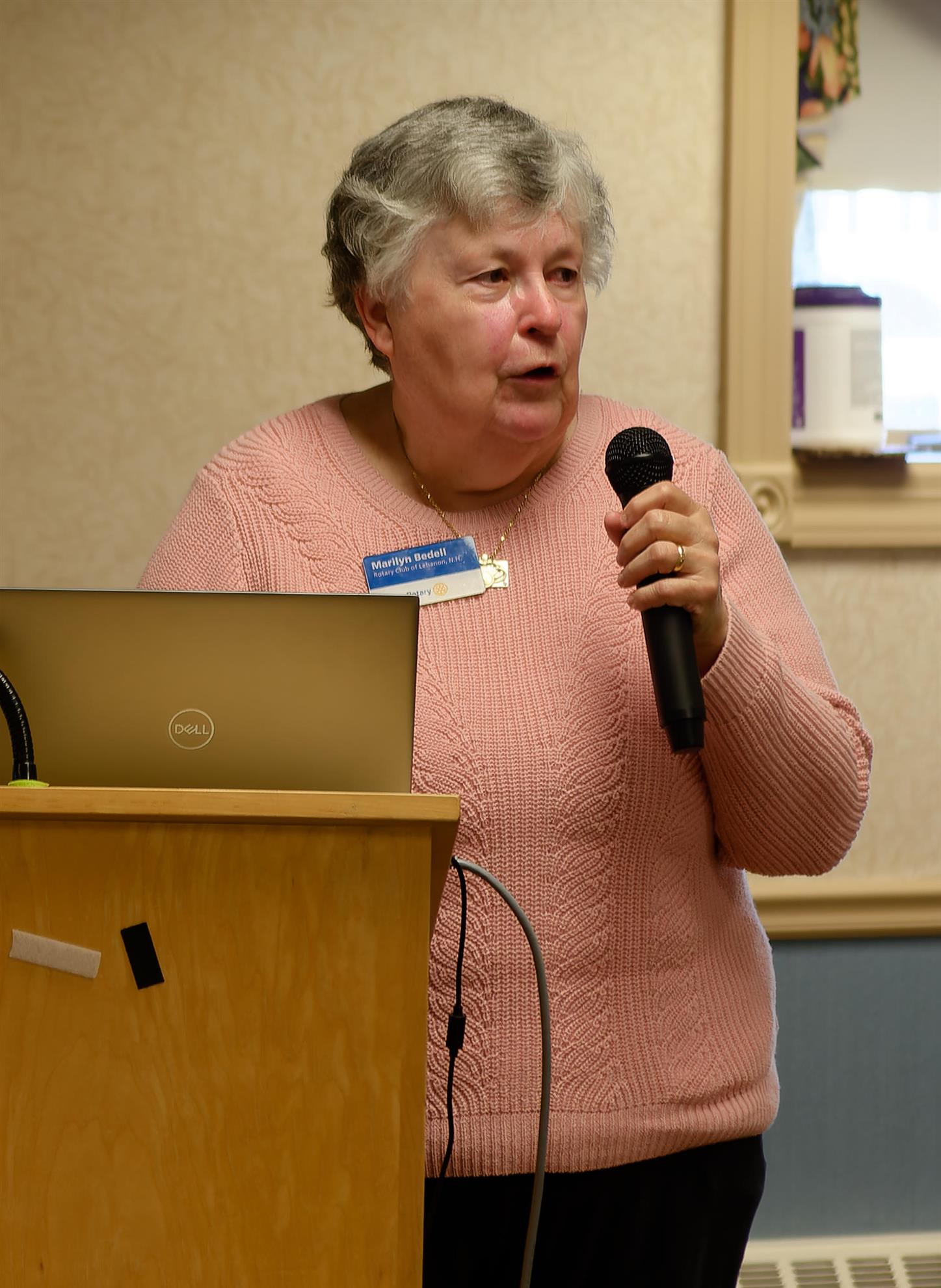
Marilyn Bedell
She began by reviewing the history of polio, and what caused it to escalate after the invention of flushed toilets, sewage systems, and use of baby formula.
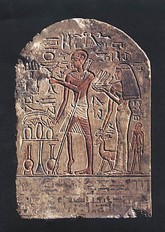
Poliomyelitis is said to have first occurred nearly 6,000 years ago in the time of ancient Egyptians. The evidence for this is in the withered and deformed limbs of certain Egyptian mummies.
Before the advent of modern indoor plumbing and sewage systems, many cities had open sewers that were no more than gutters with outhouses in backyards. Almost everyone had, at one time or another, been exposed to polio, and with open sewers and outhouses the norm—there was ample opportunity to contract polio. [Resulting in Herd Immunity] Polio viruses infected generations of babies, who were protected in part by antibodies passed on to them by their mothers. When a child became infected with the poliovirus the results were flu-like or cold-like symptoms. The diagnosis of polio was rare because the symptoms were often indistinguishable from other childhood diseases.
Cases of paralytic polio began to rise once changes in public sanitation and other health measures came about, such as changes to water purification, milk pasteurization and use of formula instead of breast milk. Better hygiene meant that babies and the young were not receiving some immunization from their mothers.
In northern Europe and in the United States, epidemics of paralytic polio began to appear in the late 19th early 20th centuries. The full impact of polio wasn’t felt in the United States until the summer of 1916, when an outbreak resulted in 27,000 people being paralyzed and 6,000 died. The 1916 epidemic caused widespread panic and thousands fled the cities to nearby mountain resorts. Movie theatres were closed, meetings were cancelled, and public gatherings were almost nonexistent. Children were not to drink from water fountains, and were told to avoid amusement parks, pools, and beaches. From 1916 onward, a polio epidemic appeared each summer in at least one part of the country, with the most serious outbreak occurring in the 1940s and 1950s.
In the United States, it would be the 1952 polio epidemic that marked the worst outbreak in the nation’s history. Of the nearly 58,000 USA cases reported that year, 3,145 died and 21,269 were left with mild to disabling paralysis. Statistically, more children died of polio in 1952 than any other infectious disease.
Polio in the United States changes with the advent of the Salk, followed by the Sabin vaccines.
Rotary’s global polio initiative was started in the Philippines when a District Governor from the Philippines began to question why polio was such a problem in his country, but not in the United States. This led him to champion to administration for polio vaccine to every child in the Philippines. He was able to demonstrate that when a population of fully vaccinated, polio disappeared from the environment. This service project was shared at Rotary International Conventions.
This compelled Rotary’s leadership to develop plans to “tackle” polio worldwide. Beginning in 1985, our Rotary leadership inspired the World Health Assembly to pass a resolution to eradicate polio. This paved the way for the formation of the Global Polio Eradication Initiative in 1988.
Since PolioPlus began in 1985, Rotary’s vast network of 1.2 million members has contributed money, volunteer time and networking expertise to the worldwide polio eradication effort.
Rotary work in Polio eradication has been bolstered by our partnerships with the World Heath Organization, UNICEF and the Centers for Disease Control. The Bill and Melinda Gates Foundation joined this partnership in 2007. Annually since 2007, the Gates Foundation has matched Rotary’s donation to polio 2:1. We have met the challenge and annually see 150 million going to polio eradication efforts in the areas of vaccine distribution, surveillance, development of new vaccines, national immunization days and “mop-ups” when polio outbreaks occur.
In 1988, there were 350,000 wild polio cases documented worldwide. As o April 11, 2022, their has only been 1 documented wild polio case in Pakistan. In 2022, there were 30 wild polio cases.
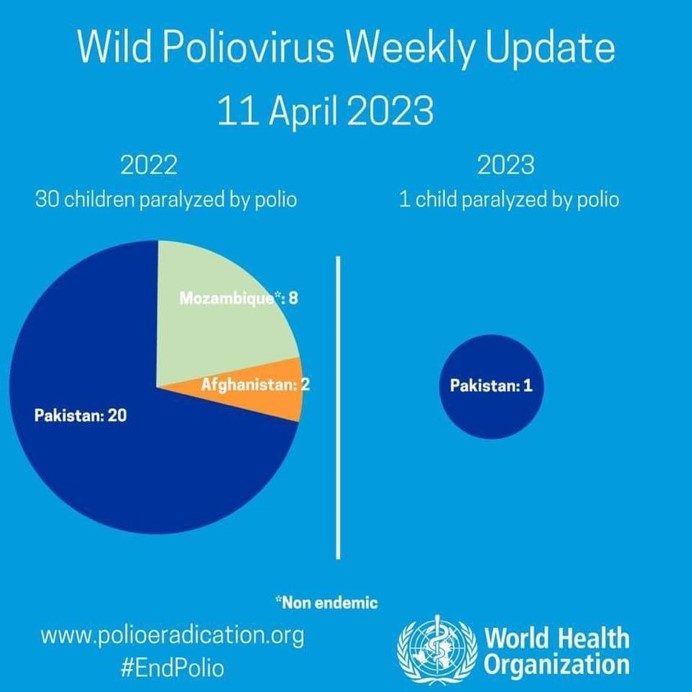
The two remaining endemic countries are Pakistan and Afghanistan. Fortunately, it has been reported by RI that the Taliban is supportive of vaccine administration. Brave female polio worker in both Pakistan and Afghanistan are on the frontlines of administering vaccines. Despite the murder of polio vaccine administrators, the women working on the frontlines continue to work to get vaccines to children.
One of the most troubling parts of our eradication efforts in vaccine derived polio cases. On very rare occasions, if a population is seriously under-immunized, there are enough susceptible children for the excreted vaccine-derived polioviruses to begin circulating in the community. If the vaccine-virus is able to circulate for a prolonged period of time uninterrupted, it can mutate and, over the course of 12-18 months, reacquire neurovirulence. These viruses are called circulating vaccine-derived polioviruses (cVDPV). An inactivated (killed) polio vaccine (IPV) developed by Dr. Jonas Salk and first used in 1955, and a live attenuated (weakened) oral polio vaccine (OPV) was developed by Sabin. The attenuated vaccine is the vaccine of concern. There are efforts underway to modify the oral vaccine to eliminate the risk of cVDPV.
MAY 6, 2020
From the Harvard Science in the News BLOG, May 2020
Redesigning the polio vaccine – Lessons from evolution
Currently, the main antipolio vaccine used in the world is the oral poliovirus vaccine (OPV), which contains weakened poliovirus that is unable to infect people. However, OPVs are risky, because the weakened poliovirus in OPVs could potentially mutate and evolve into a vaccine-derived poliovirus (VDPV), regaining their ability to become infectious. These VDPVs have already caused outbreaks of polio again in areas with low vaccination coverage. In order to completely end the circulation of all polioviruses in the world, scientists have designed a new, genetically-stable poliovirus vaccine, called the novel oral poliovirus vaccine type 2 (nOPV2).
Scientists painstakingly looked at all the possible mutations in the weakened poliovirus that resulted in VDPVs, and figured out the various regions in the genome, or the genetic material, of the virus that was the most susceptible to mutations. They made five modifications in different areas of the genome and created a new polio vaccine candidate, nOPV2, which is not susceptible to genetic mutations that could cause it to become infectious again. In mice models, this new vaccine does not mutate as much and does not induce paralysis within the safe dosage of the vaccine. Importantly, nOPV2 also confers similar immunity as the current OPV, with 75%–100% of vaccinated mice successfully generating antibodies against the poliovirus. Read more
During the fall of 2022, an unvaccinated man in Rockland County, New York, was paralyzed as a result of a polio infection. The NY man was infected with a type of poliovirus that came from the oral polio vaccine, called vaccine-derived paralytic polio. The case was concerning because we know that only about 1 of every 2,000 people infected with this vaccine-derived strain will be paralyzed, meaning that many others are likely also being exposed to this virus. High vaccination rates in most U.S. communities mean that often we remain unaware of the presence of the virus, but recent drops in routine immunizations following the pandemic have left some communities more vulnerable. This case demonstrated that polio continues to be only a plane ride away.
As of April 11, 2023, no new cases of circulating vaccine-derived poliovirus type 2 (cVDPV2) were reported in the United State (Rockland County in particular. In addition, no circulating vaccine-derived poliovirus type 2 (cVDPV2) positive environmental (sewage) sample was reported last week. There were 14 positive samples reported in 2022.
Dr. Margaret Chen, World Health Organization, Former Director- General shared the following: “As an international community, we have very few opportunities to do something that is unquestionably good for every country and every child, in perpetuity. Polio Eradication is one of these opportunities.”

The Polio Plus Society is a group of like-minded Rotarians who have committed to contribute $100 or more each and every year to Polio Plus until the world has been declared free of the Wild Polio Virus. This is our commitment to fulfil the promise Rotary made in 1985 to immunize all the children of the world.
Marilyn encouraged everyone in our club to consider making a donation to Polio Plus. This can be done via My Rotary on the www.Rotary.org web page. If you would like to receive a Polio Plus Society pin to signify that you plan to make this donation annually let Marilyn know.