CLASSIFICATION TALK: Ahmad Haidari
Summary written by Bruce Pacht
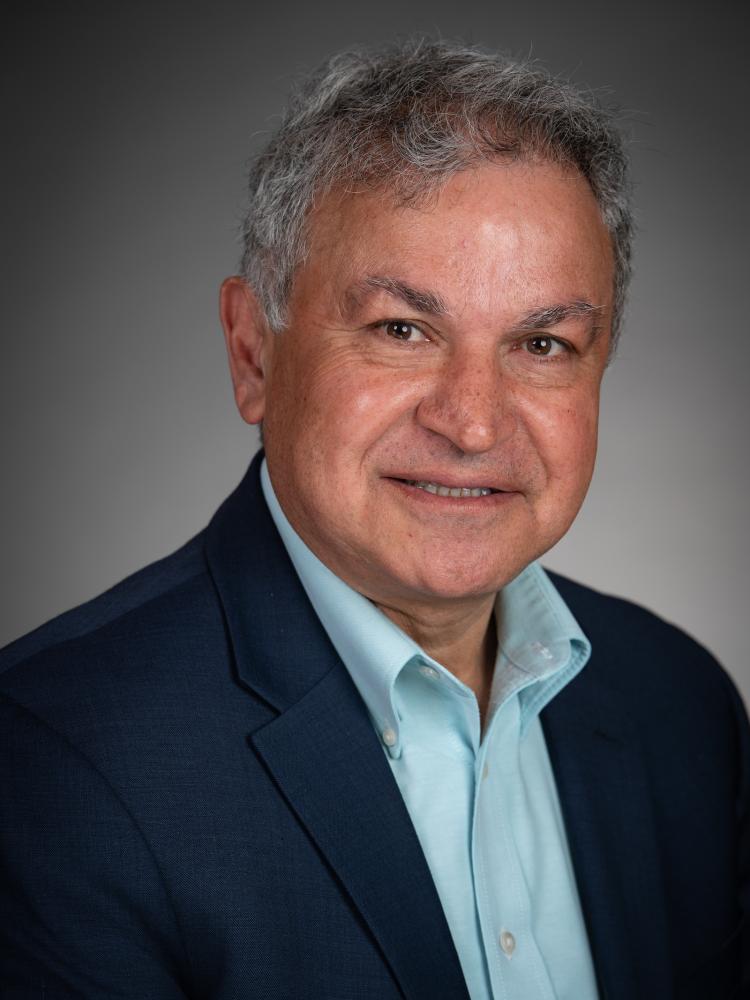
Steve Whitman introduced Ahmad whom he met Ahmad a year ago; eventually asking him about joining Rotary. Ahmad came in 1977 to US to study mechanical engineering. He took his PhD at Lehigh University. He has live for 30 years in Lebanon and worked mostly with the software industry.
Ahmad then spoke:
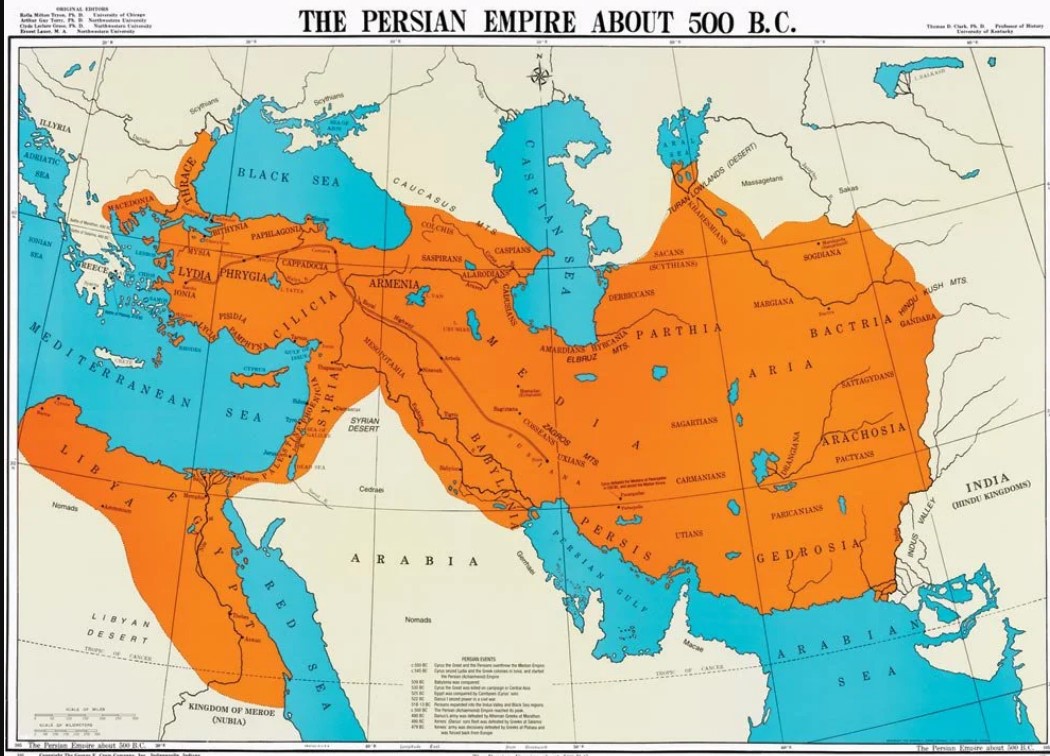
He is from Iran, about which he gave us some history; he is 64 years old. Around 500 BC in the time of Cyrus the great, The Persian Empire included much of what is now Turkey, edges of eastern Europe and all the way to western India; it’s a 3,000 year-old civilization.
Iran borders Afghanistan, Iraq, Persian Gulf, and Russia. Iranians are not Arab, but Persian. Now, the country is a combination of multiple cultures in one area. Ahmad himself is of Persian descent. Iran is about 1/5 the size of the USA, and 10th largest with regard to natural resources. Historically Iran was a good friend of the US.
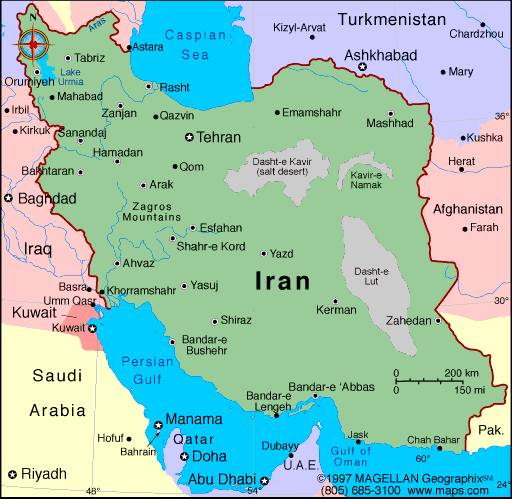
Ahmad was born in Isfahan, located in the center of Iran. The Caspian Sea to the north of Iran is a souce of much of the world’s best caviar. Iran’s geography is diverse, with mountain ranges and ski areas in the north, down to hot desert in the south and east bordering Afghanistan and Pakistan.
Isfahan is Iran’s 2nd largest city founded about 700 years ago. It’s main square was at the center of the dynasty. The city is full of mosques and palaces. Many parks are around a main river with beautiful bridges. Water is an essential hardship in Iran; as the river dies, it creates problems with city’s life cycle. Beautiful ceramics from 6-700 years ago decorate the mosques. Drought and traffic are other problems the city faces.
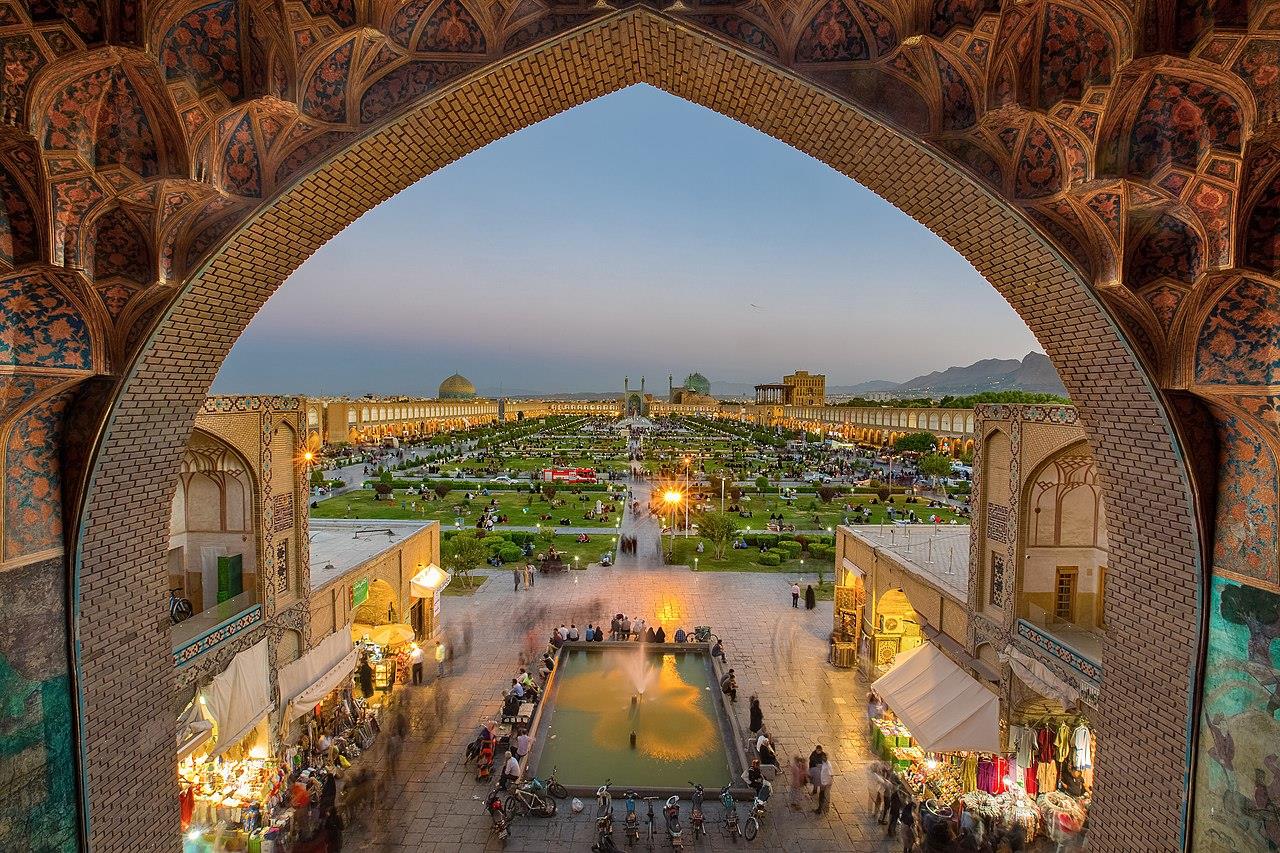
Picture of Isfahan, Iran from Wikipedia
Ahmad arrived in Philadelphia in 1977 for college after he graduated secondary school at 16. There were about 20m000 American servicemen in his hometown which affected his decision about college. He attended University of Pennsylvania, Temple University, and Lehigh University eventually concentrating in fluid mechanics, including aerodynamic pump design.
He married in 1991 and moved to the Upper Valley in 1992. His 4 children are all Lebanon High graduates; when they were young, Ahmad was involved with soccer and youth hockey.
Ahmad’s work is “at the intersection of business development and technology.” He is neither a geeky PhD or a business school school graduate but knows how to work where the fields come together. He works at “building vertical businesses.”
- In college, he started a company that he sold: “Vortab”
- He is a co-founder of Segnet Technologies in 1995. He also helped start an online food coop in 1995.
- He joined Fluent (one of the CREARE spinoffs) in 1992. Fluent was sold in 2006 for $520 million.
- Ahmad ran global business for Ansys in the energy and process industries
- During Covid in 2020, Ahmad started a business development consulting company
- Today’s, he’s helping a small engineering software company to grow its business
The thread running through Ahmad’s work is that it is all about developing and then leasing or selling software.
What is software? It’s basically the set of instructions a human gives to a computer to do work. We need American youth to pay attention to STEM fields. Brain power will be the strength of US in the future. Learning to develop software is like learning a language. “Enterprise software” is a main area of growth: back office, product life cycle management, engineering software.
“Engineering software”
We do almost everything. Formula One cars use software computational fluid mechanics to maximize airflow over the vehicle. Another one computerizes gearboxes to see where the stresses occur.
Ahmad showed an animation simulating how a harvester works – the company wanted to know how well the machine would work before they built it. The simulation is all about using mathematical modeling.
Tim’s buggy: Ahmad created a simulation about what happens when the buggy travels over grass, mud, etc.-- where the particles are going, what they will hit, where they could get stuck – dirt, debris and fibrous plants.
QUESTIONS:
- Bill Secord: Are you a programmer? Does new chip legislation have an impact on your work?
Ahmad – I’ve ended up not writing much software, though I still understand physics. I’m not a programmer anymore; I focus on building businesses.
US is heavily dependent on chips; it would be a US advantage to have that technology here. There are many chips in automobiles, and autonomous operations require chips as well. Faster computers give us results faster and they learn more.
- Ed: Tell us more about your growing up
Ahmad: We were a lower middle-class family and I was one of five children. The family’s focus was on getting kids educated. Father’s central value was integrity; he was an agricultural advisor. By age 16, Ahmad left Iran and didn’t have much close supervision from adults. “My character was already formed.” He had uncles and cousins in USA who were points of interaction and inspiration for him.
Iran was getting more westernized before he left. In the past, people had more opportunities for travel; now people on both sides (Iran/US) have made the relationship harder. Iran’s government has two parts: the pragmatics and the fundamentalists. They are open to travel (they love tourism), but there are restrictions on women traveling alone (religious rules), though travel is safe. Americans would be under a watchful eye and require a VISA.
Ahmad is now chair of Lebanon Rotary’s membership committee. He thanked folks for mentoring him in this. Ahmad was impressed about Rotary’s reputation when he recently went to AVA to talk about paintings – when he said he was from Rotary, two directors came out. At the Library he saw our room. We are a well-regarded group and we could do more with additional members. He thanked Cal and Dave for serving on the committee.