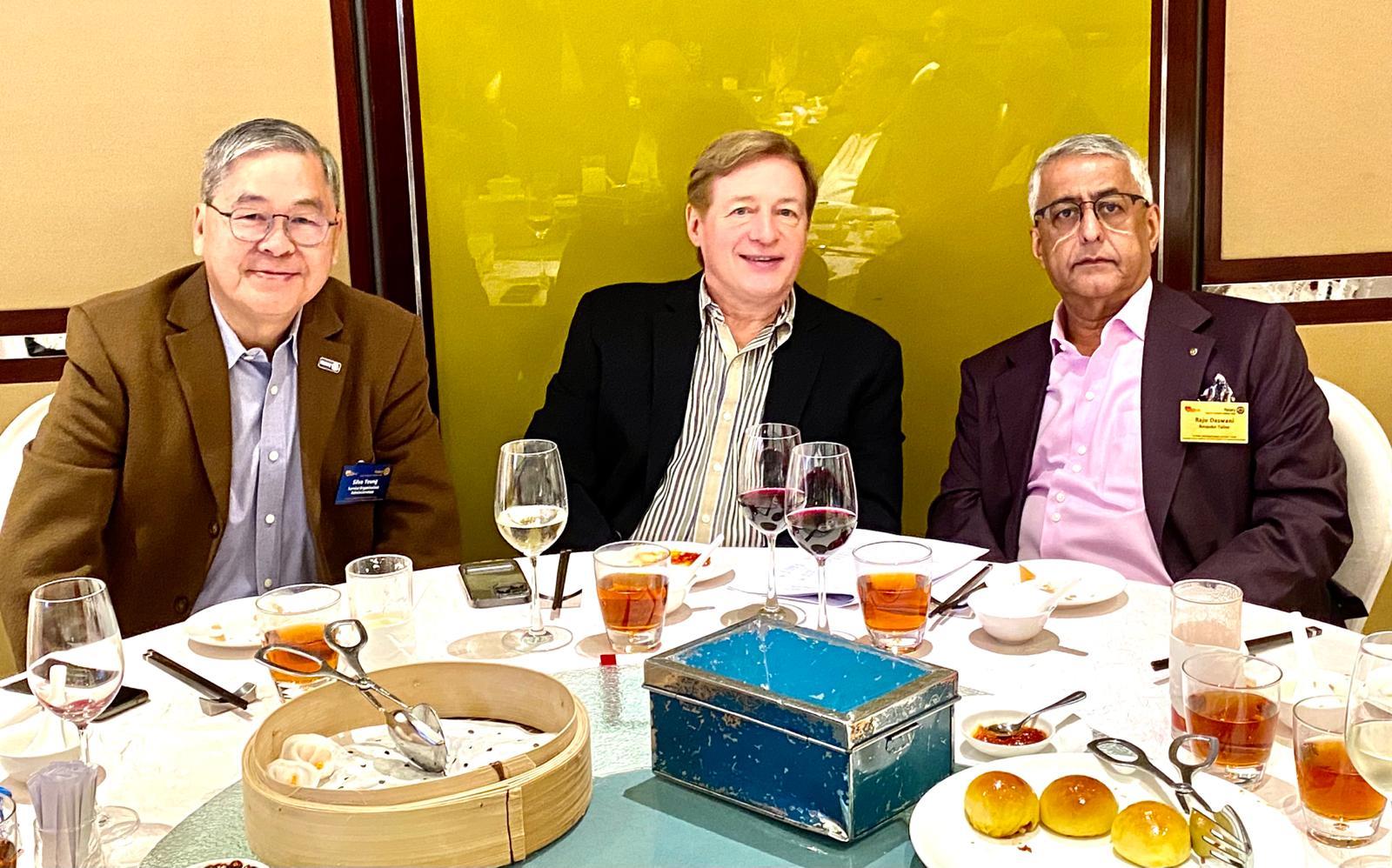
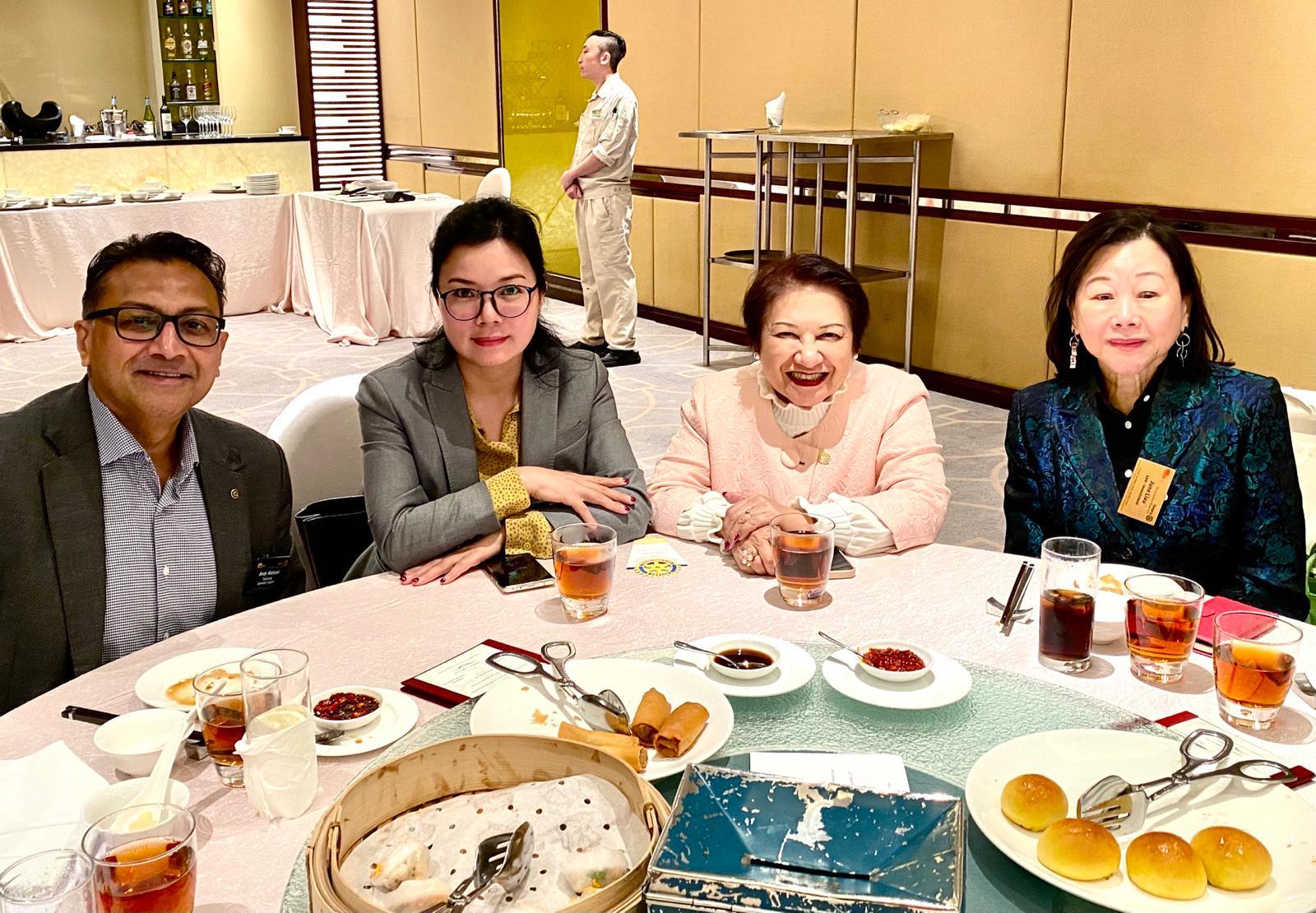
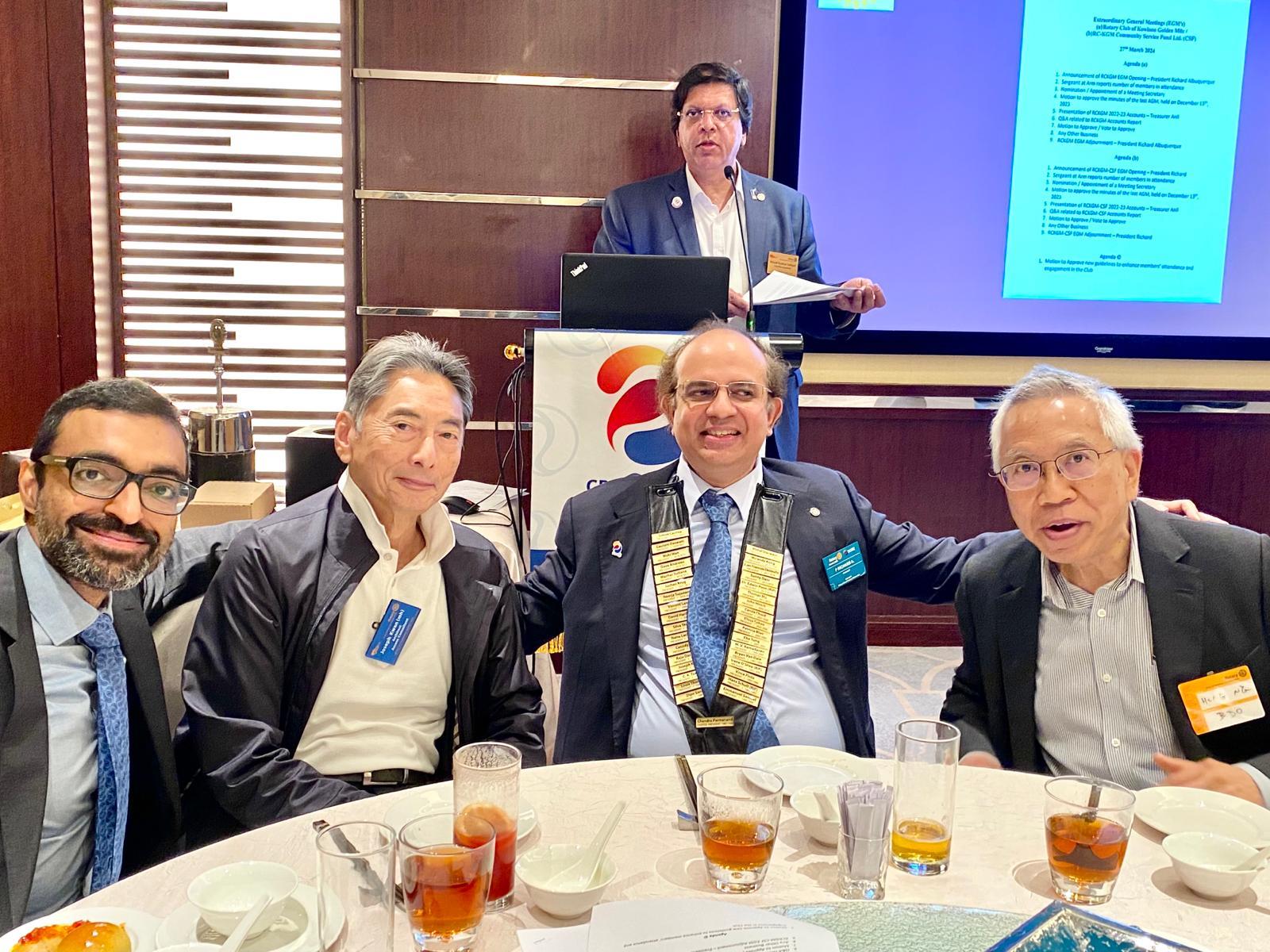
Dear KGMiers, I’m at the home stretch of my Presidency with less than 3 months to go. We had a great fireside chat (organized by PP Joseph) for our members, especially our new ones followed by a fellowship on 20th March 2024 focusing on what it means to be a KGMier and how we can enhance and best cater to the needs of our KGM family. We also had an open forum for our members to voice their opinions at the 27th March regular lunch meeting where members expressed their views on Rotary engagement & participation in lunch meetings, fellowships & community service events. Although there were different points of view, there was one Common United goal - all members present wanted whats best for KGM. We have some wonderful events coming up in April & May - the Rotary Clean Day on 20th April organized by PPE Director, Deven Pandaram, our biggest fund-raising event on May 4th, our Rotary Annual Charity Ball organized by PE Vinod Sehgal & his Ball Committee followed by the Rotary Convention in Singapore from May 25 - 29. We hope to see a good number of our members attending & contributing to these events.
If you cannot attend, you may pledge for the club's initiatives. Your contribution, no matter the size, will be greatly appreciated and will go a long way in helping those in need.
Please get in touch with PE Vinod for more details, a table or individual seat tickets.
Next Regular Lunch Meeting: Date: April 10th, 2024 (Wednesday)
Event: Regular Lunch Meeting
Location: Room B3, Holiday Inn Golden Mile, 50 Nathan Road TST Time: 12.30 to 14:00
Menu: Chinese
Guest Speaker: Mr. David Kong,
Topic: Outward Bound Program
RSVP: on Whatsapp group
Upcoming Events:
Rotary Clean Day - 20th April (please see the Whatsapp Announcement Group for signing up)
Regular Lunch Meeting - 24th April, Guest Speaker Dipjay Sanchania from Adidas
Feeding the Elderly at Kwai Chung - 27th April
For updates on events, please stay tuned on the Whatsapp Announcement Group.
Knowledge Section: Rotary Quiz (answers at the bottom of the bulletin)
This Rotary president first was a newspaper Reporter in Denver. Who was…?
Frank J. Devlyn?
Wilfrid J. Wilkinson?
Glenn E. Estess, Sr.?
Paul P. Harris?
23 February 1905. What was….?
The Charter Night Dinner for Rotary Club of Chicago?
Paul Harris’ Birthday?
The night four men decided to start an organization in Chicago?
The First Regular meeting of Rotary Club of Chicago?
A 1900 Walk after dinner by Paul Harris. What was…?
The Day Paul Harris’ Grandfather died?
The inspiration for Rotary?
Paul’s cure for irregularity?
A desperate attempt to find legal work?
*NEW* Knowledge & Fun Facts on Money / Finance / Investment / Stock Market:
1. Money Is Dirtier Than You Think
Both paper currency and coins can carry viruses and bacteria that can live on the surfaces and easily transfer to your skin or onto other objects after touching it. Research has found physical currency changes hands at least 55 times a year or almost once a week. One recent study found banknotes made with cotton or linen fibers, such as U.S. dollar bills, present increased areas for germs and the capacity to retain moisture, which can make it an easier place for bacteria to thrive.
2. The Dollar Sign Was First Used in 1785
Here’s another fun money fact: The official adoption of the dollar sign in the U.S. can be traced back to 1785, when it evolved from the Spanish symbol for pesos. It’s believed the $ originated from the abbreviation PS, which was used to indicate Spanish pesos in the Americas. Gradually the “S” came to be written over the “P,” eventually morphing into the dollar sign we know today.
3. Martha Washington Is the Only Woman to Appear on a US Bill
America’s first First Lady, Martha Washington, is to this day, the only woman to have her likeness on a U.S. paper currency note. Her image appeared on the $1 Silver Certificate, first issued in 1886 and discontinued in 1957. It was the country’s second-longest issued paper money.
1778 – Oliver Pollack invents the dollar sign $. 1828 – Noah Webster produced the first American Dictionary. 1852 – The first edition of Peter Roget’s Thesaurus is published. 1851 – Elias Howe applies for a patent for the “Continuous Clothing Closure”, later called the Zipper. 1896 – The first modern Olympic games open in Athens, Greece. 1916 – The PGA was formed, and the first professional golf tournament was held. 1964 – The Ford Mustang is formally introduced to the marketplace. The base price: $2,368. 1969 – The Internet’s symbolic birthday. 1975 – Microsoft is founded by Bill Gates and Paul Allen. 1976 – Steve Jobs and Steve Wozniak found Apple computer from the garage of Job’s parents’ home in Cupertino, CA. 1995 – The world record longest sausage is made in Kitchener, Ontario, Canada. It is 28.77 miles long! 2004 – Google introduces Gmail.
March 1639 – Harvard University is named after clergyman John Harvard. 1817 – The New Your Stock Exchange is founded. 1845 – The rubber band was invented by Stephen Perry in London. Can you imagine life without them!?! 1858 – A pencil with an attached eraser is patented by Hyman L. Lipman of Philadelphia, PA. 1862 – The U.S. government issues paper money for the first time. 1867 – The United States buys Alaska from Russia for $7.2 million. 1876 – Alexander Graham Bell places the world’s first telephone call, to his assistant in the next room. 1876 – Alexander Graham Bell patents the Telephone. 1886 – Coca Cola is invented. 1894 – Coca Cola is sold in bottles for the first time in a candy store in Vicksburg, Mississippi. 1933 – The Monopoly board game is invented. 2006 – Twitter is created. Social media will never be the same.
There is no man living that can not do more than he thinks he can. Anyone who stops learning is old, whether at twenty or eighty. Anyone who keeps learning stays young. The greatest thing in life is to keep your mind young. - Henry Ford
“If you want to walk fast, walk alone.But if you want to walk far, walk together” - Ratan Tata
Food for Thought:
The Blue Zone Diet
What is the concept of the blue zone?
“Blue Zone” is a non-scientific term given to geographic regions that are home to some of the world's oldest people. It was first used by the author Dan Buettner, who was studying areas of the world in which people live exceptionally long lives. None of the blue zones centenarians the author ever met tried to live to 100. No one said at age 50, “You know what, I’m going to get on that longevity diet and live another 50 years!” They don’t count calories, take vitamins, weigh protein grams, or even read labels. They don’t restrict their food intake—in fact, they all celebrate with food.
What is the Blue Zone Diet... There 11 simple guidelines reflect how the world’s longest-lived people ate for most of their lives. I will post 1 guideline per bulletin, stay tuned. Remember, these are just guidelines, meant to help you, but listen to your body and work out the best diet and exercise routine plan that works best for you.
DAILY DOSE OF BEANS
Eat at least a half cup of cooked beans daily. Beans reign supreme in blue zones. They’re the cornerstone of every longevity diet in the world: black beans in Nicoya; lentils, garbanzo, and white beans in the Mediterranean; and soybeans in Okinawa. People in the blue zones eat at least four times as many beans as Americans do on average.
The fact is, beans are the consummate superfood. On average, they are made up of 21 percent protein, 77 percent complex carbohydrates (the kind that deliver a slow and steady energy rather than the spike you get from refined carbohydrates like white flour), and only a few percent fat. They are also an excellent source of fiber. They’re cheap and versatile, come in a variety of textures, and are packed with more nutrients per gram than any other food on Earth. Beans are a meal staple in all five of the blue zones—with a dietary average of at least a half-cup per day, which provides most of the vitamins and minerals you need. And because beans are so hearty and satisfying, they’ll likely push less healthy foods out of your diet.



 https://www.facebook.com/rotary.goldenmile
 https://www.instagram.com/rotarykgm/


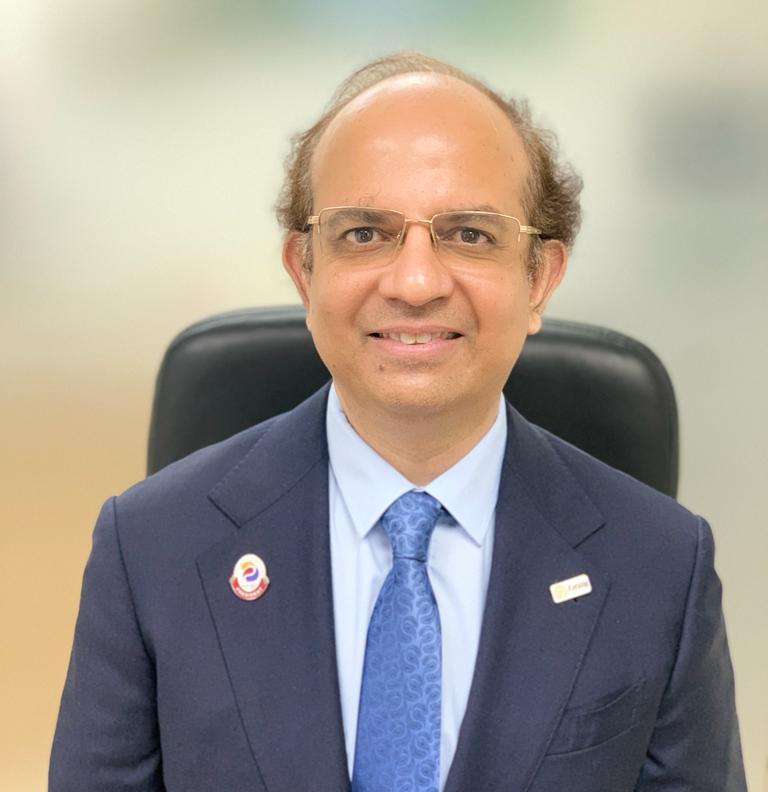
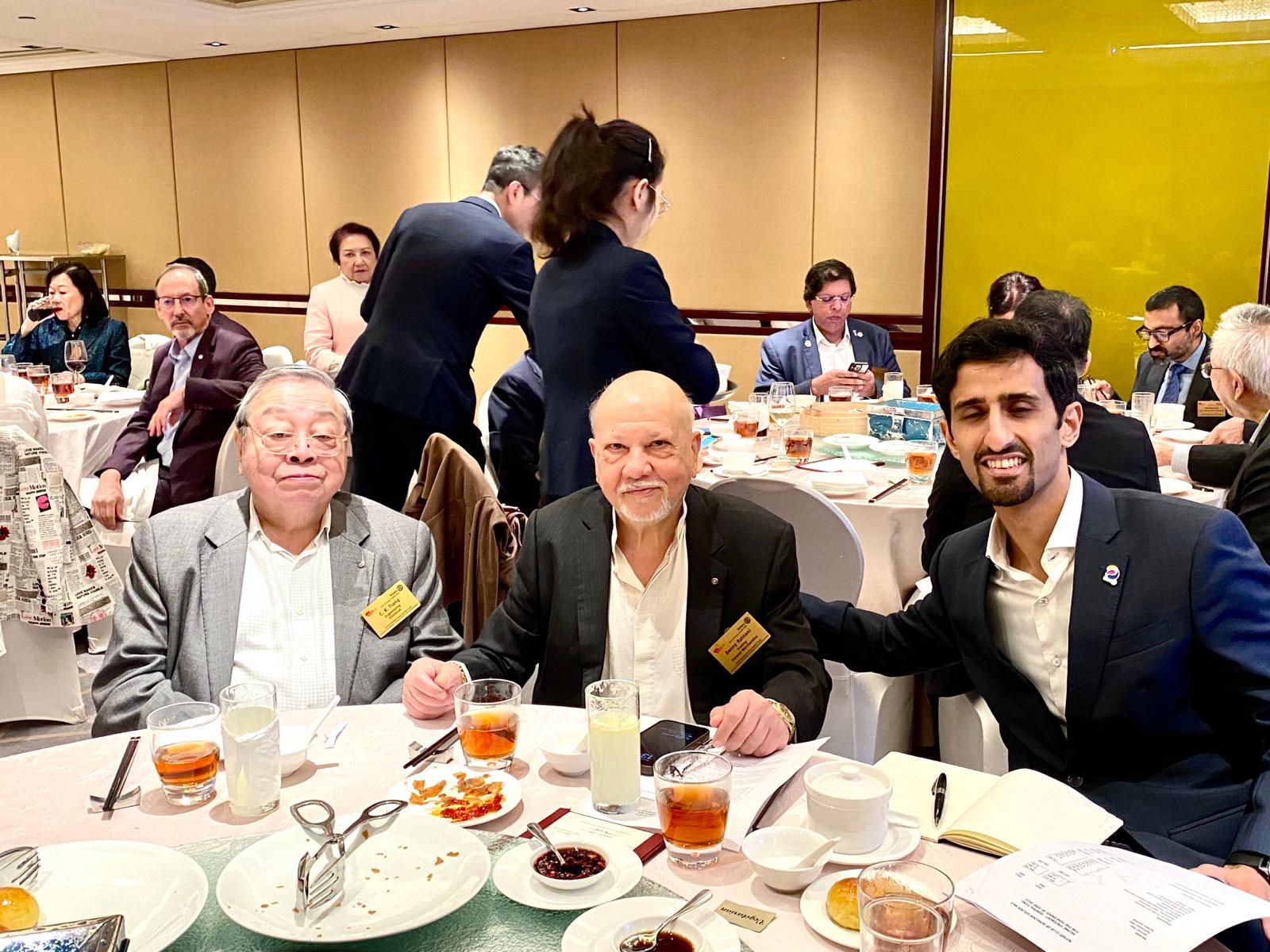

 e on KGM Family Group Chat @ Whatsapp)