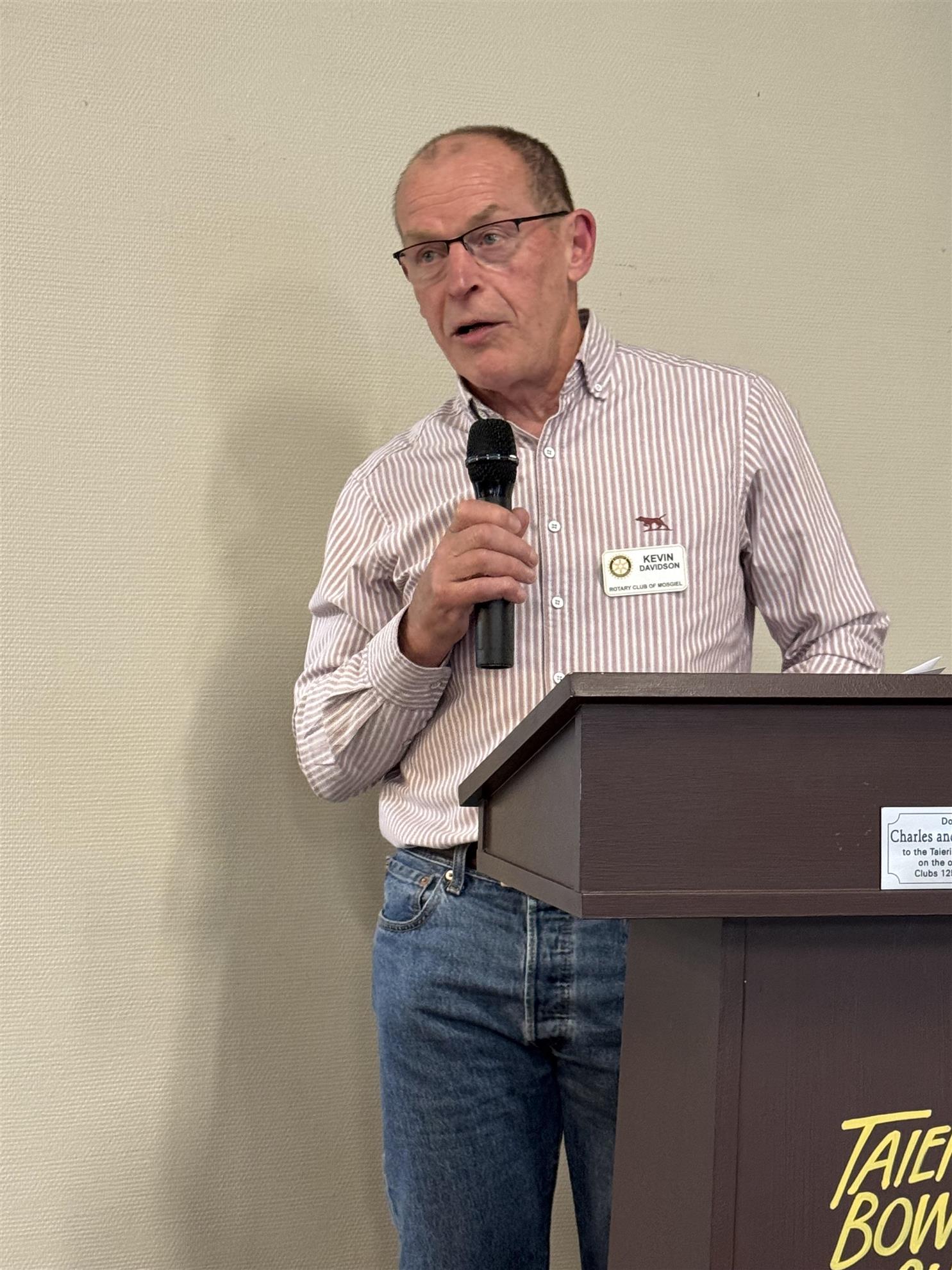
The room was quiet as Kevin Davidson began to speak, not with fanfare, but with the steady tone of someone who had simply lived a full life.
His story began in 1979, in Christchurch, where at 23 he first stepped into a policing career that would shape the decades ahead. From there, it was off to Trentham for basic training—an experience that was as much about discipline as it was about discovering resilience. Once completed, Dunedin became his first posting, a city that would feature prominently throughout his career.
Kevin’s journey through the police force was anything but static. He moved between roles and locations—routine frontline policing, dog handling, and specialised squad work. There were transfers to Mosgiel, back to Dunedin, and then again to Mosgiel, where he eventually took on the role of Sergeant. Each move added another layer to his experience, another chapter to a career built on adaptability and service.
Yet, when reflecting on what made him most proud, two aspects stood above the rest.
The first was his time in the Police Investigation Team. It was here that the real depth of policing revealed itself—complex cases, human stories, and moments that stayed with him long after the job was done. The stories he shared carried both weight and meaning, a reminder that policing is as much about people as it is about procedure.
The second was the evolution of technology within the police. Kevin spoke of how modern officers now have immediate access to information and specialist advisors at their fingertips—tools that dramatically improve decision-making on the ground. It was a far cry from the early days of his career, and something he clearly saw as a vital step forward.
But change in policing hasn’t only been about technology. Kevin reflected on pivotal moments that reshaped the way police operate. The 1981 Springbok Tour protests marked a turning point in how large-scale public events were managed, while the tragic loss of two officers in 1990 forced a reassessment of tactical response and the equipment officers carry into dangerous situations.
Those changes are reflected not only in strategy, but in the physical reality of the job. When Kevin first joined, his uniform consisted of little more than a blue shirt, a baton, and a helmet. Today’s officers carry significantly more—tactical vests, tasers, radios, and phones—adding up to an extra 8–9 kilograms of gear. It’s a visible symbol of how the role has evolved, and the increasing demands placed on those who serve.
And the demands are significant. Kevin noted that in 2025 alone, New Zealand recorded 85 murders, 272 road fatalities, and, most tragically, 630 suicides. Each number represents not just a statistic, but a call for police to respond, investigate, and support communities—often under considerable pressure with limited resources.
As Kevin finished, there was a sense that this wasn’t just a career retrospective, but a window into the realities of policing—past and present. His story was one of movement, change, and quiet dedication. Above all, it was a reminder of the human side of the badge, and the pride that comes from serving others, no matter how the job evolves.