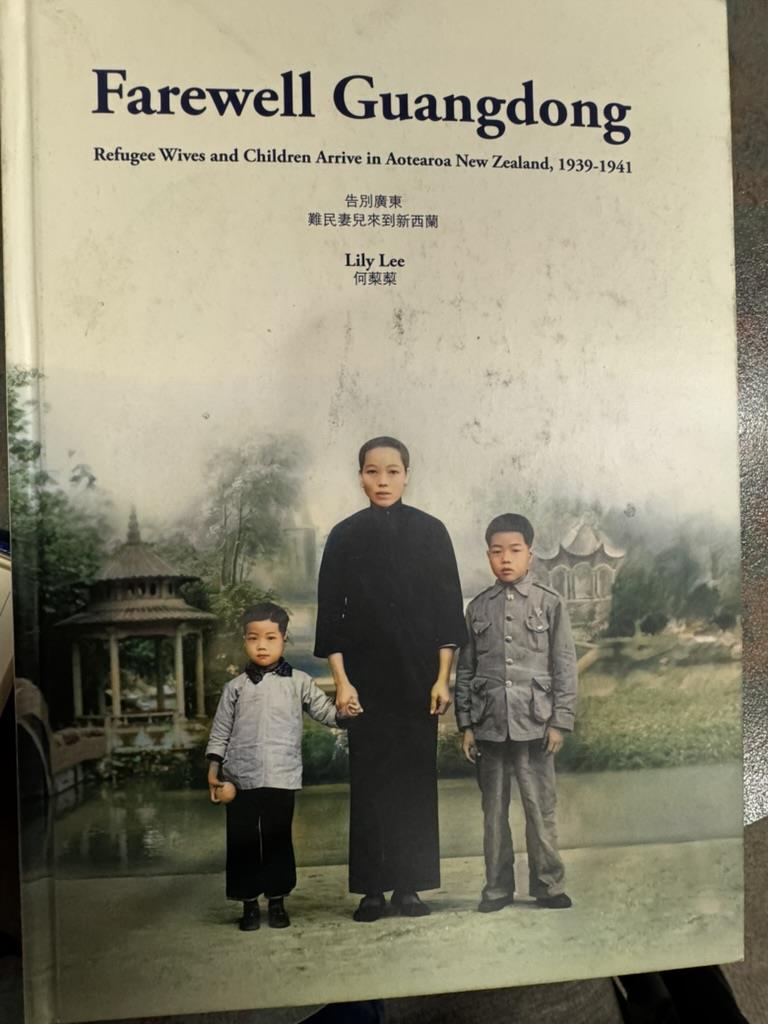
Inspired by our previous speaker, Gail Goodger, and her message about preserving family histories, Peter Chin shared with members the remarkable story of his mother’s journey to New Zealand and the wider history of Chinese migration to this country. Peter provided a fascinating and often sobering insight into the experiences of early Chinese settlers in New Zealand.
The first Chinese arrived in 1865 as gold miners on the Otago goldfields after being invited by the Dunedin Business Association to help revive the declining gold industry. Twelve miners initially travelled from the Victorian goldfields in Australia, and by 1867 the Chinese population had grown to around 1,200. Most immigrants were men who hoped to earn money and send it home to their families in China. Only the most prosperous merchants and businessmen could afford to bring their wives to New Zealand, resulting in a heavily male-dominated Chinese community. In 1901, only 18 Chinese wives entered New Zealand.
Peter explained how increasingly restrictive immigration laws made family reunification extremely difficult. In 1926, the Immigration Restriction Amendment Act denied permanent residency to Chinese immigrants, with entry permits limited largely to the wives or fiancées of New Zealand-born Chinese men. Chinese immigration slowed dramatically, with only small numbers entering the country each year. During the Sino-Japanese War, refugee wives and children were finally allowed entry from 1939 as a temporary humanitarian measure, but they faced strict conditions including heavy deposits, signed bonds, and guarantees that any New Zealand-born children would eventually be returned to China. It was not until 1947 that these families were finally granted permanent residency.
When opportunities on the goldfields diminished, many Chinese settlers established market gardens, laundries, and vegetable shops, becoming hardworking and valued members of their communities despite enduring significant racism and discrimination. Peter spoke of the infamous poll tax introduced under the Chinese Immigrants Act of 1881, which charged every Chinese person entering New Zealand £10, increasing to a crippling £100 in 1896. Around 4,500 Chinese immigrants paid the tax before it was finally abolished in 1944. In 1937, all Chinese arrivals were also fingerprinted upon entry into New Zealand.
Peter then shared his own family story. His father arrived in New Zealand on 16 March 1920, later returning to China to marry before coming back to New Zealand. Peter’s mother arrived in 1940, and despite raising five children here, the family did not gain the right to permanently remain in New Zealand until 1947. In 1961, they finally became naturalised New Zealand citizens.
Peter concluded by reflecting on the formal apology made by the New Zealand Government in 2002 for the poll tax and the establishment of the Chinese Poll Tax Heritage Trust, through which Lily Lee helped record the stories of Chinese migration. He also highlighted the work of Radio New Zealand in documenting the experiences of 249 Chinese refugee wives who arrived between 1939 and 1941, ensuring these important stories are preserved for future generations.
Their stories can be found at www.rnz.co.nz/farewell