

Our speaker on January 22 was Luisa D'amato of the Record.
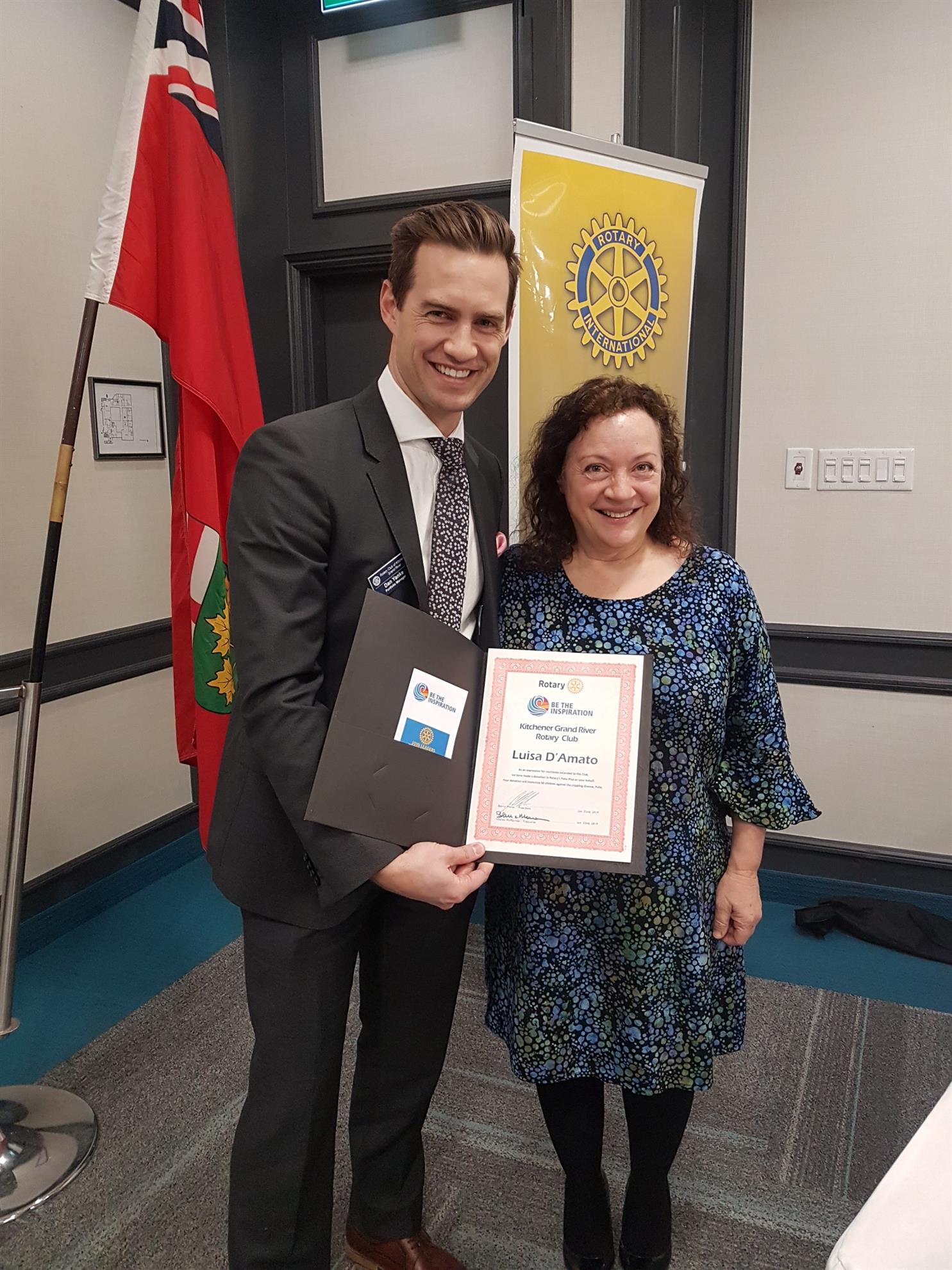
Louisa has been at The Record newspaper for 34 years, is part of the Philharmonic Choir. She enjoys being in the newspaper business and has been a reporter for 38 years, starting out in Winnipeg. The job is hard, with long hours, low pay and lots of negative feedback from readers.
The good news is, newspapers are not dying due to Trump as people search for reality. Newspapers are not the first with a story – it is usually internet or TV – so they are still figuring out what this change all means for readers and the business. Ultimately, there is too much content that is free, so readers do not want to pay for on line news.
On social media, a user can make all kinds of strident comments because they do not have to face the a real person. The newspaper has shut down online comments because of this abuse.
The use of algorithms on the internet means user gets more of what they click on to keep them engaged, so lots of national advertising has gone to places like facebook, etc from newspapers.
But news is a business and a public service – they have an obligation to readers to know what is going on and communicate it. This leads to making better personal decisions and a stronger democracy.
Citizen journalism is also prevalent – anyone with a cellphone can make a film of an event/be a reporter but has no authority i.e. Catholic boys in DC confronting an Indigenous man story that broke this week. There is a need for professional news gatherers. A reader needs to access more than one news source to get different points of view.
What is the business case for newspapers? They started by giving content away free but that is not sustainable. We have seen papers close, amalgamate, cut costs within their operations. Younger readers are hooked on internet, so that should be part of business.
How does a reader get bias out of stories? Read more that one source as most papers lean left or right in reporting.
Where does a reader find the facts and not opinion? Almost all sources are biased but maybe ‘The Economist’ is closest to neutral.
Are we ever going to be like the USA? We track about 10 years behind them; but Canada already has regional bias i.e. anti-west in Toronto media.
The cooking column – how is consumer to know what to believe, eat, or not? This column is to reflect local produce and processes; perhaps the Keto diet is not good as it should include more veggie protein and veggies as well. Bittner’s book ‘Vegan before 6’ is good source for vegetable dishes.