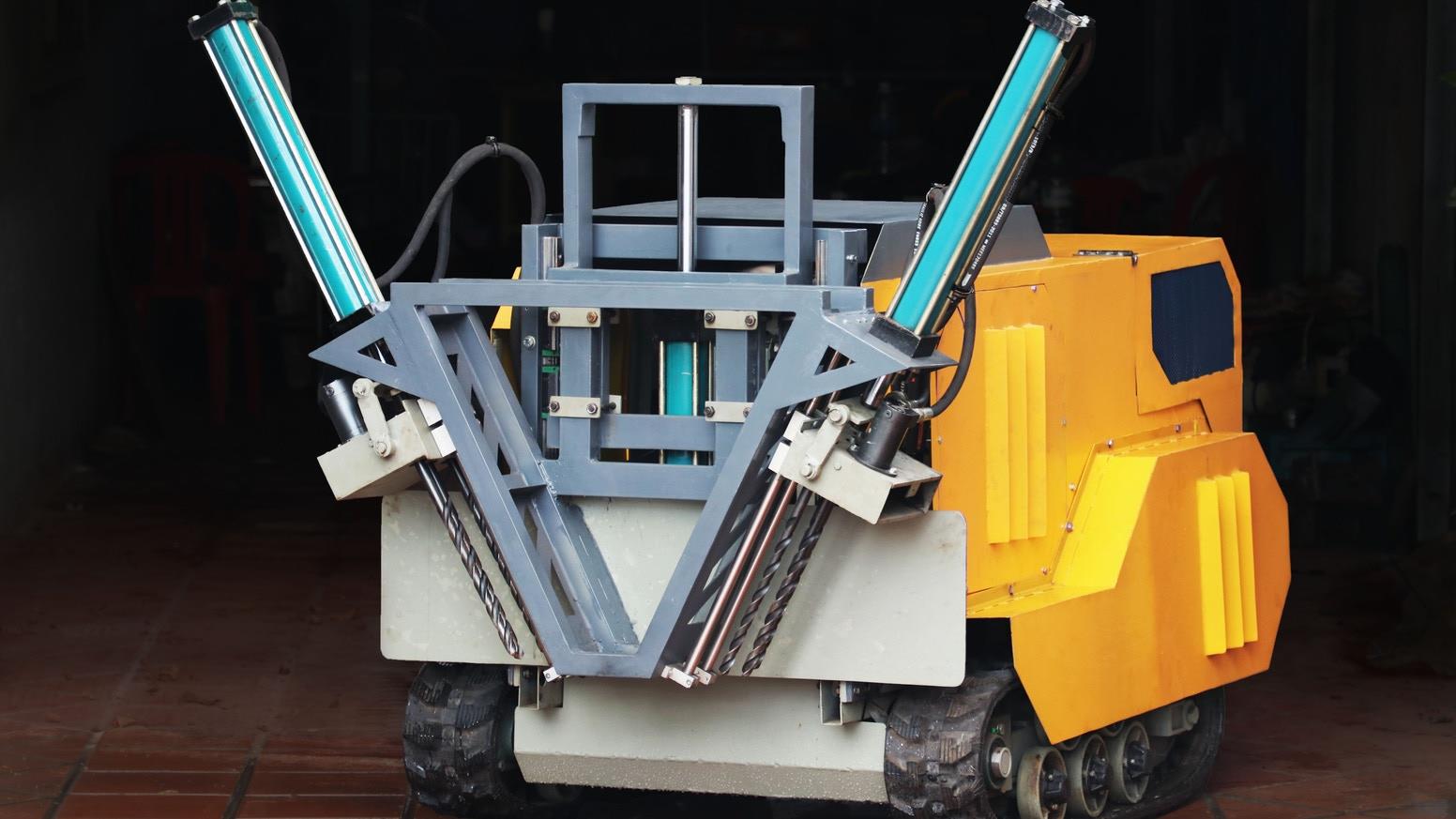
On August 27th our speaker was Jared Baribeau from Demine Robotics, a company that helps build machinery to destroy unexploded landmines.
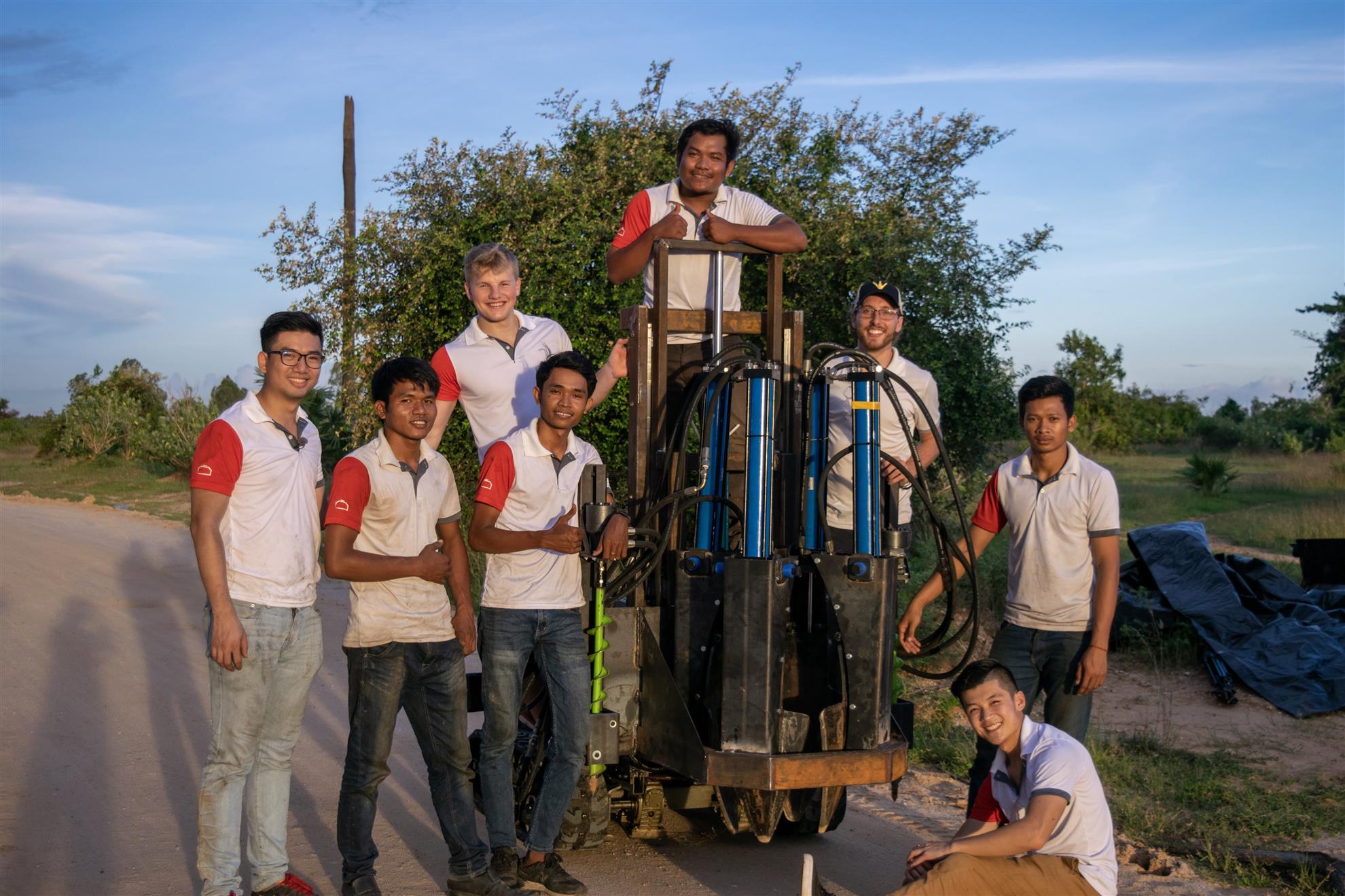
(shown: Jared in the black ball cap with some of the Demine Robotics team and a prototype of their machine)
- Jared is a U of W grad who is currently living in Phnom Penh, Cambodia
- it is estimated that there are still 50 million mines left in the ground, most from conflicts that have already ended. At the current rate of removal, it will take 250 years and $80 Billion to remove all of them
- for every 1 live landmine, there are approximately 300 false detections, so it is difficult to know which you are dealing with when trying to remove them
- in 1997, there was an international treaty ban on the use of landmines, but there are some still being used. The treaty places responsibility for landmine removal on the country that planted them but there are issues in the situation of failed nation/states or for rebellions or insurgent land mine planters.
- Landmines are designed to sit in the ground for long periods of time and remain deadly. Only 2 options, remove safely or blow up.
- the worldwide goal is to have removed all landmines by 2025 but with the cost of removal at $600-$1000 each, it is very expensive especially compared to the approx cost of planting the mines at $2/ea
- the removal process is: 1) survey; 2)detection; 3) clearance; 4) disposal
- as part of the survey process removal teams talk to local villagers about the area and where there have been losses of life or livestock and identify areas and grids of possible mine locations. The detection phase involves metal detectors (which create alot of false detections) or dogs trained to sniff for TNT of the explosive (which is more reliable).
- the current method to clear or remove landmines is by hand (with a shovel and a stick to loosen the dirt), which is not only time-consuming (30-40 min/mine), but dangerous to the de-miners. The many false positives make it easy for removal specialists to become lulled into complacency and make a mistake. Mines are generally abut the size of a hockey puck and trigger on 50lb of weight. For disposal, often times mines are just exploded in place.
- Demine Robotics has created what is in effect a "remote control shovel" that can dig out identified landmines including the surrounding dirt to the mine depth of 5-10" deep, and deposit them in a cleaning container with brushes to remove the dirt. Once the mine is separated from the dirt, then the mine can be safely detonated.
- Demine Robotics is hoping to begin testing their prototypes in Cambodia in the next couple of months and to begin more large-scale manufacturing next year, following successful testing.
- it is expected that the cost of the Demine Robotics machine will be in the range of $50k in comparison to their competitors at $500k-$1M
- The goal is for the de-miners to be able to work more safely by providing an economical robotic solution
- Ridding the world of land mines has recently reentered the international spotlight as Prince Harry has picked up the cause that his mother first supported
- for further information on Demine Robotics see their website at https://deminerobotics.com