
On May 28th we were joined by Dr Matthew Chamberlain and Julie Powell from St. Marys Hospital to speak on the Cardiovascular Prevention and Rehabilitation Program Waterloo/Wellington.
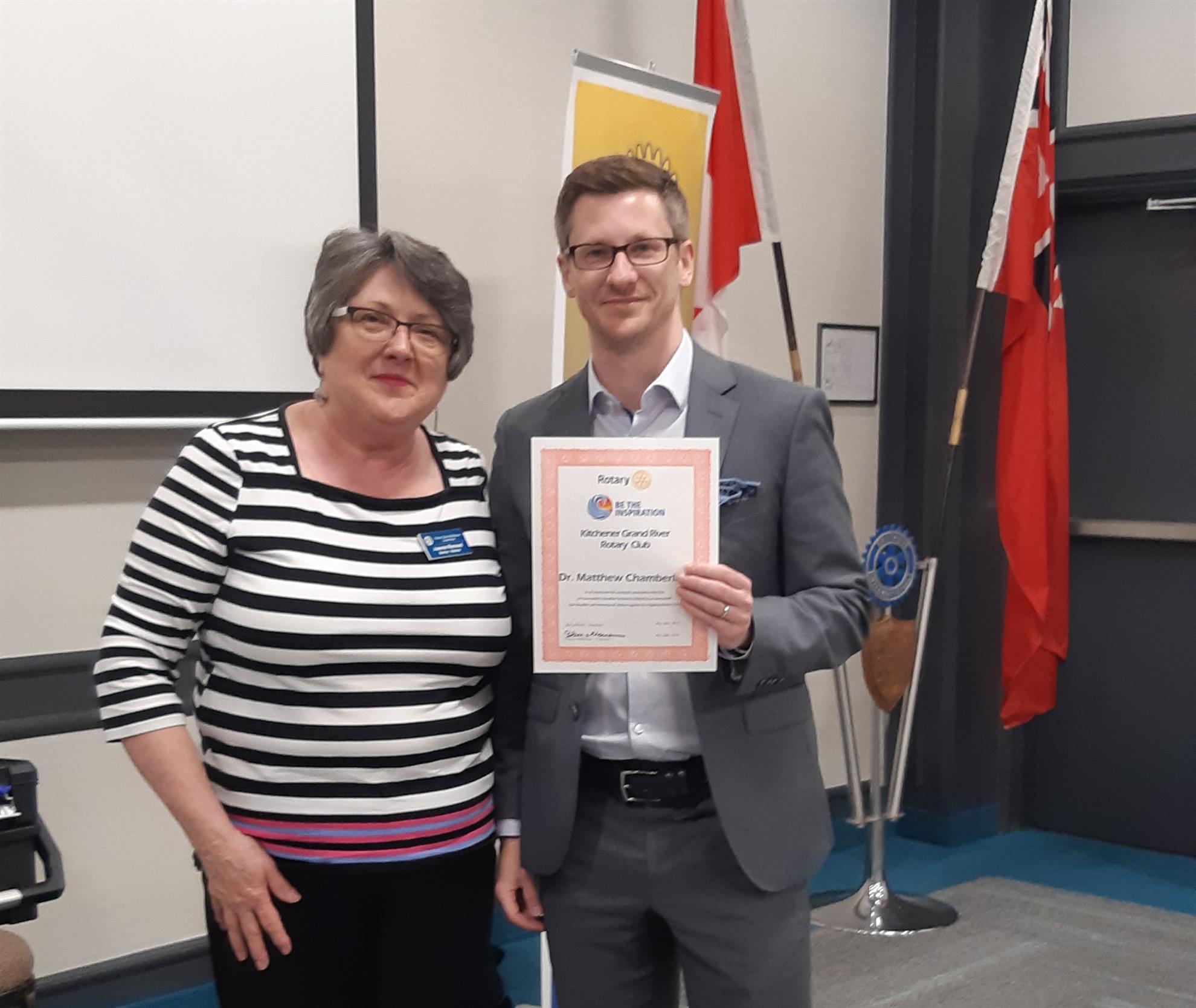
Dr Chamberlain began with a review of basic cardiology telling us that the heart is basically a pump and how oxygen is used by the body. The heart is a muscle. He spoke to the need for rehabilitation after an event.
Coronary artery disease is very common and the number 1 cause of death. It often starts early (in teens) as plaque builds up. We have a very poor understanding of heart disease.
We use aspirin when we suspect an issue because blood platelets try to clot and aspirin prevents the clotting.
He indicated that people formerly were considered cardiac cripples after a heart attack but revised thinking is that we want to get back to an active life. In the 1960s the first CR programs were developed and in the 1980s the first program was begun in Toronto. Today there are over 200 across Canada. Cardiovascular Rehabilitation (CR) is a medically supervised exercise program designed to improve cardiovascular fitness and reduce risk factors. The program provides education, diet exercise and risk factor modification information. The goals are to reduce complications from heart disease and to optimize health and performance as well as to restore confidence.
Proven benefits include reduced deaths, recurrent heart attacks and symptoms. Hospital and ER visits decrease and risk factors improve. The CR program applies to a wide range of heart conditions.
However, in spite of this, only 10 to 30% of patients attend, many come but don’t finish and many fall off the wagon. CR is one of the most underfunded and undervalued programs in cardiovascular medicine.
In the future a prerehab program would be the ideal.
Some of the barriers to people attending include women, younger patients, ethnic minorities, distance, weather time and funding.
The St Marys Hearts in Motion clinic is located at 50 Bathurst St in Waterloo.
Dr Chamberlain indicated that in the future it is important for regionalization to occur, for hub and spoke networks to be developed to increase access, standardize the quality of care and CR delivery and to increase the ability to track local data. He also indicated the importance of forming alliances with major universities who have the equipment necessary for a program.
Julie Powell mentioned the St Marys Hike for Heart “An annual celebration of recovery for those touched by heart disease, their families and St Marys caregivers” on Sunday Sept 15, 2019 at Laurel Creek Conservation Area. supportstmarys.ca/hike