Minutes of Meeting
November 12, 2025
Prepared by: Julie Walder
Meeting No. 2192
Announcements
-
The club is considering a name change that would remove the word Club from our title. Options being explored include Kitchener-Westmount Rotary or Rotary Kitchener-Westmount.
-
The Glad Tidings performance by Drayton Theatre is almost sold out.
-
We are still actively selling tickets for our Christmas Dinner, which will feature a special Broadway performance this year.
We currently have 32 of the 50 tickets we need to sell to hold the event.
-
Looking ahead to June 2026, Neil will be coming out of retirement to perform in a Drayton production titled “Sorry Not Sorry.”
-
The Sounds of Christmas fundraiser for KidsAbility is officially sold out. The demand was so high that three busloads of people had to be turned away in order to ensure local residents could attend.
-
Movember: Brad Enns is raising funds in support of men’s mental health. Please see his recent email and consider contributing.
-
Today’s 50/50 draw sits at $515 and will continue to grow as the black marble was not drawn.
Guest Speakers
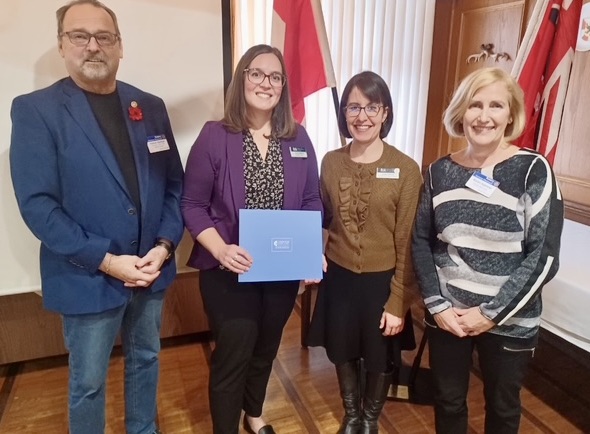
Dana Zummach and Shira Ginsler
Schlegel–UW Research Institute for Aging
Dana and Shira joined us to share the work of the Schlegel–UW Research Institute for Aging (RIA), an independent not-for-profit research institute with more than 70 staff supporting researchers across multiple disciplines.
Purpose and Focus
The RIA’s primary goal is to better understand dementia and develop resources and strategies that will support individuals, families, and caregivers.
-
Building dementia-friendly communities
-
Creating practical resources for caregivers
-
Advancing research on healthy aging
They do not provide direct services but work to empower those living with dementia and their care partners.
Key Learnings Shared
-
Is dementia the same as Alzheimer’s?
No. Dementia is an umbrella term that describes symptoms affecting thinking, memory, and behavior. Alzheimer’s is the most common cause, accounting for about 65% of diagnoses.
-
Other forms include:
-
Vascular dementia (often related to stroke)
-
Lewy body dementia
-
Frontotemporal dementia (typically appears between ages 45–65)
-
Mixed dementia (multiple diagnoses)
-
Dementia is progressive and the experience is unique to each person. It can affect speech, problem-solving, mood, thinking, and sensory or physical functioning.
Understanding Stigma
Stigma can come from the outside world or be internalized by the person experiencing symptoms. Media stereotypes often portray dementia in harmful or reductive ways, contributing to shame, embarrassment, or withdrawal.
Clarifying What Dementia Is Not
-
Dementia is not a normal part of aging.
Aging brings changes in brain and body function, but dementia involves more significant decline.
-
People can live well with dementia. Lifestyle choices that may reduce risk include:
-
Eating less red meat and processed foods
-
Reducing alcohol and tobacco use
-
Staying physically active
Supporting People with Dementia
People living with dementia can remain highly capable and engaged. Staying connected increases purpose, meaning, social connection, and cognitive stimulation.
Ways to offer support include:
-
Ask for their preferences and include them in decisions
-
Be patient and flexible
-
Communicate clearly
-
Suggest one task at a time
-
Ask closed-ended questions when helpful
-
Try to schedule interactions between 11 a.m. and 2 p.m., often the best time of day for energy and focus
-
Focus on strengths and values
The RIA also recommends opportunities for training (online or in person) to help groups and organizations like Rotary to become more dementia-friendly. This may be an area our club chooses to explore further. A handout was given to everyone "Members for Life: Supporting Club Members Through Memory Changes"
The presentation was exceptionally well received by our members. Dana and Shira offered meaningful insights into dementia, caregiving, and the work being done through the Research Institute for Aging. We are grateful for the time they took to join us and for the clarity and compassion they brought to such an important topic.
Our club deeply appreciates their commitment to building dementia-friendly communities and equipping families, caregivers, and service providers with the tools they need to support people living with dementia. We are thankful for the opportunity to learn from them and look forward to staying connected with the impactful work happening at the RIA.